

Data analysis, strength and conditioning, Head of athletic performance Blues Rugby (Auckland)
Joined March 2015
- Tweets5.7K
- Following1.2K
- Followers4.4K
- Likes26.4K






Mark Bennett retweeted

Speak to any hard-bitten older farmer around me in Somerset, or anywhere in Britain, and they will tell you that they grew up among fields teeming with corncrakes, grass snakes, hares, hedges full of yellowhammers and other songbirds, car windscreens splattered with bugs after the shortest summer drive, nearly all now gone. 98% of wildflowers, gone. Huge shoals of herring, cod, and other fish in the sea, a distant memory. Across almost every indicator, the losses during just one human lifetime have been catastrophic. The data is all there, as are the anecdotes. Britain is among the most nature-depleted countries on earth.

Two episodes of “The Ancients” podcast with Prof Chris Stringer. “Origins of Homo Sapiens” and “Rise of Humans”. Really worth a listen if the below interests you. (He’s a regularly a guest and could make any subject interesting).

Около 930 тысяч лет назад наши предки почти исчезли. Не в переносном смысле — буквально.
Генетический анализ современных геномов показывает, что численность размножающихся особей упала до примерно 1280 человек и держалась на этом уровне около 117 тысяч лет. Почти 99% предковой популяции исчезло.
Это вывод исследования Ху и коллег, опубликованного в Science в 2023 году. Они применили новый метод FitCoal к геномам 3154 современных людей и реконструировали историю численности популяции. До кризиса, по их оценкам, было около 98–100 тысяч размножающихся особей. Потом — обвал. Общая численность, включая детей и стариков, была выше, но и она была критически мала. Это меньше, чем население небольшого посёлка. Одна эпидемия, одна засуха, один неудачный сезон охоты — и линия могла оборваться.
Период совпадает с серьёзными климатическими изменениями среднего плейстоцена: похолодание, удлинение ледниковых циклов, вероятно сильные засухи в Африке и Евразии. В ископаемой летописи как раз есть заметный пробел между примерно 950 и 650 тысячами лет назад — слишком мало находок. Исследователи предполагают, что причина простая: людей было так мало, что они почти не оставляли следов.
Интересный момент: этот узкий горлышко, похоже, совпал с важным эволюционным событием. Примерно в это время или чуть позже появляется популяция, которая позже дала начало общему предку неандертальцев, денисовцев и нас. Возможно, именно в условиях крайней малочисленности и жёсткого отбора произошли ключевые генетические изменения, которые в итоге определили дальнейшую историю рода Homo.
Важно: это модельная реконструкция по современной ДНК, а не прямое наблюдение. Часть специалистов относится к результатам осторожно — метод новый, а археологические данные не всегда идеально стыкуются. Но если оценка близка к реальности, то мы существуем благодаря очень узкому коридору. 1280 размножающихся особей — это не «человечество». Это маленькая группа, которая каким-то образом пережила десятки тысяч лет экстремальных условий, не вымерла и в итоге дала начало всем, кто живёт сегодня.
Восемь миллиардов человек — потомки тех, кто тогда не исчез.

Mark Bennett retweeted

Steve Ford scored a club record 198 tries from 234 appearances for Cardiff, but his Arms Park career almost ended after two matches at the age of 21.
Here’s my interview with him as he tells his remarkable tale.
zee-on.com/article/player-fe…

Saddened to hear about the death of Darryl Jones. Had so much influence on my rugby and life. I loved being coached by him as a teenager. Condolences and love to his family 💔

Mark Bennett retweeted

Ian Winship with an inspirational run at the age of 90 ‼️
The Scottish Masters athlete, who served as a paratrooper during the 1956 Suez Crisis, completed the 10km course in his hometown of Cumbernauld in 64:37 (chip time).
Winship ran with his daughter Fiona Fleming and grandson Kyle Fleming [of Kirkintilloch Olympians] and bettered Gordon Porteous' British M90 10km mark of 67:02 from 2004.
His grandson states that he walks 20,000 steps a day and wants to live to 100.
📸 @scotathletics

Mark Bennett retweeted

Performance and physiological responses to repeated-sprint exercise: a novel multiple-set approach buff.ly/QRIQfu3

Mark Bennett retweeted

Testosterone decline is blamed on aging. A new study analyzing nearly 5,000 men found age explains only 2.5% of testosterone variation. Body fat explains 18-20%. The difference matters clinically.
Researchers at the U.S. Army Research Institute of Environmental Medicine analyzed National Health and Nutrition Examination Survey data from 2011-2016. They included men aged 20 to 59 years with measured testosterone levels and body composition scans.
The goal was to separate what actually drives testosterone decline: chronological aging or the body fat accumulation that typically accompanies aging.
Key findings:
• Age alone explained only 2.5% of testosterone variation across men
• Total body fat percentage explained 18.2% of variation
• Visceral fat (belly fat surrounding organs) explained 18.4%
• Waist circumference explained 19.9%, slightly better than advanced imaging
• These patterns held across multiple testosterone thresholds (300, 250, 200, 150 ng/dL)
Think of this as explanatory power. If you only know a man's age, you can barely predict his testosterone level. If you know his waist circumference, you have 8 times more predictive information.
The study measured body composition using dual-energy X-ray absorptiometry, the same technology used for bone density scans. This provides precise measurements of total body fat percentage and visceral adipose tissue area.
Visceral fat is the metabolically active fat stored around your abdominal organs. It's distinct from subcutaneous fat, the fat you can pinch under your skin. Visceral fat drives metabolic dysfunction through multiple pathways.
How does body fat suppress testosterone?
First, fat tissue contains aromatase, an enzyme that converts testosterone into estradiol. More fat means more conversion, lowering circulating testosterone.
Second, visceral fat promotes insulin resistance. Insulin resistance reduces production of sex hormone-binding globulin (SHBG) in the liver. SHBG is a protein that binds and transports testosterone in your blood. Lower SHBG means lower measured total testosterone.
Third, visceral fat releases inflammatory molecules that suppress the hypothalamic-pituitary-gonadal axis. This is the hormonal control system that signals your testes to produce testosterone. Chronic inflammation dampens this signaling.
The relationship is bidirectional. Body fat suppresses testosterone. Low testosterone promotes fat accumulation by reducing lipolysis (fat breakdown) and allowing increased fat cell development. This creates a reinforcing cycle.
Across every age group, men with testosterone below 300 ng/dL had substantially more body fat than men above that threshold.
For men aged 30-39:
• Low testosterone group: 30.3% body fat, 130.5 cm² visceral fat
• Normal testosterone group: 26.4% body fat, 94.6 cm² visceral fat
The body composition differences were larger and more consistent than age differences.
Testosterone levels declined from ages 20-29 to 40-49, then plateaued at 50-59. This plateau occurred despite continued increases in body fat, suggesting that the testosterone suppression threshold is crossed primarily during midlife rather than progressively with aging.
Waist circumference performed as well as advanced imaging for predicting testosterone levels. A waist circumference above 110-115 cm corresponds to visceral fat area above 300 cm², where predicted testosterone drops by more than 400 ng/dL compared to men with minimal visceral fat.
This has practical implications. Clinicians can use a tape measure instead of expensive body composition scans to assess obesity-related testosterone suppression.
The researchers also examined whether these associations persisted after accounting for SHBG. In models adjusted for SHBG, body fat remained inversely associated with testosterone. This indicates that fat suppresses testosterone both directly and through SHBG reduction.
As always, we have some limitations of this study. The study is cross-sectional, meaning it captures a snapshot in time rather than tracking individuals over years. Why does this matter? This prevents establishing whether fat accumulation causes testosterone decline or whether low testosterone drives fat gain.
The bidirectional nature of the relationship means both processes likely occur simultaneously, creating the reinforcing cycle described earlier.
NHANES measured testosterone once, without confirmatory testing. Clinical hypogonadism requires repeat measurements, symptom assessment, and evaluation of other hormones. These findings describe biochemical testosterone concentrations, not clinical diagnoses.
The study included only men aged 20-59 years. Findings may not apply to older men, where primary testicular aging may play a larger role independent of body composition.
What does this mean clinically?
Current guidelines recommend evaluating reversible causes before starting testosterone replacement therapy. In men with excess body fat, particularly visceral fat, addressing metabolic health and weight loss should be prioritized.
Weight loss studies, including trials of GLP-1 receptor agonists like semaglutide and liraglutide, show that reducing adiposity can increase endogenous testosterone production. This supports a functional, potentially reversible suppression rather than permanent testicular failure.
Experimental data reinforces this. Healthy lean men subjected to prolonged caloric restriction and high physical stress can experience testosterone decline to near-castrate levels, with rapid recovery upon refeeding. This demonstrates that testosterone suppression can represent an adaptive response to metabolic stress rather than irreversible dysfunction.
The proliferation of direct-to-consumer testosterone therapy platforms raises concerns about inappropriate prescribing. If low testosterone is attributed to inevitable aging rather than modifiable metabolic factors, men may receive lifelong androgen therapy when lifestyle interventions could restore endogenous production.
This matters for both individual health and population health. Testosterone therapy carries cardiovascular and behavioral risks. It suppresses natural production, creating dependence. If the underlying cause is reversible metabolic dysfunction, addressing that cause is preferable to pharmacologic replacement.
The framework matters. If testosterone decline during adulthood primarily reflects the metabolic burden of excess adiposity rather than intrinsic gonadal aging, then the decisions made about physical activity, diet, and body composition in your 30s and 40s shape your hormonal status in your 50s and 60s.
Body fat accumulation is not inevitable with aging. It reflects the cumulative balance between energy intake, expenditure, and metabolic health across decades. Maintaining lower body fat, particularly visceral fat, appears to preserve testosterone concentrations independent of chronological age.
The study provides a quantitative framework for understanding what drives testosterone variation in adult men. Chronological aging contributes minimally. Body composition, particularly visceral adiposity, explains substantially more variation and represents a modifiable target for intervention.


Mark Bennett retweeted

Effects of Weekly Set Distribution on Volume Load, Lower-Body Strength, and Quadriceps Muscle Thickness in Trained Men ovid.com/10.1519/JSC.0000000…

1. Does Reactive Strength Index Ratio provide useful information beyond height and contact time considered separately.
Fifty one athletes, examine the relationship between CT, Ht, RSI and Velocity.
3. Analysis 2, Nested Model ANOVA (F-Test). Run a You nested ANOVA to see if adding RSI to a model that already contains C.T. and Ht significantly improves it. If the p value for test is > 0.05 RSI adds no unique information. Result pm of 0.3805


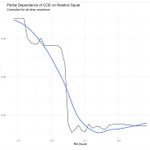
6. PDP plots give us an idea of how much raw capacity may transfer to athletic events. e.g. 1 The higher you jump the better your COD. We can see a plateau occurs around 1m jump height but possibly thats because jump heights topped out here, jumping higher might still transfer?


Mark Bennett retweeted

My most recent article on Threshold versus VO2max Training.
jamesgalanes.substack.com/p/…
Mark Bennett retweeted

AMPD1 gene variant in rugby athletes and distance runners @ResearchGate: researchgate.net/publication… Dan Martin @M_R_Antrobus @jonbrazier1 @MarkBennett07 @Dr_Heff56 @RMErskine @AdamJHerbert91 et al. @Genes_MDPI mdpi.com/2073-4425/17/8/935


