
Research Scientist Intern @NVIDIA | PhD student @UofT @VectorInst.
Toronto
Joined September 2022
- Tweets162
- Following1.3K
- Followers620
- Likes583



Pinned Tweet
Continual learning and online adaptation are often framed as the next frontier of AI. 🚀
Modern architectures use Test-Time Training (TTT) to memorize key-value pairs on the fly via gradient descent, or so we thought.
To test this memorization hypothesis, we replaced gradient descent with gradient ASCENT. It should destroy memorization.
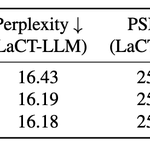
Instead... performance was preserved, or even slightly improved. 😱
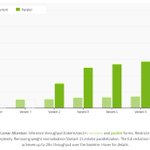
It turns out, TTT with KV Binding is secretly linear attention!
Site: research.nvidia.com/labs/sil…

Junchen Liu retweeted

He's back

NVIDIA Board reinstates Jensen Huang as President, CEO and Board Director.
Read the release: nvidianews.nvidia.com/news/n…


I started my NVIDIA internship this February. I’ve never met Jensen, but I feel his influence every day through the people and culture here.
Just as a child’s character reflects the family they grew up in, a company’s culture reflects the people who shaped it. What struck me at NVIDIA is how proud everyone around me is to work here, and how much a thumbs-up from Jensen means to them.
Those of us who speak Mandarin affectionately call him “老黄”, with the warmth and familiarity of talking about an uncle. There’s so much affection in the way people talk about him.
It’s hard enough to earn that kind of pride, trust, and affection within a small team, let alone across a company this large. To me, that says a lot about his leadership.
NVIDIA needs 老黄.
This quoted post is unavailable.
Junchen Liu retweeted

We're excited to unveil Matrix-Game 4.0: the world's first open-source game world model streaming at 83 FPS on a single 5090. It's built to be played, not just watched.
My first project leading the Matrix Game team at @Skywork_ai. I'm glad we built something fun! Thanks, team!
Junchen Liu retweeted

At @VeedaAI we are growing our team across all fields and locations (Zurich, Bay Area, Toronto)! Come join us and help build the future of Physical AI! My DMs are open!

At @VeedaAI , we’re building for a future where robots learn by interacting with the world, at scale -- in simulated reality.
Getting there means bringing together the brightest minds to tackle some of the hardest problems in Physical AI.
Come build what’s next with us: jobs.ashbyhq.com/veeda-ai

It turns out UMM doesn't need VAE or ViT at all. Neat architecture finally wins at scale!

Let's remove VAEs and ViTs from video models!
🚀 Introducing 𝗣𝗶𝘅𝗲𝗹𝗨𝗠𝗠: an encoder-free unified multimodal model for image and video understanding and generation, directly in pixel space.
Code and model available today!
🌐 nv-tlabs.github.io/PixelUMM
📄 arxiv.org/abs/2609.38597
Junchen Liu retweeted

Today is my last day at @NVIDIA.
Over the past few years, I’ve become obsessed with one problem:
simulating the world.
I’ve been incredibly lucky to pursue this at NVIDIA — from bringing gsplat into NVIDIA and helping power NuRec, to helping build OmniDreams, and most recently leading FlashDreams for interactive world models.
Along the way, my work moved from reconstructing the world, to generating it, and increasingly toward making it interactive.
I’ve become convinced of one thing:
the future of video generation is simulation.
Models that understand actions, predict how the world changes, and generate interactive experience at scale could become an important source of training data for robots and autonomous vehicles.
I’m incredibly grateful to everyone I got to build with and learn from at NVIDIA.
Now I want to keep pushing on this problem.
More soon. :)

Junchen Liu retweeted

Excited to announce: In 2027 I'll join the UW Allen School (@UWCSE) in Seattle as tenure-track faculty in Computer Science!
My group will advance core geometry processing + 3D AI for visual computing, science, & engineering. I'll be recruiting PhD students in the next cycle!


Junchen Liu retweeted

We are releasing code (training + inference) and model weights for CMD. Give it a go :)
✨ Code: github.com/nv-tlabs/cmd
✨ Weights: huggingface.co/nvidia/cmd


Introducing Context-Matched Distillation (CMD) for fast, controllable autoregressive video generation.
CMD supports frame-wise and chunk-wise generation along with precise camera conditioning.
🌟 Project Page: hmrishavbandy.github.io/cmd-… 🌟 Paper Link: arxiv.org/abs/2608.13391
Junchen Liu retweeted
Introducing Context-Matched Distillation (CMD) for fast, controllable autoregressive video generation.
CMD supports frame-wise and chunk-wise generation along with precise camera conditioning.
🌟 Project Page: hmrishavbandy.github.io/cmd-… 🌟 Paper Link: arxiv.org/abs/2608.13391
Junchen Liu retweeted

🚀 Pixel Diffusion Decoder (PiD) v1.5 is out
🎨 No color-shifting problem, better 4K visual quality
📦 Undistilled checkpoint and full training code
🧩 Support FLUX, FLUX2, Qwen-Image, Z-Image, ...
Feel free to use it, reproduce it, and build on top of it
💻 Code:
github.com/nv-tlabs/PiD
🔗 Demo & comparison:
research.nvidia.com/labs/sil…

So honored that MOTIVE was named an ICML 2026 Outstanding Paper Honorable Mention! 🎉
Motion Attribution for Video Generation 👇
research.nvidia.com/labs/sil…
TL;DR: We propose Motive, a scalable, motion-centric data attribution framework for video generation to identify which training clips improve or degrade motion dynamics, enabling curation and more.
Huge credit to Xindi Wu (@cindy_x_wu), who led this, and to the whole team.
Congrats and thanks to @paschalidoud_1 @JunGao33210520 Antonio Torralba @lealtaixe @orussakovsky @FidlerSanja, with support from @NVIDIAAI @PrincetonCS @MIT_CSAIL @UMichCSE @UofTCompSci @VectorInst 💗 #ICML2026

1
6
2,075
I’ll be at #ICML2026 next week presenting this work.
icml.cc/virtual/2026/poster/…
See you in Seoul! 🇰🇷

Continual learning and online adaptation are often framed as the next frontier of AI. 🚀
Modern architectures use Test-Time Training (TTT) to memorize key-value pairs on the fly via gradient descent, or so we thought.
To test this memorization hypothesis, we replaced gradient descent with gradient ASCENT. It should destroy memorization.
Instead... performance was preserved, or even slightly improved. 😱
It turns out, TTT with KV Binding is secretly linear attention!
Site: research.nvidia.com/labs/sil…
Junchen Liu retweeted

1/5 🚀 Thrilled to open-source OSCAR 🤖 — an action-conditioned world model for robotics, led by the visiting student in my group @wuzy2115! It generalizes across different robot embodiments with precise action controllability. All trained on a single GH200 GPU, and outperforms existing open-sourced baselines, which have larger model capacity and need more compute.
Everything is public, including training data.
📄 Paper: arxiv.org/abs/2606.04463
🌐 Project: wuzy2115.github.io/oscar-pro…
💻 Code: github.com/wuzy2115/oscar-pu…
🤗 Robot data: huggingface.co/datasets/zywu…
🤗 Human data: huggingface.co/datasets/zywu…
🤗 Weights: huggingface.co/zywu2115/OSCA…
#Robotics #WorldModels #AI #OpenSource
My favorite paper so far this year: a simple idea, solid experiments, and overwhelmingly strong results.

Two months ago, I vaguely posted a number: 0.9 FID, one-step, pixel space.
Now it is 0.75, and can be even lower.
Many wonder how.
I thought it might end as a small FID prank: simple and deliberate.
It started with one question: can FID be optimized directly, and what does it reveal?
Introducing FD-loss.

Junchen Liu retweeted

Turning long-horizon generated videos into explorable 3DGS scenes🪄 TokenGS has been selected as a CVPR Highlight, visit our poster tomorrow for a live demo!
We’ve also released new model updates—details in the thread below 👇 (1/4)
Junchen Liu retweeted
Interactive world models are finally getting their vLLM/sglang moment
We’re open-sourcing FlashDreams, an optimized library for inference and serving of interactive world models
FlashDreams is released under Apache 2.0, and we’re excited to improve it further with the community

World models are moving beyond offline generation towards interactive, real-time experiences.
Introducing ⚡FlashDreams⚡: an open-source high-performance inference and serving library built for autoregressive world models:
🔥 Up to 3.10× faster LingBot-World inference
🔥 Up to 2.12× faster Self-Forcing inference
🔥 Up to 1.40× faster Wan2.1 inference
🔥 8 integrated models
🔥 Multi-GPU, streaming, low-latency serving
🔥 Agentic skills that teach you how to use it
FlashDreams is designed for a new generation of AI systems that continuously evolve over time while responding to user interactions. It powers applications across robotics, autonomous vehicle simulation, gaming, and virtual worlds.
Github: github.com/NVIDIA/flashdream…
Docs: nvidia.github.io/flashdreams
Research page: research.nvidia.com/labs/sil…
Join the #flashdreams Discord channel at discord.gg/yTdHDqFP
FlashDreams is also the runtime backbone behind NVIDIA OmniDreams (github.com/nv-tlabs/omni-dre…)
1/n
#AI #WorldModels #FastInference #PhysicalAI #OpenSource #NVIDIA
Junchen Liu retweeted

we made a new model for text-to-image generation and editing. the results are looking good and the leaderboard is looking strong. it turns out that nano banana 2 is not impossible to beat, which felt like the case at the beginning of the year. there are a lot of great models out there that get released often. why should you care about reve 2.0?
to me, there are mainly two reasons. one being that reve is an underdog, reasonably funded but magnitudes less than other big labs, e.g. oai, google, meta, etc. you might be curious about how we managed to make it to the top. two being that reve 2.0 is a decent model, and we as a team are willing to talk openly about some of our learnings and thoughts that could be helpful. in this post, i want to share mine on reve 2.0 and multimodal in general as a person working on it.
first things first, reve 2.0 is a pixel diffusion model with a thing that we call "layout" as the rendering representation. these two things are our research bets that turned out to work amazingly well. pixel diffusion lets us go 4k without sacrificing quality or speed. layout lets us scale better and have better control, which are two sides of the same coin. the field standard has been to use long upsampled prompts for rendering. yet this results in an awkward situation where captioners and users need to describe precise controls with text, which can be inaccurate. this inaccuracy amounts to bad reconstruction and control at test time. it gets worse with scale. and this inherent ambiguity is a curse in current multimodal generators. so what's a layout? a layout is a css of an image, which can be either defined by humans or learned by models. we end up capitalizing a lot on regions, which are good for 2D space. yet this idea naturally generalizes. it turns out to be a standard VLM mid-training task, and that's solvable in good hands. it also brings many good properties in pretraining and post-training, which i am not going to expand on. ideogram independently verified that layout is useful (released on the same day, congrats!). to be clear, these bets are not novel, but to put together a system that makes them work is (and showing it beats nano banana 2).
second, it's nice that these bets, among others, worked out. however, like in many cases, there was a long time when things were underperforming. our competitor models are great, and most likely didn't make many risky bets. it is a big pipelining and engineering problem. why should we risk it? in retrospect, the culture of our team and leadership helped a lot. our priorities didn't swing and have stayed focused during our development. the idea makes sense, the execution is good, if things don't work out it's a bug, let's go find it and try more things. by and large, reve remains a research lab with big computers. this is rare. let me tag some amazing ppl here: @Taesung @m_gharbi @Songwei_Ge @TianweiY James Hong @dima_smirnov_ @theSidlak, ... the list goes on.
third, we spent most of our time improving text-to-image and didn't do much on editing. and our arena ranks show that. to date, we are #2 on text-to-image yet #9 on image editing. it's honestly a bit embarrassing that we didn't do well in editing, as layout promises to do well. but i am confident that this will improve, as we are juggling bandwidth and resources (we are a small team, and hey, come join us!).
fourth, talking about leaderboards and the state of multimodal, i genuinely feel that the gap between labs is shrinking. compared to LLMs, multimodal gen is at least half a year to a year behind. i am talking about architectures and core pipelines. to do good multimodal, you need to do good LLMs. reve has been helped by the OSS community a lot, but we've realized we need to own our language stack. and scaling follows naturally. leaderboards, in turn, are a noisy approximation and average of the real environments that you care about in deployment. they chase scaling and generalizable post-training. reve 2.0 ended up not being driven much by leaderboard evaluation, but relying on our intuition instead.
finally, how can multimodal be more useful? this is a question that keeps me up at night. coding has found its product-market fit and is driving up societal productivity. how can multimodal do that too? to me, we are nailing a single-round rollout that leads to an infinite one. this infinite rollout will drive our digital interaction and creation. for this rollout to be good, it needs to be precise. otherwise rollout efficiency is too low for either humans or agents. we are making bets and concrete progress towards that goal, such as converting images into a css-like layout. if you are interested in this topic, i recommend @stuffyokodraws's post for a high-level digest: xitter.cf/stuffyokodraws/status/…. the success of multimodal depends on whether or not it can find a good product-market fit. that's the top question to figure out, then it's the model. it's quite non-linear to be honest, as critical pieces are still missing. but to me it's an area worth pouring my thoughts and efforts into.
give our model a spin, try your tasks, move some boxes. in case you find any bugs, please let me know in a reply or DM. hope it can help you.

Junchen Liu retweeted

Super excited to open source Flashdreams, acceleration library for world models! No restrictions on usage, Apache 2 license.
World models are the next frontier for video generation and paramount to Physical AI.
Flashdreams yields out of the box speed up across world models
World models are moving beyond offline generation towards interactive, real-time experiences.
Introducing ⚡FlashDreams⚡: an open-source high-performance inference and serving library built for autoregressive world models:
🔥 Up to 3.10× faster LingBot-World inference
🔥 Up to 2.12× faster Self-Forcing inference
🔥 Up to 1.40× faster Wan2.1 inference
🔥 8 integrated models
🔥 Multi-GPU, streaming, low-latency serving
🔥 Agentic skills that teach you how to use it
FlashDreams is designed for a new generation of AI systems that continuously evolve over time while responding to user interactions. It powers applications across robotics, autonomous vehicle simulation, gaming, and virtual worlds.
Github: github.com/NVIDIA/flashdream…
Docs: nvidia.github.io/flashdreams
Research page: research.nvidia.com/labs/sil…
Join the #flashdreams Discord channel at discord.gg/yTdHDqFP
FlashDreams is also the runtime backbone behind NVIDIA OmniDreams (github.com/nv-tlabs/omni-dre…)
1/n
#AI #WorldModels #FastInference #PhysicalAI #OpenSource #NVIDIA
Junchen Liu retweeted
Real time world model NVIDIA OmniDreams now open sourced!
If you are at CVPR, we invite you to also check out a live demo you can try out at the NVIDIA booth.

🚀 What if physical AI policies could interact with generated worlds in real time?
Introducing OmniDreams, a generative world model for closed-loop autonomous vehicle simulation.
Tech report, code, models, and data samples are available now.
Project: research.nvidia.com/labs/sil…
Code: github.com/nv-tlabs/omni-dre…
Model: huggingface.co/collections/n…
Join the #omnidreams discord channel: discord.gg/bsjzh4uZ