

If it’s not 1 thing... It’s 3. I do what I can.
Edmonton, Alberta
Joined March 2012
- Tweets6.2K
- Following1.5K
- Followers1.9K
- Likes11.6K





Jeff Nonay retweeted

Tune in to the #RealAgRadio #FarmerRapidFire at 4:30 E on @RURALRADIO147 brought to you by @PioneerSeedsCA! On today’s show, @ShaunHaney is joined by @mbcornfarmer, @JoshBoersen, @JeffNonay, @jocwasko & @SeligaJohn & @PioneerSeedsCA

Jeff Nonay retweeted

Oh, wow.


Jeff Nonay retweeted

Today is the last day of our BOGO sale on our wagyu steak class featuring @JeffNonay don’t miss out on this delicious bbq class


Jeff Nonay retweeted

It is rumored that at the Mar-a- Lago meeting Trudeau was summoned to, he was told 8 out of 10 Canadians would get back more in Tariff rebates than they paid.
Had some fun this w week making mozzarella and burrata!
If you swing by the farm today, ask to give one a try. And let us know what you think!!
#burrata #freshcheese
#fiordelatte


It is confusing for me that weight classes are required to create an even playing field
But an individual with XY chromosome and testing over the limit for testosterone is put in the same class as XX fighters
I don’t care about the gender crap…. Something is very off here
This Post is from a suspended account. Learn more
Jeff Nonay retweeted

Thrilled to fill in for @cspotweet, on @630CHED today, 12-2MT.
First, free therapy with @YonahBudd.
(Call/Text: 780-496-0063)
Next, dairy farmer @JeffNonay talks food sustainability.
Then, we celebrate @GlobalEdmonton fav, @kevinoweather's stellar career.
player.630ched.com
A few years and enough acres to to solidify confidence and push acres into this program.
stalbertgazette.com/local-ne…

He’s talking about you @SportsnetSpec
Love the way the Oiler players have handled the Edmonton Meat

Jeff Nonay retweeted

LOL. My dad literally just ran into a solo female hiker in the Canadian wilderness.
He had just run into a couple of bear cubs and a mama bear further up the trail.
He told the woman that there were bears that way and she had the choice.
Random man? Or bear?
She chose the man
My father spent the hike teaching her bear safety and she got home safely.
Jeff Nonay retweeted

@jenniferelle_ drops a very candid response to the federal government's initiatives and announcements lately
Jeff Nonay retweeted

Farming can be isolating and stressful some days and it can be tough on our mental health
It’s ok to ask for help
And it’s ok to talk about it
It doesn’t mean you are weak, in fact it may be the bravest thing you ever do…
#BellLetsTalk
@domoreag @RUboggedmate @AgknowCa – at Trochu, Alberta


Jeff Nonay retweeted

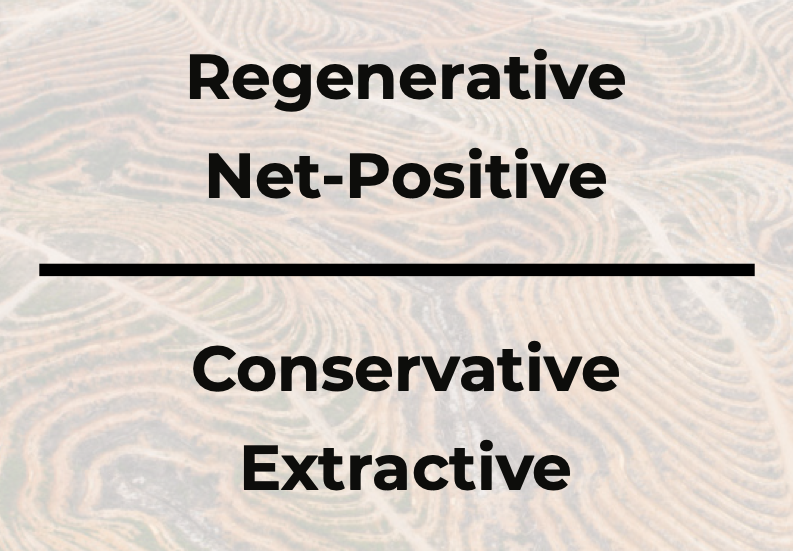
In the world of food and farming, the term "regenerative agriculture" is everywhere you look. Yet, the vast majority of those who claim to practice it fall short.
Regenerative agriculture is not a set of practices; it is not a carbon sequestration method, nor is it limited to or even necessarily related to pasture-raised animals.
Most of what is touted as regenerative agriculture fits into one of the prevailing agricultural paradigms. To better understand regenerative agriculture, let’s first examine these common paradigms.
Today, most of our agriculture is extractive. Extractive agriculture seeks to maximize productivity by all means necessary, focusing on quantitative yield and profitability.
Modern extractive agriculture depends on other extractive industries such as mining, petroleum, agrochemicals, and biotechnology.
Extractive agriculture degrades the vitality of the living systems upon which it relies—water, soil, biodiversity—and requires increasingly more off-farm inputs to remain productive.
Decades of extractive agriculture, featuring mechanization, agrochemicals, and high-yielding crop varieties, have produced an overabundance of grains.
This has led to an explosion in farm scale and has resulted in numerous negative downstream effects: insurmountable farmer debt, consolidation of farmland, and a toxic and nutrient-poor food supply.
One step better than extractive agriculture is conservation agriculture.
Conservation agriculture aims to lessen the negative impact of extractive agriculture while maintaining high yields. Efficiency is key to conservation agriculture. Precision fertilization, specialized machinery, and high-efficiency irrigation allow conservation farmers to reduce costs and inputs.
With this approach, the incremental harm reduction to soil and ecosystems rarely reaches a net zero negative impact, and over time, the efficiencies gained from technology may start to decline and, in some cases, reverse. The soil degrades more slowly, but it still degrades.
Going beyond the conservation approach that seeks to do less harm, net-positive agriculture aims to do good. Explicitly, net-positive agriculture works to build soil, repair water cycles, increase biodiversity, produce high-quality food, and improve farm livelihoods. The goal is to make life thrive, not just survive.
Rather than finding fragmented solutions to agroecosystem problems, net-positive agriculture employs integrated solutions through holistic design and planning.
Net-positive agriculture often struggles to move beyond the farm as the primary unit of focus for restoration.
Regenerative agriculture takes an approach that considers the entire lifeshed of a farm. A lifeshed, similar to a watershed, encompasses all life within a given system.
Each lifeshed has its own unique essence, a holistic and singular way of generating and maintaining life.
In regenerative agriculture, each farm must be considered within its web of relationships and exchanges with the lifeshed within which it is nested. This requires a deep understanding of the ecological, horticultural, geological, and human history of the place.
The development of a regenerative farm will result in unique, place-specific varietals, a dynamic web of life, commerce, and culture. Each regenerative farm has its own individuality and unique essence, making it non-displaceable.
Some well-known examples of regenerative agriculture include the great Incan agriculture system that functioned across several distinct ecozones; the Spanish Dehesa and Portuguese Montado, which have persisted for thousands of years; and the Ahupua’a systems of pre-contact Hawaii, which cooperatively produced a diversity of foods on a watershed scale, feeding over 1 million people while maintaining soil fertility, ecosystem function, and clean water.
Hat tip to Carol Sanford for the several decades of work she has put into defining regeneration and to Ethan Soloviev for his work applying Carol’s concepts to agriculture.
Jeff Nonay retweeted

Seeing a lot of misinformed Trudeau supporters who don’t realize just how essential plastic is to preserving fresh produce BEFORE it reaches the grocery stores.
They might want to reconsider their misguided support for a policy that if enacted, would exponentially increase Canada’s hunger crisis.
Here is an important #PSA from @sobeys CEO Michael Medline, about the expected impacts of a plastic ban on food prices. 👇
#cdnpoli #CdnAg #nofarmersnofood #axethetax #Pierre4PM #CPC
Jeff Nonay retweeted

This is a remarkable chart. World cereal yield compared to population and land use. Production continues to increase with essentially the same land use. This is sustainable intensification, same land, more product, thanks to genetics, management, and technology.

Jeff Nonay retweeted

On November 7th, 1920, in strictest secrecy, four unidentified British bodies were exhumed from temporary battlefield cemeteries at Ypres, Arras, the Asine and the Somme.
None of the soldiers who did the digging were told why.
The bodies were taken by field ambulance to GHQ at St-Pol-Sur-Ter Noise. Once there, the bodies were draped with the union flag.
Sentries were posted and Brigadier-General Wyatt and a Colonel Gell selected one body at random. The other three were reburied.
A French Honour Guard was selected and stood by the coffin overnight of the chosen soldier overnight.
On the morning of the 8th November, a specially designed coffin made of oak from the grounds of Hampton Court arrived and the Unknown Warrior was placed inside.
On top was placed a crusaders sword and a shield on which was inscribed:
"A British Warrior who fell in the GREAT WAR 1914-1918 for King and Country".
On the 9th of November, the Unknown Warrior was taken by horse-drawn carriage through Guards of Honour and the sound of tolling bells and bugle calls to the quayside.
There, he was saluted by Marechal Foche and loaded onto HMS Vernon bound for Dover. The coffin stood on the deck covered in wreaths, surrounded by the French Honour Guard.
Upon arrival at Dover, the Unknown Warrior was met with a nineteen gun salute - something that was normally only reserved for Field Marshals.
A special train had been arranged and he was then conveyed to Victoria Station, London.
He remained there overnight, and, on the morning of the 11th of November, he was finally taken to Westminster Abbey.
The idea of the unknown warrior was thought of by a Padre called David Railton who had served on the front line during the Great War the union flag he had used as an altar cloth whilst at the front, was the one that had been draped over the coffin.
It was his intention that all of the relatives of the 517,773 combatants whose bodies had not been identified could believe that the Unknown Warrior could very well be their lost husband, father, brother or son...
THIS is the reason we wear poppies.
We do not glorify war.
We remember - with humility - the great and the ultimate sacrifices that were made, not just in this war, but in every war and conflict where our service personnel have fought - to ensure the liberty and freedoms that we now take for granted.
Every year, on the 11th of November, we remember the Unknown Warrior.
At the going down of the sun, and in the morning, we will remember them.

Jeff Nonay retweeted

"The truth that agriculture consumes 6% of the world’s fossil fuel energy" should not be something to deplore. It is, rather, quite impressive that we can feed 8.1 billion people on only 6%, and this too will improve.
"Awash in fossil fuel" 🙄
= Whining of well-fed activists.

Most American farms consume massive amounts of oil and gas. As the climate crisis intensifies, lawmakers must start regulating the industry and holding it accountable for its impact on the air and water. #oped by @p_lehner buff.ly/46bxXmU
Jeff Nonay retweeted

From 2017: How do you live after unintentionally causing a death? nyer.cm/ZFCAaWf

