

Eye2Gene is a decision support to help clinicians provide a genetic diagnosis for people with sight-loss caused by an inherited retinal dystrophy.
- Tweets140
- Following56
- Followers189
- Likes203




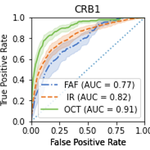
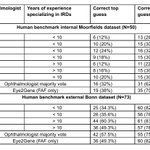

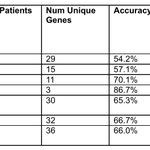


ALT Eye2Gene provides IRD-gene prediction given a retinal scan of one of three imaging modalities (FAF, IR or SD-OCT) for up to 63 gene classes. Images are initially resized to 256 by 256 pixels and rescaled to the range [0,1]. Each image modality-specific predictor block consists of an ensemble of five CoAtNet neural networks. The outputs are averaged to produce a final prediction output. The performance of Eye2Gene is evaluated on a held-out internal test dataset from MEH consisting of 28,174 images acquired from 524 patients over 9,291 patient visits since 2006.





ALT A person stands at a podium in a lecture hall, presenting information displayed on a large screen. The screen shows the name "Chrissie Adams (she/her)" and the title "Equality, Diversity and Inclusion Research Associate NIHR Moorfields BRC and CRF".

ALT The image features a quote from Nikolas Pontikos, displayed on a blue background with the NIHR Moorfields Biomedical Research Centre logo at the top left. The quote reads: 'This AI tool could support earlier genetic diagnosis, improve access to personalised treatments, and reduce the diagnostic burden on families affected by inherited eye disease. Our work with Eye2Gene exemplifies how the NIHR Moorfields BRC accelerates world-leading research into real-world impact.' To the right of the text is a photo of a person in a blue shirt.


