EM Consult|POCUS Spc SnrResFw @UCL|PhD(c) @DerbyUni DepEd @BMUS_Ultrasound|Edbd @EJ_EmergencyMe|DecEd @EmergencyMedBMJ NAP 8 SLWG @RCollEM

Yorkshire/Derbyshire, England
Joined April 2013
My Quality Improvement Project on Emergency Department PoCUS governance and administration been accepted for publication by @BMUS_Ultrasound @SAGE_Publishing 🙏🏾 So much blood, sweat and tears. All worth it. @RCollEM @EMTAcommittee very keen to see an improvement nationally
5
17
1
72
Dr Nick Mani, MSc FRCEM retweeted
Its not about more or less fluids. Its about giving patients the right hemodynamic support based on their physiology! Some patients in early septic shock are: 1. Fluid responsive with low SV --> fluids 2. Fluid unresponsive with low SV --> pressors, inotropes 3. Fluid responsive with high SV --> pressors 4. Fluid unresponsive with high SV --> pressors 5. Congested --> inotropes + diuresis 6. Impaired microcirculation with hemodynamic coherence --> fix macrohemodynamics 7. Impaired microcirculation with hemodynamic incoherence --> MAP target, avoid edema, other? (anticoagulation) We need to stop treating "septic shock" as hemodynamic paradigm.
Among adults with septic shock, the use of restricted fluids and early vasopressors did not result in more days alive and out of the hospital through day 90 than the use of liberal fluids and later vasopressors. Full ARISE FLUIDS trial results and Research Summary: nej.md/3PVdwIp
5
42
3
191
10,531
Dr Nick Mani, MSc FRCEM retweeted
Among adults with septic shock, the use of restricted fluids and early vasopressors did not result in more days alive and out of the hospital through day 90 than the use of liberal fluids and later vasopressors. Full ARISE FLUIDS trial results and Research Summary: nej.md/3PVdwIp
8
92
5
320
40,727
Dr Nick Mani, MSc FRCEM retweeted
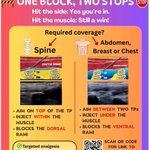
My neighborhood goes HARD for halloween…and oddly enough, our case today involves a 48 yr old man who fell off a ladder while affixing skeletons to the outside of his house. He has multiple lateral rib fractures (left side), and is having a hard time breathing. He also has a distal femur fracture and is in traction. You’re asked to perform a block for his rib fracture pain. Which block are you doing? 🧵👇
8
13
2
22
5,797
Dr Nick Mani, MSc FRCEM retweeted
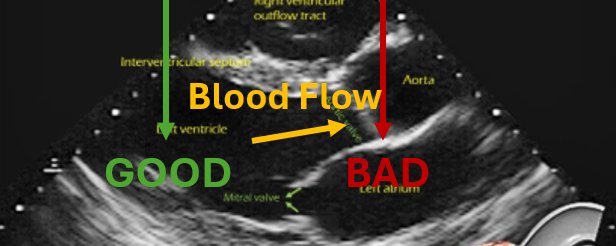
❤️Echocardiography in shock: stop asking only “What is the EF?” In undifferentiated shock, echocardiography is most useful when it answers physiological questions, not when it simply describes cardiac anatomy. Colebourn and Fisher propose a pragmatic 5 question framework for approaching the shocked patient: 1. What are the stroke volume and cardiac output? Start with flow. Importantly, cardiac index is not a binary marker of shock. A patient may maintain cardiac output through tachycardia despite a low stroke volume, while another may have low output because bradycardia prevents compensation. SVI, CI, heart rate and rhythm therefore need to be interpreted together. 2. If output is abnormal, why? LV failure? RV failure? Low preload? Valve disease? Mechanical complication? Obstruction? And do not forget dynamic LVOTO. Critical illness can combine low LV volume with hypercontractility, and escalating vasoactive support without recognising LVOTO may paradoxically worsen shock. This is also where LVEF can mislead us. A “normal” EF does not guarantee adequate forward flow. EF depends on LV volume and afterload and does not distinguish forward from regurgitant stroke volume. Vasoplegia may even make LV systolic function appear reassuring until vascular tone is restored. 3. Is left atrial pressure elevated? E/e′ >14 may support elevated LAP in general ICU populations, but performs less reliably in cardiogenic shock and should not be interpreted alone. A normal LA size does not exclude an acute rise in LAP. 4. Are pulmonary pressure and PVR elevated? Now the assessment moves to the RV pulmonary circulation interaction, where pressure, afterload and RV adaptation matter. 5. How is the situation evolving? Perhaps the most important question. The echo we see is not the patient's fixed cardiovascular phenotype. It is the heart under the current preload, afterload, vasoactive therapy and ventilatory conditions. Noradrenaline can increase BP while decreasing SV in one patient, yet increase both BP and SV in another. This is why critical care echocardiography should increasingly be thought of as: Flow → Mechanism → Filling pressures → RV pulmonary circulation → Response over time Not a photograph. A dynamic physiological assessment. This paper represents pragmatic expert guidance rather than a validated diagnostic algorithm. Reference📚 Colebourn C, Fisher R. A structured 5-question approach for echocardiographic evaluation of undifferentiated shock. Echo Res Pract. 2026;13:30. doi.org/10.1186/s44156-026-0… #CriticalCare #Echocardiography #POCUS #Shock #Hemodynamics #Cardiology #IntensiveCare
2
92
280
12,843
Dr Nick Mani, MSc FRCEM retweeted
I'm amazed at how many providers in the ICU still think about shock with approaches learned in pre-clinical med school... its 2026, lets move away from "Distributive, Hypovolemic, Cardiogenic, Obstructive" or "Pumps tubes pipes" To: Stroke Volume Minute VTI Congestion (right and left) Fluid responsive Fluid tolerant Microcirculation Hemodynamic Coherence SVR MAP responsive LV-Arterial coupling RV-PA coupling Admittedly, the above is more complicated, but so is the physiology of a patient dying of shock! These patients are hard, but don't start shackled by mental frameworks that don't allow you to actually think about these issues.
15
39
4
272
42,345
Delighted that our @POCUSUK systematic review & meta-analysis on the diagnostic accuracy of focused TTE in acute PE has been accepted for publication @EJEMedicine @EuroSocEM ​Building on @escardio PE guidelines, this provides up-to-date evidence ​#POCUS #MedTwitter #FOAMed
2
3
9
453
Dr Nick Mani, MSc FRCEM retweeted
We are inviting UK ED healthcare professionals to take part in the BEaT-ED study, exploring current use of bedside transthoracic echocardiography (TTE) in the assessment of suspected Acute Aortic Syndrome. Take part in this survey research here: forms.cloud.microsoft/e/E12e…
1
4
2
628
We are inviting UK ED healthcare professionals to take part in the BEaT-ED study, exploring current use of bedside transthoracic echocardiography (TTE) in the assessment of suspected Acute Aortic Syndrome. Take part in this survey research here: forms.cloud.microsoft/e/E12e…
1
4
2
628
The quest to prevent rebound pain: clarity or uncertainty? • There is not a universally accepted definition of rebound pain. • The pathogenesis of rebound pain is unknown. @DrTimJen @Ropivacaine #anaesthesia #MedTwitter #pain doi.org/10.1111/anae.70242
9
20
1,576
Dr Nick Mani, MSc FRCEM retweeted
🫀POCUS is no longer just a bedside imaging tool. It is becoming real time physiological intelligence. This excellent 2026 review highlights how modern POCUS is expanding into: • ultrasound guided regional anesthesia • shock and cardiac arrest management • AI assisted imaging • advanced diagnostics • governance and medicolegal practice Some of the most provocative concepts: • “Occult VF” detectable only on echocardiography during cardiac arrest • Ultrasound guided CPR compression positioning • AI assisted lung ultrasound acquisition by nonexperts • Handheld devices approaching cart based diagnostic performance One important medicolegal message: several lawsuits involved failure to perform POCUS when clinically indicated. The future of emergency and critical care medicine will likely depend on clinicians capable of integrating: physiology + imaging + AI + rapid bedside decision making. POCUS is not anymore an “optional skill” but “core clinical infrastructure.” Mani N, Rao S, Kim DJ. Point-of-care ultrasound in the modern era of emergency medicine: a narrative review of the recent literature. Curr Opin Crit Care. 2026. doi:10.1097/MCC.0000000000001358
1
49
3
163
8,566
Dr Nick Mani, MSc FRCEM retweeted
How should you resuscitate sepsis post Andromeda-Shock 2? Join us, the investigators on Andromeda-VEXUS, Andromeda-Shock 2 as we have a full throttle webinar (debate? cage match?) and settle this with a discussion of the blend of evidence and physiology. When: June 10th 3:00pm ET (12:00pm PT) Free Registration: hubs.ly/Q04hyRNf0 Super pumped for it!
1
20
56
4,175
Dr Nick Mani, MSc FRCEM retweeted
For example, in a study of 96 ED patients undergoing CTPA for suspected PE, 56% of them had an alternative diagnosis identified on lung ultrasound: pneumonia, pulmonary edema, or pleural effusion. This suggests that more than half of those CTPAs could have been avoided with a prior POCUS exam. buff.ly/ZYul9nK
1
3
9
731
Dr Nick Mani, MSc FRCEM retweeted
Doc 1: I did #POCUS. EF is great. I’m done! Doc 2: Wait… do you want to comment on the LV wall thickness? Could it have implications for fluid therapy? (e.g. associated diastolic dysfunction, SAM depending on the clinical context). What about cardiology referral for further imaging or genetic testing? #Nephpearls #FOAMed
12
64
4,907
Dr Nick Mani, MSc FRCEM retweeted
New in EMJ - free open access: Endovascular resuscitation: an expert practice review A practical overview of REBOA, SAAP and ECPR for emergency physicians managing the sickest patients in shock or cardiac arrest. Please read / comment / share DOI: 10.1136/emermed-2025-215376
🤖 Made with AI
1
14
1
21
2,840
Dr Nick Mani, MSc FRCEM retweeted
🚨 HOT OFF THE PRESS! 🚨 New guidance from the American Society of Echocardiography @ASE360 for Cardiac Ultrasound Artifacts 🫀📡 ➡️bit.ly/4tKDSvf 👉 A must-read for everyone in #EchoFirst! 🔍 What is an artifact? ➡️ An imaging feature that does NOT reflect true anatomy/pathology ➡️ Common, expected, and rooted in ultrasound physics ⚙️ 💡 Why this matters ⚠️ Artifacts can mimic disease → misdiagnosis → inappropriate management ⚠️ Present across ALL modalities: • 2D 🖥️ • Spectral Doppler 📈 • Color Doppler • 3D echo 🧊 📘 What this guideline delivers ✅ Standardized, structured approach to artifacts ✅ Clear explanation of: • Appearance 👁️ • Mechanism ⚙️ • Clinical impact 🏥 • Real-world cases 🧾 • Mitigation strategies 🛠️ 🧠 Also covers 🔹 “Artifact-like” phenomena 🔹 Interference from external devices & equipment 📡 🎯 Key takeaway 👉 Artifacts are inevitable—but misinterpretation is not 👉 Mastering them = safer, smarter echo practice 👩‍⚕️👨‍⚕️ Who should read this? ➡️ Sonographers ➡️ Cardiologists ➡️ Trainees ➡️ Anyone interpreting cardiac ultrasound 📢 Elevate your imaging game. Recognize. Understand. Mitigate. #CardioX #Cardiotwitter @JournalASEcho #ACCFIT
49
136
10,304
Dr Nick Mani, MSc FRCEM retweeted
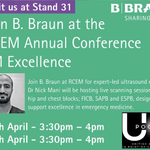
• Serratus Anterior and Erector Spinae Plane Blocks for rib fractures • Popliteal Sciatic Nerve Block for ankle fracture manipulation Just two of our live sessions daily, on our booth. Don’t miss these fantastic sessions happening live on our stand (6).
2
2
156
Dr Nick Mani, MSc FRCEM retweeted
🫀 Hemodynamics is not blood pressure... actually, It never was. ⚠️ The biggest mistake in perioperative & critical care: 👉 Treating numbers instead of physiology 📊 What we were taught ✔️ BP ✔️ HR ✔️ SpO₂ 🔥 What actually matters 👉 Flow + oxygen delivery + tissue perfusion 🧠 Core concept 👉 Blood pressure ≠ perfusion You can have: ▪️ Normal BP → low cardiac output ▪️ High BP → poor microcirculation ▪️ Stable vitals → ongoing hypoxia 💡 Why? Because: 👉 BP = CO × SVR Same pressure → completely different physiology 🧬 The real pillars of hemodynamics ✔️ Cardiac output ✔️ Stroke volume ✔️ Preload / afterload / contractility ✔️ Oxygen delivery (DO₂) ⚠️ Critical insight 👉 Oxygen delivery = CO × arterial O₂ content Not: ❌ BP ❌ SpO₂ alone 🔥 This is where advanced monitoring changes everything 👉 From static → dynamic 👉 From guess → prediction 🧠 Dynamic parameters outperform static ones ✔️ SVV ✔️ PPV ✔️ PVI 👉 Predict fluid responsiveness 👉 Avoid fluid overload 💥 Reality check Only ~50% of unstable patients respond to fluids 👉 The rest get harm 🫀 Next level thinking 👉 Ventriculo-arterial coupling 👉 Cardiac power output 👉 Tissue perfusion markers 🚨 Final message Stop asking: ❌ “What is the blood pressure?” Start asking: 👉 “Is the patient perfusing?” 🧠 Because in critical care: 👉 Flow saves organs Pressure just looks good on the monitor 📚 Demir et al., Aydın et al. Turkish Journal of Anaesthesiology & Reanimation, 2025 DOI: 10.4274/TJAR.2025.251926 DOI: 10.4274/TJAR.2025.251925
4
44
141
7,182