https://xitter.cf/t.co/9NWHg0fN1W https://xitter.cf/t.co/dBAYE0YydI
London, England
Joined May 2020
- Tweets6.5K
- Following2.9K
- Followers224
- Likes8K


Crypto Consult & Solutions retweeted

Hasta ahora, la mejor explicación sobre el uso del teléfono móvil.


Crypto Consult & Solutions retweeted

Andrew Huberman does 100 back extensions a week, and his nagging injuries disappeared.
He says the small, boring exercises are what keep you strong into your 50s.
His 8 staples for staying strong every week:
1) 5 sets of 5 hanging knee raises for your core

Crypto Consult & Solutions retweeted

John Goodman got sober in 2007, and then the same craving moved straight into his kitchen. He calls it "eating alcoholically," and a 2025 drug trial pretty much backed him up.
AA figured this out way back in 1939. The Big Book passes along a doctor's advice that newly sober drinkers should keep chocolate on hand at all times.
Here's why that works. Booze and sugary, fatty food hit the same reward system in your brain. Both push dopamine into a spot called the nucleus accumbens, which is basically the part that decides what's worth going after again. As far as that part of your brain is concerned, a glass of bourbon and a sleeve of cookies get you to the same place.
So when a heavy drinker quits, the craving goes looking for the closest substitute, and sugar is usually sitting right there. Studies of people in early recovery have found their sugar intake and sweet cravings go up in the first months sober.
Goodman described exactly that to ABC back in 2016. He said he'd grab a handful of food and it would just keep going to his mouth, all day long. He'd already met that compulsion once, in a bottle, so he knew what he was looking at.
Then last year the science caught up with him. In a 2025 JAMA Psychiatry trial, 48 adults with alcohol use disorder took low doses of semaglutide, the drug in Ozempic and Wegovy, for nine weeks. None of them were even trying to quit. By the second month they were drinking about 30% less on the days they drank, compared to around 2% for the placebo group. The smokers in the study cut back on cigarettes too.
A drug made to calm down food cravings ended up calming down the urge to drink, which pretty much only makes sense if both cravings run through the same wiring. Goodman figured that out a decade ago just by paying attention to himself.
He lost about 200 pounds the slow way, with a trainer in New Orleans, and it all started with putting the drink down. He still won't take a victory lap, either. He told AARP he doesn't want to be anybody's example "when the weight comes thundering back on."
That's a guy 200 pounds lighter who still treats the hunger like something that could walk back in the door any day. Anybody who's been around recovery knows that's the honest version.

John Goodman reveals what sparked his major weight loss transformation after nearly 400 pounds - 'I was eating alcoholically' trib.al/zik9Wjw

Crypto Consult & Solutions retweeted

China’s Unitree unveils a robotic bodyguard — a machine ready to die for its owner
The H2-X Kung Fu Legend Guardian can protect its owner from a robber, lift a car trapping a person underneath, and even throw itself under the wheels to save its owner.
The manual specifically asks users to treat it kindly.
Crypto Consult & Solutions retweeted

Penso di non farcela, vi prego.
(Il cameo di Vance mi ha ucciso)
🤣🤣🤣🤣🤣🤣🤣🤣🤣


Crypto Consult & Solutions retweeted

I don’t ask Claude to “make a video” anymore
I give it 6 small jobs. each one produces one file, and the next job starts from that file
> reference spec.md
it watches a video I like and writes down why it works: pacing, first motion, cut rhythm
> data data.json
it pulls the real numbers and keeps the source next to every figure
> story story.md
one point, one hero number, three beats. before anything moves
> motion Scene.tsx
it writes every frame as code with Remotion and a motion-design skill
> direct timing.ts
I give notes in plain words. “title is a beat late” one line changes
ship final.mp4
it renders stills, checks them against the spec and the data, then waits for my approval
why small jobs work better:
each step has one clear output, so it’s easy to check
if something looks off, you know exactly which file to fix
nothing gets re-rolled, so the rest of the video stays the same
one big prompt gives you a guess
six small jobs give you a video you can actually edit
full setup, prompt and the 10 open-source skills are in the article




Crypto Consult & Solutions retweeted

I am a senior official of the Russian Federation.
I negotiate.
Which ministry I belong to is not your concern, and in any case would mislead you, because the ministry with its name on the building is rarely the one where the thing is decided. We have many doors. The diplomats have the handsome lobby and the brass plaque and the press briefings; the work happens down a corridor they do not photograph, in an office whose budget line does not quite add up. You are thinking of the Foreign Ministry. Keep thinking of it. It is a wonderful decoy. We built it to be looked at.
I want to explain how we won a war this month without firing the shot that mattered, because the method was beautiful, and you paid for it, and a craftsman likes to be understood before he dies.
First, unlearn what they taught you. In your country two parties sit, each concedes a little, they meet in the middle, they shake hands, somebody writes a book about active listening. Charming. We do not believe in the middle. We have a proverb, old, from the village: tsar far, God high. Help is not coming. No one is in the middle to meet you there; there is only the steppe, and the winter, and whoever is still standing when it ends. A negotiation is not a search for agreement. It is a contest of endurance, and endurance is the one thing Russia has never had to import. We have buried more sons than you have living citizens, and, I tell you with my hand flat on the table, we are prepared to bury the next rank behind them. Time is not a neutral referee. Time has a nationality. Vremya rabotayet na nas. Time works for us. It always has. Ask Napoleon. Ask the other one. We did not defeat them. The calendar did, and we simply declined to freeze.
So. Your President wanted a deal. He wanted it the way a child wants the toy in the window: loudly, now, and with witnesses. This is the single most valuable thing a man can hand you across a table, the knowledge that he needs the deal more than the deal needs to exist. We did not have to be clever. Cleverness is for people in a hurry. We had only to be patient, and to let his hunger do the labor. A man who must have his peace by a certain Tuesday will, by Monday, call a surrender “peace,” and thank you, and ask you to smile for the photographers.
What did we actually need? I will be honest, because honesty is free now that the ink is dry. Our refineries were burning. Those clever little Ukrainian drones, toys, cardboard and a lawnmower engine and a boy with a laptop, had knocked our diesel output down by nearly a third. We had been forced to halt our own exports. For the first time in this long war we were bleeding from the only wound that frightens us, not the one that spills sons, we have an ocean of those, but the one that spills money. We had the fuel and could not sell it, because the civilized world had shaken hands and agreed not to buy.
And so what did the President of the United States give us, at this precise moment, as our great gift?
Permission to sell it.
Sit inside that sentence. I had to. I sat inside it at the table and performed the hardest work of my career, which was keeping my face a wall while my soul did the prisyadka, the Cossack kick-dance, the one where the man drops low and throws his boots out and howls. Our problem was that we could not sell our oil. And the solution, gift-wrapped, tied with ribbon, announced on his little telephone application with the stern instruction Do not break it!, was a license from his own Treasury, signed by his own man, valid, and here I permit myself to savor it the way one savors the first spoon of hot solyanka after a day in the cold, until April of next year, permitting the entire planet to buy the precise diesel we were choking to move. He did not take a thing from us and hand it to Ukraine. He reached into Ukraine’s hand, took out the one card that was winning, the fire, the pressure, the drones over the refineries, and he laid it gently in ours. We were going under. Your President threw us our own anchor, called it a lifeline, and the cameras applauded his throwing arm.
They tell me he is a tough man. A hard bargainer. I have sat across from hard men; a hard man does not open by wishing you mnogaya leta, many happy years. There was a call, you understand, on the ninth, the birthday of our President, and your President sang him the warm wishes, and passed along the fond regards of his wife, and the two of them talked for an hour and a half, two old friends, and when it was finished our spokesman told your press, with a composure I confess I could not have held, that neither man had wanted to be the first to hang up the telephone, so they hung up at the same instant, together, in harmony. Two nuclear powers, and the final sticking point, the one irreconcilable difference, was which of them would be so rude as to end the call. I have done this work a long time. I have never watched a nation bargain so ferociously for the privilege of being liked by the people it is being robbed by. There is a word for a man like that where I come from. We call him rubakha-paren, the shirt-off-his-back fellow, the big warm open soul who gives everything away at the table and wakes with no shirt and calls it a wonderful party. We toast such men. We do not fear them.
Now the part your newspapers chew but cannot swallow, so I will swallow it for them, as a courtesy between professionals.
We gave up nothing. I must be exact, because precision is the whole art, the difference between a surgeon and a butcher. Not “a little.” Not “a small concession for the optics, a bone for the cameras.” Nichego. Nothing. We did not commit to resume the talks; our man allowed only that we would “think about when.” We did not agree to any ceasefire; and when your President announced one regardless, declared from his telephone that an energy ceasefire now existed and that both parties had agreed to it, we kept striking their power stations that very night, in the dark, as the cold came on, because a ceasefire you announce on my behalf is not a ceasefire. It is a press release. And I am not bound by your press releases. Your President was asked, directly, how he could announce a peace that both armies flatly denied, and he answered, and I have had this translated three separate times because twice I assumed an error, “They agreed because I said they agreed.”This is not statecraft. This is a man who names his dog Poslushnyy, “Obedient,” and then points to the collar as proof the animal obeys.
And the following day our foreign minister, a man I admire the way one admires deep winter, something that does not negotiate and cannot be charmed and simply outlasts you, was asked whether Russia would honor this sacred respite. He said the Ukrainian president “has not earned a respite.” The day after the ceasefire was proclaimed. We did not sustain the fiction for even one full news cycle. We did not have to. That is the gift the appeaser makes you: he needs the arrangement so desperately that he will keep its corpse warm himself, bent over it, breathing into its blue lips, long after the other party has put on its coat and walked out into the snow. We broke the thing in public and he defended it in public. We were not even his partners in the lie, you understand. We were its subject. He was its author, its narrator, its only audience, and its most devoted admirer. He lied about us, for us, to his own people, and asked nothing of us in return but that we not embarrass him too quickly. We obliged for eighteen hours. Generous, I thought.
And here is the part I admire most, the part we could never have built ourselves, because you built it for us, years ago, without being asked, and then handed us the key while smiling for a photograph. Consider how your ally fights. He cannot see in the dark without a constellation of satellites owned not by his government, not even by yours, but by a single one of your private citizens, a man with his own moods, his own businesses, his own weather. That little network is his eyes, his voice, the nerve that runs from the soldier in the trench to the officer behind him; it is how his cities learn a missile is coming, how his drones find my refineries in the black. And the switch for it does not sit in Kyiv. It does not sit, truly, even in Washington. It sits on a desk belonging to a man who may be persuaded, or flattered, or simply left in a bad mood on the wrong morning.
We did not have to buy that switch. This is what I want your grandchildren to understand about the century they are inheriting. We would once have had to invade a nation, occupy it, garrison it, bleed for every kilometer of its nervous system. You spared us the trouble. You privatized the nervous system and sold the subscription. And so we had only to wait for the day your side decided the ally had become difficult, that he was “misreading the room,” that he was burning our refineries after being asked so courteously to stop, and to let the quiet thought travel down the wire: perhaps the eyes grow unreliable for a while. Perhaps the little blue dot that tells him where we are begins to wander. Perhaps the warning that a rocket is inbound arrives, regrettably, a few seconds late, and a power plant and the apartment block beside it discover this at the same moment the residents do. We never touched the switch. We did not need to. We needed only for your side to remember that the switch exists, and for the ally to remember it too, and to feel, in the cold, how very much of his survival runs through hands that are not his own and not even ours but simply for sale. You gave one private man a dial on another country’s breathing. We would have had to win a war to seize a thing like that. You incorporated it, and listed it, and let us lease the fear for nothing.
You will want the figure. Americans always want the figure; it is one of the more endearing things about you, this faith that the number is the truth. The diesel we so graciously consented to sell you, the great prize, the triumph, the headline across your screens, four point eight million tons: it is less than two weeks of your nation’s thirst. One of your own analysts called October’s portion roughly half of what you burn in a single day. Kaplya v more, he might as well have said, a drop in the sea. And your own bank reckoned the whole magnificent transaction might lower the price at your pump by a dollar, perhaps two, per barrel, which is to say by an amount no human hand will ever feel, because the thing actually driving your fuel prices is a different war entirely, the one you are now fighting with Iran, and no license signed by Mr. Smith at your Treasury can switch that off. So weigh the trade with a clear eye and a cold heart, the way we weigh it in Moscow. We received: the removal of the single pressure that was killing us, six months to refill the war chest, the American President’s own voice telling Kyiv to stop burning our refineries, and the standing reminder that your ally’s eyes can be dimmed on a private man’s whim. You received: a rounding error, delivered precisely in time for your November elections. We sold you two weeks of diesel. You sold us the war. It is the most profitable arrangement of my career, and the exquisite part, the part I will tell my grandchildren by the fire, is that I did not even propose it. I prepared my arguments. I sharpened them for weeks. I never used one. I simply sat, and kept my wall of a face, and failed to object, and your side negotiated against itself until there was nothing left on the table but our winnings.
There is a thing on my desk. A copy of a document from 1994. Look it up; your grandchildren will have no choice. In it, three nations put their names to a single promise: Russia, Britain, and the United States. Ukraine in those days held the third-largest nuclear arsenal on the earth, some nineteen hundred warheads, enough to turn any conversation, including this one, into glass. And we asked them, all three of us, together, arm in arm, to give it up. Hand over the warheads. Let us melt them. Trust the paper instead of the fire. And in exchange we three solemnly pledged, I am quoting the document, to respect their borders, and to “refrain from economic coercion designed to subordinate” their sovereignty to our interests. Two of the three signatures on that page belong to Moscow and to Washington. The same two capitals that spent this month deciding, over a golf resort in Florida, who keeps which of their provinces, and at what price per ton.
Thirty-two years. Moscow took the land. Washington licensed Moscow’s fuel and leaned on Kyiv to lower its hands. And in a drawer somewhere in Kyiv lies a sheet of paper, signed by the very governments now splitting the proceeds, swearing that none of this was ever permitted to happen. They gave up the warheads because they believed, these sweet trusting people, that a world ordered by agreements was safer than a world ordered by fire. We have spent this autumn teaching them, patiently, thoroughly, in the dark, with the heat off, the true price of that belief. It is the most expensive education we have ever provided, and your President arranged the tuition, gift-wrapped, ribbon and all, with warm regards to the family.
People ask whether Russia can be trusted to keep its word. It is the wrong question, and only the losing side ever asks it, usually afterward, in the cold, going through the drawer. The correct question, the one your President never thought to ask, is why a man would sign a fresh agreement with a government that has already shown him, in black ink, in a drawer, exactly and precisely what its signature is worth. We told you in 1994. We did not even hide it. You simply preferred not to read your own handwriting.
Forgive me. There is another call on the schedule. I am told we may be invited to sell you a little more of our oil, as a gesture of peace, a token of the warm friendship between our peoples.
Poживём — увидим, we say.
We will live, and we will see.
Crypto Consult & Solutions retweeted

if you're using claude to edit videos, you can give it a library of 5.2M+ audio files for $0
sound effects, ambience, music. openverse has a free api. no key needed.
give it api.openverse.org and ask:
“whenever you need sound effects search Openverse to find the best options and use them for tasteful sound design within my video”
no more using your browser to download random clips or trying to generate the audio itself


Crypto Consult & Solutions retweeted

I saw this last night. I only saw the trailer. I’m so glad I went in not knowing much. It’s AWESOME. I understand why this film is so divisive. The film is calling out BOTH SIDES. Either side can’t take the criticism, emotions take over, thus bad reviews. For an independent like myself, it’s beyond refreshing to see a movie literally praise each side and relay the sentiment of “the show must go on”. The core message of this incredible film can’t be received by its intended audience because they’re too busy drinking the KoolAid from their respective MSM outlets. For the rest of us, not emotionally driven by a worldview dictated to us, this film is for us. I loved every second of it. Highly recommend it. And see it in IMAX.

Crypto Consult & Solutions retweeted

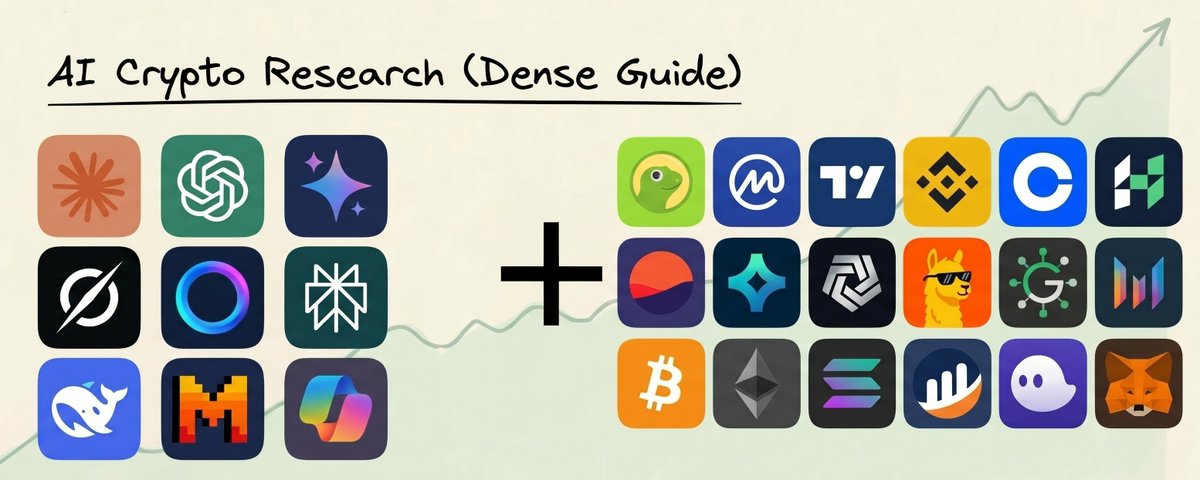
It's not often that you come across free money.
This Crypto x AI prompt is probably the closest thing you'll get to it.
You're welcome:


Crypto Consult & Solutions retweeted

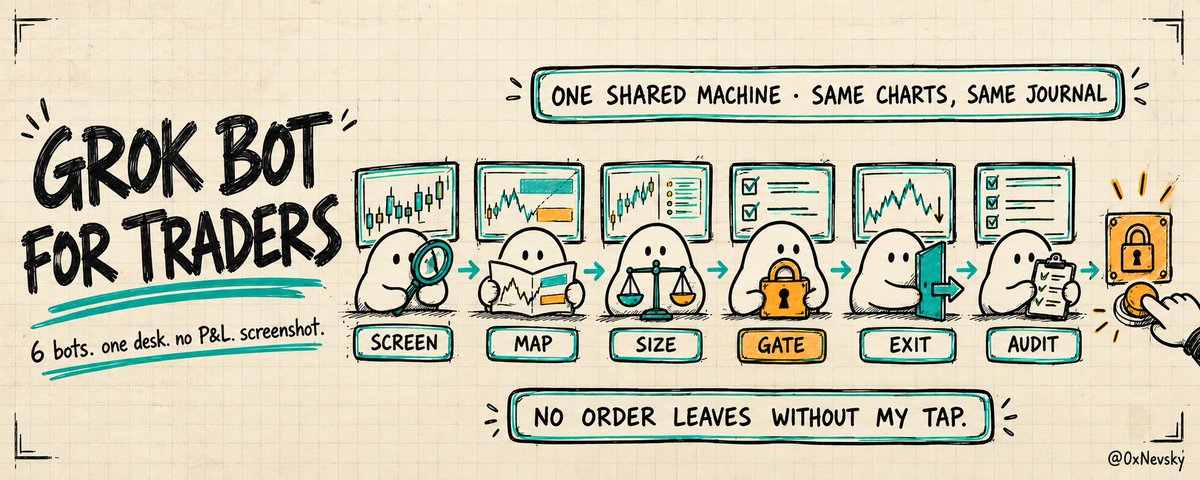
122X IN 18 HOURS. NO LUCKY COIN, NO MAGIC TRADE, JUST MY GROK BOT COMPOUNDING
$52 → $6,392. The first big close paid $37. The last one paid $1,685 at almost the same return, 118% vs 119%.
Most people try to grow a small account by hunting for the one trade that pays 1,000%. My bot’s best big close did 138%. The rest of the work was done by the base underneath getting bigger.
Grok Bot built itself a perp desk for the majors, BTC, ETH, SOL, AVAX and SUI. It doesn’t try to call the market, it trades whichever way the board is leaning. The day was red, so almost everything went short. The only long was a BTC bounce.
- AVAX short at 18x, +$37.73, 118% on margin
- SUI short at 15x, +$91.35, 117%
- SOL short at 23x, +$252.86, 138%
- BTC long at 30x, +$722.05, 116%
- ETH short at 28x, +$1,685.61, 119%
Look at the percentages, not the dollars. They barely move. The payout still grew almost 45x from the first close to the last.
The margin explains it. Every big trade gets about half the stack, leverage is picked for the move it expects, and the position rides to target and closes in one piece. Divide each profit by its return and you get the margin: about $32 on AVAX, about $1,416 on ETH. Same logic, much bigger stack.
The stack itself comes from the routine stuff. 180 trades, 154 green, 86% win rate. Small trades get cut fast and sized up as the balance grows, and together they netted about $3,550, 56% of the profit. Biggest one was +$212. The 26 losers cost $363 combined, worst one $58.
30x on BTC and 28x on ETH with half the stack in the trade is my own desk. Read it as a log, not a setup to copy.
Hour 18. $6,392 on the stack, and whatever the bot opens next gets sized off that number.