

A normie tackling macro economics, technical analysis and geopolitics. Follow me on Substack
Joined December 2017
- Tweets3.7K
- Following786
- Followers1.1K
- Likes17.7K


I've been spot on with every plot of the SPY chart since early may. But now the RSI is flat. I need momentum to plot. First target was the red zone, then plotted the blue zone and it's held as resistance since early August. It makes sense that we are stuck at resistance right before midterms I guess. Charts are in order from May through today.


Kung Fu retweeted

First-order thinkers counting widgets or aircraft carriers don’t see that barring a quick one-and-done war, which isn’t how things work out as we now see, it’s all going to be about sustained production and supply-chain replacement power.
That’s also why when you build a global “rules-based order” based on post-WW2 U.S. military power and the U.S. dollar, and the latter means ever-less U.S. industry, which then means a less powerful U.S. military production system,… the “order” destroys itself and we get disorder.
So, the U.S. is going back to an economic statecraft playbook it used before to develop that echoes parts of China’s current model.
Everyone else globally has to deal with that - but with China and America’s sheer scale, they’d better be a side, pick a side, or be picked and left on their backside.

The real threat to the United States in a looming war is not China’s ships or missiles. It is the fact that China can replace them faster than America can.
China already produces ships, electronics, machinery, batteries, and components at a scale the U.S. cannot yet match. In a prolonged Indo-Pacific war, that industrial gap decides whether the U.S. can replace damaged equipment, replenish munitions, and repair ships or whether the fight ends when the first stocks run out.
Washington is trying to reverse decades of industrial contraction. One new facility for Virginia-class submarine components will not operate until 2030. China did not wait. It built the manufacturing base first.
A military that cannot sustain itself does not deter. In the Indo-Pacific, production capacity is the threat the United States has not yet closed.
A naked gold statue of the American president is on display in the European Parliament this week.
It's called "The Orange Plague": an 8.5-foot gold-leaf Trump sitting on the back of a frail man. The Parliament's administrators approved it, and the MEP who sponsored it says anyone who objects is "thin-skinned" and has "no place on the world stage."
The artist says it targets America's "assault on the rules-based order." Well, you're damn right we are attacking that order. Here is why.
SPEECH
The globalist order: Europe's Digital Services Act and national laws police what you can say online. A German journalist got a seven-month suspended sentence for a meme of the interior minister. UK police make roughly 12,000 arrests a year over online posts.
The sovereign model: an executive order barring the federal government from censoring Americans' speech or spending taxpayer money to do it.
MONEY
The globalist order: trillions of dollars created offshore, through London, where the Federal Reserve can't see or control them.
The sovereign model: stablecoins backed one-for-one by Treasury bills, on rails American regulators can audit (the GENIUS Act).
ENERGY
The globalist order: Germany shut down its nuclear plants, bet its factories on Russian gas, then lost the gas. Its power now costs far more than ours.
The sovereign model: federal loans and Defense Production Act determinations to build out grid, gas and petroleum capacity at home.
SUPPLY CHAINS
The globalist order: "cheapest producer wins" gave us no new refinery in fifty years and left China with roughly 85-90% of rare-earth processing.
The sovereign model: tariffs paired with federal loans, like the $725 million rare-earth loan through the Department of War, and a Pentagon plan to be "mined in America, refined in America, built in America."
TRADE
The globalist order: decades of trade deficits while our factories moved overseas.
The sovereign model: tariffs and bilateral deals, and by one industry count about $1.6 trillion committed to new American factory construction.
And the people defending that order can't keep it running. France's borrowing costs just hit the widest gap over Germany's since 2012. It's also more than two weeks into riots that began as school protests, with roughly 6,000 arrests and hundreds of high schools shut, centered on suburbs where about two-thirds of residents are immigrants or their French-born children.
Mock the president if you want. Satire is fair game. But a continent that can't power itself, can't fund itself, and can't follow its own fiscal rules should check the mirror before unveiling another naked emperor.
cnn.com/2026/10/07/style/gol…

I've got crude plotted to $120 a barrel. If you look at the chart, I'm plotting the (A) wave using a fib extension to find the momentum resistance of (C) wave. The 1.272 fib extension of (A) typically gives you the overbought price of the RSI. The RSI is the oscillating indicator at the bottom of the chart. Overbought is the price when the RSI crosses above the 70 line. I've marked that with an arrow on the price and the indicator. The RSI measures momentum, and an overbought RSI typically means there is more momentum left to push the price upwards. So the chart isn't a price prediction, rather it's a plot of where momentum resistance is relative to price. I can't predict the price but I can plot momentum. Right now, momentum says $120 a barrel incoming.

The World We're Actually Living In
A plain-language map of what's happening in the global economy right now
The Federal Reserve raised interest rates today for the first time in three years. Unanimously — including a chairman the President appointed expecting cuts. They cited inflation, and they're not wrong that inflation is here. But the reason it's here has almost nothing to do with what raising rates can fix.
That disconnect is the whole story, and most coverage treats these as separate news items when they're actually one system. Here's the map.
Part One: The Physical Problem
Start with diesel, because everything downstream flows from it.
Diesel hit an all-time record of $6.23 a gallon on September 14th. Gasoline that same week sat around $4.15 — roughly 17% below its own 2022 record. Same barrel of oil, two completely different stories.
That gap is the single most important clue in the economy right now.
If this were a crude oil problem, gasoline and diesel would move together. Here's the proof they aren't: when diesel last peaked in June 2022, crude was $110-119 a barrel. On September 1st of this year, crude was $91.48 — cheaper than 2022 — and diesel was setting records anyway.
So, it isn't the oil. It's the refining — the ability to turn crude into finished fuel.
There's a number that measures exactly this, called the crack spread. It's the gap between what crude costs going into a refinery and what fuel sells for coming out. Before this year's conflicts it ran about $20 a barrel. On September 3rd it hit $108 — an all-time record, and it had never before sustained above $100. That's a fivefold increase, and it points at one thing: the crude is available, the capacity to process it is not.
Where the capacity went:
Ukraine has hit Russian refineries more than 70 times this year. S&P Global estimates about half of Russia's refining capacity was offline by the end of August, and Russia responded by banning diesel exports entirely. Russian diesel exports went from over 800,000 barrels a day in 2025, to 350,000 in June, to 50,000 by late July. Those barrels didn't get rerouted. They vanished from the world market.
Meanwhile the Strait of Hormuz has been effectively closed for six months by the Iran conflict. And this month a second chokepoint went down: Houthi forces completed a takeover of Yemen's entire Red Sea coastline, seizing the port of Mokha on September 10th and Perim Island in the middle of the Bab el-Mandeb Strait the following day. Saudi airstrikes failed to stop the advance. They've since stated that navigation remains open to everyone except Saudi ships — which means they aren't closing it, they're holding the ability to close it over everyone's head.
Then on September 11th, Saudi Arabia's energy ministry confirmed that its East-West pipeline was attacked and shut down — by drones launched from Iraq. That pipeline is how Saudi crude reaches the Red Sea while bypassing Hormuz entirely. So both of Saudi Arabia's workarounds were compromised in the same week. Crude jumped to $108.23 on the 14th.
American refineries are running at 98% of capacity, the highest since 2018. That's not a figure of speech. They are physically maxed out. There is no spare refining capacity idle anywhere in the world waiting to pick up the slack.
And we've been shrinking our own capacity for decades.
The United States hasn't built a new refinery in 50 years. The first one is breaking ground in Texas now and it's years from producing a drop.
California is the clearest case of a place that made it worse on purpose, and it's all documented. October 2024, the governor signs new mandates on refiners. Two days later Phillips 66 announces it's closing its Los Angeles refinery — 8% of state capacity, 900 jobs. April 2025, Valero announces Benicia is closing, citing among other things a record $82 million air quality fine. Those two closures took out roughly 18% of California's refining capacity, by the state's own accounting.
Then in March of this year, executives from Chevron and Marathon wrote directly to the governor and state regulators warning that further tightening would close what's left — and specifically flagged fuel security risk for West Coast military and aviation. That letter went out six months before diesel hit a record.
Why diesel matters more than gasoline: you can't substitute away from it. If gas gets expensive you carpool and combine trips. Diesel moves freight, rail, farm equipment, and construction. When diesel costs more, everything that gets shipped costs more — which is everything. One analysis found diesel prices explain 46% of the variation in trucking costs.
And the timing is about as bad as it gets. Gasoline demand seasonally declines after summer. Diesel demand seasonally increases into fall and winter for heating and harvest. Distillate inventories are already 14% below their five-year average, and early-August stocks were the lowest for that time of year since 1996.
Here's the fact that should end the argument about whether this is an overheating economy: actual diesel consumption is down 6% from a year ago. That's the Energy Department's own data. Record prices, falling usage. That's not demand running hot. That's a supply shortage meeting people who are already cutting back.
Part Two: Who Buys the Debt
The federal government owes about $40 trillion. It doesn't pay that down — it continuously rolls it over, issuing new bonds to replace old ones as they mature. That works as long as buyers show up.
They do show up. But there's a lot packed into how they show up, and this is where most explanations go wrong in one direction or the other.
The auctions are clearing. September's 10-year auction was genuinely solid — bids covered the offering 2.7 times, with foreign buyers taking 79% of it. Recent auctions have run right around historical averages. Foreign capital is actually absorbing more new issuance than the big Wall Street dealers are. So anyone telling you nobody will buy American debt is overstating it.
But clearing isn't the same as healthy. An auction will always clear at some price. The question is what price. That 30-year bond auction in August cleared at 5.216% — the highest yield since 2001. The buyers came, but they came at a price that costs the taxpayer enormously more than it did two years ago. A house always sells if you drop the price far enough. The sale isn't the story. The price is.
The weakness is specific, and it's at the long end. This is the part that reconciles everything. That strong auction was the 10-year. The 30-year has been the problem child — August's came in below average on demand, with dealers stuck holding 11.5% of it, and it priced worse than the market expected going in.
Demand is fine when you're lending for ten years. It thins out considerably when you're lending for thirty. That makes sense from the lender's side: you're watching diesel run up 75% in a year, and someone's asking you to accept a fixed payment for three decades. You want a lot more compensation for that, or you'd rather not.
So, what are the buybacks for?
An auction and a buyback happen in two different markets. Auctions sell new bonds. Buybacks purchase old ones that are already out there trading — often years-old issues that have gone stale and don't trade much anymore.
The problem the buybacks address isn't "can Treasury sell new debt." It's "can someone holding an old 30-year bond actually sell it without crashing the price." When the dealers whose job is making that market are already loaded up with long bonds they can't move, two things happen. Existing holders can't exit cleanly. And those same dealers bid less aggressively at the next auction, because their balance sheets are full.
That's the connection. Bad secondary-market conditions eventually poison primary demand. Treasury buying back old paper clears the dealers' inventory and frees up capacity to bid on what's coming.
On September 9th, Treasury doubled the size of those buyback operations — and it doubled them specifically in the 10-to-20 year and 20-to-30 year buckets. Exactly the maturities where demand is thinnest. That targeting is the tell.
There's a broader pattern underneath it, too: since 2024, Treasury has increasingly been borrowing short and buying back long. Funding the government with short-term bills while retiring long-term bonds. That's a choice, and it tells you where the demand actually is.
The honest summary: it's not a failed auction problem. It's a price and duration problem. Buyers exist, but they want the highest compensation since 2001 to hold long-term American debt, and the market for the long bonds already outstanding needs government support to function smoothly. Meanwhile, a 30-year mortgage is at 7.19%, because that's what long rates do when they climb.
Part Three: The Carry Trade
This is the piece almost nobody explains, and it's load bearing.
For decades Japan held interest rates near zero, making the yen the cheapest money on earth. So global investors did the obvious thing: borrow in yen at nearly nothing, convert to dollars, buy something that pays more — Treasuries, corporate bonds, stocks — and pocket the spread. This is the carry trade, and it operates in the trillions.
It works beautifully until the yen strengthens. Then you owe more than you borrowed and the math flips. You have to sell what you bought to repay the loan. And because everyone in the trade is positioned the same way, the exit is violent.
The yen hit a 40-year low against the dollar this summer. The Bank of Japan intervened directly in August — selling dollars, buying yen — and the yen jumped over 3% in a single day.
Here's the connection people miss. When Japan defends its currency, it needs dollars. Where does a country get billions in dollars on short notice? It sells US Treasuries. So Japan propping up the yen means Japan selling American long bonds — into exactly the part of the market that's already thinnest.
Europe has its own stake here. European institutions have been meaningful participants in these trades, and a slow unwind serves them far better than a fast one. Worth understanding that when countries pull in different directions on rate policy, there are real balance sheets behind those preferences, not just competing economic philosophies.
Part Four: What We're Trying to Build
Against all of that, there's a serious effort to rebuild American industrial capacity, and it deserves to be understood on its own terms.
The government has been using an old statute — the Defense Production Act, Title III — to directly finance strategic industry through loans, loan guarantees, and purchase commitments. Last year five simultaneous presidential determinations authorized the Energy Department to deploy it across coal, grid infrastructure, petroleum, and natural gas.
A concrete example: a $725 million federal loan to Energy Fuels, through the Office of Strategic Capital under the Department of War, to build rare earth and magnet production on American soil. Rare earth magnets go into everything from vehicles to guided munitions, and China dominates that supply chain almost entirely. That loan is a direct attempt to change it.
This is real capacity, not a press release. Welders, electricians, and machinists in towns that haven't seen a plant open in decades.
But here's the tension. Those government loans are financed against the government's own borrowing costs. Every time rates go up, every one of those industrial loans gets more expensive to extend. The policy meant to fight inflation makes the capacity rebuild — the only thing that actually cures a supply shortage — harder to finance.
Part Five: The Piece That Just Broke
Last one, and it happened quietly this month.
There's been a real effort to build new demand for US government debt using digital dollars — stablecoins. A stablecoin is a digital token backed one-for-one by real assets, mostly short-term Treasury bills. As stablecoin usage grows, so does demand for the bills backing them. It's a genuinely elegant idea: a buyer for government debt that grows with transaction volume rather than with interest rates, meaning it doesn't dry up when rates fall.
The GENIUS Act, which set the reserve rules, is law and operating. The companion bill — the CLARITY Act, which would have given the broader digital asset market a clear legal framework — failed in the Senate this month. Couldn't get the votes.
With midterms in November and the calendar what it is, some analysts put the next realistic window for this legislation at 2030.
So the mechanism designed to relieve pressure on government borrowing just lost its legal runway, at exactly the moment the pressure is worst.
Putting It Together
The whole picture:
We have a physical shortage of refining capacity that takes years to fix. That shortage is driving fuel prices, which drives up the cost of everything shipped. The Fed, seeing inflation, raised rates — a tool built to cool an overheating economy, applied to an economy where diesel consumption is falling 6%. Higher rates don't build a refinery, don't reopen a strait, and don't produce a gallon of diesel. What they do is raise the government's borrowing cost on $40 trillion, raise the cost of the industrial loans meant to rebuild capacity, and push mortgages to 7.2% for families already absorbing a 75% jump in diesel.
Meanwhile bond buyers are demanding the highest yields since 2001 to hold long-term debt, Japan is selling American bonds to defend its currency, and the one new mechanism that could have created durable demand for Treasuries just died in the Senate.
None of those is a crisis alone. Together they're a system where every available lever operates on the wrong variable.
What Would Actually Help
The honest version: cutting rates wouldn't fix the long end either — that's driven by inflation expectations, not Fed policy. But cutting would make the industrial loans cheaper, lower the government's debt service, and stop stacking a demand shock on top of a supply shock. Treasury already has its own tool for the long end in the buyback program. Two problems, two instruments, neither pretending to solve the other.
The refineries and the strait resolve on their own timeline regardless of what any central bank does.
That's the world we're in. A system under real strain, where the institutional reflex is to reach for the tool that fits the institution rather than the one that fits the problem.


Bessent's 5 Principles of American Economic Statecraft (Treasury, June 23, America 250 Gala)
National capacity first — "The nation that cannot produce what it needs is not truly secure." Hamiltonian call to rebuild domestic capacity in semiconductors, AI, quantum, critical minerals, shipbuilding, and pharma. Production is power.
Openness matched by reciprocity — Market access is no longer unconditional. Partners can't sell into the US while closing their own markets, taxing American firms, or forcing tech transfer. Benefits now carry obligations.
America writes the rules of the next economy — Standards become strategy. Explicitly names digital assets, stablecoins, tokenization, and new payment systems as dollar-strengthening tools the US must lead, not cede.
Financial leadership as statecraft — The dollar's dominance is an instrument of power. Sanctions, illicit-finance enforcement, and financial-system integrity deployed with discipline and tied to strategy.
Statecraft must serve the American people — "Working families not merely consumers of what the world produces, but participants in what America builds." Gains shared "beyond the boardrooms and trading floors." No community accepts permanent decline as the cost of global efficiency.
home.treasury.gov/news/press…
The Dollar Milkshake Comes in Lanes
"Dollar up" tells you nothing until you know which lane — and who's in it. Each has a distinct trigger, FX fingerprint, and buyer:
Yield lane — differential widens (hawkish Fed). Funders sold: CHF, SEK, JPY weaken, dollar firms without spiking. Buyer = private carry/spread arbitrage. Active today.
Fear lane — risk-off. Haven bid: CHF strengthens, dollar spikes. Buyer = private flight-to-quality. Sovereigns here usually sell USTs to defend their currency — official supply, private demand, same lane.
Funding lane — dollar shortage. Cross-currency basis blows out. Buyer = distressed private, backstopped by sovereign swap lines (Fed→foreign CBs).
Reserve lane — structural hedging. Slow, FX-reserve correlated. Pure sovereign — and it's the one in retreat.
The tell that sorts them: watch the haven. A weakening franc isn't fear, it's carry.
Here's why it matters. Somebody has to buy the long end of the Treasury market, and the who is quietly changing. Central banks — the old reliable buyers — are stepping back, either selling reserves outright or dumping Treasuries to defend their own currencies. The buyers filling the gap are private: yield chasers and money running for cover.
That's a more fragile bid than it looks. Central banks held for decades. Private money holds for a reason — and every reason has an off-switch. The yield chasers stay until the spread narrows. The scared money leaves when things calm down. Take away the reason, take away the bid.
So when someone asks who's funding the long end now, the honest answer is: depends which lane is open, and whoever's in it can leave.
🤖 Made with AI


From Checkout Counter to Factory Gate
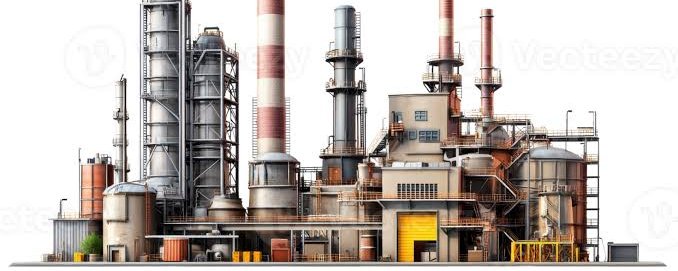
For fifty years America ran a suicidal experiment: ship the factories overseas, buy everything cheap, and call it victory if Walmart shelves stayed full. The financial class got filthy rich. Industrial towns got gutted. We measured "success" by consumption, not production. Treasury Secretary Scott Bessent just called it what it was: While America Slept.
In his speech this week, Bessent nailed it: "In reducing economics to consumption, we forgot production. We measured abundance at the checkout counter rather than the factory gate."
The old way destroyed us.
It turned America into a nation that made financial claims instead of real things. We became dependent on rivals for chips, medicine, minerals, and defense basics. Cheap imports masked the rot — hollowed-out communities, lost skills, fragile supply chains, and working-class wages that got replaced by welfare claims and the opioid crisis. Wall Street balance sheets boomed while factory floors died. That wasn't efficiency. It was managed decline.
The new path actually rebuilds.
Bring production home. Use tariffs to protect American workers instead of subsidizing our own destruction. Build strategic reserves of critical stuff we can't run out of — drugs, minerals, energy. Align trade, industrial, and national security policy so they reinforce each other instead of sabotaging each other. Bessent's line says it all: "Productive capacity is power."
This is the old American System returning — Hamilton designed it, Lincoln executed it, we abandoned it for the globalist extraction model. Now it's being restored.
The difference is brutal and simple:
An economy built on consumption rewards whoever owns the assets.
An economy built on production rewards whoever does the work.
One hollows out the middle class.
The other rebuilds it.
America spent fifty years measuring wealth at the checkout counter. That era is over. The factory gate is reopening.
share.google/dnUI4VEe9hp5LvJ…
