

PA-S | Ortho bro here to explain how injuries actually work and to share other health knowledge | Mechanisms, anatomy, timelines, never an official diagnosis
United States
Joined January 2024
- Tweets7.7K
- Following121
- Followers5.4K
- Likes5.5K


The Body Explained | Hockey Injuries retweeted
Scary play as Eetu Luostarinen crashed hard into the boards
He returned to the game which is great news but let’s break down some general possibilities
His left ankle inverts at first which could cause any ankle sprain or fracture
Main concern of course on the boards and his whole left side
Strong mechanism of injury for AC joint sprains/separations, dislocated shoulders, broken arms/wrists especially how his left arm seems to be exposed

The Body Explained | Hockey Injuries retweeted
Morrissey has been downgraded to week-to-week
Leads to the belief that this is more of a wrist sprain that isn’t getting much better during this first week
It is important to redo imaging for a recheck of potentially missed scaphoid fracture as well or carpal ligament injuries

The Body Explained | Hockey Injuries retweeted

The contact appears to be near Taylor Hall's left rib cage. A rib fracture or injury to the surrounding structures is certainly possible.
But watch his head snap into side bending and extension during the collision. That raises concerns about a potential cervical injury or concussion.
Also worth considering his history of left shoulder injuries:
• 2012: Left shoulder labral surgery.
• October 2023: Injured the same shoulder following a hit from Brandon Carlo, then aggravated it again later that month.
Given his history and the location of this latest contact, the left shoulder and surrounding structures are worth considering as well.

The Body Explained | Hockey Injuries retweeted

FROZEN FRENZY IS HERE! 🚨
SO IT'S TIME TO LIGHT THE LAMP
For EVERY TEAM who scores their first goal tonight, we're giving away $250 BONUS BETS!
For a chance to win:
➀ REPOST
➁ REPLY with a screenshot of a FanDuel betslip for any 10/13 NHL game
📝 go.fanduel.com/FrozenFrenzy
The Body Explained | Hockey Injuries retweeted
Great news for Conor Bedard who originally had a 4 month return timeline when he first injured the left shoulder
It was never known what the exact injury was but it was likely a shoulder dislocation with potential labral or other soft tissue damage
These typically have 4 month return to play timelines but can obviously progress if testing standards are met
This is his second shoulder injury, one on each side that were pretty similar
As a Blackhawks fans, hope the kid can stay healthy (and help Jeff Blashill keep his job)

Connor Bedard: Could return Tuesday rotowire.com/hockey/player/c…

The Body Explained | Hockey Injuries retweeted
Here is a good return to play protocol for anterior shoulder stability that Conor Bedard may have had a version of
We didn’t know his injury but the accelerated return and initial timeline leads to a shoulder dislocation/soft tissue injury being likely
These is a dominant concern for reinjury, especially given the faster return
Ice hockey has the single highest recurrence of this type of injury than any other sport!
This depends on a lot of factors such as age, extent of injury, and type of procedure done
Still good for Bedard and the struggling #Blackhawks though


The Body Explained | Hockey Injuries retweeted
A pretty classic mechanism for an AC joint sprain/separation, similar type to Ryan Lindgren a couple days ago
It is the most common shoulder injury in hockey and mostly caused by the compression into the boards that you can see in the video
Other differentials would include clavicle fracture, shoulder subluxation, rotator cuff tear/strain, labral tear, humerus fracture and have to look at the head as well

The Body Explained | Hockey Injuries retweeted
Scary moment here in the Wild-VGK game, especially after Brock Faber’s recent injury
Strongest and most likely concern is a concussion, but some education for those out there
‼️Warning Signs of Head Injury
Loss of consciousness
Seizure
Worsening headache
Persistent vomiting
Limb weakness or numbness
Double vision
Neck pain
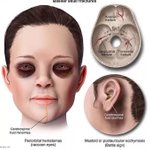
Signs of basilar skull fracture (comments)
Other diagnoses can be skull fracture, hematoma, facial bone fracture
Important NOT to miss: intracranial bleeding, basilar skull fracture, spine fracture
Sturm is rightfully not returning tonight and hoping for the best
The Body Explained | Hockey Injuries retweeted
Rasmus Dahlin didn't miss a single game in his first 106 NHL appearances. Then came a concussion in November 2019.
Here's his injury history since:
Feb 2020: Upper-body injury. Missed 2 games.
Feb 2022: Lower-body injury. Missed 1 game.
Feb 2023: Undisclosed injury. Missed 3 games.
Mar 2023: Upper-body injury, listed by some databases as upper back.
Sept 2024: Injured his back during a routine passing motion early in training camp.
Dec 2024: Recurrent back spasms. Missed 7 games. Lindy Ruff confirmed the connection to September.
Oct 2026: Apparent noncontact injury while shooting. Reached toward his back leaving the ice.
The similarities between the 2024 and 2026 mechanisms are particularly interesting.
Research has linked concussion to increased subsequent musculoskeletal injury risk, potentially through changes in neuromuscular control.
Most research examines much shorter timeframes, and we don't know the mechanisms of several of Dahlin's earlier injuries.
After more than 20 years working with athletes, I've learned not to dismiss previous injuries when evaluating current problems.
Time since injury doesn't necessarily tell us how well an athlete has reconditioned.
Day to day for Dahlin which could lead to potential back spasms as he was reportedly grabbing at the back
Dahlin has a long history of it per @ReconHub, good catch
The Body Explained | Hockey Injuries retweeted
Interesting situation with Jacob Melanson of the #SeaKraken
He suffered from an “anterior mediastinum hematoma with vascular pseudo aneurysm”
What that means is that a blood vessel in his chest was damaged allowing to collect behind his breastbone
Some escaped blood formed a pocket held in place by other tissue rather than the normal vessel wall
This can be very serious as the damaged vessel can bleed more and the blood can press on nearby structures
Prayers are up for Melanson and hoping for a fantastic recovery


The Body Explained | Hockey Injuries retweeted
🍃Kratom has been making the news a lot recently.
It sits on gas station shelves, so what is the big deal?
Why is it a threat?👇🧵

The Body Explained | Hockey Injuries retweeted
📖ADHD focus often isn’t about “trying harder”, it’s about making time visible and tasks small enough to start.
💡Try Pomodoro:
Pick 1 specific task
Set a timer for 10–25 minutes
Work until it ends
Take a 3–5 minute break; the key with the break is to make it BORING, do not scroll TikTok or do any distracting activties
I suggest going for a walk
Repeat
If 25 minutes feels impossible, start with 10. The goal is a repeatable win, not perfect focus.
Pomodoro is a planning tool, not a replacement for ADHD treatment or accommodations.

The Body Explained | Hockey Injuries retweeted
These came straight from my new book, "Making Sense of Perimenopause", but can be used for anything!
If you or women in your life are struggling during this time, get them a plain-English guide to navigate it here!👇
amazon.com/dp/B0HJPQ7ZWM

The Body Explained | Hockey Injuries retweeted
Bring these to the next appointment when discussing any condition!
Track symptoms and note when they happen and know exactly what you want out of different sleep options
Data and tracking will get you heard more than guessing!


The Body Explained | Hockey Injuries retweeted
🦴In regards to Jaxson Dart's recent injury, here are some things to know about the MCL as the potential main injury....
🔹The MCL is the main restraint to valgus stress, which is what you can see is disrupted when he was hit
🔹The semimembranosus and pes anserinus tendon add to the stabilization
⚕️Injury wise...
🔹Typically a valgus force to the knee causes injury (as seen in the picture)
🔹Younger patients may see bone injuries or MCL avulsions, which may be seen in Dart given the recent update being worse than originally thought
Grade 1 - microscoping tearing
Grade 2 - partial disruption/tear
Grade 3 - full tear
Symptoms likely include inner knee pain and tenderness, bruising, and instability depending on the grade
🩺Management will depend on severity. Almost all isolated grade 1 and 2 injuries do not need surgery as it heals very well on its own.
Avulsions and full tears generally need surgery as well as when the injury is combined with ACL tears.


The Body Explained | Hockey Injuries retweeted
☹️Jaxson Dart and The Unhappy Triad
Grade III complete MCL ruptures carry roughly a 78–80% rate of concomitant ligament injury, of which about 95% involve the ACL.
Meniscal injury accompanies roughly half of combined ACL–MCL injuries!
These 3 injured at once is known as the unhappy triad!
The MCL–ACL combination is the single most common multi-ligament pattern.


The Body Explained | Hockey Injuries retweeted
Brain fog. Aching knees. Heart flutters. Itchy skin. 3am wake-ups.
Looks like five problems. Often it's one.
Your ovaries make estrogen. Its receptors sit in your brain, joints, blood vessels, skin, and sleep centers.
When the signal changes, it changes everywhere.
