

Neurologist - Neuroscience - Parkinson
Torino, Piemonte
Joined July 2019
- Tweets553
- Following565
- Followers743
- Likes2.6K




Carlo Alberto Artusi retweeted

Adults with the highest levels of physical activity at midlife and late life had 41% and 45% lower risk of all-cause #dementia, compared with those with the lowest levels of physical activity. ja.ma/4i732iN

ALT JAMA Network Open article: 'Physical Activity Over the Adult Life Course and Risk of Dementia in the Framingham Heart Study' by Francesca R. Marino et al. Published November 19, 2025.
Carlo Alberto Artusi retweeted

Viewpoint: Routine brain health screening, interdisciplinary teams, and policy reforms addressing neurotoxic exposures may shift neurology toward primary prevention—reducing disease burden across populations. ja.ma/49Ss8Qc

ALT Article titled 'Preventive Neurology Isn't a Pill; It's a Plan' by Kevin N. Sheth, MD; E. Ray Dorsey, MD; Michael S. Okun, MD, discussing the importance of preventive measures in neurology and the need for a shift towards prevention rather than just treatment.
Carlo Alberto Artusi retweeted

GBA1 mutations and DBS: Folks, there’s more to the story. GBA1 refers to a gene that makes a product to help cells break down certain fats. Mutations in GBA1 are the most common genetic risk factor for Parkinson’s and can influence both motor and cognitive outcomes. Avenali and colleagues describe in a new paper in Neurology that folks carrying GBA1 variants can still benefit from deep brain stimulation w/o an additional cognitive penalty. The study, part of the Italian PARKNET project, followed more than 600 individuals across 14 centers to explore how genetics intersected w/ long-term DBS outcomes.
Key Points:
- DBS provided strong and sustained motor improvements in Parkinson’s regardless of GBA1 mutation status.
- Cognitive decline in GBA1-associated Parkinson’s was driven by the genetic variant itself, not by DBS surgery.
- Quality of life improved after DBS and remained stable over time, while non-operated GBA1 carriers experienced worsening function and higher medication needs.
My take: This paper nicely outlines how we should not jump to the conclusion that someone 'should not' receive DBS surgery solely because of their gene status. Jim Beck from Parkinson's Foundation led a great discussion on this topic at the DBS Think Tank . Here are 5 points that resonated w/ me about this new paper: 1- Having a GBA1 mutation does not mean you cannot have DBS surgery. 2- DBS improves movement can reduce medication burden even in folks carrying GBA1 variants. 3- Cognitive decline occurs in GBA1-associated Parkinson’s, however, it progresses at a similar rate whether or not surgery is performed. 4- Quality of life tends to be better and more stable after DBS when compared w/ those who decline or defer surgery. 5- Health care providers should continue to personalize care and consider DBS as part of the treatment plan for eligible GBA1-positive individuals, especially those experiencing motor fluctuations or medication related side effects.
neurology.org/doi/10.1212/WN…
#parkinson @ParkinsonDotOrg @FixelInstitute @movedisorder @PdAvengers @SfNtweets @MichaelJFoxOrg @DBSThinkTank

Carlo Alberto Artusi retweeted

Excited to share our latest publication in Lancet Neurology: "Advances in diagnosis, classification, and management of pain in Parkinson’s disease". Grateful for this great collaboration! 🙌
🔗 sciencedirect.com/science/ar…
#Parkinsons #PainManagement
Carlo Alberto Artusi retweeted

Neurological conditions now leading cause of ill health and disability globally, affecting 3.4 billion people worldwide, suggests GBD study in @TheLancetNeuro
On #WorldBrainDay:
➡️ Read the paper: hubs.li/Q02GWZ5F0
➡️ Explore the infographic: hubs.li/Q02GWMJ00

Carlo Alberto Artusi retweeted

People with 2 copies of APOE4 were known to have a high risk of #Alzheimers.
Today that changed to nearly 100% full penetrance
@NatureMed
nature.com/articles/s41591-0…


Carlo Alberto Artusi retweeted
Big news with positive result announced for a randomized study of a GLP-1 agonist for Parkinson's just released @NEJM. A new era for Parkinson's or alternatively, more questions than answers raised by Meissner and colleagues.
Key Points:
- This multi-center French trial studied Lixisenatide which is a glucagon-like peptide-1 receptor agonist used for in diabetes.
- The trial was a phase 2 double-blind randomized and placebo-controlled.
- The authors wanted to know whether this drug would affect the progression of motor disability.
- Who did they study? Parkinson's treated and with symptoms less than 3 years.
- If you enrolled, you received daily subcutaneous lixisenatide or a placebo.
- The primary outcome was a change in the motor PD scale called the MDS UPDRS when on dopamine medication after one year.
- There were 78 people in each group.
- The motor scores slightly improved in lixisenatide and worsened by 3 points in the placebo group.
- There was a very short 2 month washout period where those getting the active drug stopped it and the benefit persisted.
- Nausea was the most common side effect and occurred in about 1/2.
My take: We have continued our multiple year love affair with various diabetes drugs and their potential links to Parkinson's disease, however the current study results are the most promising. Interpret with caution: there is a number called the 'clinically meaningful threshold' and those reading this study should appreciate that the results 'fell short' of this important metric. There will certainly be many arguments among experts as to whether this study met a minimum threshold for neuroprotection, and my personal opinion is that it did not. Here is an important message: In my view do not rush to prescribe this drug or try to creatively acquire it. We have been down this road many times including leukemia drugs, cough syrups and lithium. The data is not yet there to proceed to prescribing. More importantly, the weight loss associated with GLP-1’s is not desirable in the majority of cases of Parkinson’s disease and the nausea and vomiting will not be a welcome symptom. We must ask the important questions as to why the non-motor outcomes did not change, and why the other GLP-1 studies have been negative? Is there a blind spot here we are missing? Please appreciate this was trialed in only very early Parkinson's disease and thus there may be 'generalizablility' concerns. I do not want to diminish a great paper with a randomized design and encouraging data, however let's not rush to the drug store counter. Perhaps we should consider ad augusta per angusta – to glory through narrow spaces by continuing to follow the data with diabetes drugs and see where it leads and what it teaches us.
nejm.org/doi/full/10.1056/NE… #Parkinsons #OZEMPIC #diabetes #GLP1

Carlo Alberto Artusi retweeted

PRD Editor Dr. Hubert Fernandez pays tribute to the 45 individuals in the PRD 100 Club: prd-journal.com/article/S135…. A heartfelt thanks to these 45 experts who have reviewed more than 100 or more papers for Parkinsonism and Related Disorders!
#PRDjournal

Carlo Alberto Artusi retweeted

Saw another patient with sensory neuronopathy who had been misdiagnosed with functional neurological disorder.
What is sensory neuronopathy, and why do we keep missing it? A #tweetorial.
1/

Carlo Alberto Artusi retweeted

From a #parkin #early-onset #parkinson cohort, an outline on #pregnancy and clinical changes due to fertile life. #gendermedicine #young-onset #yopd #eopd @ArtusiScience link.springer.com/article/10…

Carlo Alberto Artusi retweeted

One week of cerebellar transcranial direct current stimulation (ctDCS) in a randomized single-blind, sham-controlled crossover trial of Friedreich's Ataxia (n=24) led to improved SARA scores and fMRI findings confirming target engagement. loom.ly/LXBXBfQ

Carlo Alberto Artusi retweeted

Can GPT-4 solve really hard medical cases and come up with a good list of differential diagnoses?
@zahirkanjee @byrondcrowe and my study is out in @JAMA_current , and the short answer is, “Yes.”
But what does this all mean? 🧵⬇️ xitter.cf/JAMA_current/status/16…

In this study, a generative artificial intelligence (AI) model provided the correct diagnosis in its differential in 64% of challenging cases and as its top diagnosis in 39%. ja.ma/3X5M6i9
Carlo Alberto Artusi retweeted

"Accuracy in defining endophenotypes of “typical #Parkinsons” across different but interrelated disciplines will enable better definition of variants & their stratification in therapeutic trials, a prerequisite for breakthroughs in precision medicine"
movementdisorders.onlinelibr…

Carlo Alberto Artusi retweeted

Globally, disability due to #Parkinsons is increasing faster than for any other neurological disorder 🧠
@ArtusiScience (@unito) comments on quality of life in patients with Parkinson’s disease: ow.ly/oWHE50NAOyz
#WorldParkinsonsDay #TheSpark @ParkinsonsUK @movedisorder
Carlo Alberto Artusi retweeted
AutoPosturePD(APP):a new software tool for automatic, accurate assessment of axial postural abnormalities in #PD, based on patients' pictures. @ArtusiScience @kailashbhatia @mmerello loom.ly/kSK72Ek

Carlo Alberto Artusi retweeted

The Sound of Footsteps!!!
“it's possible to learn more about neurologic status from watching a patient walk than from any other single procedure”
Russell Nelson DeJong (1907-1990)
#MedTwitter #neurotwitter #EndNeurophobia
1/

Carlo Alberto Artusi retweeted
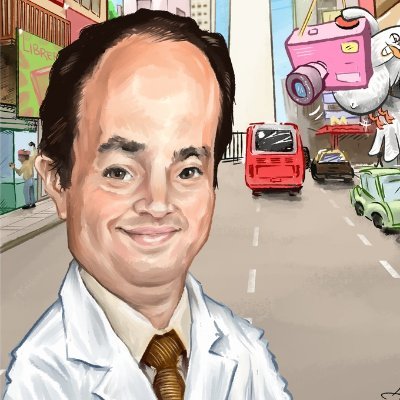
Higher levels of soluble Aβ42 predict normal cognition better than lower amyloid burden among #Alzheimers-causing mutation carriers. Key data and implications from our latest analysis (1/9). @journal_ad
content.iospress.com/article…

Carlo Alberto Artusi retweeted

In case you wondered: #DBS-localization by @leaddbs varies only by ~0.6 mm across (even unexperienced) raters and imaging modalities! Check our recent publication w @andreashorn_ @AA_Kuhn @simonoxen @SiobhanEwert @Steiner_LA in @NeuroImage_EiC: sciencedirect.com/science/ar…

Carlo Alberto Artusi retweeted

Very disappointing, but as we said here again and again, expected. The results from two trials of a-synuclein antibodies have been published today. Both failed. The failure is not just the final results, the failure is of the concept.
nejm.org/doi/full/10.1056/NE…

Carlo Alberto Artusi retweeted

Epstein-Barr virus is the likely cause of #multiplesclerosis, research confirms. ms.spr.ly/6015jJgx5