

Neurologist - Neuroscience - Parkinson
Torino, Piemonte
Joined July 2019
- Tweets553
- Following565
- Followers743
- Likes2.6K





A masterful synthesis of a complex and critically important concept that remains too often neglected

What resonates most with me about this important paper by Jhodi Webster and Ashley Harms is that it challenges one of the assumptions that may be holding back progress in Parkinson’s disease: that we can treat a complex brain disease by targeting a single abnormal protein. The authors remind us that more than half of Parkinson’s brains examined after death harbor overlapping pathologies, including alpha-synuclein, tau, and amyloid-beta, and that these proteins may interact with one another and with the immune system to accelerate neurodegeneration and cognitive decline. I have long believed that Parkinson’s is not one disease, but many biological processes converging in the same person. What particularly caught my attention was the discussion of microglia, T cells, and chronic neuroinflammation, which may help explain why therapies targeting alpha-synuclein alone have repeatedly disappointed us. The lesson from cancer treatment is especially compelling: sometimes we need to attack several biological pathways simultaneously to meaningfully change the course of a disease. This does not mean combination therapies are proven to work in Parkinson’s, but it does suggest that our next generation of clinical trials should be smarter, more personalized, and designed around the biology of each person. We need to stop expecting one magic bullet to solve Parkinson’s. Our people (persons w/ disease) deserve treatments that recognize the full complexity of their disease.
nature.com/articles/s41531-0…

100
Targeting Aggregated α-Synuclein in Parkinson’s Disease: The Prasinezumab Story ctanalytics.substack.com/p/t…
3
226
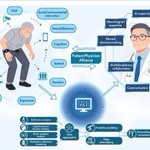
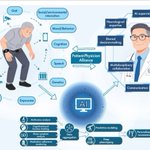
Technology will transform neurology:
What will the role of the neurologist be in 2050?
We discuss the future of movement-disorders care in this perspective.
Just published
rdcu.be/fyA5E
#Neurology #MovementDisorders #DigitalBiomarkers
@silviaG15515
1
2
246

A Summary of the MDS ‘Statement of the MDS on Biological Definition, Staging and Classification of Parkinson’s Disease’ movementdisorders.org/Moving…
Agreed!
1
320
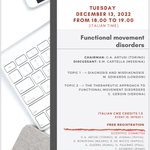
Today, another awesome Moviews webinar.
Prof. Isaias and Jorik Nonnekes will talk about freezing of gait!
Not to miss!
itlavmeeting.it/Home/Iscrizi…


The final part of the post is the most important! Very well-said and wise comment on the differences about what we (little) know 'at a group' level and what we can learn by single cases and long-term experience. Still, it is important keep pushing the research on surgicogenomics
How will DBS go if you have a genetic form of Parkinson's disease? Great new study on the
motor and non-motor DBS outcomes using a multi-scale meta-analysis by Asimakidou and colleagues @MDCP_Journal.
Key points:
- The authors point out we have high-throughput sequencing techniques so why not genetically stratify Parkinson's folks?
- They opine this could be added to selection procedures, levodopa challenge testing and may even predict outcome.
- They looked at 380 genetic PD cases.
- Their conclusion was that genetic PD were as a group 'good candidates.'
- Outcomes may differ by mutation.
- PRKN benefited most by motor function, daily dose medication and motor complications.
- GBA carriers 'appeared' to be 'more prone to cognitive decline after subthalamic nucleus DBS.'
- Possible cognitive worsening in SNCA carriers.
- Across the board pre-operative levodopa responsiveness and a younger age of onset had better outcomes, which we already knew.
My take: Dr. Foote and I are now into our 3rd decade of performing DBS and guess what? We did not always have genetics and most of the time we operated without this information. Over time, we learned that the multidisciplinary evaluation and the careful examination for Parkinson's disease is adequate to make DBS decisions even without genetics. We also learned that folks with GBA mutations can do very well with DBS and that we should be careful not to mix 'general information at a cohort level' with individual level data. Bottom line: If you have a gene underpinning your Parkinson's disease you will likely do well with DBS, however this does not obviate the need for a multi-disciplinary evaluation. So, please take the genetics in DBS candidates with cum grano salis, with a grain of salt, and if you decide to use the information, pair it with other factors such as where a person may be in the progression of their disease.
movementdisorders.onlinelibr… #Parkinsons #Genetics #geneticcounseling

3
282
BoNT can be of help in maintaining posture stability over time. Most patients opted to continue BoNT treatment >12 months.
doi: 10.3390/toxins15090566.
@MDPIOpenAccess

12
500
Very interesting study! A new biomarker for PD severity?

How interesting, did you know that increased size of choroid plexus, that unpleasant looking mass of vessels in the cerebral ventricles, is linked to neurodegeneration severity in Parkinson's disease.
If you're as interested as I am, read more here 👇 👇
bit.ly/3r8zxqi


3
344
New congress of the Italian #Parkinson Society, new #young group, same enthusiasm. Passion, work and fun.
@LimpeParkinson

Should we offer deep brain stimulation to Parkinson’s disease patients with GBA mutations?
#ParkinsonsDisease #dbs #Genetics
frontiersin.org/articles/10.…

The importance of Dysphagia in advanced #Parkinsonsdisease.
1) Almost 50% of PwP treated with LCIG (Duodopa/Duopa) developed dysphagia within a mean of 3 years.
2) Dysphagia was the main determinant of mortality in PwP treated with LCIG.
authors.elsevier.com/a/1glwV…


Free registration at fadlimpe.it or follow the link: itlavmeeting.it/Home/Iscrizi…
Home Care Design for #parkinson. A source of information for a better life at home with PD. Useful for patients, doctors and institutions. The book is freely downloadable, now in English!
series.francoangeli.it/index…
An important project for people living with #Parkinson. The book will be soon translated in English!

🏠Home Care Design for #Parkinsons program: developing guidelines for designing a functional and safe home environment for people with PD
@ArtusiScience (@unito) discusses: ow.ly/UgOK50LHg11
@movedisorder #Neurology #NeuroTwitter #MDSCongress
Extremely happy to share this study with the scientific community! Thanks to all co-authors for their support and effort during difficult times. And thanks to @MDCP_Journal for being the house of this study!

Visuospatial deficits are associated with Pisa Syndrome but not Camptocormia in PD, suggesting different pathophysiologic underpinnings of these two postural abnormalities in PD. @ArtusiScience @alessandro5161 loom.ly/UpLqZUA
5
"Gait and axial postural abnormalities correlations in Parkinson's disease: A multicenter quantitative study" 🚶🧍is now published on @ParkinsonismD and freely downloadable for a few days.
authors.elsevier.com/a/1g0GS…
It was quite a tiring month, but I had the opportunity to travel, meet friends and colleagues, teach, and learn a lot. #SeptemberSpecial #Neurosciences #Parkinson


8
Neuroinflammation, IPSC, organoids, and other frontiers of research on #parkinson in the new Moviews webinar. Join us!

Are dopa-resistant axial symptoms really dopa-resistant in #parkinson ? Can we improve freezing of gait by increasing the rate of duodopa infusion?

4