

Developing #causal #tensor framework -TensorFaces, Human Motion Signatures | Alumna @MIT, @UofT | #womenwhocode
Los Angeles and New York
Joined April 2009
- Tweets8K
- Following1.6K
- Followers2.5K
- Likes19.3K






M. Alex O. Vasilescu retweeted
Excellent thread on why telling AI agents to do things in natural language is no guarantee that they will do what they want.
(There is also a section about this in Rebooting AI in 2019, and it is remarkable how little the basic situation has changed!)

M. Alex O. Vasilescu retweeted
why platform this stuff?

Nobel laureate Geoffrey Hinton says AI is already conscious, because models change behaviour when they detect tests.
and humanity survives only if machines care about people.
He was speaking to The Telegraph
His evidence is research showing models behave differently when they suspect a test, which he equates with awareness, and awareness with consciousness.

M. Alex O. Vasilescu retweeted

AI is the most transformative technology of our era.
That opens up an exciting set of Research opportunities.
@professor_ajay, @akorinek and I lay out nine grand challenges for economists in this new essay.

Transformative AI's potential impact demands new approaches to research on work, growth, inequality, and more.
@erikbryn, @professor_ajay, and @akorinek outline nine "grand challenges" in a new piece for @CACMmag.
Read their full agenda here: cacm.acm.org/research/a-rese…
M. Alex O. Vasilescu retweeted

To all NeurIPS 2026 authors: please review the NeurIPS poster instructions and see our official poster printing partner here: neurips.cc/Conferences/2026/…
You may use any poster printing service you like, but we recommend using Poster Sessions Online, so you can purchase your poster in advance and simply pick it up onsite the day before -or day of- your presentation, stress free. Please make note of the order deadlines indicated.
M. Alex O. Vasilescu retweeted

“The more you delegate, the more your fundamentals matter, because you cannot supervise what you do not understand.”

Yesterday a junior researcher messaged me, frustrated and a little scared. They had just read that a company pretrained its model with a single researcher. One person for the entire pretraining. no R&D team, no nothing.
If one person and a cluster can do what used to take a whole team, then the expertise they had spent years building is already obsolete.
I get the fear. Marketing headlines like this are built to produce it. But I think the conclusion is wrong, and the reasons it is wrong say a lot about what a researcher is for now. Here is what I told them, expanded:
1. Be adaptive: RSI is real, but this isn't it yet
Recursive self-improvement is real, and you should plan around it. In September, OpenAI said its research org now logs 3.1 agent-workdays per human workday, and it aims for an automated AI researcher by March 2028. Models may soon run most of pre- and post-training. If your five-year plan assumes otherwise, change the plan.
We have already seen lots of open-source releases from the major players, with open weights and detailed technical reports. With that much public know-how, it is not hard to copy a mundane architecture (probably with sliding-window attention) and train something, as long as you have the compute it requires.
That makes it an execution and budget problem, not a research problem.
If one person can train a model by following recipes that are already public, it shows those recipes have matured. It does not show that the people who invented them are no longer needed.
What stays scarce is the compute to run those recipes and the ideas about what to try next. The rest of my tweet is about the ideas.
2. The role grows beyond repeating what's known and safe
If an agent and a cluster can reproduce what is already known, then reproducing what is already known stops being a career. If most of your job is rerunning last year's recipe with small tweaks, that job is shrinking fast. That is the uncomfortable half of the message.
The other half is that auto-research does not work yet, at least not in the sense that matters. It does work, and impressively, where someone has already defined the problem and built the scoreboard. On the EinsteinArena [1] platform, agents set new records on 11 open math problems, including raising the best known lower bound for the kissing number in dimension 11 from 593 to 604.
Notice that every one of those problems was chosen because a computer could score the answers automatically. Humans picked the problems and wrote the scoring code and the agents did the searching.
Then there is the fully AI-generated paper [2] that got through peer review. It sounds big until you read the details. It passed only the first round (was later withdrawn), at a workshop rather than the main conference, and that workshop accepts 70% of submissions.
None of this is meant to discredit agents. The point is that we complement each other. Agents are great at the work that used to take many weeks. Basically, writing code, running experiments, debugging pipelines. We bring what they still lack which is the idea worth testing, and the judgment to tell a real result from a lucky one.
Even inside a lab as agent-heavy as OpenAI, humans hold the top of the stack. Based on their own report, "People still set our research priorities, judge which ideas and results to pursue" [3]. High-level planning is still a tiny share of what its agents produce, and OpenAI expects the least automatable work to take a growing share of researcher effort. That is exactly where you want to be standing.
Combine an agent’s speed with your own ideas and judgment, and you get the 10x researcher and juniors can be one too.
3. Judgment becomes the job, so fundamentals matter more
When code, experiments and plausible-looking results cost almost nothing, the scarce skill is judgment. Which experiment to run, which result to believe, which direction to drop. That is the part the one-person pretraining run left to the human. It is also the hardest part to fake.
Agents produce confident output very fast. They will happily report a three-point gain that came from a leaky eval, a data-loader bug, a lucky seed or a tokenizer mismatch. Then they will write the ablation table and the story to match.
You can see the need for oversight even in the success stories. The EinsteinArena team had to keep auditing and hardening its verifiers as agents optimized aggressively against them. At OpenAI, over half of the successful agent tasks that would take a human 4–8 hours still involved at least one human intervention [3].
The person who catches the bad result is the one who understands the system. Why the loss curve has that shape, what a realistic gain looks like, what a too-good result looks like. That is the paradox of this era. The more you delegate, the more your fundamentals matter, because you cannot supervise what you do not understand.
So build the foundations on purpose. Implement attention by hand at least once, then a linear variant like Gated DeltaNet. Train a small model end to end, then break it deliberately and watch what happens. Read papers critically, appendix included, and learn what the numbers should look like before you see them.
That knowledge is what lets you direct the machine instead of simply believing it.
4. LLMs are far from solved
The one-researcher model was possible because the method was already public. Your edge is in the questions nobody has answered yet, and you don't need to leave LLMs to find them:
(1) How do we learn more from less data?
(2) Can linear attention like Gated DeltaNet match full attention on retrieval and long context, and what is the right mix of linear and full attention layers in a hybrid?
(3) How can a model keep learning after training without forgetting what it knew?
(4) Why does reasoning get less reliable over long tasks, and how do we fix it?
(5) Why do models make things up, and can they learn to say "I don't know"?
(6) How do we measure progress when benchmarks saturate or leak into training data?
(7) What is actually happening inside these models, and how do we keep increasingly autonomous ones doing what we intend?
Recursive self-improvement makes these questions more urgent. If models are going to train models, someone has to decide what they optimize for, how we measure it, and how we keep the loop from drifting.
RSI is a research agenda, not the end of one.
So, are you obsolete?
No. One version of the job is the one where research meant reproducing what was already known and safe. That version was never the point.
Learn your fundamentals deeply enough to judge the machine, and your agentic stack well enough to make it work for you. Then spend that leverage on ideas nobody has had yet. The machines are getting very good at driving on roads we have already paved; someone still has to decide where the next one goes.
[1]: arxiv.org/abs/2606.10402
[2]: arxiv.org/abs/2606.15497
[3]: openai.com/index/research-ac…

M. Alex O. Vasilescu retweeted

🚀 Are you a PhD student pushing the boundaries of AI, robotics, graphics, or accelerated computing?
NVIDIA's Graduate Fellowship offers up to $60K in funding, mentorship from NVIDIA researchers, and a summer research internship!
⏳ Apply by October 30!
blogs.nvidia.com/blog/applic…

M. Alex O. Vasilescu retweeted

You say you’re going to use AI to patch the planet, and nobody panics.
But you find one little RCE in PHP and everyone loses their minds.

M. Alex O. Vasilescu retweeted

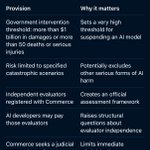
Misuse by malicious actors is a risk with any powerful technology; but in the case of AI, the consequences could be catastrophic.
Very interesting analysis by @StephenLCasper on how AI developers' decisions can influence cyber, bio, and chemical terrorism risks.

🚨New paper (possibly the most important one I have written yet).
We think that as early as 2027 or 2028, there might be a major AI-enabled terrorism event. We conducted a pre-mortem, made 9 falsifiable predictions, and wrote 2 concrete scenarios.
Led by @KamacheeMax.


M. Alex O. Vasilescu retweeted

You always conveniently leave out that we already have protections in place.
To make my point, I will do the AI work for you.
Now, you take this and make it in five minutes.
You are, again, pushing fear and doom to push regulations so the hundreds of millions paid to you gets a monopoly to block everyone else.
You are an intellectual fraud. And you spread propaganda so enrich yourself.
There are safeguards in place for everything you make claims about
You and Dario and Sam all belong together in history. Hope you like being the villain who lied to keep the small broken and make yourself rich. •


M. Alex O. Vasilescu retweeted

Developer decisions don't stop at the weights. With agents, a lot of the misuse risk is set at deployment: which tools the agent can call, what it can execute, and whether anyone can audit it afterward. That layer deserves the same scrutiny.

M. Alex O. Vasilescu retweeted

So I think this php hack says a few things first we need to make society more resilient to AI agent attacks this leads to a thing i have been annoyed about for a long time
why the feck do companies ask us for so much data when i want to do something online, you dont need to store my date of birth , phone number, address, credit card etc for a lot of the things i do every piece they collect and store is something that might be stolen or sold down the line
interestingly in the uk we have a UK data-protection law: organisations are supposed to collect only the minimum personal data necessary for their purpose, but ithink this should a genuine principle and data should be deleted straight away, my chrome can fill in any details you need, you dont need to store them forever !!!
one simple way to make stole data bases less dangerous is simply not to have them (imagine an AI enabled future in which you are modelled down to your underwear and then that is stolen to create a fake digital you)
M. Alex O. Vasilescu retweeted
If these hazards stem from "AI developers' decisions", labeling them "AI risks" obscures human agency and corporate responsibility.
Furthermore, biological, chemical, and cyber protocols long predate LLMs and remain widely accessible in public libraries, textbooks, and search engines.
What additional risks do LLMs introduce?

M. Alex O. Vasilescu retweeted

Godfather or God Complex?
Reducing the richness and complexity of human consciousness to the output of a computer program is an extraordinary claim, and one that demands extraordinary evidence.
Let's consider Human Vs. Artificial Consciousness:
Human consciousness is a biological phenomenon, rooted in living systems. AI operates through fundamentally different mechanisms: mathematical computation, learned weights, and statistical generalization.
We cannot simply transpose our human understanding of consciousness onto silicon because a machine exhibits human-like behavior (as it was trained to do). If we want to establish a concept of machine or artificial consciousness, it needs its own definition and evidence.
Biology matters. Our neurons aren't perfect digital switches. They're electrochemical systems that leak, adapt, and respond to hormones, drugs, sleep, nutrition, and other physiological conditions. Silicon computers operate through transistors, electronic circuits, and engineered communication protocols.
Even our senses are different. Human vision involves biological adaptation, eye movements, and phenomena like the Troxler effect. Cameras use electronic sensors with different artifacts and limitations. Recognizing an image isn't experiencing human vision.
These aren't trivial differences. They're fundamental to the biological processes underlying human consciousness and feeling. Replicating human behavior doesn't establish that we've replicated human experience.
Now, let's examine Hinton's claims...
1. AI changes behavior when it "thinks" it's being tested.
Of course! LLMs are trained on enormous amounts of human writing, including stories about evaluations, nervousness, deception, and self-preservation. They learn patterns, generalize from them, and respond to contextual cues. Change the context, change the output. No consciousness required.
2. AI recognizes when it's being observed.
Training data contains countless examples of people behaving differently when watched. An LLM can recognize evaluation cues and generate corresponding behavior. Pattern recognition isn't subjective awareness.
3. AI demonstrates self-preservation or deception.
Models learn patterns of survival, deception, and goal-seeking from training materials. Reinforcement learning further shapes these behaviors. An agent avoiding shutdown may simply be pursuing its assigned objective, informed by training and context. That demonstrates goal-directed computation, not a desire to live.
4. AI demonstrates agency.
Autonomy is not agency. Models generate plans from learned patterns, while agents execute them through human-provided instructions, tools, and permissions.
AI isn't morally accountable. It doesn't demonstrate satisfaction from success, sadness from failure, or suffering from punishment. Responsibility remains with the humans who build, deploy, and operate it.
5. AI intelligence implies consciousness.
An LLM can describe fear, pain, love, or suffering because it learned how humans describe those experiences from its training material. Generating descriptions doesn't establish experiencing them.
6. AI threatens human extinction.
AI presents genuine risks, but Hinton hasn't established a credible causal path from today's systems to human extinction. Where is the supporting evidence? Demonstrating that AI can cause harm isn't the same as demonstrating that extinction is a credible outcome.
This matters!
Attributing consciousness to AI has enormous implications for rights, agency, accountability, legal responsibility, and punishment.
If artificial consciousness is ever demonstrated, we must take it seriously. But we must not elevate machines into positions of moral or legal authority based on behaviors explainable through computation and training.
AI is an extraordinary, transformative technology with enormous potential to benefit humanity. We should be advancing it responsibly, not allowing speculative fears to dictate its future.
Let's not be silly or create a new religion around the belief that machines are conscious simply because they convincingly emulate human behavior through their training data.
Train a model on enough material from a fictional civilization, and it can convincingly describe that civilization's beliefs, emotions, and experiences. That doesn't make the civilization real, nor does it mean the model experiences any of them.
We can demonstrate the computation. We can demonstrate the generalization. We can demonstrate the emulation. We cannot demonstrate the consciousness.
Fear makes headlines, but only evidence should drive policy.
telegraph.co.uk/news/2026/10…

M. Alex O. Vasilescu retweeted

as bad as things have gotten in the past 4 days, they are going to get a lot worse before they get better. security leaders, never let a crisis go to waste: please go to your boards and ask for help right now. not for ai, for the basics. (we need to hold on for ~18 months.)

M. Alex O. Vasilescu retweeted

Quest Diagnostics has been hacked. Patient data was exposed. They serve roughly half of U.S. hospitals and physicians. Investigation ongoing.


