

Three years teleoperating driverless vehicles from a room in Tempe. Now building an independent fleet operation in the East Valley. Pre-operational. And BYU.
Gilbert, AZ
Joined June 2026
- Tweets853
- Following68
- Followers435
- Likes7

Pinned Tweet
Nobody in Northeast Ohio decides to root for @OhioStateFB. It gets assigned at birth, like a middle name.
Mine was assigned in Ravenna, a town that borrowed its name from Ravenna, Italy. The Catholic parish there traces its roots to 1854. Most of the kids around me were Catholic.
I was a Latter-day Saint. When I graduated from Ravenna High in 1983, the school had two of us.
The strange part is how close my faith's own history sat. In September 1831 Joseph Smith moved into a farmhouse in Hiram, same county, and lived there about a year.
Section 76 of the Doctrine and Covenants was received in that house in February 1832. Roughly 150 years later, I was half the Latter-day Saint population of my high school.
Football came with the zip code. Woody Hayes ran Ohio State. Bo Schembechler ran @UMichFootball. They met ten times from 1969 to 1978, and Bo went 5-4-1, a record nobody in my house said out loud.
Then I enrolled at BYU. For a kid who had been one of two, it felt like walking into a room where everybody already knew the words.
The school is named for Brigham Young, who lived in Kirtland, Ohio, from 1833 to 1837. Even my way out of Northeast Ohio ran through Northeast Ohio.
I was on my mission in 1984 when @BYUfootball won the national championship. The clincher was the Holiday Bowl that December, 24-17 over Michigan. Over Bo.
My new team won it all by beating my old team's oldest enemy. Ohio kids would call that a conversion story. I call it a confirmation.
In fairness to the Buckeyes: Ohio State and BYU have played three times, every one a bowl game, and Ohio State won every one.
The first was the 1982 Holiday Bowl, during my senior year. Ohio State 47, BYU 17, against a quarterback named Steve Young, who threw for 341 yards anyway.
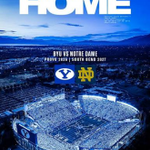
This Saturday, No. 2 @NDFootball visits No. 8 BYU, the first top-10 vs. top-10 game Provo has ever hosted.
@CollegeGameDay spent five of its first six Saturdays this season on SEC campuses. This one it spends in Provo, for the first time since 2009.
The Buckeye in me still has January 2025 saved: Ohio State 34, Notre Dame 23 for the national title. The Cougar in me would like a sequel in different jerseys.
Then Jason Swensen at the Deseret News flagged a roster detail Thursday that would have melted a few brains at Ravenna High.
BYU's starting quarterback, @bearb47, grew up in a Catholic family. Notre Dame linebacker Kahanu Kia served a Latter-day Saint mission in Raleigh, North Carolina.
And the man running Notre Dame, Marcus Freeman, is from Huber Heights, Ohio, and played linebacker for Ohio State. A Buckeye on the other sideline. I'll forgive him Sunday.
A Catholic kid under center for the Latter-day Saint school. A returned missionary in the Notre Dame linebacker room. An Ohio boy calling the shots for the Irish. In Ravenna in 1983, explaining that would have taken a chalkboard.
Kickoff is 5:30 p.m. Mountain on ABC. For one night in Provo, my side of the room is the majority.
Stephen Snyder, Ravenna High class of 1983, cheers for BYU from Gilbert, Arizona, where he is building something else entirely.
#BYU #GoCougs #HearHim #CollegeGameDay


The company Waymo picked to keep its Toronto robotaxis running has never built a car or written a line of driving software.
⠀
That is the point.
⠀
On October 16, @Waymo said it is coming to Canada. Mapping with drivers begins in the coming days under Ontario’s Automated Vehicle Pilot Program. First riders are targeted for 2028, hailing from the Waymo app.
⠀
@ElementFleet, headquartered in Toronto, will run onsite operations. Lifecycle management, maintenance, charging, energy management, and cars cleaned and ready to go. Element has supported Waymo in San Diego since June.
⠀
Kaan Can G., who writes The AI-First Founder, read the news and called it a pricing story. Whoever owns the service layer behind the robotaxi captures the new revenue.
⠀
He is right about the layer. Two numbers in his version need a correction.
⠀
The fleet manager is paid by Waymo, not billed to the rider. And nobody is undercutting a $15-per-mile ride. @rideobi’s January data from San Francisco put Waymo at about $9 a mile and Tesla near $3. The $15 in that report is what an average Lyft ride cost.
⠀
Now look at who else holds the keys.
⠀
Moove in Phoenix. @Avis in Dallas. In Nashville, @flexdrivecars, which is owned by @lyft.
⠀
Kaan’s advice was that ride-hailing has to reinvent its own service bundle. One ride-hailing company already did. It built a depot for the robot.
⠀
@kirstenkorosec at @TechCrunch put the pattern plainly in April. Waymo wants to be a technology supplier, not an operator.
⠀
Somebody still has to be the operator.
⠀
Not the software. Not the network. The depot, the charger, the cleaning crew and the person who answers at two in the morning.
⠀
That is the job ASCENDING AUTONOMY is building in Gilbert, Mesa, Chandler and Tempe, on the @robotaxi network from @Tesla and our own contracted-rides app.
⠀
We carry no riders yet. That waits on Tesla, ADOT and AZ DPS clearing driverless operation.
⠀
The robot gets the headline. The depot gets the margin, if it earns it.
⠀
Commercial autonomous mobility in the Phoenix East Valley will arrive — sooner than most think. For me, it seems like forever...
⠀
#AutonomousVehicles #Robotaxi #FleetOperations #Waymo
⠀
X: @ASCENDING_AZ | nowascend.ing
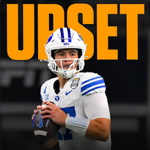
Notre Dame offered him a scholarship in July 2023. On Saturday night he scored all four touchdowns against them.
⠀
He got the offer at his grandmother’s house in Lemoore, California. His late grandfather had been an Irish fan his whole life. He called it “truly special.”
⠀
Two months later, Notre Dame took another quarterback.
⠀
The family keeps a different kind of score. A great-grandfather flew fighters. His father, Michael, is a Naval Academy graduate who was commissioned as a Marine.
⠀
MURRIETA VALLEY HIGH: 6,810 passing yards. 59 passing touchdowns. 33 more on the ground.
⠀
He picked Stanford in February 2024, because his older brother Tiger was already there.
⠀
Stanford fired its coach in March 2025. On May 3, the brothers committed to BYU on the same day.
⠀
Then there is Hank, his older brother and another quarterback. On October 9, 2021, Hank brought Boise State into LaVell Edwards Stadium and left with a 26-17 win, BYU’s first loss of that season.
⠀
Saturday, No. 2 Notre Dame came to the same field.
⠀
PASSING: 23 of 36, 224 yards, 1 touchdown.
RUSHING: 2 touchdowns.
RECEIVING: 15 yards, 1 touchdown, on a double pass from @KasperKyler.
⠀
Notre Dame went ahead 24-21 with 9:31 left. His next throw was intercepted.
⠀
His next drive went 55 yards. Third and goal from the 6. Walker Lyons. 1:47 on the clock.
⠀
BYU 28, Notre Dame 24.
⠀
No FBS player had run, thrown and caught a touchdown against an AP top-five team in 30 years. No Cougar had done all three in a game since Steve Young in 1983.
⠀
Then he said the part he had been carrying. “Kalani won’t like this because I’m talking about myself, but out of high school, Notre Dame disrespected me and my family pretty badly. I wasn’t going to lose to those guys.”
⠀
After the press conference ended, he told reporters he loves Notre Dame and praised CJ Carr. Receipts kept. Grace too.
⠀
Early this week the Heisman books had him at 125 to 1. By kickoff Saturday he was sixth, at about 24 to 1. That was before he played.
⠀
Hank beat BYU in Provo. Tiger came with him to Provo. He defended it.
⠀
His name is Bear Bachmeier.
⠀
Now you see the whole picture.
⠀
@bearb47 @tigerbachmeier @BYUfootball @KalaniSitake @NDFootball @BroncoSportsFB
⠀
Stephen Snyder writes from Gilbert, Arizona, where he is building something else entirely.
⠀
#BYU #GoCougs #HearHim #Heisman


Arizona wrote the robotaxi rules early. Texas is planning what robotaxis plug into.
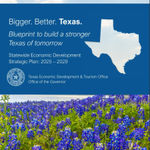
The second half comes from @jjdecoux , who posted this week about @txcomptroller @DonHuffines and the Texas Broadband Development Office's Strategic Plan Blueprint. His argument: Texas can turn historic broadband capital into the physical foundation for Intelligent Infrastructure Economic Zones. A statewide host layer for network nodes, digital twins and edge AI, resting on accurate public maps, granular data, challenge processes and open dashboards.
The blueprint is a draft. Comments close October 30. Final plan to the Legislature in December. BEAD allocation: about $3.31 billion. Mission: all 254 counties, lowest public cost.
The blueprint itself is about broadband. The leap to physical AI is Jeffrey's. It's the right leap.
So I ran Arizona through it.
PERMISSION: Executive Order 2015-09. EO 2018-04. The Institute of Automated Mobility, October 2018. HB 2813 in 2021.
FIRST RESPONDERS: A.R.S. 28-9702 requires a law enforcement interaction plan filed with @ArizonaDOT and DPS before a car runs driverless.
CONNECTED ROADS: @maricopacounty has tested V2X in Anthem since 2008. Its $20 million CVAZ project plans 750 connected signals.
CURBS: @cityofchandler wrote passenger loading zones into its zoning code in 2018.
BROADBAND: about $993 million in BEAD.
SCALE: @Waymo covers about 350 square miles of the Valley, Gilbert included.
Arizona has the pieces. Texas is trying to draw the whole board.
Now take one rider. Hypothetically, 82, Mesa, a cardiology appointment.
Her trip needs a loading zone at the clinic door. A charger near the work, not across town. Signal inside the parking structure. Lane paint somebody repaints. A responder who has the number.
Some of that may already be mapped. Where?
What would an East Valley version of Jeffrey's zone look like if it started at the curb of a cardiology office?
The car is the part @elonmusk @larsmoravy @aelluswamy are solving. Where it stops, charges and waits is the part I'm planning.
We're not on the road yet. Tesla, ADOT and AZ DPS clear driverless operation first.
Permission put the cars on the road. Infrastructure decides where they can stop.
Commercial autonomous mobility in the Phoenix East Valley will arrive — sooner than most think. For me, it seems like forever...
#AutonomousVehicles #Robotaxi #PhysicalAI #Arizona
X: @ASCENDING_AZ | nowascend.ing

Tell a robotaxi it can't wait at the curb and it doesn't go home. It drives around in circles.
A UC Irvine and @UCBerkeley team simulated 1,700 robotaxis serving 68,000 daily trips in San Francisco. Banned from staging between rides, the fleet ran 564,650 km a day, more than 200,000 km above fleets allowed to stage. Nearly 60 percent more driving.
Michael Hyland of @UCIrvine walked through it with Ben Hubbard at @TheRideshareGuy's The Driverless Digest. The software literally hands idle cars short "fake" trips to burn time.
His pricing view: "If a passenger vehicle has to pay to park, a robotaxi should have to pay to park."
@BernGrush of the Urban Robotics Foundation pushed back. Pricing, yes. One rule for all, no. Each rider type exacts a different externality.
Monica Waggoner offered a bridge: price that rises with duration. Ten minutes between rides costs less per minute than two hours at dinner.
Good rule. Now run my rider through it.
Picture a hypothetical 82-year-old in Chandler at a cardiology appointment. My car isn't waiting for the next stranger. It's waiting for her, and nobody knows when she walks out.
On a duration curve, that wait gets priced like dinner. With nowhere to wait, the car circles or drives home and back. The study already told us what circling costs.
Meanwhile a car waiting for her uses the same curb as the car she gave up.
My modest proposal: keep the duration curve. Let a clinic or senior community reserve a few off-street bays for rides tied to a scheduled appointment, and start the clock at the appointment's scheduled end, not at drop-off.
Same rule for everyone. Different clock for a different externality.
The car is the part @elonmusk @larsmoravy @aelluswamy are solving. Where it waits for an 82-year-old is ours.
We're not on the road yet. Tesla, ADOT and AZ DPS clear driverless operation first, and no clinic has signed anything.
A robotaxi between rides is idle. A car waiting for her is working.
Commercial autonomous mobility in the Phoenix East Valley will arrive — sooner than most think. For me, it seems like forever...
#AutonomousVehicles #Robotaxi #FleetOperations #Arizona
X: @ASCENDING_AZ | nowascend.ing

Before the surgery, his parents signed a waiver for his throwing arm.
He was sixteen. In June 2016 his mother noticed a mole on his forehead that kept changing. His great-grandfather had died of melanoma. Half a dozen biopsies. One positive.
The surgeons at UC Irvine also removed two lymph nodes from his neck. One sat next to the nerve that controls his right arm.
When he woke up, he made a throwing motion before he said a word. Then he told his mom, "We are all good."
No chemo. No radiation. A scar below the hairline. And from then on, a bucket hat.
At the 2017 @Elite11 competition the hat wasn't in the gear bag. When the event's president heard why he wore it, every quarterback in the field got one.
Alabama recruited him that year. He visited Tuscaloosa the weekend @JalenHurts beat LSU.
He passed. Twenty-one months in Brazil, then @StanfordFball: 5,336 yards, 28 touchdowns, 2021 team MVP.
@Eagles took him 188th overall in 2023.
He waited. January 5, 2025, first start: 27 of 41, 269 yards, two touchdowns, a win over the Giants.
This summer he lost the backup job to Andy Dalton. Dalton threw one pass this season. Intercepted.
Twelve days ago he was QB3.
Thursday, the Eagles walked out for walkthrough and found him running the offense. Hurts is out with a blood clot in his calf.
"You're walking out to walkthrough, and it was like, 'OK, well, I'm taking the one reps now,'" he told @NBCSPhilly's Reuben Frank.
"I feel like I was ready at any moment the last few weeks," he said.
Now the part nobody scheduled.
Sunday's game against @Panthers is the Eagles' Crucial Catch game, the NFL's cancer-screening campaign with @AmericanCancer. Last October he was one of 19 ACS player ambassadors.
"My case was very mild because I was able to catch it early," he told @PhillyInquirer.
KICKOFF: Sunday, 1 p.m. ET, CBS
MOUNTAIN: 11 a.m.
ARIZONA: 10 a.m.
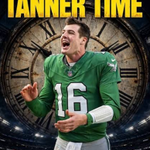
His name is Tanner McKee.
His mother caught it early. Sunday the league plays a game about catching it early, and her son starts it.
Now you see the whole picture.
@McKeeTmckee
#RestOfTheStory #FlyEaglesFly #NFL #CrucialCatch
Stephen Snyder writes from Gilbert, Arizona, where he is building something else entirely.
X: @ASCENDING_AZ | nowascend.ing

I used to ask people what it would take to put them in a car today.
@lyft now asks if you'd prefer the bridge or the tunnel.
Same industry. Very different question.
Alcove, Lyft's new chauffeur brand, launches in early 2027. @davidrisher's service standard: spill coffee on your shirt before a meeting, and your driver replaces the shirt and calls ahead to explain why you're late.
That's the oldest idea in the car business. The business mostly forgot it.
I spent the better part of a decade in Arizona auto retail, the last stretch as a General Sales Manager. The customers who came back didn't come back for the price. They came back because somebody remembered them.
Then about three years as an AV operator and teleoperator in Tempe. I watched the car learn to drive. I also watched what it couldn't do. It can't carry a bag up a walkway. It can't notice a rider is confused. It can't call a daughter to say her mother arrived.
Risher told @WSJ he expects Alcove riders to prefer human drivers to AVs.
Maybe for executives. I'm betting on a different rider.
ASCENDING AUTONOMY is building toward a self-driving fleet in Gilbert, Mesa, Chandler and Tempe for older adults who no longer drive.
The car is the part @elonmusk @larsmoravy @aelluswamy are solving. Everything around the drive is the job I signed up for.
The honest part: we haven't carried a passenger. Tesla, ADOT and AZ DPS clear driverless operation first. Today the company is a plan, a filing cabinet, and me.
Alcove will charge executives for hospitality.
I'd like my first rider to get it at 7 a.m. on a Tuesday, on the way to dialysis.
Lyft put the driver back in the car to sell hospitality. I'm taking the driver out and keeping the hospitality.
Commercial autonomous mobility in the Phoenix East Valley will arrive — sooner than most think. For me, it seems like forever...
#AutonomousVehicles #Robotaxi #Tesla #Arizona
X: @ASCENDING_AZ | nowascend.ing

Stephen Snyder retweeted

Coolest hype video I’ve seen in a long lonng time from this best linebacker in the NFL

Stephen Snyder retweeted

It's often said that BYU is a special place. As a former player there, Zubin Mehenti asked me why...
#GoCougs
#NDvsBYU
#BYUvsND
@BYUfootball
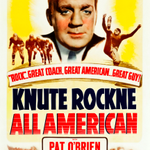
In 1922, @BYUfootball played its first season of intercollegiate football. It went 1-5 and failed to score in four of six games.
So athletic director Eugene L. Roberts called the most famous football coach in America.
Knute Rockne came to Provo in 1923 and ran a coaching clinic.
On the train back to Indiana, the story goes, he wrote Roberts a letter. The students were so earnest and good-natured, he said, that it would be a shame if anybody flunked his class.
The next season BYU went 2-5. It scored 47 points and allowed 156.
In Provo, that counted as progress.
The two schools would not play each other for another 70 years.
1992: @NDFootball 42, BYU 16, in South Bend. Jerome Bettis and Reggie Brooks each ran for more than 100 yards.
1994: LaVell Edwards beat Lou Holtz and No. 17 Notre Dame 21-14, in the shadow of Touchdown Jesus.
2010: BYU went independent. Same day, Notre Dame agreed to a six-game series, two of them in Provo.
Then Notre Dame signed a scheduling deal with the ACC. The Provo games disappeared.
2022: Las Vegas. A Notre Dame home game. Shamrock-green hot dogs in the press box. Notre Dame 28-20.
December 2025: Notre Dame opted out of the Pop-Tarts Bowl after BYU had already accepted the bid to Orlando.
Most relationships do not survive that.
This one got a phone call.
BYU AD Brian Santiago told Notre Dame AD Pete Bevacqua that BYU respected the decision. Bevacqua called back the next day.
"Hey Brian, what if we play next year in Provo?"
Santiago: "Bottom line is relationships matter."
Tonight, 103 years after Rockne's train ride, No. 2 Notre Dame (6-0) visits No. 8 BYU (5-0) at LaVell Edwards Stadium.
First top-10 matchup in stadium history. @CollegeGameDay in Provo for the first time since 2009. ABC, 5:30 p.m. MDT. BYU a 10-point underdog. Notre Dame leads the series 7-2.
@KalaniSitake, to every other program that wants a game: "Let us know, man. We're open for business."
The scoreboard settles tonight's game. The relationship is the reason it is being played at all.
Via @drewjay and @Deseret.
#BYU #GoCougs #NotreDame #Big12FB


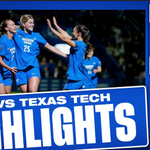
Texas Tech brought a four-year guarantee to Provo on Friday night: score twice, and you do not lose.
Since the start of the 2022 season, @TexasTechSoccer was 54-0-2 in matches where it scored two goals.
Fifty-six matches. Zero losses.
Friday it scored two. No. 22 @byusoccer_w scored three.
No. 8 Texas Tech arrived 9-0-4, unbeaten in 18 straight. It led after 46 seconds, off a miscue by BYU goalkeeper Paiton Collins.
Collins answered in the 15th minute with a sliding save that kept it 1-0.
Then sophomore Mia Goettsche tied it, finishing a cross at the far post.
With one minute left in the half, Presley Freeman drove up the left, freshman Sydney Snow sent the ball across, and senior Mattyn Summers-Oviatt headed it in. 2-1.
It was only the second time all season Texas Tech had gone into halftime behind.
56th minute. Summers-Oviatt again, from junior Mika Krommenhoek. 3-1. Her first career brace.
Tech did not go quietly. Taylor Zdrojewski matched her with two of her own. The second, in the 70th minute, stood after review. 3-2.
In the 83rd, Avery Frischknecht stopped a Texas Tech free kick with her chest.
Read that again. With her chest.
BYU was outshot and still put more goals on the Red Raiders than anyone has this season. It is also BYU's second straight come-from-behind win over Texas Tech, after a 2-1 win in 2024.
Head coach Jennifer Rockwood: "It was a little sketchy at first, but we found a way. We went into the half with momentum."
Across the field, Tom Stone told @RedRaiderSports: "The locker room's pretty down. But at the same time, we're proud of the effort, proud of the attitude, proud of the fact that we made it a game."
Stone also said the first practice after a first loss is one of the most important of the year.
Both teams leave at 5-1-1 in the @Big12Conference. BYU is now tied for first.
So which matters more in a title race: the streak you protect, or the one you end?
Next for the Cougars: at Kansas, Oct. 22, 5 p.m. MDT.
Fifty-six matches said two goals was enough.
Mattyn Summers-Oviatt had other plans.
Recap from @BYUCougars: byucougars.com/news/2026/10/…
#BYU #GoCougs #HearHim #Big12Soccer

Where does the money hide in a brand-new industry? Usually in the job nobody brags about.
@amyreesanderson found that job in health care. By her own account she started out unable to balance a checkbook, and she learned about venture capital where the rest of us learn everything: on the internet.
Her first health care technology company came at 23. Running a business, she says, is what kept her on her own feet through the years she raised two young children alone.
From 2004 she ran MediConnect Global, whose business was retrieving medical records from facilities on six continents for the insurance companies and law firms that needed them.
You will never see a records request in a Super Bowl ad. Claims and cases still wait on them.
By March 2012, four of the five leading health insurers in the United States were customers, and @Verisk agreed to acquire the company.
Then she built on it. REES Capital backs founders. The IPOP Foundation promotes entrepreneurship as a road to self-reliance. She wrote a book and called it What Awesome Looks Like.
The Rollins Center at @BYU named her 2012 Entrepreneur of the Year, the first woman to earn it, and in the last twelve months she has been back in front of @BYUMarriott students three times, two ethics and integrity classes among them.
Her rule, in short: success is the part that comes and goes, and integrity is the part you keep.
I think about that every time someone asks me where the opportunity in driverless cars really sits.
The vehicle gets the cameras. The lasting work happens in between: getting a stranded car recovered, inspected, cleaned and back in service, and putting a human on the line for the rider who needs one.
About three years inside an autonomous vehicle operations center in Tempe, both in the vehicle and behind a remote console, taught me how much of this business happens out of sight.
Take the driver out of the car and character becomes the only crew member who never clocks out.
Latter-day Saints know the chorus by heart: "Do what is right; let the consequence follow."
That in-between work is what ASCENDING is being built to do across the Phoenix East Valley.
Thank you, @amyreesanderson, for proving that awesome can start with an unbalanced checkbook.
Commercial autonomous mobility in the Phoenix East Valley will arrive — sooner than most think. For me, it seems like forever...
X: @ASCENDING_AZ | nowascend.ing
#BYU #GoCougs #HearHim
Fifty-one years ago, the Church of Jesus Christ of Latter-day Saints let go of 15 hospitals. Today @BYU won the right to open a medical school, and it has no plans to own one.
President Shane Reese made it official in Provo this morning. The Liaison Committee on Medical Education granted preliminary accreditation, and a first class of 60, the most the committee allows a new school, begins in July 2027.
That is the news. What caught me is a choice the Church made in 1974.
That year the First Presidency concluded that running hospitals sat outside the Church's central mission, and that a church growing worldwide found it hard to justify concentrating curative care in one affluent corner of the map.
On April 1, 1975, the 15-hospital system passed to the communities it served. @Intermountain was formed to operate it, and the Church has no say in how it runs.
Then, announcing BYU's medical school in 2024, the First Presidency kept the same discipline. No hospital. No hospital system.
Tad Walch of @Deseret laid out what that means in practice: every clinical rotation comes through an affiliation. Intermountain, @UofUHealth, the Utah Department of Health and others are on the list of partners BYU has been working out.
The founding dean, Dr. Mark Ott, came to BYU from Intermountain. The first class will train inside the health system the Church gave away.
I read it as a lesson for anyone building something. Decide what is central to your mission. Pour everything into that. Partner for the rest, and choose partners you would trust with your students.
I am building ASCENDING in the Phoenix East Valley on the same discipline. Tesla builds the vehicle and the autonomy. The local operator owns what has to happen on the ground: the fleet, the depot, the remote operations center, the rider.
BYU did not need a hospital to open a medical school. It needed to know which part of the work was its own.
Commercial autonomous mobility in the Phoenix East Valley will arrive — sooner than most think. For me, it seems like forever...
X: @ASCENDING_AZ | nowascend.ing
#BYU #GoCougs #HearHim

The game is Saturday night. The bigger news landed a week ahead, when @CollegeGameDay told the country where it would set up Saturday morning.
It picked Provo. @NDFootball at @BYUfootball, both unbeaten, the first matchup of two top-10 teams Provo has ever hosted.
On the Sept. 28 GameDay podcast, @ReceDavis said there was a really good chance the show would be at BYU, then joked he might be in trouble with PR and management for saying so. Now it's official.
The show has been to Provo exactly once before, on Oct. 24, 2009. Saturday ends a seventeen-year gap.
The 500th road show was Sept. 5 at @LSUfootball, Baton Rouge's 15th visit. Provo's count after Saturday will be two.
@espn passed on Ohio State at Indiana. It passed on Alabama at Tennessee, played on the actual Third Saturday in October.
Saturday Down South noted it is only the second week this season the crew has set up anywhere but an SEC campus.
How does a pregame show's travel itinerary turn into a headline? It did not start out that way.
The first campus show drew roughly 2,000 people in 1993. Chris Fowler has said they lobbied to hit the road for a while and nobody was eager to pay for it.
A show that once had to argue for travel money went into its 40th season at 82 schools in 39 states. Now where it parks gets announced like a verdict.
Saturday it is live on campus from 7 to 10 a.m. Mountain. Kickoff on ABC is 5:30 p.m. That puts Provo in front of the country ten and a half hours before the opening kick.
One network picks one campus, and the pick becomes the story.
The road show was born in South Bend in 1993. Thirty-three seasons on, @NDFootball is the visitor at Provo's second.
Stephen Snyder follows BYU from Gilbert, Arizona, where he is building something else entirely.
#BYU #GoCougs #HearHim #CollegeGameDay

Everyone filming the new driverless shuttles at @phxskyharbor is pointing the camera at the vehicle. Point it at the attendant.
@OhmioAutomotion shuttles began a six-month run in the airport's East Economy lot, moving travelers between parking areas and the PHX Sky Train station on weekday mornings and afternoons.
@AdamKleppAZ of @abc15 rode along. No steering wheel up front, and a staff member aboard to help passengers and take over if something calls for it.
That staff member is doing a job much like the one I did for about three years, riding in autonomous vehicles and watching over them from a remote seat. It is the least glamorous role in autonomy and the first one a rider sees.
A machine can follow the route. A traveler meeting this for the first time wants a human face nearby, and someone has to answer for whatever the route did not plan on.
Phoenix is going about this sensibly. Two shuttles, set weekday hours, a six-month window, and Mayor Kate Gallego says the city will hear from travelers before deciding whether to keep it going.
Listen to riders, then decide. A parking lot full of people with flights to catch is a demanding place to earn trust, and a good place to find out whether you have.
The vehicles will keep improving wherever they are built. The work wrapped around them stays local, and that work is what we are building at ASCENDING for the East Valley.
Commercial autonomous mobility in the Phoenix East Valley will arrive — sooner than most think. For me, it seems like forever...
X: @ASCENDING_AZ | nowascend.ing


The new FSD Supervised clip from @Tesla is being shared as a save, and it is one. The part I keep replaying is the second right after the save.
@TheNewGrid, the owner, says he watched a car approach a stop sign and assumed it would stop. His car pulled out, then halted mid-intersection while the other car flew by.
He also says that driving by hand, he would have been hit. The software saw what he did not and changed its decision partway through the move.
Credit to Tesla leadership, @elonmusk @larsmoravy @aelluswamy, and the FSD engineers. Reversing a decision in time is a hard problem, and here it worked in a real intersection.
Pause it right as the other car clears. Everyone is fine, and a car sits stopped in the middle of an intersection.
With someone in the driver seat, the moment is covered. He can take over, clear the intersection, and head home with a story worth sharing.
Empty that seat and the same moment has no owner until an operator takes it.
Usually the car will roll on by itself. When it does not, somebody must notice, decide whether it can safely wait where it is, and get it rolling or get the scene protected.
And whether it rolls or not, somebody should check on the passenger.
For about three years I worked in autonomous vehicle operations, both inside the car and at a remote console. When the software stopped a car, my work started.
A sudden stop throws that passenger forward against the belt. In a robotaxi, that passenger could be 80 years old and alone in the back seat.
The car has no way to ask whether she is okay. A person does.
Tesla is solving the driver. ASCENDING is being built for everything that follows a good decision made in a bad place.
Commercial autonomous mobility in the Phoenix East Valley will arrive — sooner than most think. For me, it seems like forever...
X: @ASCENDING_AZ | nowascend.ing

Around Gilbert the question is always when. Tesla's own launch record says the sharper question is where first.
@NotATeslaApp's Nehal Malik measured all seven active Robotaxi metros this week, and the geometry tells the story.
Austin began in June 2025 at roughly 20 square miles. It sits at 246 now, about a dozen times its first footprint.
The newest five started compact. Dallas 31. Miami 30.8. Orlando 26.2. Houston 25. Tampa 23.6. Four of the five sit next to an airport.
Launch tight, prove it, widen the circle. That is disciplined scaling, and it sets the tempo for every city still on the list.
Mesa, Chandler, Gilbert and Tempe add up to 312.5 square miles of land by the Census count, with roughly 1.27 million residents.
That beats Austin's whole zone by 66 square miles. Stack the five newest zones together and they still cover less than half of it.
Tempe, the smallest of our four at 39.9 square miles, would outsize every one of them on its own.
Expect this valley to come online in rings, the way Austin did.
Every ring gets built in Phoenix heat. The Weather Service's 30-year normal is 111 days at or above 100 degrees and 21 at or above 110. In 2024 we logged a record 70 days at 110 or hotter.
Heat punishes battery packs, cabin cooling and charging hardware. Somebody has to design the depot around August.
Riders count as much as square miles. Better than one in six people in Mesa is 65 or older, and plenty of them will value a steady arm at the curb as much as the trip.
Tesla's Arizona first-responder appendix already names all four cities among the areas the service may include.
The software improves on its own schedule. The pace of the map here rides on everything the car can't do for itself: power, turnaround, and people on call.
That operating layer is what I'm building ASCENDING to run in the East Valley. Not on the road yet. Getting ready for the day the zone reaches us.
Watching the map, and building for it: @elonmusk @larsmoravy @aelluswamy
Commercial autonomous mobility in the Phoenix East Valley will arrive — sooner than most think. For me, it seems like forever...
X: @ASCENDING_AZ | nowascend.ing

Sixteen years. @byusoccer_w had not beaten @TCUSoccer since 2010, until Monday night at South Field.
The Cougars won 2-0 in the rain, and a freshman who did not start was in the middle of both goals.
Anna Neff played 28 minutes. She is listed at 5-foot-2, and her coach counts her among the team's best in the air anyway.
The first half stayed scoreless. Mia Goettsche hit the crossbar twice, Olivia Geller dove to stop Emma Hamberlin, and a TCU goal in the 34th minute came off the board when BYU's video challenge showed Emma Yolinsky offside.
Minute 66: Afton Perry to Neff, Neff into the box, and Hamberlin with one touch and a finish past Geller. Neff's first college assist. Hamberlin's fourth goal this season.
Minute 82: Neff won a header near midfield, and Sophie Sivulich, a 5-foot-3 sophomore, ran onto it and sent a shot from beyond 25 yards over the keeper.
Chelsea Peterson finished with three saves and BYU's first clean sheet since late August.
Neff arrived in January as an early enrollee. This fall she also gets to play beside her sister, senior defender Emma Neff. They never shared a field in high school.
BYU did beat TCU on penalties in last year's Big 12 Tournament, though a shootout goes in the books as a draw. Monday was the first win on the record since 2010, and TCU is still looking for its first at South Field.
BYU moves to 6-2-2 and 2-0-1 in the @Big12Conference, still unbeaten in league play and at South Field. TCU drops to 4-4-1.
Kansas State visits Friday to close the homestand, 7 p.m. MDT on ESPN+.
Jennifer Rockwood coached BYU the last time it beat TCU, back in 2010. Sixteen years later, in her last season on the bench, she got to do it again.
Reporting by Darnell Dickson for @heraldextra and Ben Ward for BYU Athletics.
Written from Gilbert, Arizona, by a lifelong fan of BYU women's soccer who is building something else entirely.
#BYU #GoCougs #HearHim #Big12Soccer
The young animator had the job he had dreamed about since childhood. He also had a habit of telling the people above him that the work fell short.
The dream went back a long way. He was eleven when he first walked through the Walt Disney Studios, and eleven when he started drawing a cartoon of his own.
He worked on it for three years down in his parents' basement, sliding each drawing under a secondhand 8mm camera that could shoot a single frame at a time.
At fourteen he put the finished cartoon, a fifteen-minute Tortoise and the Hare, in the mail to Disney. No one there had asked to see it.
The studio's reply was an invitation to stop by any time he was in town. The great animator Milt Kahl, one of Walt's Nine Old Men, took him under his wing.
Years later he walked in as a Disney animator himself, carrying everything Kahl and the other masters had drilled into him.
He was fired. In his own telling, the offense was insisting on the very standards those masters had taught him.
He kept going. In 1999 he directed his first feature for a rival studio, an animated film about a boy who befriends a giant robot from outer space.
The reviews were glowing. The ticket sales were dismal. By any box-office measure, it was a failure.
In 2000 the computer-animation studio in Emeryville hired him anyway. Steve Jobs and Ed Catmull told him that very film was why: it showed he was determined to find new ways to tell a story.
His first picture there came out in 2004. It won the Oscar for Best Animated Feature and took in more than $630 million around the globe.
Then came the turn nobody scripted. In January 2006, Disney, the studio that had fired him, agreed to buy the studio that had hired him, in a deal valued at $7.4 billion.
Twelve years later his sequel opened to $182.7 million in a single weekend, the biggest debut an animated film had ever had, and went on to pass $1 billion.
The company that once let him go now owned his biggest hit.
The kid with the basement camera. The young man Disney sent packing. The mind behind The Incredibles.
His name is Brad Bird.
Now you see the whole picture.
@BradBirdA113 @Pixar @Disney
#Pixar #Animation #Storytelling
X: @ASCENDING_AZ | nowascend.ing