
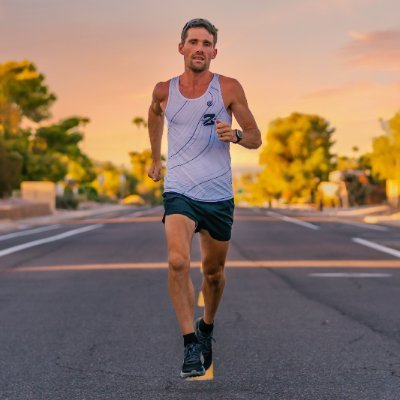
100 miles at 6:47/mi | 5x 100 mile under 12 hours Helping the everyday runner train smart, strong & get faster. READY TO TRAIN?
Austin, TX
Joined December 2009
- Tweets21K
- Following1.1K
- Followers19K
- Likes19K





Pinned Tweet
Episode 487: Rachel Entrekin | Cocodona 250 Course Record
Rachel Entrekin recently cemented her legacy in the growth of multiday trail ultramarathons with her outright course record and third win at the Cocodona 250. We talk about how her race played out, her life has changed since going pro earlier this year, and what her performance has taught us about the many variables to success at multiday ultramarathons.
For a full picture of Rachel’s transition into professional ultra runner, please check out my previous episode with her, Episode 477: Cocodona 250 Ultra Champ | Rachel Entrekin
Timestamps:
0:00:00 Highlight Reel
0:00:53 Podcast Intro and Sponsor Deals
0:02:27 Cocodona Recap and Fueling Upgrade
0:06:07 Race Nutrition Real Food vs Gels
0:08:43 Viral Finish
0:10:10 Radical Acceptance Mindset
0:11:23 Seven Hours Faster Why
0:15:53 Pro Life Balance and Bandwidth
0:22:18 Durability Beats Speed Debate
0:30:09 Spreadsheets vs Vibes Racing
0:34:52 Crew Communication and Efficiency
0:38:25 Stepping Back to Crew
0:39:29 Giving Back at Cocodona
0:42:53 Crew as Storytelling
0:45:26 Levity and Showmanship
0:48:24 Crews Versus Uncrewed
0:49:27 No Support Challenge
0:53:01 Kilian Chase Pressure
0:55:23 Sleep Strategy Discussion
01:00:55 Experimenting With Sleep
01:03:49 Six Day Curiosity
01:07:09 Where to Follow Rachel
01:08:50 Wrap Up
Which experts are drawing up guidlines in the 150g/hr range? My understanding is ACSM caps at 90g/hr and ISSN mentiones up to 90+ g/h (with specific delivery recommendations).

Zach Bitter retweeted

BACKYARD ULTRA WORLD TEAM CHAMPIONSHIP OFFICIAL LIVESTREAM / HOUR 1 - 10 youtube.com/live/K4M1QaL7L5E…

I think I probably would have cancelled before the event given the forecast, but I am also not a race director or a weather man, so what do I know. I am curious if there was a reroute considered before the event, or was it too hard to know where to safely reroute ahead of time?

Moab 240 Cancellation & Chicago Marathon | Run The News youtu.be/-3Rwvs2C0gA?si=e9ZU…

Run The News | Moab 240 Cancellation & Chicago Marathon
Allison Mercer joined the show to recap two very different running stories from the past week: the Moab 240 cancellation amid flash flooding, mudslides, and serious safety concerns in a remote area, and the Chicago Marathon with its mix of stories. We dig into the growing risks and responsibilities around 200+ mile events (experience levels, communication, support crews, and protocols), contrast that with Chicago’s high-profile narratives involving Emma Grace Hurley, Vinny Mari, Clayton Young, and Galen Rupp, and touch on treadmill training accuracy, super-shoe competition, and race overcrowding.
Timestamps:
0:00:00 Introduction and Overview of Upcoming Events
0:00:10 Moab 240: Challenges and Safety Concerns
0:10:09 The Role of Experience in Ultra Running
0:21:47 Chicago Marathon: Excitement and Expectations
0:28:46 Treadmill Training: Pros and Cons
0:35:55 Vinny's Journey: The Underdog Story
0:46:22 The Drama of Marathon Racing
0:50:53 Shoe Technology and Brand Rivalries
0:54:00 The Evolution of Running Shoes
0:57:59 Galen Rupp's Remarkable Comeback
01:01:06 The Impact of Experience in Racing
01:05:00 The Future of Major Marathons
01:08:54 The Challenges of Overcrowding in Races
Summary:
Moab 240 cancellation and safety in long-distance trail ultras
- Race canceled after mudslides, flash flooding, and severe weather tied to a hurricane; remote course with limited cell service created major problems for runners, crews, and volunteers.
- Discussion of preparedness and communication gaps; similar issues noted in prior wet years. Sheriff’s office involved in evacuations.
- Concerns about athletes (and their sleep-deprived support people) entering 200+ mile events without sufficient single-day ultra or backcountry experience.
- Debate on qualifiers, mandatory safety gear (e.g., bivy), EMT/medical presence at aid stations, and standardized protocols; references to past incidents (including a deadly race in China) and stronger setups at larger events like UTMB or Boston.
- Responsibility split between participants, race directors, volunteers, and first responders; risk of overusing rescue resources for preventable situations.
- Options once weather turns bad: cancel pre-race, push through, cancel mid-race, or reroute (permits and logistics make last-minute changes hard). Comparison to Cocodona’s frequent reroutes and UTMB course shortenings.
- Side note on a Bigfoot race pacer rule (time penalty for leaving a pacer on course for safety/tracking reasons) and Destination Trails’ earlier “poop buckets” PR issue.
Chicago Marathon storylines and performances
- Strong field and multiple narratives: Emma Grace Hurley (Atlanta connection, patient build-up through shorter distances and half-marathon success before her debut; went out aggressively), Vinny Mari (unconventional high-volume treadmill training at Planet Fitness, led early American men before stretching stops, still ran a strong debut), Clayton Young (hamstring issue that raised questions but he finished as top American), Charles Hicks, and others.
- Galen Rupp ran 2:06 at age 40 for the American masters record; praised for longevity, experience, and commentary potential.
- Weather warmer than recent fast years but not extreme; discussion of heat-training protocols, dew point, and pacing discipline (several athletes noted starting too fast).
- Treadmill training under scrutiny: calibration variance even on well-maintained machines, industrial gym units vs. home units, and whether heavy treadmill reliance (including Vinny’s ~45-mile day with large chunks at goal pace) fully prepares athletes for road racing. Vinny’s stop-start race mirrored some of his treadmill resets.
- Shoe conversation: Adidas athletes won both open races; Nike’s relative position questioned despite sponsorship and models like Alphafly/Apex. Strong results and third-party testing for Puma Fast-R 3 (Allison tested and liked them; Zach has raced long distances in them but notes they require adaptation). Brooks Hyperion Elite 6 seen as a big step forward, with some athletes in prototypes. Overall gap between top brands has narrowed; individual athlete response still varies.
Broader marathon and industry notes
- Overcrowding and logistics at major races (gel stops, tangents, later waves). Two-day formats (as discussed for London).
- Bib allocation breakdowns (charity, sponsors, infrastructure vs. pure increase availability for traditional signups) at big events.
- Other fall marathons (Philly, Detroit, CIM, Houston, etc.) selling out quickly, signaling broad demand beyond the World Marathon Majors.
- Brief personal note: Allison is entered and training for Tunnel Hill.
Episode Sponsors:
- LMNT: drinkLMNT.com/HPO (free sample pack with purchase)
- deltaG: deltagketones.com Code: BITTER20 (25% Off)
- TrainingPeaks: trainingpeaks.com (free account)

Allison Mercer joined me to chat about where much of the attention in the ultra marathon world goes, and what impacts the interest and participation of the wide range of events in ultra running.
Video version of the episode below!
Road Ultras Need Hype & Money In Ultras | Run The News youtu.be/89u9qQTWtEw?si=fnsV…

Hottest take?
If you are going to have a heart attack running, best place to do it is at a big city marathon. You’ll be swept up immediately.

Hotter take 🔥
It's the experienced (but not elite) runners who are a little larger, lower mileage, and get a time stuck in their head, regardless of the conditions of the day, who are at risk.
Hottest take 🔥🔥
The email won't make a lick of difference to them (they'll think they're immune from the laws of thermodynamics)
Run The News | Road Ultras Need Hype & Money In Ultras
Allison Mercer is an ultramarathon athlete who has competed at both 50km and 100km World Championships, Tunnel Hill, and Strolling Jim. She joined me to unpack why the World 100 KM deserves more attention, and what ingredients make ultramarathons grow.
Timestamps:
0:02:03 Introduction and Team USA's World 100 KM Championship
0:05:01 Experiences and Insights from the World Championship
0:07:58 Team Dynamics and Individual Performances
0:11:06 Challenges in Ultra Running and Qualification Standards
0:13:54 Promoting Road Ultras and Building Excitement
0:17:05 The Role of Media and Storytelling in Ultra Running
0:19:59 Future of Road Ultras and Athlete Contracts
0:36:43 The Rise of Local Ultra Races
0:38:03 The Logistics of Ultra Running Events
0:39:34 The Impact of Media on Ultra Running
0:41:34 Prize Money and Its Implications in Ultra Running
0:43:09 Drug Testing in Ultra Running
0:48:02 The Need for Regulation in Ultra Running
0:52:51 The Role of Sponsorship in Ultra Running
01:06:53 Opportunities for Unsponsored Athletes
01:08:50 The Path to Sponsorship in Ultra Running
01:14:34 The Growth of Running Communities
01:20:24 Navigating the Challenges of Ultra Running
01:22:36 Reflections on the World 100km Experience
Summary:
World 100K and the team format
- Allison just raced for Team USA at the World 100K in Spain. Making the team is the hard part; wearing the USA kit is the payoff. Conditions were much better than India two years ago (cars on course, poor air, long transfers).
- Scoring is the sum of the top three finishers’ times, so individual goals and team gaps both matter. The men’s team won gold by 44 seconds. In 2024 Allison was told late to close a roughly two-minute gap on Japan and help secure bronze.
- Storylines: Charlie Lawrence and Courtney Olson won the titles; men’s team gold; Phil Young made his first team at 40 after years of flat ultras. The women's team was short-handed (Ann Flowers out with injury; Ashley Paulson also out, though later linked to Moab). Courtney still delivered; Allison argues she is under-sponsored relative to her results.
- Other names: Chikara (longtime scorer, high mileage, third American this year and needed for the gold), plus the Brogan, Phil, Anthony, and a very young Charlie. Zach recalled 2014 gold (Max King, himself, Zach Miller) and passing into sixth in the chute.
Why flat 100Ks stay niche
- Few certified US options: Mad City (top two can auto-qualify), Tunnel Hill (Steve Durbin added and certified a 100K), Jackpot splits, a Connecticut race, Marine Corps 50K (sometimes dropped). Certification is expensive and unfamiliar to many race directors.
- Tunnel Hill is becoming a “Valencia of ultras” for fast times and records (Courtney’s American 100K record; Allison’s age-group 50-mile). Momentum still fades between headline moments.
- Ideas to keep attention: athlete-led series in the Clayton Young / Charlie Lawrence style, multi-athlete YouTube profiles (Sweat Elite model), photography and storytelling around champs, and annual broadcast of Tunnel Hill or a timed event rather than one-offs.
- Carbon X built hype, then had no sequel. The Adidas 100K record attempt landed during UTMB week and got buried. AeroVipa’s fast 100K series with Mount to Coast only lasted a year or two; Mount to Coast now sponsors Tunnel Hill.
- Contracts and appearance bonuses pull athletes toward UTMB, Western States, and golden tickets. Road ultras need either record clauses or a reason to skip those races. Des Linden at Tunnel Hill could have drawn marathon attention; injury sent that spotlight to Javelina instead.
Prize money (Run Rabbit Run)
- A very large purse (on the order of $100k to win) is real leverage, but the date fights Western States, Hard Rock, UTMB, and Javelina.
- Allison’s questions: where the money comes from, and whether there is drug testing. Same concern around Broken Arrow’s purse.
- Upside for unsponsored runners: a win can replace a sponsorship check and get a brand’s attention (Mason Coffey / Gorge as a recent example).
- Zach floated paying appearance fees to hand-pick a field and fund a livestream. Allison countered that appearance money can be collected with a token start, and that it enriches athletes who are already rich unless underdogs still have a path. Marathon-major distance clauses (Emma Bates in Chicago) show the injury risk of tying pay to finishing.
Doping policy
- Both treat big purses without meaningful testing as a problem. USATF events already test (Allison tested for second at Mad City; Zach tested for winning the Jackpot US 100-mile title). Early on, tests were mostly for world records (Desert Solstice 2015 American record was not tested).
- Zach’s frame: World Athletics has the right out-of-competition and biological-passport model, but not enough money to use it often. Jonah Koech went years without an OOC test, then a cluster of tests built the passport. Ultras risk the same “deter some, miss some” outcome.
- Zach estimates only about 1–5% of US endurance events have any doping policy. Preferred first step is written expectations, not viral punishment: opt in to compete/results under a concrete policy (World Athletics or the race’s own), participate otherwise. Western States is zero-tolerance on bans for entry, but golden-ticket races have let banned athletes run and only blocked the ticket (Beth McKenzie, Lisa Roberts). No clear requirement that qualifiers carry the same policy.
Growth, access, and culture
- Western States can mean years of qualifiers and a lottery. Short-loop and road events are cheaper and easier (Equalizer 12-hour was $85, no qualifier; Mad City is 10K loops and crew-light). Old-school ultras and local races are the practical on-ramp.
- Camera saturation at Western States, Leadville, and UTMB often duplicates the same shot and crowds runners. 200-milers grew partly because big names brought media; that may not transfer.
- Austin has on the order of 150 run groups. Historical running booms rise and fall; the sport is less cheap than the old “accessible in a bad economy” version, so a dip is likely, but not yet. Social media keeps the boom going and also pushes people at 200 miles before they have the base.
- Shared close: leave no trace. Allison was struck by bottles and gels thrown on the 100K course.
Allison’s race
- Mixed experience. She rolled and badly sprained an ankle on an easy path the day they left, after her best training block. Flight canceled, a few days off in Portugal, then race-week physio (Kelly) got the ankle runnable.
- Only four US women started, so she felt the team pressure. About 58°F at the start, about 91°F three hours later. Ice bandanas, sponges, and course sprinklers; attrition was high. She ran a lot with Sarah Morrison, no music allowed, and finished 15th.
- She wants another team. Times are getting faster. Uniform swaps and the camp atmosphere are the part she values most (40+ countries). Tunnel Hill is the likely next target if she rebounds; unfinished business there. Find her on Strava (Allison Mercer) and Instagram (onewomandanceparty).

Zach Bitter retweeted

100% agree. If you use HR properly, it almost always involves using it less rigidly, less often, less prescriptively and with other metrics given more priority. Proper use of HR means using it less, and with more nuance. It effectively diminishes its value when it’s understood.

Heart rate purists will often build a strawman where they suggest that because it is widely accepted as a poor guide for race day that it is also seen as useless by people who state this. Nobody is arguing heart rate is useless, or not an option/tool to be used in training. It’s just not nearly as valuable as some would like you to think for guiding workouts and races.

Heart rate as your primary performance guide is like breast feeding. It is very, very useful early on and will always a useful tool to help guide training. As you get more experienced, you can slowly wean yourself off relying primarliy on it and be able to use HR, pace, and RPE to help guide your training. And you'll see that all have value and different ones have more value than others depending on the type of training you are doing.
When you are new to running, your feel will lie to you, badly. But that doesn't mean you should ignore completely. You should start trying to match it up with your HR, that's how you'll learn proper feel. Then you can start using pace to help as well. And if you really wanna get into it (and blow some money) you can start measuring lactate.
The point of all of these metrics is to help guide your trianing so you can do your sessions at the correct intensity and get the adaptation you need.
Learn when and how to use them all. Learn the strengths and limiations of each.
And ignore anyone who says any of them have no value.
Heart rate as your primary performance guide is like breast feeding. It might be useful very early, but you need to be weaned off it or you will be behind. You don't want to be the 10 year old still breast feeding.


You will never see John Korir as he sits at a table eating his rice and sugar say, tomorrow at the marathon my strategy is to dial up “x” heart rate.

At only 23 years old, Kim Gottwald has big plans for making the spectator side of Back Yard Ultras as exciting as possible. Full video of our chat below!
Last Soul Ultra Steals The Show | Kim Gottwald youtu.be/SemC65p61TU?si=9Glr…

If you don’t like the idea of doing an all out mile, consider tracking short interval (30sec up to 4 min, one to one work to rest ratio) progression over time. If your pace is improving at the same effort, who cares what number your watch produces.


Kim Gottwald is only 23 yrs old and has already launched a successfull apparel line, and viral BYU event that is growing into four more events. I had him on to discuss what makes an ultra event go viral, and what makes BYU events unique.

Episode 503: Last Soul Ultra Steals The Show | Kim Gottwald
Kim Gottwald is a German ultra runner and content creator who went from law student to backyard-ultra standout by documenting extreme projects in public, including a co-win at Go One More in Texas, and a 449 km Last Soul Ultra victory at home. He co-founded the running brand Rappid, became BPN’s first German athlete, and now hosts Germany’s Last Soul Ultra. He has big plans for expanding Last Soul Ultra into multiple locations, including the US.
Timestamps:
0:02:03 The Rise of Backyard Ultras
0:05:12 Media's Role in Ultra Running
0:08:09 Diversity in Backyard Ultra Participants
0:10:54 Innovative Event Formats and Storytelling
0:14:06 The Last Soul Ultra Experience
0:16:56 Mark Dowdle's Journey and Performance
0:20:00 Challenges and Triumphs in Event Production
0:30:25 The Unforgettable Moment: Mark's Viral Clip
0:34:50 Scaling Last Soul Ultra: Future Plans
0:37:25 The Impact of Media in Ultra Running
0:41:09 Exploring New Formats: Uncrewed Backyard Ultras
0:48:27 Balancing Ambition and Athleticism