
Yet another microbial bioinformatician, group leader, ARC Future Fellow https://xitter.cf/t.co/n4uQkFfRWL
CMR, QUT, Brisbane
Joined September 2008
- Tweets209
- Following143
- Followers461
- Likes204




Ben WoOdcroft retweeted

The Centre for Microbiome Research has a large contingent going to #ISME20 in Auckland next week. See below for our talks, posters and panels!
🌏🔬🦠 Discover new methods to uncover microbial diversity, interactions and function, from cells and viruses to global microbiomes.

Hi @CAMI_challenge good to hear there's a new round. For the profiling challenge, will it only be relative abundance or will per-base coverage also be scored? Will the scoring be different to OPAL at all?
Sandpiper 2 is up. 913,000 metagenomic community profiles w GTDB R232 via SingleM, 200k more than 1.0. sandpiper.qut.edu.au
GlobDB coming.
Thanks to @aroney_samuel @IAmTotesBrett Josh Mitchell and especially the new kid @StefanHerh

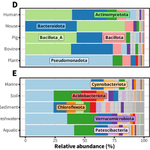
New paper in mSystems! 🧵 How much of your metagenome is actually bacterial/archaeal DNA? For many samples, nobody knows. We built SingleM prokaryotic_fraction (SPF) to answer this, then ran it on >100,000 public metagenomes. doi.org/10.1128/msystems.010…

Ben WoOdcroft retweeted

A big milestone, my final PhD paper is finally out!
Started lab work in 2017 & bioinformatics via a DOE SCGSR fellowship @jgi with @simroux_virus
Honored that this paper was selected as an Editors’ Highlight
nature.com/ncomms/editorshig…
@NatureComms
doi.org/10.1038/s41467-025-6…
Ben WoOdcroft retweeted
Celebrating Excellence at the Centre for Microbiome Research!
We’re thrilled to share that Gene Tyson, @wwood and @luispedrocoelho have once again been named Highly Cited Researchers for 2025 by Clarivate!
#HighlyCited2025
Ben WoOdcroft retweeted

“Bin Chicken” is now published in Nature Methods! It substantially improves genome recovery through rational coassembly. Applied to public 🌍 metagenomes, we recovered 24,000 novel species 🦠, including 6 novel phyla.
doi.org/10.1038/s41592-025-0…
@wwood @rhysnewell
🧵1/6

Thanks also to the reviewers including Alice McHardy - very fair and helpful we thought. We gratefully acknowledge the large collective effort expended in administering, gathering, sequencing and uploading metagenomes into the public domain in the spirit of open science.
SingleM is BYO genome, you can add your MAGs to the refDB to get profiles which include both known species and your novel MAGs. wwood.github.io/singlem/tool…
Many many to thank, particularly @aroney_samuel,
@RossenZhao, Joshua Mitchell, Rizky Nurdiansyah Mitchell Cunningham @CoralSymbioses Gene Tyson @CMR_QUT and dozens of people who have helped with the software, ms, and everyone who tolerated my enthusiasm.
Perhaps most strikingly, it detects microbes that aren't in the ref db, correctly weighting their relative abundance.

gtdb.ecogenomic.org R226-based profiles from 700k public metagenomes are at sandpiper.qut.edu.au. Search for your fave microbe by GTDB taxonomy there and see to get prevalence and community profiles. Got something novel? Get in touch.

A new @rust4bio approach also helps - conserved regions are already aligned to each other so distance calcs become a vector similarity search problem. github.com/wwood/smafa Big distance => novel species. Props to github.com/jakobnissen
for awesome PR.

Fast and RAM-efficient since most raw reads are swiftly ignored. We optimise an up-front DIAMOND BLASTX-based method. Thanks @bbuchfink / Serratus for makeidx

Out in @NatureBiotech: Metagenome taxonomy profilers usually ignore unknown species. SingleM is an accurate profiler which doesn't, even detecting phyla with no MAGs. Profiles of 700,000 metagenomes at sandpiper.qut.edu.au. doi.org/10.1038/s41587-025-0… A 🧵


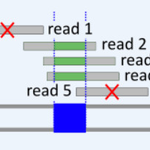
SingleM is a new approach to metagenome profiling. It uses conserved regions within marker genes (20aa) spanned by individual short reads. Concentrating analysis on these regions makes things easier.

