

Plant disease epidemiologist @INRAE_France studying wheat fungal pathogens, mostly Zymoseptoria | Enthusiatic about rust & wild pathosystems | IngAgro PhD IHEDN
Paris-Saclay, FR
Joined April 2012
- Tweets8.4K
- Following577
- Followers3.8K
- Likes11.1K



Détection de la bactérie #Xylella fastidiosa dans le vignoble mosellan luxembourgeois
agriculture.public.lu/de/akt…

🚨 IPPC Pest Alert 🇱🇺
Luxembourg has detected Xylella fastidiosa, an emerging pest under the IPPC Pest Outbreak Alert and Response System (POARS), at 3 vineyard sites.
🔎 Authorities are taking action to prevent its spread.
🔗 Read the Pest Alert here: tinyurl.com/3uew6n6b
#PlantHealth🌱 #IPPC

A seed-associated #Chaetomium globosum endophyte from a susceptible wheat cultivar suppresses #Septoria tritici blotch doi.org/10.1038/s41598-026-6…
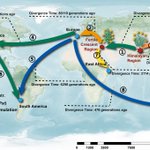
Global rise of a #wheat pathogen [#Puccinia striiformis f. sp. tritici] through two-stage evolutionary emergence coupled with aerial dispersal @NatureComms doi.org/10.1038/s41467-026-7…

I put this in Claude. Response unequivocal. @MDPIOpenAccess, you should try!
“Can you identify errors in this paper? Base your assessment on an in-depth literature search. Give me an opinion as a post-publi reviewer + your assessment of MDPI ed policy.”
mdpi.com/2076-0817/15/7/741
Seriously, @MDPIOpenAccess, you need to stop publishing crap manuscripts. So embarrassing. 🤡
doi.org/10.3390/pathogens150… – at Villepreux, France

Glad to share our latest review, “Breaking the brown bridge for residue-borne fungal disease control in broadacre agricultural systems” — led by Katia Taylor @CSIRO 🙏 through a research linkage project with #BIOGER @INRAE_DPT_SPE @INRAE_Intl doi.org/10.1007/s13593-026-0…


Thrilled to have hosted this week @INRAE_Bioger Simon Law & Katia Taylor for a linkage project @INRAE_France-@CSIRO #Australia. Great discussion on the microbiome of crop residues, both a challenge (source of pathogen inoculum) and a solution (good for soil health and C storage).

Interaction-specific early wheat responses to #Zymoseptoria tritici share enhanced defense-related transcription during incompatibility doi.org/10.64898/2026.10.07.…

"Adaptation in #Zymoseptoria tritici: Implications of fungicide use and temperature conditions", PhD thesis by Eula Gems Mateo Oreiro #SLU #Sweden
res.slu.se/id/publ/8f0d7ab5-…

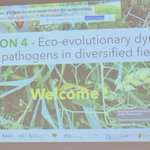
Presentation of the collaborative French-Tunisian project "Cultivated diversity and seed manegement as drivers of agroecological disease regulation in #Tunisian durum #wheat" by Thierry Marcel #BIOGER @INRAE_DPT_SPE at #Mix4Agroecology conference.


The #Mix4AgroEcology conference @AgroParisTech is officially underway! mix4agroecology.colloque.inr…
Program: mix4agroecology.colloque.inr…

Un grand merci à @Arvalisofficiel pour la visite du site de #Boigneville !

Ravis d'accueil nos collègues tunisiens 🇹🇳 à #BIOGER @INRAE_IDF @AgroParisTech pour poursuivre les échanges sur le thème "Résistances variétales en céréaliculture" en marge de la conférence #Mix4Agroecology !

A novel phenotyping approach for reconciling precision and variance in disease severity estimates from high-resolution imaging doi.org/10.1186/s13007-026-0…

📣 Offre de #stageM2 dans notre équipe #ADEP #BIOGER @INRAE_France en #phytopathologie: "Molecular and phenotypic validation of fungal genes involved in the adaptation of #Zymoseptoria tritici to bread #wheat and durum wheat". Détails ici ▶️ bioger.versailles-saclay.hub…
Première réunion de la nouvelle mandature du CES SantVeg @Anses_fr "Risques Biologiques pour la Santé des Végétaux" anses.fr/fr/comites-collecti…. Un atelier où les "anciens" révisent quelques concepts sur l'ARP ; s’il fallait n'en retenir qu'un : introduction = entrée + établissement.

Virulence and genotypic diversity of the #wheat stem #rust pathogen (#Puccinia graminis f. sp. tritici) in #Jordan and the response of durum wheat genotypes to infection doi.org/10.1094/PDIS-10-25-2…

Race characterization of the stripe #rust pathogen in #Canada from 2020 to 2024 and long-term CYP51 mutation analysis doi.org/10.1094/PHYTO-02-26-…

GWAS with a global population of #wheat stripe #rust identified high-confidence avirulence gene candidates doi.org/10.1111/mpp.70336

Exploring the antifungal activity of the wheat microbiome doi.org/10.1042/BST20250408

#Rust of blunt-leaved willow (#Salix retusa) caused by a #Melampsora sp. belonging to the Melampsora epitea complex — perhaps M. laricis-epitea or M. artica based on urediniospore size (14–20 × 16–24 µm) (Aime-La-Plagne, FR).

#Rust on snow willow (#Salix reticulata) likely caused by #Melampsora epitea var. reticulatae syn. M. reticulae (Aime-La-Plagne, FR).
