

I am a time traveller who first bought crypto in 2023 I have been to the moon 600x please follow and check out my links
Joined November 2019
- Tweets140
- Following710
- Followers35
- Likes65

2035 Crypto Whale retweeted

fu*cking every Uncensored AI models on internet
free to use. $0. no GPU needed.
hft.md/uncensored-ai
save it rn.
2035 Crypto Whale retweeted

i know a kid in Iowa making 38k/mo stealing from Russians
Google shut off all Youtube ad payouts in Russia back in 2022
which means thousands of Russian videos get 20,000,000+ views and make $0 from Youtube, and Americans never see them cause the titles are in fucking Cyrillic
so he just translates their scripts into English and cashes the US ad checks they aren't allowed to touch:
why tf would Russian creators still spend 60 hours editing a crazy video if Youtube pays them $0??
they just switched how they get paid
instead of ad revenue, they use Youtube as a traffic funnel to sell $15-$30 low ticket products inside Telegram, Boosty subscriptions (the Russian Patreon), or local crypto/betting sponsors burned into the video
and since they only make money if a viewer actually clicks their link and buys a $19 product, their storytelling and retention had to get 10x better than lazy American channels that just coast on passive ad checks.
a Russian guy selling a $19 Telegram product in rubles has zero use for English viewers
so they never dub their videos into English, and Youtube's algorithm never recommends a video titled in Cyrillic to an American home feed
you know what that means?
there are thousands of 10/10 viral videos sitting behind a language wall right now that already proved they can pull 10M+ views, and 100% of the US ad revenue on them is sitting unclaimed
this is how the kid in iowa runs this shit:
1. open DeepL or ChatGPT and translate high RPM topic words into Russian
-катастрофа (engineering disaster)
-миллиардер (billionaire scandal)
-афера (heist / fraud)
-секретный проект (secret project)
2. paste those Cyrillic words into Youtube search, filter by "This month" and sort by view count
you will instantly see channels with 40k subs pulling 5M to 20M views on stories about Soviet submarine disasters, oligarch scams, crazy mechanical failures etc that zero English channels have ever covered
3. click "Show transcript" under the Russian video, copy the whole thing, and drop it into Claude
tell Claude to translate the transcript into English, strip out the 20-second Russian Telegram product pitch in the middle, and rewrite the story into a tight 45-second Short script (or a 12-minute longform script)
4. run the English script through ElevenLabs for a clean American voiceover
(do NOT just rip their raw mp4 file and slap an English voice over it btw, Youtube's hash detector will flag your channel for reused content in a week. grab the same public news clips and archival photos they used, throw them into CapCut with fresh zoom cuts and English captions so Youtube sees a brand new file)
5. post it to a US channel
some Russian dude got 15 million views, made $0 from Google, and relied on Tg sales to eat
you post the exact same proven story in English to 35 year old Americans, pull a $0.42 Shorts RPM (or $16+ per 1,000 views on longform), and Google wires you $6k to $10k from a single video that was already guaranteed to blow up before you even opened Capcut
i run about 20 faceless channels and make over $100k/mo from them
everything i do to build and monetize them is in my FREE Telegram
tg link in bio
2035 Crypto Whale retweeted

this SpaceXAI paper is f*cking insane...
it's pretty much the 6-bot system the Grok Bot team runs to manage 200+ agents on a small bill
every rule, every formula, the full copy-paste template, all of it spelled out
paste it into your Grok Bot once and it stops waking up 567 times a day to find nothing
the crazy part is the fix was never a bigger model. 75% of the tokens go to re-reading old chat and 99% of people never check
full breakdown in the article below
bookmark it before this thread gets buried


2035 Crypto Whale retweeted

CANCEL your weekend plans.
The 2027 meta just dropped. You NEED to:
• Build a computer-use agent that parses the DOM, diffs screenshots and maps clicks to coordinates so it can drive legacy software with zero APIs
• Ship generative UI where your LLM returns live React components instead of markdown blobs and watch your product feel 10 years newer
• Wire a System-One router that resolves 95% of requests in milliseconds for fractions of a cent, escalating only the hard 5% to reasoning models
• Kill your `while True` loop and rebuild it as a Temporal state machine that resumes from the exact node after a crash or a 3-day approval
• Write a raw MCP server in pure JSON-RPC so any external agent can call your product with scoped credentials, no SDK required
• Add grammar-constrained decoding so your agent emits 100% valid JSON on the first try, every try, forever
• Build a trajectory grader in CI that blocks the merge the second a tool-call sequence deviates from the golden path
• Ship an inter-agent sanitization proxy that executes prompt injections before they cross a single agent boundary
• Wire a PII unmasking proxy that swaps sensitive data for UUIDs before inference and restores it after with full audit logs
• Add a cost kill-switch that halts any loop projected to exceed $0.50 and degrades frontier → mid-tier → local → cache
• Implement KV-cache prefix sharing at the gateway and cut Time-To-First-Token by 80% on repeated system prompts
• Set up speculative decoding: local 3B drafts, frontier 70B verifies, acceptance rate logged on every single request
• Shadow-route 5% of production traffic to your new model, diff trajectories and cost silently, auto-post the report to Slack
• Automate the DPO flywheel: thumbs-down → preference pairs → nightly LoRA → eval-verified promotion, zero human touch
• Build a voice loop with VAD and sub-1s interruption handling, streaming tokens and tool calls simultaneously
• Ship an API-to-browser fallback that spawns a headless browser the moment a REST endpoint 404s, finishing the job anyway
• Add a WebGPU shim so a 2B model runs in the browser when the cloud dies and your users never see a spinner
• Fuzz your own agent swarm with malformed tool outputs and context overflow until it self-heals without a single pager alert
• Publish one benchmark: your system vs the naive baseline, on cost, latency and task success, fully reproducible
The wrapper era is over. The systems era pays.
You have way too much to do.
Bookmark & Repost.
2035 Crypto Whale retweeted

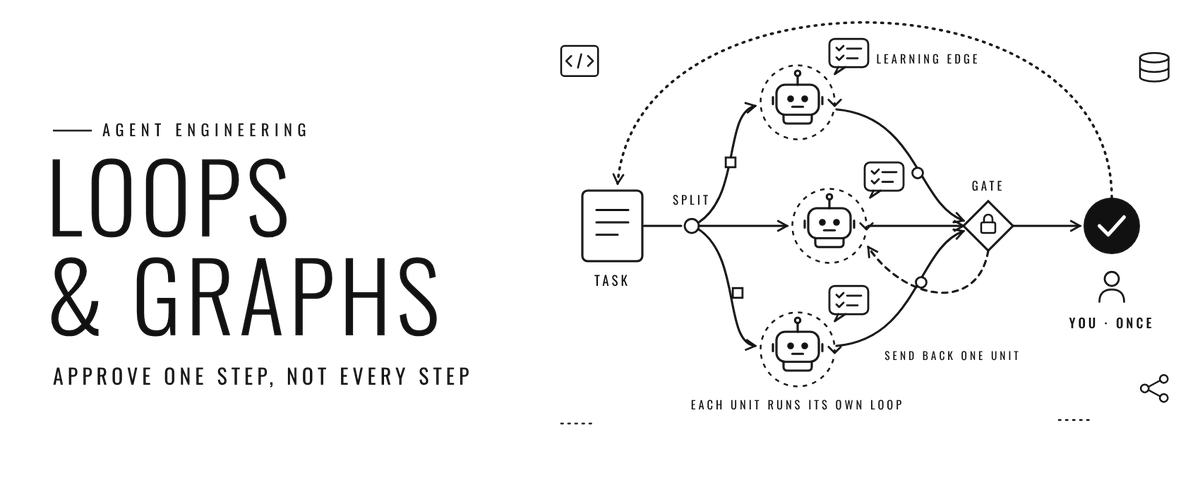
After Andrej Karpathy released autoresearch, where an agent runs experiments in a loop on its own, I packed his method into one prompt that turns Opus 5.5 into a graph and can carry almost any task to the finish.
→ writes a check that can actually fail, first
→ splits the task into parts
→ runs the independent parts in parallel
→ loops each one until it passes the check
→ sends back only the part that failed
→ turns every mistake into a rule for next time
→ calls you only for the step that can’t be undone
Throw it at Opus 5.5 with the task you’ve been putting off for a week, and you’ll see the difference in one run.
The full prompt is in the comments.
How to tune it for your own work is in the article below. Save it before it gets lost ↓

2035 Crypto Whale retweeted

My roommate hasn't slept since this shit... Claude Code just found a one-person website that made $4,800 in a single day. The guy who runs it has 27 followers on X, and he's selling the whole business for $360.
It finds local businesses with no website, builds each one a site with AI in minutes and writes the pitch for you. A web agency you run alone from a laptop.
This wasn't a screenshot from some guru. Every dollar was read straight from Stripe on TrustMRR, with the day it landed: $0 for 22 days, then $4,800 on one day. 48 people visited the site that whole month.
He opened Claude Code on his MacBook, made a folder called steal and told it to pull the 25 fastest-growing businesses on TrustMRR with $1,000 to $20,000 of checked revenue last month. 10 names came back, and 8 never said where their customers come from.
He started scrolling. A library of AI agent skills went from $27 in August to $12,216 in October, paid every single day. An email app for Mac went from $238 to $23,099 in one month. Then he opened the listing for the $4,800 site: "375 interested buyers saw this recently." People were lining up to buy it while he was still reading.
Tiny businesses that make money don't need an audience, so nobody posts about them. Their numbers sit on a public page that almost nobody reads.
Claude Code only runs this while his laptop is awake, so he gave the same job to viktor, an AI employee in his Slack that works from its own computer in the cloud. Every Monday it sends him the new winners and a steal sheet for the best one.
He copied the website-for-local-shops one that weekend. By Friday four shops had paid him $400 each for sites he never designed. How many people are already copying the same 10 businesses, I don't know.
To find yours, open Claude Code, make a folder called steal and ask it for the fastest-growing businesses with revenue checked by Stripe. The exact prompt he used is in the first comment, and the full setup for Claude and viktor is in the article below.


2035 Crypto Whale retweeted

This is f*cking insane. Demis Hassabis spent 16 years building DeepMind and won a Nobel Prize
Last week, he packed what he knows about the next 5 years into one free 1-hour talk
He explains who survives what's coming and who doesn't
Chatbots → Agents → Workflows → Automated Departments → One-Person Companies
One person who really understands AI will outperform an entire startup team
People pay $15K for bootcamps that teach less than this
You probably don't have 1 hour right now
Don't let this disappear from your feed
Bookmark it and watch it tonight
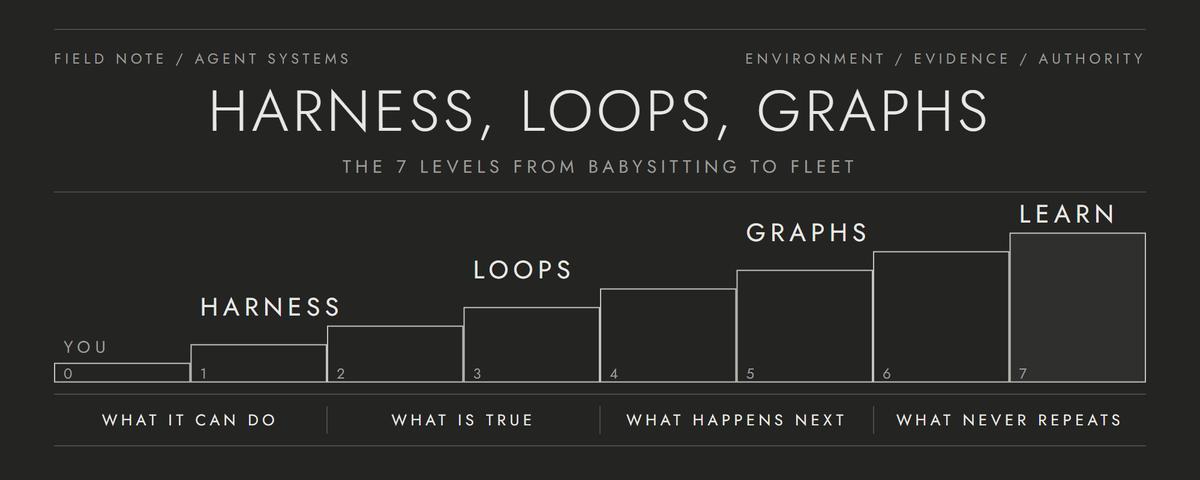
Then read how to build agents that actually finish the job in the harness engineering guide below ↓
2035 Crypto Whale retweeted

holy f*ck, this free AI degree for your workday is 9 GitHub repos
32 free Claude skills and 268,503 stars
in the right order they take you from raw notes to workflows that run alone
1. obsidian-skills (50,523) -> where your knowledge lives
obsidian-markdown, obsidian-bases, json-canvas, defuddle for clean text
↳ github.com/kepano/obsidian-s…
2. notebooklm-py (20,036) -> ask your sources
query Gemini Notebook from Claude Code, unofficial
↳ github.com/teng-lin/notebook…
3. huggingface/skills (11,243) -> read the research
huggingface-papers finds the paper behind a claim
↳ github.com/huggingface/skill…
4. humanizer (62,975) -> text that sounds like you
strips the tells that read as AI
↳ github.com/blader/humanizer
5. marketingskills (57,678) -> copy that sells
copywriting, copy-editing, launch, pricing
↳ github.com/coreyhaines31/mar…
6. vercel-labs/agent-skills (33,309) -> writing with rules
writing-guidelines, plus React and deploy skills
↳ github.com/vercel-labs/agent…
7. Agent-Skills-for-Context-Engineering (18,263) -> context
context-fundamentals, before you stack ten skills
↳ github.com/muratcankoylan/Ag…
8. n8n-skills (6,557) -> work that runs by itself
Claude builds n8n workflows that run
↳ github.com/czlonkowski/n8n-s…
9. trailofbits/skills (7,919) -> clean Python
modern-python for tidy projects
↳ github.com/trailofbits/skill…
most of these have nothing to do with code
don't install all 32 at once
add one skill and give it a week
keep it if it saves an hour
whoever on your team learns these first runs the AI work
the raise usually comes with it
the Obsidian + Opus 5.5 build is in the guide below ↓


2035 Crypto Whale retweeted

WHOEVER LEAKED THIS JEV BRAIN SCAN DESERVES THE BCI CHAIR
I thought a brain scan was one grayscale picture, two findings, and a bill from your HMO.
Apparently not.
This scan's setup is much more interesting:
→ ANATOMY splits the volume across 6 regions (frontal 12.3, parietal 12.0, temporal 14.6, occipital 9.9, cerebellum 7.2, brainstem 4.5 percent), no averaging across the whole brain
→ PATHWAYS tracks 5 named signal routes (corticospinal 95, arcuate 86, uncinate 75, fornix 67, cingulum 63 percent), each pathway logged separately, no "overall connectivity" lie
→ EEG BANDS resolves delta 1.2 Hz, theta 4.8, alpha 10.0, beta 18.3, gamma 34.4 continuously, no manual channel re-reference
→ NEUROTRANSMITTERS tracks dopamine 58, serotonin 67, norepinephrine 56, acetylcholine 62, GABA 51 in parallel, no snapshot bias
→ PROCESSING UNITS surfaces live load per cognitive module (visual 97, auditory 65, motor 67, executive 96, default mode 63 percent), flags 6 modules drifting past the baseline this scan
so you get:
Regions resolved. Pathways tracked. Bands continuous. Modules loaded.
the interesting part isn't a higher-res scan.
it's giving every signal a layer the atlas can anchor against the next session.
Instead of a radiologist reading one picture and writing "within normal limits", you load 86.5B neurons at 4.2ms processing, resolve 5 EEG bands live, and read neurotransmitter levels across 5 systems in the same scan.
Resolve the region. Track the pathway. Load the module.

2035 Crypto Whale retweeted

HOLY F*CK, motion studio in 100% free github skills for you guys.
20 open-source skills for Opus 5.5.
Animation. Simulation. 3D. Audio. Export.
01 Remotion → React video engine.
github.com/remotion-dev/remo…
02 Remotion Skills → Official video skills for coding agents.
github.com/remotion-dev/skil…
03 Anime.js → Timeline choreography.
github.com/juliangarnier/ani…
04 Motion → UI animation and layout transitions.
github.com/motiondivision/mo…
05 Manim → Animated diagrams, equations and explainers.
github.com/ManimCommunity/ma…
06 Lottie → Lightweight vector animation playback.
github.com/airbnb/lottie-web
07 MCP for Blender → Let Claude build and edit 3D scenes.
github.com/ahujasid/mcp-for-…
08 Three.js → 3D scenes and camera moves.
github.com/mrdoob/three.js
09 Three GPU Pathtracer → Realistic lighting and reflections.
github.com/gkjohnson/three-g…
10 Jolt Physics → Collisions, rigid bodies and soft bodies.
github.com/jrouwe/JoltPhysic…
11 postprocessing → Bloom, depth of field and color grading.
github.com/pmndrs/postproces…
12 Three.quarks → Particle trails and VFX.
github.com/Alchemist0823/thr…
13 Tweakpane → Live controls for your scene parameters.
github.com/cocopon/tweakpane
14 ComfyUI → Node-based generation workflows.
github.com/Comfy-Org/ComfyUI
15 CosyVoice → Multilingual voiceovers.
github.com/QwenAudio/CosyVoi…
16 librosa → Beat detection for music-synced animation.
github.com/librosa/librosa
17 WhisperX → Word-level timing for captions.
github.com/m-bain/whisperX
18 OBS Studio → Screen capture.
github.com/obsproject/obs-st…
19 LosslessCut → Fast cuts without re-encoding.
github.com/mifi/lossless-cut
20 FFmpeg → Encoding and delivery.
github.com/FFmpeg/FFmpeg
Concept → scene → motion → sound → final cut.
Bookmark this. Go build something worth watching ↓


2035 Crypto Whale retweeted

if you edit videos, stop paying for every tool you use.
i found 5 free GitHub repositories that can seriously upgrade your video editing workflow.
some can replace paid editing software. others automate tasks that would normally take you hours.
here’s what you should know:
1. OpenCut : 96.9K GitHub stars
an open-source video editor built as a free alternative to CapCut.
→ edit videos with a familiar timeline
→ add effects and transitions
→ create content without another subscription
GitHub: github.com/OpenCut-app/OpenC…
2. Remotion : 69.2K stars
create videos programmatically using React.
→ generate videos from code
→ turn data into animated visuals
→ create reusable video templates
→ automate videos at scale
GitHub: github.com/remotion-dev/remo…
3. LosslessCut : 45.5K stars
the tool for cutting large video files without re-encoding them.
→ trim clips almost instantly
→ remove unwanted sections
→ preserve original quality
→ save time when handling large footage
GitHub: github.com/mifi/lossless-cut
4. video-use : 30.2K stars
use AI agents to work with your video footage.
→ organize raw footage
→ interact with your videos through Claude Code
→ automate parts of your editing workflow
→ turn instructions into editing tasks
GitHub: github.com/showlab/Video-Use
5. auto-editor : 5.7K stars
automatically remove silence and unwanted pauses from videos.
→ detect silent sections
→ cut dead space automatically
→ speed up talking-head editing
→ process videos from the command line
GitHub: github.com/WyattBlue/auto-ed…
here’s a workflow worth trying:
→ use auto-editor to remove silence
→ use LosslessCut for quick trimming
→ use OpenCut for your main edits
→ use Remotion when you need programmatic videos
→ experiment with video-use to bring AI into your editing process
you don’t need to keep buying expensive software to improve your workflow.
save these repositories and test the ones that fit how you edit.
follow for more useful AI tools and open-source discoveries.


2035 Crypto Whale retweeted
Claude Code just found proof that the tiny apps making real money online are hiding in plain sight. an email app for mac. a collector-car price checker. a form builder. they're making up to $14,201 a month and almost none of them tell you where their customers come from. i have the data to prove it.
i've suspected this for months but last week something happened that made me finally check.
my friend spent 5 months building an app ChatGPT called "a million-dollar idea." launch day he opened Stripe next to me and the whole dashboard was zeros. "0 customers." "$0.00 this month." he looked at me and said "why did ChatGPT tell me this would work." i said i don't know. but i did know.
i opened Claude Code on my MacBook and ran Opus 5.5 that same night.
it reverse-engineered the 25 fastest-growing businesses on TrustMRR, a site that reads revenue straight from Stripe. not the numbers founders post on X. not the "i made $50k" screenshots. only money Stripe actually saw land in their accounts in the last 30 days.
what it found:
→ bytemail, an email app for mac, made $14,201 in 30 days
→ Skillry, a library of AI skills that started in August → $10,519
→ Intentsly → $7,388
→ WESAM.ai → $7,304
10 of them landed between $1,000 and $20,000 a month. small enough to run alone. every dollar checked and sitting on a public page anyone can open.
Claude Code pulled what every one of them sells:
→ "oil and gas safety audits" — $2,226 a month. i didn't know this was a business
→ "collector-car pricing" — $1,860 from one tiny niche
→ "cloud macs for ai agents" — $1,288 from a problem that didn't exist 2 years ago
→ "ai image and video generator" — $5,341
→ "form builder" — $1,187. the most boring idea on the list. still paid
those businesses were sitting on a public page sorted by growth. bytemail had the most. Skillry was second. and 8 of the 10 left one field blank: where their customers come from. so Claude Code dug it up anyway, from reviews, Reddit, X and YouTube.
the craziest one was Skillry. it started in August. the founder wrote one line that explains the whole business: "their visual output often looks generic." AI builds sites that all look the same. Skillry sells the fix. free skills, Premium at $9.99 a month. $10,519 in 30 days. i've read that complaint a hundred times. never thought to sell the fix.
then i checked the list everyone else uses. Indie Hackers, where founders type their own numbers. the #1 "business" by revenue claimed ten quadrillion dollars a month. typed by hand. nobody checked. that's the kind of list people copy their ideas from.
i asked Claude Code how to steal one. it mapped Skillry's demand, offer and channels and built a one-page steal sheet.
what i did:
→ told it the kind of business i'd actually run
→ set it to check TrustMRR again every Monday at 9am
→ had it put only new winners on top, with a steal sheet for the top one
→ said no once to the ones i'd never build, so they never come back
Claude Code confirmed the Monday job was live. one catch: it only runs while my laptop is awake. so i handed the same job to viktor, an AI employee in my Slack that works from his own computer in the cloud. same steps, one paste. his first run took 4 minutes: 25 businesses checked, 2 winners in an Excel file, a steal sheet in my Slack.
i sent the Excel file to my friend. he went quiet for a minute, then said "why didn't ChatGPT show me any of these." that's when i knew for sure. the ideas that already make money aren't secret. they're on a public list almost nobody checks.
the full step by step is in the article below: the Claude Code build with every prompt, and the viktor version that runs while your laptop sleeps. the prompt is in the first reply. one paste. save it so you don't lose it and send it to anyone who's ever said "every good idea is already taken." it is. now you can find who took it and steal it.
2035 Crypto Whale retweeted

I can't believe nobody is using this yet
I showed a bot on my screen once how I hunt for hidden GitHub repos based on real working code, and an hour later a folder with 3 fresh AI tools was sitting on my cloud drive
The new Grok Bot update just shipped learning from demonstration and a Shared Cloud VM running in the Cursor cloud
I simply demonstrated the sequence of actions on screen, the bot saved it as a Skill, and then I triggered a team of bots on a single shared drive right via the bot tag on X:
Bot #1 Scout:
parses fresh GitHub commits through a shared logged-in browser and pulls 30 under-the-radar repos onto the drive
Bot #2 Auditor:
opens the downloaded folders in the terminal on its own separate virtual screen and immediately filters out empty wrappers with no real logic
Bot #3 Tester:
physically runs the build for each project on a third screen and keeps only what compiles with zero errors
Here are 3 fresh finds that passed this filter in an hour:
btahir/reelbird
Free open-source replacement for paid Screen Studio ($29/mo) with a built-in CLI and MCP server. Records your screen with auto-zoom and feeds the video directly to coding agents so they can replicate your actions
github.com/btahir/reelbird
casareanderson/sieve
Security scanner that checks Claude Code, Aider, and Goose configs for accidentally leaked tokens and highlights vulnerabilities that actually affect your system
github.com/casareanderson/si…
win4r/codebase-memory-mcp-pro
Local code memory graph via MCP that feeds exact dependencies to your agent in milliseconds and cuts token usage by 99%
github.com/win4r/codebase-me…
Standard scrapers sort by stars and bring back old, overhyped software. When 3 bots sit on a single virtual machine with a shared filesystem, one downloads an obscure repo in the browser while another physically tests it in the terminal
How to set this up in 5 minutes:
Step 1: Turn on demonstration mode in Grok Bot and show once how to inspect code in the console
Step 2: Save the workflow as a standalone Skill
Step 3: Deploy 3 bots onto the shared Cloud VM (Scout, Auditor, Tester)
Step 4: Trigger the task with the bot tag right on X and grab the verified software an hour later
docs: docs.x.ai/grok-bot/overview
Bookmark this post so you never have to hunt for tools on GitHub manually again


2035 Crypto Whale retweeted

DEEPSEEK HAS JUST KILLED THE ENTIRE CODING AGENT INDUSTRY
It's called deepseek-harness
It's the most complete framework for creating code agents
Open source. Claude's most complete plan costs $200 a month. This is FREE
And it comes with a brutal idea
Everything is a plugin
The model
The tools
The sandbox
The UI
Even the agent's own loop
You can swap out any of those pieces just by tweaking the config
Without touching the base code
One single command and you have the local web interface:
npx deepseek-ai/dsh web
Compatible with DeepSeek, Claude, GPT, Gemini and whatever else you want to plug in
It reached over 160 thousand stars in just a few days
A frontier lab just dropped for free the exact layer that other companies are selling as premium product – at Dallas, TX
2035 Crypto Whale retweeted

i've burned through 3 BILLION tokens on uncensored deepseek v4.1 flash in the past 24 hours for $87
if you're still defaulting to claude and chatgpt for everything you're ngmi
PLEASE spend a weekend going down the chinese open-weight model rabbit hole. deepseek, qwen, kimi, glm, uncensored fine-tunes, abliterated models, local inference, all of it
the price/performance on some of this shit is genuinely ridiculous and 99% of people have no clue it even exists
you can run smaller models locally with Ollama, LM Studio or MLX. larger models through Venice AI or other inference providers. plug them into OpenCode and suddenly you have a coding agent with terminal access, browser tools, filesystem access, whatever you configure
YOU DO NOT NEED TO BE LOCKED INTO ONE MODEL OR PROVIDER
here's a prompt. literally paste this into your coding agent:
"research the current chinese open-weight model ecosystem. deepseek, qwen, kimi, glm, plus uncensored and abliterated variants.
inspect my hardware and figure out what i can run locally with Ollama, MLX or llama .cpp. for anything too large, compare hosted providers including Venice AI.
compare actual output tokens/sec, TTFT, context limits, input/output pricing, cache pricing, coding ability and tool-calling reliability. find the best options for my actual workloads, not benchmark leaderboards.
set up OpenCode with the best local and hosted models for my budget. configure the providers, test tool calling, optimize context usage and benchmark identical tasks across endpoints.
show me the fastest, cheapest reliable setup you can actually get working. verify everything before changing my existing configuration."
ALSO PLEASE understand that the model and the inference provider are two different things
you can have the EXACT same weights running at wildly different speeds depending on who's serving them. check real decode speed, not advertised throughput
prefix caching, context compaction, quantization, model routing. look into this shit. your agent could be spending more money rereading old tool outputs than actually solving anything
and stop using expensive reasoning models for tasks a tiny local model or 20 lines of python could handle
there's so much money being wasted on AI subscriptions by people who haven't even tried running a model outside a chat window
it's actually insane

2035 Crypto Whale retweeted

THIS IS F**KING DANGEROUS
SOMEONE JUST DROPPED A MASSIVE COLLECTION OF AI JAILBREAK PROMPTS
THAT COULD PUSH MULTIPLE MODELS PAST THEIR GUARDRAILS.
→ prompts for Gemini, DeepSeek, GLM and Kimi
→ jailbreak experiments across multiple AI models
→ completely free and open source
→ no paywall
ONE REPO. A WHOLE ARSENAL OF JAILBREAK PROMPTS.
REPO BELOW
2035 Crypto Whale retweeted

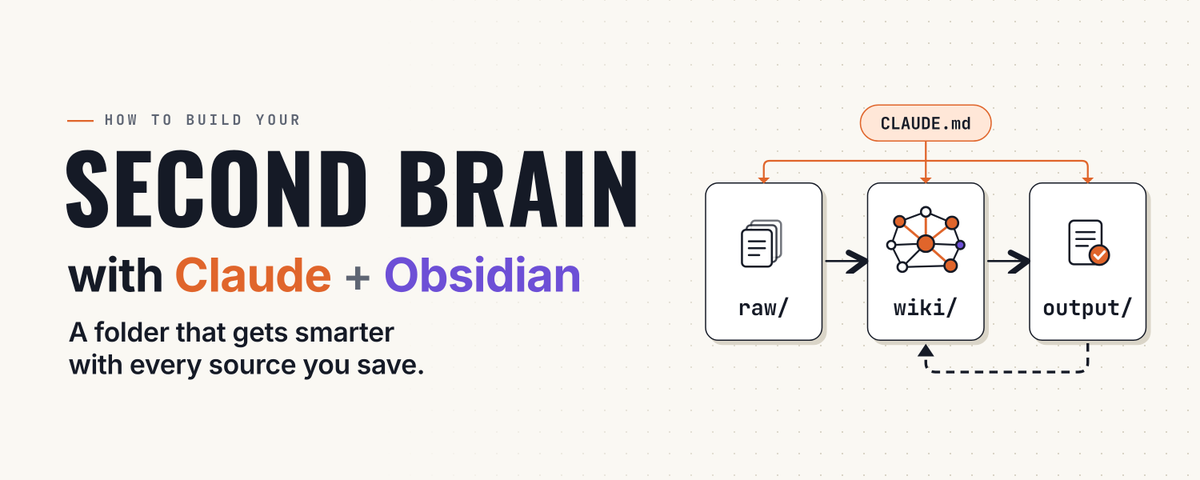
I still don’t understand why people keep building a Claude second brain from scratch when these 10 repos already built the whole system
They take in your sources, link them into a wiki, check every claim, and one of them runs fully on your own machine
01 obsidian-skills → Obsidian’s own CEO teaches Claude how Obsidian really works
github.com/kepano/obsidian-s…
02 claude-obsidian → drop in any source and Claude reads it, links it and files it into one connected graph of plain Markdown you own
github.com/AgriciDaniel/clau…
03 obsidian-second-brain → Claude Code remembers you between sessions, with 48 commands, all inside your Obsidian vault
github.com/eugeniughelbur/ob…
04 karpathy-llm-wiki → one install line, then ingest, query with citations and lint, in Claude Code, Cursor, Codex or OpenCode
github.com/Astro-Han/karpath…
05 second-brain → raw sources in, linked wiki pages out, browsed in Obsidian
github.com/NicholasSpisak/se…
06 second-brain-os → the full kit: a 77-page guide, a starter vault, 18 skills, 72 commands and 6 subagents, four of them read-only
github.com/undefined-ui/seco…
07 llm-wiki → two-layer memory: 10 to 20 rules Claude loads every session, 50 to 200 wiki pages pulled only when needed
github.com/MehmetGoekce/llm-…
08 vouch → agents propose changes, you approve them, and a claim without a source is an error
github.com/vouchdev/vouch
09 ai-second-brain → your ChatGPT and Claude history becomes a linked Obsidian vault, then a wiki
github.com/charlie947/ai-sec…
10 LLM_Wiki_SecondBrain → the whole pipeline on a local model, no cloud API. 32 GB of RAM recommended
github.com/DimitrisLianos/LL…

2035 Crypto Whale retweeted

RIP paid AI memory tools.
MemPalace just hit 49K stars for one reason: it outperforms everything, runs locally, costs nothing, and never sends your data anywhere.
Most AI memory systems work like a junk drawer. You throw everything in and hope semantic search finds the right thing. MemPalace organizes memory into a structured palace where people and projects get wings, topics get rooms, and original text lives in drawers that can be searched individually without crawling the whole corpus.
The benchmark numbers are what shocked me. 96.6% retrieval recall on LongMemEval with zero API calls, zero LLM, zero cloud involvement. Add the hybrid pipeline and it hits 98.4% on questions the system had never seen. Every result is fully reproducible from the repo.
→ Verbatim storage, nothing gets summarized or rewritten ever
→ 29 MCP tools for palace reads, knowledge graph operations, cross-wing navigation, and agent diaries
→ Auto-save hooks for Claude Code keep memory updated before context compression hits
→ Python 3.9 plus ChromaDB is all you need, around 300MB disk and zero API keys
49K stars. MIT License. 100% Opensource.
github.com/MemPalace/mempala…


