

Human Resources Director at @PUCPR1. Alumni @iesebschool, @unav & @PUCPR1. (Following, RTs & links ≠ endorsement)
Puerto Rico, USA
Joined March 2013
- Tweets1.1K
- Following5.6K
- Followers390
- Likes1.6K

Wilfredo Cornier retweeted
Necesitamos escucharlo 365 veces: "¡No tengáis miedo!"
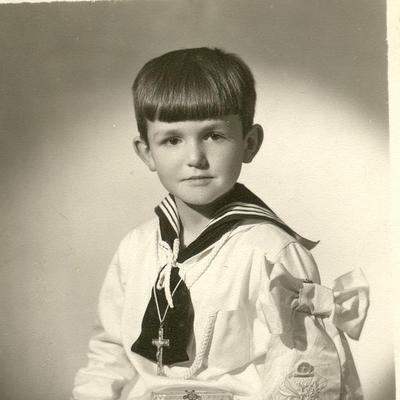
Este es Carlos Ortiz, fallecido en el accidente de Urda, director del área de colegios de San Pablo CEU...
Gracias por tu testimonio. Descansa en paz!
#AccidenteTren
#AccidenteFerroviario
#AccidenteFerroviarioUrda
#AccidenteUrda
#TodosLosSantos
#TodosLosDifuntos
Wilfredo Cornier retweeted

PRUEBA ESTE TRUCO CHATGPT + KLING:
Crea personajes que hablan con IA
Sígueme, comparte y comenta, que para eso está Twitter X
#ia #ai #inteligenciaartificial #chatgpt #bigdata #data #bilbao #motioncontrol


Wilfredo Cornier retweeted

Tu atención es el recurso más valioso que tienes.
Si una app te interrumpe constantemente, no es entretenimiento: es una fuga de concentración
Recuperar la atención es posible y urgente.
Wilfredo Cornier retweeted

Mi Top 3 trucos de IA. El tercero es el que más tiempo me ha ahorrado este año 👇👇
Wilfredo Cornier retweeted

Epidemias y pandemias: guía para prevenirlas y gestionar sus riesgos
"Una crisis mal comunicada puede llegar a causar más daño social que el propio problema sanitario"
@ToniTrilla
theconversation.com/epidemia… a través de @Conversation_E

Wilfredo Cornier retweeted
PRUEBA ESTE TRUCO CHATGPT - 10 CÓDIGOS PARA EFECTOS FOTOGRÁFICOS PROFESIONALES
Sígueme, comparte y comenta, que para eso está Twitter X
#ia #ai #inteligenciaartificial #chatgpt #bigdata #data #bilbao #fotografiaia
Wilfredo Cornier retweeted

Cuando un progre acomplejado con la historia de su nación te diga que España tiene que devolver el oro a los países de Hispanoamérica, le pones este vídeo
Wilfredo Cornier retweeted

Los pueblos que no tienen solución viven estos epílogos:
Se rehabilita a los condenados
Se libera a los presidiarios
Se hace regresar a los exiliados
Se invalidan las sentencias judiciales
Cuando esto sucede llega el colapso total del estado, y no existe esperanza de salvación .
Cicerón
Wilfredo Cornier retweeted
¿Podría la IA acabar realmente con la especie humana?
"El verdadero reto no es evitar que las máquinas piensen como humanos, sino garantizar que quienes diseñamos el futuro no olvidemos lo que nos hace verdaderamente humanos"
theconversation.com/podria-l… a través de @Conversation_E

Wilfredo Cornier retweeted
Qué se sabe de la alerta sanitaria por peste tras la muerte de una trabajadora de un laboratorio en Rusia elpais.com/sociedad/2026-10-… vía @el_pais

Wilfredo Cornier retweeted

La Fórmula de Euler explicada visualmente en 2 minutos:
Rotación: Un punto recorre una circunferencia en el plano complejo.
Coseno: Es la proyección horizontal (eje real) de esa rotación.
Seno: Es la proyección vertical (eje imaginario) de esa misma rotación.
MIRA EL VIDEO 👇
Wilfredo Cornier retweeted

This is the most important video on the internet right now for parents to watch.
Wilfredo Cornier retweeted

Este video lo hizo para Instagram una joven cubana valiente, Yanaisa Crespo. Me tomo la libertad de compartirlo porque denuncia, sin filtros, la realidad que se vive en Cuba.
Ojalá lo vean quienes viven fuera de la isla y todavía creen que exageramos cuando decimos que Cuba es un infierno provocado por la dictadura.
No es propaganda. No es exageración. Es la realidad. 🇨🇺.
Wilfredo Cornier retweeted

Pope Leo XIV at UNESCO asks “what does it mean to be human?”
Watch and listen to the Pope’s magnificent reflection:
“What does it mean to be human? Every culture is challenged by this question, which lies at the heart of every form of knowledge, every art and every religion. Even in the twenty-first century, after all, we cannot take for granted that we know who the human person is or what it means to live as a human being. Indeed, every generation is called to grapple with this question, especially in the face of tragedies that, regrettably, occur even today.
Before all else, the human person is someone who is conceived and born. Thus, first of all, to be human means to be a child. None of us chose to be so. None of us decided from whom, when or where to be born. This evident truth sheds light on something that is not merely biological but ethical: as children, we are all brothers and sisters. From the outset, our humanity is a gift and a trial, a promise and a responsibility. For every human being, birth establishes a primordial bond — a communion of life that has its source, and its first educational setting, in the family.
Secondly, we are all born naked and in need. We are poor by birth, in need of bread and words, of care and affection — that is, of all that nourishes body and spirit. We know this well, and yet, as we become adults, we risk forgetting it. It is precisely those in need who suffer the greatest consequences of this forgetfulness, whenever their humanity is betrayed or cast aside, exploited or deceived. Forgetting the circumstances of our birth obscures the very idea of human life, because it detaches life from the history common to us all. Thus, life is no longer understood as a gift, but as a commodity. It is no longer viewed as a summons to care and responsibility, but as a product to be exploited. Indeed, this tragic alternative reminds us that to be human is to be free by nature. Since all of us have been children, our freedom begins with our response to the freedom of the one who first turns to us — whether with gestures of affection or rejection, of loving welcome or neglect and cruelty.
Thirdly, to keep alive the memory of our common humanity is to recognize its grandeur — that is, its immense potential — even though it is diminished by many forms of evil and injustice. Those engaged in the fields of education, science and culture are called all the more to care for every person, so that the beauty of our freedom may shine forth. This beauty has a name: justice. Freedom is indeed beautiful when it is oriented toward goodness and truth; it is disfigured when it descends into arbitrariness, violence or the thirst for power. To be human, then, implies a responsibility before history: the human being is one who grows, learns and works with both hands and mind. By that labor, we may cultivate the earth or disfigure it, create works of art or destroy them. At this particular juncture, we must recognize that the most terrible of “human works” is war, for then science itself is placed at the service of an inhumane will to destroy and to kill.”
