

Dad, geek, builder ・Building https://xitter.cf/t.co/GqUgaRyJQq・Home is https://xitter.cf/t.co/011lZ47kFH
Greece
Joined December 2006
- Tweets22.8K
- Following2.4K
- Followers6.8K
- Likes4.7K




vrypan retweeted

Can confirm my sources saying the same: "We are seeing loss of connectivity in various areas at speeds of 130–160 km/h."

vrypan retweeted

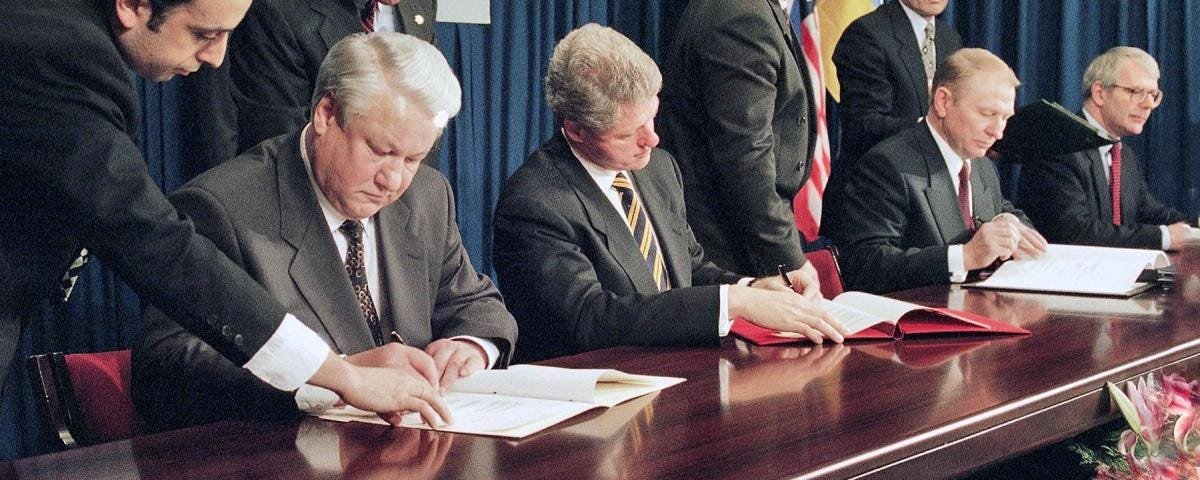
In 1994, Ukraine gave up the world’s third-largest nuclear arsenal on America’s word.
This month, the president traded that word for a diesel deal with Putin.
Watch what he does for Putin. It shows what he wants to do with his power over you. 👇🏼


vrypan retweeted

Protests are spreading across Europe.
France, Italy, Spain, Portugal, Belgium, Greece and even Albania have seen or will see massive clashes these weeks.
Expect many reasonable grievances to be exploited by the extremes and to degenerate into vicious urban guerrilla warfare.


vrypan retweeted

nothing that hasn't already been said before but it's so much fun to be building with ai these days
i've been slowly working on an article for something and there's one interactive piece i use to show a concept. i gave opus a picture of a proprietary font that isn't available and a few minutes later i had it as a woff2 ready to use
and im finding myself using opus 5.5 a lot more for creating custom icons and getting them lottie friendly. you still need to be heavily involved (maybe run through 30 variations before you find a style you like, then tweak) but this is still pretty magical
vrypan retweeted

I posted about the riots in France yesterday. Saying that:
“You have the right to protest.
You have the right to be angry.
You have the right to demand change.
You do NOT have the right to burn, loot or attack people.”
What happened in the comments was disturbing.
Racism. Hatred. Attacks on entire communities. People openly trying to divide France and Europe.
And it made me wonder.
How much of this anger is genuine? And how much is being deliberately amplified?
We know Russia has conducted influence operations designed to exploit divisions in European democracies.
And here’s the clever part.
Russia doesn’t need to invent racism.
It doesn’t need to organise riots.
It doesn’t need to create political divisions.
It just needs to make existing divisions worse.
Turn French citizens against each other.
Turn Europeans against each other.
Make everyone distrust the police, the government, the media and democratic institutions.
And watch us do the rest.
Am I saying the accounts commenting on my post were Russian bots?
Maybe. But I have no evidence of that.
But we should all be asking who benefits when our conversations become increasingly hateful.
Because you don’t have to be a Russian agent to amplify Russian propaganda.
You just have to stop questioning what you’re sharing.
The easiest way to weaken a democracy is to convince its citizens to turn against each other.
And judging by some of the comments yesterday, we have a problem.

I’m French. 🇫🇷
And I’m tired of watching people confuse freedom with the freedom to destroy.
You have the right to protest.
You have the right to be angry.
You have the right to demand change.
You do NOT have the right to burn, loot or attack people.
A Republic that protects the right to protest must also protect its citizens from violence.
That’s not authoritarianism.
That’s the rule of law.
Sure, if you consider learning rust or C an achievement, AI coding is a threat. But if you've been writing code for 30 or 40 years, and you've coded for various platforms and in many languages, AI if fascinating.

When I was writing Unreal Engine 1, my time was divided as follows:
- Around 30% went to seriously deep coding on hard problems: assembly language texture mappers, C++ BSP trees, data persistence, object oriented systems design, and networking.
- Around 70% was just typing and refactoring large bodies of code needed for a complete engine feature set. This was not hard, and while I was doing it my mind was mostly on the deeper coding topics, thinking and planning for what's next. It didn't feel much different from vibe coding today, except that it was just me typing code on an IBM Model M keyboard rather than prompting it and reviewing the results.
So, it has always seemed perfectly logical that we would rely on AI for that 70%, once the AI could do it with a similar quality standard as we could, which has never been perfection. It came as no surprise that, after a few years of AI model evolution, it was able to take the reigns on that 70% and free up programmers' time for more valuable tasks.
What's more of a surprise is the emergence of AI as a sort of insta-Carmack able to solve hard technical problems quite cleverly and often cleanly, and that it's able to reason about and work in complex 3D scenes both by operating the tools and by directly understanding the raw data files.
I abandoned assembly language in 1998 when out-of-order CPUs made much simpler C/C++ code faster, and never I missed it. If prompting through architectural documents, concept art, and design plans can transcend typing code and tweaking vertices, that will enable developers to spend their time on higher-level, higher value technical and creative tasks.
What matters is the end product, whether it's a game or an engine. Anything developers can do to try out more ideas and make better software and games faster is a win for everyone.
vrypan retweeted

We don’t use Starlink for our responses inside Russia. We use Starlink to intercept jet-powered “shaheds” that attack our civilians and kill families.
Starlink wasn’t turned off – its speed was reduced. And when the speed was reduced, we were unable to intercept a certain number of jet-powered “shaheds.” We couldn’t use a tool that helps protect people. That’s very painful and frustrating.
We also use Starlink for mid-range strikes against enemy military targets in our temporarily occupied territories. We couldn’t do that when the restrictions were in place. And third, what matters most is people. Our warriors, who spend weeks and months on the front line, receive food and water delivered by drones using Starlink.
Has the speed been fully restored to what it was before? No. Is it being restored now? Yes.
From a conversation with media representatives in Brussels. (2/3)
vrypan retweeted

Imagine if Europe, in the days after 9/11, had cleared its throat and announced: We have struck a tremendous deal with Osama bin Laden. We have lifted the sanctions on his organization, so he is now free to trade on the open market and bankroll his war against the United States. Bush must step down. The man has no cards.
Has he even looked at his hand?
But no. Europe did nothing of the sort. Europe did not sit down with a mass murderer and come home gushing about what a strong and reasonable fellow he turned out to be.
Europe laced up its boots, flew to Afghanistan, stood shoulder to shoulder with the Americans and hunted that bearded wretch through every godforsaken mountain in the country, because that is what you do when a friend gets hit, and handing the attacker a shopping list while telling the victim to surrender is what you do when you have lost your mind.

vrypan retweeted

When I was writing Unreal Engine 1, my time was divided as follows:
- Around 30% went to seriously deep coding on hard problems: assembly language texture mappers, C++ BSP trees, data persistence, object oriented systems design, and networking.
- Around 70% was just typing and refactoring large bodies of code needed for a complete engine feature set. This was not hard, and while I was doing it my mind was mostly on the deeper coding topics, thinking and planning for what's next. It didn't feel much different from vibe coding today, except that it was just me typing code on an IBM Model M keyboard rather than prompting it and reviewing the results.
So, it has always seemed perfectly logical that we would rely on AI for that 70%, once the AI could do it with a similar quality standard as we could, which has never been perfection. It came as no surprise that, after a few years of AI model evolution, it was able to take the reigns on that 70% and free up programmers' time for more valuable tasks.
What's more of a surprise is the emergence of AI as a sort of insta-Carmack able to solve hard technical problems quite cleverly and often cleanly, and that it's able to reason about and work in complex 3D scenes both by operating the tools and by directly understanding the raw data files.
I abandoned assembly language in 1998 when out-of-order CPUs made much simpler C/C++ code faster, and never I missed it. If prompting through architectural documents, concept art, and design plans can transcend typing code and tweaking vertices, that will enable developers to spend their time on higher-level, higher value technical and creative tasks.
What matters is the end product, whether it's a game or an engine. Anything developers can do to try out more ideas and make better software and games faster is a win for everyone.
A core feature of @scottyterm is new tabs are added to the right of the current tab, instead of splitting it in half. Open as many as you like, just swipe or use cmd-[] to move between them.
vrypan retweeted

This is Pele, my new rendering library for diagrams and charts, compatible with the latest Mermaid syntax.
- 100-500× faster than mermaid.js
- 6× smaller bundle
- No dependencies
- Easy to theme
- Responsive to device width
In pursuit of making Obsidian insanely fast and cohesively designed, I always found the Mermaid library to be too big, too slow, and too hard to theme. Pele will be the new renderer in the next version of Obsidian, but you can start using it now.
Pele [ˈpɛlɛ] is named after the goddess of volcanoes and fire. It's open source under the MIT license. Try the playground!


vrypan retweeted
The waitlist is open!
scottyterm.com/

vrypan retweeted

People are now asking whether Pete Hegseth "went rogue" and had the Pentagon shut down Starlink over Ukraine without telling Trump. If so that'd be the THIRD time Hegseth went rogue, all 3 times over Elon Musk and Ukraine: a secret meeting, cutting aid, then cutting Starlink. 1/


