




Vmoura retweeted

🪱🔬💻🎙️ New Podcast Episode!
What happens when cutting-edge technology meets one of agriculture's most important microscopic pests?
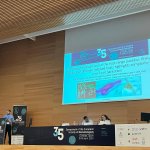
In this episode, we explore how researchers are using machine learning, artificial intelligence, advanced imaging, and even 3D printingto revolutionize the way we study plant-parasitic nematodes. From collecting better data to creating new tools for research, these technologies are helping scientists uncover insights that were once impossible to see.
Join us as we discuss the future of nematology and how innovation is transforming our understanding of these hidden threats beneath our feet.
🎧 Listen now:
Spotify: [open.spotify.com/episode/6Jm…]
Apple Podcasts: [podcasts.apple.com/us/podcas…]
YouTube: [youtube.com/@CropProtectionN…]
#Nematology #PlantPathology #MachineLearning #ArtificialIntelligence #AgTech #3DPrinting #PlantScience #Agriculture #AgPodcast
@CropNetwork @ncipmc @Seb_EvdA @camplantsci


Finally out!
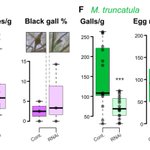
A long-standing question is how M incognita can infect hosts from most orders of flowering plants, covering > 3000 spp. We show that phylogenetic distribution does not explain the phenotypic distribution of parasitism.
Check it here: doi.org/10.1111/nph.71431

Vmoura retweeted

Paper alert!
The host range paradox of Meloidogyne incognita.
Does an obligate biotroph with >2000 species host range "know" its on different plants?
Seems so (at least in terms of gene expression), but basically we don't understand what it knows.
@vmourade @camplantsci

The host range paradox of Meloidogyne incognita
Moura de Souza et al. @camplantsci @vmourade @Seb_EvdA
nph.onlinelibrary.wiley.com/…
Vmoura retweeted
The host range paradox of Meloidogyne incognita
Moura de Souza et al. @camplantsci @vmourade @Seb_EvdA
nph.onlinelibrary.wiley.com/…
Vmoura retweeted
Congrats Victor!

New Preprint alert!
M incognita is a remarkable pathogen: extremely specialised with the widest host range (> 3,000). All this while reproducing parthenogenetically! We analyse the infection phenotype and transcriptome of 9 hosts (6 orders) at 25 dpi.
doi.org/10.1101/2025.09.26.6…
New Preprint alert!
M incognita is a remarkable pathogen: extremely specialised with the widest host range (> 3,000). All this while reproducing parthenogenetically! We analyse the infection phenotype and transcriptome of 9 hosts (6 orders) at 25 dpi.
doi.org/10.1101/2025.09.26.6…

Vmoura retweeted

📢 Reminder: #VNC2025 registration is still OPEN!!
Are you a #Nematology MSc, PhD student or Postdoc? Submit your abstract for a talk or flash talk by 10th September 🗓️
Register & submit the abstract via the link lnkd.in/dzTRsK7z
#VNC2025 #Nematology #CallForAbstracts

Vmoura retweeted
We are excited to announce our next Trends in Nematology Webinar on Nematode Genomics and Effectoromics!
When: 18th September, 2025
Time: 16:00-17:15 CEST
How can I join: Register using the QR code below 🪱
Looking forward to seeing you there!

Vmoura retweeted

We explore how plants adapt their developmental programs to form specialized organs — nodules, galls, haustoria — enabling mutualistic or parasitic symbioses.
Despite their differences, these organs share regulatory pathways, showing the amazing plasticity of plant development!

Vmoura retweeted
🚀 Excited to share our new review published in Trends in Plant Science, coauthored with Dr. Victor Hugo Moura de Souza & Dr. Katharina Schiessl!
🌱 From hosts to parasites: Hormones driving symbiosis-induced de novo organogenesis
👉 authors.elsevier.com/sd/arti…

Vmoura retweeted
Get to know our Board members! 🌱
Meet Dr. Unnati Sonawala (@u__progress ), one of YNN’s founding members. As a PostDoc at the @CropSciCentre , she is marvelled at interactions between plants and microbes—and beyond! Also, she is passionate about learning a new language!

Vmoura retweeted

A group photo from last weeks CSC retreat. It was so great to have everyone together!

Vmoura retweeted
𝗬𝗡𝗡 𝗦𝗲𝗺𝗶𝗻𝗮𝗿 𝗦𝗲𝗿𝗶𝗲𝘀 𝗶𝘀 𝗕𝗮𝗰𝗸
Join us for an exciting and informative online seminar with three expert led talks on 𝐞𝐦𝐞𝐫𝐠𝐢𝐧𝐠 𝐩𝐞𝐬𝐭𝐬
𝐖𝐡𝐞𝐧: 21st Nov 2024, 15:00-16:15 CET
Register to secure your spot
forms.office.com/e/yfZexXevC…
@ESNematologists


Vmoura retweeted
Exciting news! 🌿 Olaf Kranse will spearhead an innovative project as a King's College Research Associate, developing open-source tools to monitor climate impact on the @Kings_College meadow. #Climate #Cambridge cropsciencecentre.org/news/o…

Vmoura retweeted

Great to see this post from Victor Moura, from @CropSciCentre. Congratulations on your contribution @vmourade! 🌿🌱👋

