





Vicente Martín retweeted

⭐️ What is the most likely diagnosis in this 50 y/o F who initially presented with uveitis which did not respond to steroids? Over the course of months, she progressively declined and eventually developed encephalopathy.
🔷No significant PMH
🔷CT chest, abdomen and pelvis unremarkable
🔷No significant response to steroids or IVIG
🔷Pathergy testing and HLA-B51 negative
🔷Serum ACE & IL2-R negative
#futureradres #MedEd #radres #neurosurgery #ENT #Ophthalmology #Neurology @RadiologyACR @Radiopaedia


Vicente Martín retweeted

63-year-old man presents with syncope.
ED: CTA head and neck
This finding in the intradural left vertebral artery is alleged to have been missed (real case image).
The malpractice complaint states the patient re-presented 9 hours later with distal embolization to the basilar artery (subocclusive) and left superior cerebellar artery (occlusive), resulting in permanent injury.

Vicente Martín retweeted
An elderly patient presents with acute dizziness.
Brain attack team, activate!
Noncontrast CT head
Reason for study: Dizziness
See anything?

Vicente Martín retweeted

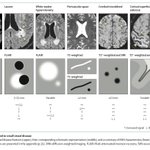
Delighted to share our international review on MRI Characteristics of #MOGAD! ➡️ Key imaging features are highlighted across the brain, optic nerves & spinal cord including lesion dynamics ➡️ Illustrative figures help show its full imaging spectrum👇
jamanetwork.com/journals/jam…

Vicente Martín retweeted

jamanetwork.com/journals/jam…
Adapted from this study. There are limitations, of course, but the general point holds true.

Vicente Martín retweeted

1/Controversy in radiology can get tense!
The Mt Fuji sign for tension pnemocephalus is under scrutiny. When should you call it?
A thread about imaging this important neurosurgery complication

Vicente Martín retweeted

The “Kiss Swan” Sign: An MRI Clue to Adult Leukodystrophies hubs.la/Q04xMy-q0

Vicente Martín retweeted

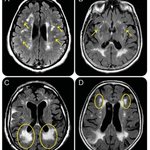
A radiologist asked: Why WM hypertensities commonly seen on a brain scan links to various clinical outcomes - healthy, small vessel disease or dementia?
Our new study shows that this depends on how WM tracts and 🧠 networks are disrupted by WMH lesions.
sciencedirect.com/science/ar…

Vicente Martín retweeted

The Law of the Pathognomonic Sign
First, a sign is described.
Then it becomes dx.
Then someone finds it in another disease. And then another.
Eventually, it becomes part of the differential.
An image is a frame, not the whole movie.
Radiology begins with what you do next.

"Hot cross buns" sign is classically described in MSA‑C but is not pathognomonic. Also associated with SCA2, DLBD, CTX, autoimmune/paraneoplastic disorders (anti‑Ri, anti‑amphiphysin, anti‑Kelch, anti‑Homer‑3, IGLON5 & anti-Yo‑related disease)
@neuro_ian
10.4103/aian.aian_288_26


Vicente Martín retweeted
Paramagnetic rim lesions in people with #MS are associated with an increased risk of future progression independent of relapse activity and accelerated rates of brain atrophy, emphasizing their potential as a prognostic biomarker for risk stratification: hubs.la/Q04tW2w10

Vicente Martín retweeted

Could we be missing one of the most treatable causes of walking and thinking problems in older adults. Normal pressure hydrocephalus (NPH) is a condition where the brain’s fluid spaces enlarge and can disrupt walking, bladder control and thinking. Maroufi and colleagues describe in a new review in JAMA why idiopathic NPH deserves our attention, particularly because it can mimic Parkinson’s disease and Alzheimer’s disease and, importantly, symptoms can improve following treatment.
Key points:
- Gait problems are frequently the earliest clue, occurring in 85% to 95% of folks, while urinary symptoms and cognitive changes are also common.
- Diagnosis requires putting the clinical picture together w/ brain imaging, and removing CSF through a large-volume lumbar puncture can help predict who may respond to a shunt.
- Following shunting, gait improves in approximately 70% to 90% of folks, while cognitive and urinary symptoms improve in approximately 50% to 70%.
My take: NPH is important because it sits at the intersection of neurology, neurosurgery and aging, and it can look remarkably like Parkinson’s disease, dementia or simply getting older. We should resist prematurely labeling an older person w/ walking, thinking and bladder changes as having an untreatable neurodegenerative disease. NPH is one of those diagnoses we do not want to miss. However, be careful of jumping to a shunt as there can be many complications of shunt therapy. Make sure you have examined the risk-benefit profile for each individual.
Here are 5 points that resonated w/ me:
1- Think NPH when gait slowing, falls, cognitive changes and urinary urgency begin clustering together.
2- The classic triad does not need to be complete, and gait trouble may arrive first.
3- MRI findings are important, however imaging alone cannot reliably tell us who will improve following treatment.
4- A large-volume spinal tap and objective measurement of gait before and after CSF removal can provide an important clue about shunt responsiveness.
5- Perhaps the biggest message is simple: recognize NPH early because this is one neurological syndrome where identifying the right folks can potentially restore walking, independence and quality of life.
jamanetwork.com/journals/jam…

Vicente Martín retweeted

🩺👩⚕️👨⚕️ ¿Debemos hacer una exploración física rutinaria a adultos sanos? 🤔
📚 The New England Journal of Medicine debate esta práctica clínica habitual ⚕️.
✅ Por un lado, se defiende que la exploración 🤝🩺 puede reforzar la confianza, responder a las expectativas del paciente 💬 y detectar algunos hallazgos relevantes 🔎.
⚠️ Por otro, se argumenta que en personas asintomáticas 🙂 puede generar falsos positivos 🚨, pruebas innecesarias 🧪📸 y sobretratamiento 💊. Además, los chequeos generales que incluyen exploración física no han demostrado reducir claramente la mortalidad 📉.
💡⚖️ El artículo no establece un consenso: enfrenta dos posturas.
🎯 Una de ellas propone priorizar la historia clínica 🗣️📋 y las intervenciones preventivas basadas en evidencia 📊🔬, reservando la exploración física 🩺 para pacientes con factores de riesgo, síntomas o hipótesis clínicas concretas.
🔗👉🏻 doi.org/10.1056/NEJMcl…
#Medicina #AtenciónPrimaria #ExploraciónFísica #Prevención #MedicinaBasadaEnEvidencia #SaludPública #DivulgaciónCientífica


Vicente Martín retweeted

「脳出血でDWIを撮る意味はある?」
Neurologyから興味深い報告
脳出血から離れた部位にspotの脳梗塞を認めることがあります。
21.6%と決して少ないくない頻度
そしてこの脳梗塞がある症例は、
☑️6ヶ月後の予後(mRS ≥3)
☑️脳卒中の再発
が明らかに多かったよう。
脳梗塞だけでもなく、脳出血でもDWIがkey pointになるのですね🤔
📚
Locatelli M, et al. Neurology. 2026
Figure 1, CC BY 4.0

Vicente Martín retweeted

This is NMOSD!
⭐️ NMOSD is an autoimmune astrocytopathy. AQP4-IgG targets aquaporin-4 on astrocyte endfeet; hence, lesion distribution tracks AQP4 density.
⭐️ It is rare (0.5 – 10 / 100,000), with a marked female predominance (as high as 9:1). Peak incidence is in middle age, not the classic young-adult MS demographic. Coexistent autoimmunity (e.g., SLE, Sjögren's, myasthenia) is common.
⭐️ When presenting with optic neuritis, long-segment posterior disease involving the chiasm and tracts is typical.
⭐️ Radiology "sweet spots":
- Periependymal surfaces, hypothalamic-diencephalic lesions and involvement of the area postrema in particular.
- Corticospinal tracts.
⭐️ On your axial T2, look for dot-like foci of hyperintensity in areas of spinal cord involvement, so-called "bright spotty lesions".
⭐️ Some MS treatments (e.g., interferon-β, natalizumab, fingolimod) can worsen NMOSD, so differentiation is important. B-cell depletion and complement / IL-6 blockade are the NMOSD path, not interferon or natalizumab.

This is a 40 year-old female presenting with a severe, rapidly progressive myelopathy and intractable nausea, vomiting, and hiccups. On MR there's FLAIR hyperintensity in the area postrema and a longitudinally extensive cervical spinal cord lesion.
What's the diagnosis and required test? This disease also commonly presents with optic neuritis; what's the typical radiological pattern of optic pathway involvement?


Vicente Martín retweeted

Excellent paper & must read article on
Autoimmune encephalitis misdiagnosis in adults..
Look for etiologies: infections, metabolic, neurodegenerative, neoplastic, vasculitis etc causes
@Mayo_AING
@EoinFlanagan14
@Div_Dubey
@JAMANeuro
doi:10.1001/jamaneurol.2022.4251


Vicente Martín retweeted

慢性硬膜下血腫のHyperdense Capsule Signとは?
•hyperdense capsule sign :CTで慢性硬膜下血腫の辺縁に高吸収の被膜
•陽性例では中硬膜動脈塞栓術によって症候性再発・増大が有意に減少
•hyperdense capsule signは中硬膜動脈塞栓術の適応候補の選択有用に指標となる可能性
#Rdiag

Vicente Martín retweeted

Cerebral Vasospasm After Traumatic Subarachnoid Hemorrhage: A Narrative Review
pmc.ncbi.nlm.nih.gov/article…

Vicente Martín retweeted

🤔Vertebral body infarction may be an overlooked clue to spinal cord stroke.
💡In 126 cases, VBI was seen in 12%; 80% involved multiple vertebrae and 92% enhanced. Thoracic levels predominated, with patterns mirroring spinal vascular territories.
doi.org/10.1016/j.ejrad.2026…


Vicente Martín retweeted

One brain. Multiple targets. Three very different ways to intervene.
HIFU, LITT, and DBS are reshaping functional neurosurgery—but all depend on one thing:
precise neuroimaging.
A superb #RadioGraphics review of targeted neurosurgical interventions. 🧵👇
#RGphx
@cookyscan1 @RadG_Editor @teachplaygrub @KatieTraylorDO
