

NHMRC Senior Research Fellow, University of Melbourne Neuroscience | Neuroimaging | Psychiatry| Brain-body modelling
Melbourne, Australia
Joined July 2016
- Tweets393
- Following254
- Followers2.2K
- Likes1K



Pinned Tweet
It is time to find out your REAL brain and body age!
The age of your brain, heart, lungs etc can be easily measured, differs from your DOB and informs your risk of chronic illness and premature death.
Check out our organ age clocks @NatureMedicine
rdcu.be/c9kFZ
1/n

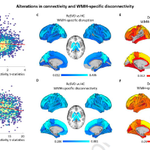
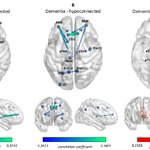
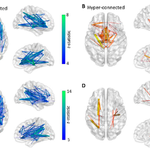
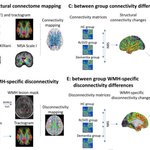
A radiologist asked: Why WM hypertensities commonly seen on a brain scan links to various clinical outcomes - healthy, small vessel disease or dementia?
Our new study shows that this depends on how WM tracts and 🧠 networks are disrupted by WMH lesions.
sciencedirect.com/science/ar…

5/6
Our work underscores the important role of WMH lesions in disrupting structural brain networks in cSVD and dementia, offering insights into the varying clinical impacts of WMH.
sciencedirect.com/science/ar…
6/6
Congrats Dr Bianca Mazini (the radiologist) and the team @AndrewZalesky, Caio Seguin! It was a great pleasure to work with you.
Thanks everyone who contributed to this study!
@chrisdav66 @JingleiLv @JunhaoWen, Remika Mito, Patric Hagmann, Guray Erus.
3 years ago, we reported pronounced poor body health in mental illness.
Is it just a side effect of treatment?
Our new study @molpsychiatry shows that dysfunction in multiple body systems is already present in first-episode, drug-naïve patients.
nature.com/articles/s41380-0…
1/6🧵


Mental illness is a brain disorder? Right?
We thought so.
Hang on though, our new study @JAMAPsych shows that poor body health is a more pronounced manifestation of mental illness than poor brain health.
jamanetwork.com/journals/jam…
🧵1/9

5/6
Further research of other peripheral organ systems across the spectrum of mental disorders is needed to enable identification of individuals at risk of physical comorbidity at the very start of mental health care.
6/6
Let’s rethink mental illness as a multi-system disorder.
Early detection and integrated mental-physical care can save lives!
Thanks @JetroAng & Dr Yangqi (Rachel) Xu for their incredible hard work and @AndrewZalesky @CropleyVanessa for their continued support!
Ye Ella Tian retweeted

Postdoc job alert! I’m looking for someone with a PhD in neuroscience/psychology, psychiatry, computational modeling or a related field to join my NIH-funded team at UCLA studying the neural & computational mechanisms of #interoception in anorexia nervosa 1/2

How life experiences and learning shape who we become? 🧠
Beautiful work revealing how our brain's emotion (amygdala) and memory (hippocampus) circuits grow apart as we age -unique windows for brain plasticity and resilience! Now out @PNASNews doi.org/10.1073/pnas.2600520…


(1/11) Excited to showcase the first work of my PhD,
"Frontolimbic Functional Connectivity Development from Birth to Emerging Adulthood"
now on @biorxivpreprint!
biorxiv.org/content/10.64898…

Ye Ella Tian retweeted

Fronto-limbic connectivity: birth to adulthood
Fronto-hippocampus circuitry matures early in life, whereas fronto-amygdala development is protracted
Elucidated using a new measure of circuit differentiation
New work from @WonyoungKim_ and @yetianmed

(1/11) Excited to showcase the first work of my PhD,
"Frontolimbic Functional Connectivity Development from Birth to Emerging Adulthood"
now on @biorxivpreprint!
biorxiv.org/content/10.64898…
Ye Ella Tian retweeted

(1/11) Excited to showcase the first work of my PhD,
"Frontolimbic Functional Connectivity Development from Birth to Emerging Adulthood"
now on @biorxivpreprint!
biorxiv.org/content/10.64898…
Ye Ella Tian retweeted
MULTIORGAN networks across the human body over the course of aging & disease
A rapidly developing field shaped by @yetianmed & @JunhaoWen
Check out our Perspective in @NatureAging
rdcu.be/fjMAz
Concepts, priorities & recommendations to get started in the field

Ye Ella Tian retweeted
Disease biology is heterogeneous, but most research reduces it to group means
NEW WORK characterizing HETEROGENEITY in BRAIN and BIOCHEMICAL biomarkers across >1/2 million people & >30 disorders:
nature.com/articles/s41467-0…
Check out the online resource:
tinyurl.com/bdecwsnb

Ye Ella Tian retweeted

(1/5) Out today in @Nature! We all know pediatric growth charts for height and weight, but what about the brain's wiring?
Excited to share our new work establishing comprehensive lifespan reference charts for human brain white matter pathways.
nature.com/articles/s41586-0…

Ye Ella Tian retweeted

💤 🫀 🫁 🧠 👁️ 💪 🫘
Today marks a meaningful milestone for LABS — our SleepChart paper, “Sleep chart of biological ageing clocks in middle and late life,” is now online in @Nature.
In this work, we link sleep patterns with biological aging clocks across the brain and body, highlighting how sleep may reflect broader systemic aging processes.
Key takeaways:
🧠 Sleep and biological aging clocks show a coordinated brain–body U-shaped pattern; this relationship extends beyond the brain alone and involves multiple organ systems and at multiple omics layers.
🧬 Sleep disturbances are linked to disease risks and shared genetic architecture: Short sleep appears to have a broader systemic impact, while long sleep shows a more focal, brain-enriched disease burden.
💤 Late-life depression provides an important example. Brain and adipose aging clocks mediate the relationship between long sleep and late-life depression, while short sleep appears to exert a more direct effect. As always, inverse causation cannot be fully excluded (potentially a sleep-LLD bi-directional relationship).
We are excited to share both the paper and the interactive SleepChart portal with the community (including GWAS summary statistics, etc.).
Paper: nature.com/articles/s41586-0…
SleepChart portal: labs-laboratory.com/sleepcha…
Great collaboration from our partners: @chrisdav66 at the University of Pennsylvania, @AndrewZalesky from the University of Melbourne, #PaulAisen and #MichaelRafii from the University of Southern California, #LuigiFerrucci, #KeenanWalker, and others from the @NIHAging, and many other collaborators!
nature.com/articles/s41586-0…
#SleepResearch #BiologicalAging #AgingClocks #Neuroscience #PrecisionHealth #BrainHealth #AIinMedicine #LABS
