

Association of Vapers India is an independent consumer body established in 2016. Join us: https://xitter.cf/t.co/YyuipvviwU.
India
Joined November 2016
- Tweets4.8K
- Following115
- Followers2.4K
- Likes9K





Pinned Tweet
FACT-CHECK: Our letter to The Hindu on an op-ed by @DrBhavnabarmi which presents alarmist misinfo on vaping. We seek an informed debate which doesn't overlook the needs of India's 100 mn adult smokers.
PDF download: vapeindia.org/hindu-rebuttal…


Maharashtra's gutkha crackdown is commendable. Enforcement is the visible part of tobacco control. The missing part is a framework that moves users who can't or won't quit to less harmful options. @Tukaram_IndIAS
AVI retweeted

Three countries. Three different paths away from smoking.
A new #GSTHR Briefing Paper examines #SouthKorea, #Ireland and #Estonia — and what their different trajectories can tell us about #tobaccoharmreduction.
What can we learn from these emerging transitions?
gsthr.org/resources/briefing…

AVI retweeted

The best thing countries can do to prevent NCDs is reduce smoking. Right?
@WHO tobacco control experts should consider the following in JAMA:
jamanetwork.com/journals/jam…
...and the unanimous opinion of 15 past-Presidents of the SRNT.
ajph.aphapublications.org/do…

AVI retweeted
If I had a dollar for every time I've read "e-cigarettes are increasing in popularity, especially among youth," I'd be a rich man.
ecigs are increasing in popularity, especially among youth
ecigs are increasing in popularity, especially among youth
ecigs are increasing in popularity, especially among youth

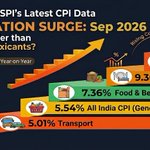
In India, toxic tobacco is getting cheaper compared to almost everything else, while the least harmful alternatives are banned. This is not tobacco control.

ALT Source: MoSPI, CPI September 2026: https://www.mospi.gov.in/uploads/latestReleases/latest_release_1791800601071_643518af-5320-4e52-b78c-75c92b83885b_Press_Release_for_the_month_of_September,_2026.pdf
AVI retweeted

New report: "Use of e-cigarettes for smoking cessation remained common from 2018 to 2023. Perceived lower harm and social exposure were consistently associated with this behavior, highlighting the influence of cognitive and social factors on cessation-related decisions among adults who smoke cigarettes."
Link: pubmed.ncbi.nlm.nih.gov/4284…
In other words: Tell the truth. If you give people who smoke accurate information about the fact that nicotine vaping (and use of other noncombustible nicotine products) is safer than smoking cigarettes, they will be more likely to stop smoking through the use of these products.

Misinformed editorial by @businessline oblivious to the reality that India has 200M users of toxic oral tobacco, who will benefit greatly by switching to far safer nicotine pouches. Snuffing out safer alternatives is snuffing out lives.
thehindubusinessline.com/opi…

India’s banned vape market hit $2.3B in 2025 and is still growing, almost as fast as the legal global market. The ban just handed the trade to a black market with no age checks and no tax. Our view...
@PMOIndia @JPNadda @NITIAayog @EACtoPM @ThePrintIndia
vapeindia.org/analysis/vape-…

AVI retweeted
Safer and Safe are not synonyms
"If something kills people, and a safer alternative exists, we are morally and ethically obligated to encourage people who use the deadly things to switch. Full stop."
medium.com/@tchad49/why-safe…
New publication from me.

How to completely miss the plot: This article by @archie_dear uses the dangers of a black market to justify the vape ban that built it. Extrapolating preclinical science while ignoring the relative risk vs smoking is just irresponsible. @Outlookindia
outlookindia.com/healthcare-…

AVI retweeted

Smoking Is Bad for You. Nicotine Isn't—but Politicians Keep Trying To Ban It.
reason.com/2026/10/01/smokin…

AVI retweeted
The rebranding of nicotine is long overdue @saraashleyo. Yes, it was demonized for good reason, to discourage smoking. But now, good people like you believe all the false claims made "for our own good."
If you pay attention, you will discover that the people online who are claiming "it can improve attention span, mood and memory" are not industry. They are informed consumers (the ACTUAL stakeholders, universally ignored, in the current stupid battle).
And many of us are Progressive Liberals, like me (not just "MAHA"). Plus there's the whole "biohacker" crowd. They know it. We all know it because there are oodles of studies with nicotine patches that show it. Many of us read them.
FYI, nicotine patches and gum are NOT "highly addictve." So the blanket claim that nicotine is "highly addictive" has NEVER made sense; it is now a fossil remnant of the decades-long effort to demonize.
You interviewed scientists who are all old-school anti-nicotine. There is an equal number (if not more) of scientists who will tell you exactly what nicotine does: it increases focus, attention and memory, and reduces stress and anxiety. You chose to ignore them.
Finally, the demonization of nicotine intensified recently due to teen use. And that is VERY strange because both the CDC/FDA National Youth Tobacco Survey and the NIH Monitoring the Future Survey show US teen nicotine use has dropped to a 50-year low, and daily use is now near nil.
Scientific paradigm shifts like this are never easy. Your one-sided reporting doesn't help. Educate yourself.

Propagandist @saraashleyo of @WSJ solely quotes people whose salaries depend on denying any benefits of nicotine use in this smear piece.
archive.is/1GanR#selection-5…

AVI retweeted

India is trying to ban much safer nicotine pouches using the same regulatory jugglery that failed for vaping in 2019. I explain..
linkedin.com/pulse/did-india…

We've rebuilt our site.
New: court cases AVI fought since 2017, section for policymakers, living library of THR research, guide to what PECA actually bans (which does NOT include using a vape), and a way to report police harassment.
Have a look. Also..
vapeindia.org – at Mumbai, India
This @scroll_in article makes wild claims on nicotine pouches. a) ICMR study is not about risk profile (which is similar to NRTs). b) US FDA has allowed 'safer than smoking' claim. c) For India's 200m toxic SLT users, they can reduce major harm. @JPNadda
amp.scroll.in/article/109577…

AVI retweeted
My latest Substack contribution examines how too many scientific papers use “nicotine,” “tobacco,” “vaping,” and “smoking” essentially as interchangeable proxies for the harms caused by combustible tobacco use. The distinction is not semantic—and getting it wrong distorts public understanding, research, policy, clinical guidance, and smoking cessation. substack.com/home/post/p-214…

AVI retweeted

The great failure of governments and NGOs is often not that they care too little, but that they look too narrowly.
They see the policy directly in front of them, but not the behaviour it will create around it. They count legal sales falling, but not what moves underground. They restrict safer alternatives, but don’t ask what people will use instead. They celebrate compliance on paper while consumers quietly find another path.
Good intentions are not enough. A policy must be judged not by what its architects hoped people would do, but by what people actually did.
Short-sighted policy looks at the next statistic. Wise policy looks at the next consequence.
AVI retweeted

"But this policy may have persuaded some people who smoke cigarettes that they would be no better off switching to vapes than they would continuing to smoke. This is despite evidence that nicotine-containing vapes are less harmful than smoking cigarettes"
theconversation.com/vaping-i…

Nicotine vapes outperformed patches, gum and cessation support in 80 major trials involving 30,000 patients, raising success rates by 60%.
@PMOIndia @mohfw_India @icmr_nicpr @nitiaayog @EACtoPM @IMAIndiaOrg @RSSorg @ThePrintIndia bbc.com/news/articles/c1e5p5…
