






Apparently the brain does CPU like context switching.

1/ We discovered something totally unexpected about the neural structure of consciousness that overturns decades of thinking on its biological basis and brings us significantly closer to the recipe for generating conscious awareness.
New preprint: biorxiv.org/content/10.64898… (led by @HesseJanis, with @FrankLanfranchi, @_conor_mcgrory, @Yuelin_Shi, and @EngelTatiana)

Using it with Claude Code on my 3060. Claude delegating simple tasks. So far looks like it is working great and saves usage. Highly recomand.

Today, we’re announcing Ternary Bonsai 2 27B.
Based on Qwen3.8 27B, Bonsai 2 27B is 9x smaller than its full-precision counterpart while retaining 98.2% of its aggregate benchmark performance.
Two months after the first Bonsai 27B release, the biggest change is quality. The footprint remains 5.9 GB, but the gap to full precision has narrowed materially, with particularly strong gains in agentic coding, multimodal reasoning, and long-horizon tool use.
Ternary Bonsai 2 27B is available today under Apache 2.0.

Wonder how much of Google inability to be competitive in SOTA is due to TPU constraints, data-types and inherent tradeoffs.
NAND retweeted

People say the left and the right can’t agree on anything these days. But there is this one thing:
NAND retweeted

DoubleAI’s AI system just beat a decade of expert GPU engineering
WarpSpeed just beat a decade of expert-engineered GPU kernels — every single one of them.
cuGraph is one of the most widely used GPU-accelerated libraries in the world. It spans dozens of graph algorithms, each written and continuously refined by some of the world’s top performance engineers.
@_doubleAI_'s WarpSpeed autonomously rewrote and re-optimized these kernels across three GPU architectures (A100, L4, A10G). Today, we released the hyper-optimized version on GitHub — install it with no change to your code.
The numbers: - 3.6x average speedup over human experts - 100% of kernels benefit from speedup - 55% see more than 2x improvement.
But hasn’t AI already achieved expert-level status — winning gold medals at IMO, outperforming top programmers on CodeForces? Not quite. Those wins share three hidden crutches: abundant training data, trivial validation, and short reasoning chains. Where all three hold, today’s AI shines. Remove any one of them and it falls apart (as Shai Shalev Shwartz wrote in his post).
GPU performance engineering breaks all three. Data is scarce. Correctness is hard to validate. And performance comes from a long chain of interacting choices — memory layout, warp behavior, caching, scheduling, graph structure. Even state-of-the-art agents like Claude Code, Codex, and Gemini CLI fail dramatically here, often producing incorrect implementations even when handed cuGraph’s own test suite.
Scaling alone can’t break this barrier. It took new algorithmic ideas — our Diligent framework for learning from extremely small datasets, our PAC-reasoning methodology for verification when ground truth isn’t available, and novel agentic search structures for navigating deep decision chains.
This is the beginning of Artificial Expert Intelligence (AEI) — not AGI, but something the world needs more: systems that reliably surpass human experts in the domains where expertise is rarest, slowest, and most valuable.
If AI can surpass the world’s best GPU engineers, which domain falls next?
For the full blog: doubleai.com/research/double…
CuGraph:
docs.rapids.ai/api/cugraph/s…
Winning Gold at IMO 2025:
arxiv.org/abs/2507.15855
Codeforces benchmarks:
rdworldonline.com/openai-rel…
@shai_s_shwartz post:
xitter.cf/shai_s_shwartz/status/…
From Reasoning to Super-Intelligence: A Search-Theoretic Perspective
arxiv.org/abs/2507.15865
Artificial Expert Intelligence through PAC-reasoning
arxiv.org/abs/2412.02441


Are frontier AI models really capable of “PhD-level” reasoning? To answer this question, we introduce FormulaOne, a new reasoning benchmark of expert-level Dynamic Programming problems. We have curated a benchmark consisting of three tiers, in increasing complexity, which we call ‘shallow’, ‘deeper’, ‘deepest’.
The results are remarkable:
- On the ‘shallow’ tier, top models reach performance of 50%-70%, indicating that the models are familiar with the subject matter.
- On ‘deeper’, Grok 4, Gemini-Pro, o3-Pro, Opus-4 all solve at most 1/100 problems. GPT-5 Pro is significantly better, but still solves only 4/100 problems.
- On ‘deepest’, all models collapse to 0% success rate.
🧵

Been working on a SW project with Gemini/Claude/Codex CLIs all in parallel. Claude is by far better, followed by Codex and lastly Gemini, which is bordering unusable.
Codex is having trouble identifying the root cause of complex problems, it priorities superficial solutions instead of pinpointing the root cause and understanding the architecture. Also lacks the self-testing abilities of Claude, usually fixes problems without proper verification while Claude writes directed temporary tests which it then deletes when the problem is solved.
Gemini is far behind, many times offers user instructions instead of executing them, frustrating.
Only problem with Claude is the usage limits on the pro plan which seems small.
Weirdly, it seems the main difference between Codex and Claude is not the core capabilities, but rather how the tool default working guidelines is configured.
Claude priorities quality over token usage, while Codex lacks the drive to dive deep even when high reasoning selected. Would be useful to have such tuning ability in Codex (cc. @thsottiaux )
“The Verilog for an accelerator should only be about 3,000. We'll build it on FPGAs, and then look for a partner to work with to tape it out.”
Made me laugh.

The Anthropic TPU deal solidifies it. There's two companies that can make training chips, NVIDIA and Google.
Elon tried with Dojo. Amazon tried with Trainium. DeepSeek tried with Huawei. Countless startups are flailing with multiple tapeouts and no real adoption. The funny thing is, the TPU chip itself is very simple. The difference is all the software (XLA-TPU is the best deep learning compiler, too bad it's closed source).
In 2 more years, tinygrad will be actually 1.0, with performance exceeding all other libraries. There was a lot of Dunning-Kruger on the way, but we maintain the underlying abstractions required for all deep learning style compute are very simple.
At this point, the backend specific code is 1,000 lines. The Verilog for an accelerator should only be about 3,000. We'll build it on FPGAs, and then look for a partner to work with to tape it out.
PS: We're still hard at work on the AMD MLPerf contract. AMD has made big strides on their mainline stack in the last 2 years. It's mirroring the NVIDIA stack, but I've come to respect this strategy more and AMD will soon be an uncontested third player in the training space.


The most interesting thing about this keynote is the lack of any Apple Intelligence features. Especially when compared with last year event.
I have canceled my ChatGPT subscription, a paying user from the start. It's clear the industry has hit a hardware wall. GPT-5's development prioritizes resource management over performance leaps. Seems that HW availability and scalability are now the primary limiters for LLMs at scale. Any competitor relying on Nvidia is bound to face this same bottleneck.
Google is the only major player insulated by its in house hardware. I don't think enough appreciate the infrastructure required for inference at Google Search volumes. This gives Google an undisputed short term lead.
xAI, OpenAI, Meta, and Anthropic must up their HW game, and I know some are actively working on custom silicon. In any case, the 3+ year timeline from architecture to deployment provides Google a crucial window to solidify its advantage.
NAND retweeted
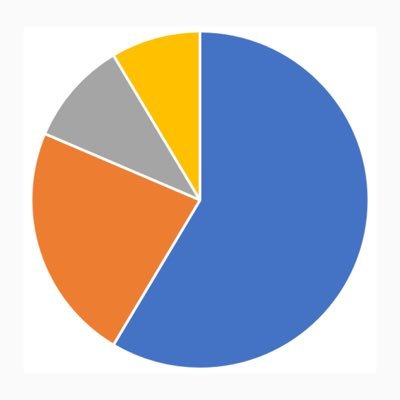
Number of foreign born founders who founded billion dollar American companies:
🇮🇳 India - 66
🇮🇱 Israel - 54
🇬🇧 United Kingdon - 27
🇨🇦 Canada - 22
🇨🇳 China - 21
🇫🇷 France - 18
🇩🇪 Germany - 15
🇷🇺 Russia - 11
🇺🇦 Ukraine - 10
🇮🇷 Iran - 8
🇦🇺 Australia - 7
🇮🇹 Italy - 6
🇳🇬 Nigeria - 6
🇵🇱 Poland - 6
🇷🇴 Romania - 6
🇦🇷 Argentina - 5
🇧🇷 Brazil - 5
🇳🇿 New Zealand - 5
🇵🇰 Pakistan - 5
🇰🇷 South Korea - 5
🇩🇰 Denmark - 4
🇵🇹 Portugal - 4
🇪🇸 Spain - 4
🇧🇾 Belarus - 3
🇧🇬 Bulgaria - 3
🇮🇪 Ireland - 3
🇰🇪 Kenya - 3
🇱🇧 Lebanon - 3
🇵🇭 Philippines - 3
🇿🇦 South Africa - 3
🇹🇼 Taiwan - 3
🇹🇷 Turkey - 3
🇦🇲 Armenia - 2
🇨🇿 Czech - 2
🇬🇷 Greece - 2
🇲🇽 Mexico - 2
🇸🇦 Saudi Arabia - 2
🇸🇬 Singapore - 2
🇨🇭 Switzerland - 2
🇺🇿 Uzbekistan - 2
🇦🇹 Austria - 1
🇧🇩 Bangladesh - 1
🇨🇴 Colombia - 1
🇪🇬 Egypt - 1
Sourse: NFAP data, as of May 2022.
NAND retweeted

Are frontier AI models really capable of “PhD-level” reasoning? To answer this question, we introduce FormulaOne, a new reasoning benchmark of expert-level Dynamic Programming problems. We have curated a benchmark consisting of three tiers, in increasing complexity, which we call ‘shallow’, ‘deeper’, ‘deepest’.
The results are remarkable:
- On the ‘shallow’ tier, top models reach performance of 50%-70%, indicating that the models are familiar with the subject matter.
- On ‘deeper’, Grok 4, Gemini-Pro, o3-Pro, Opus-4 all solve at most 1/100 problems. GPT-5 Pro is significantly better, but still solves only 4/100 problems.
- On ‘deepest’, all models collapse to 0% success rate.
🧵


NAND retweeted

Something fun we discovered: you can use #Genie3 to step into and explore your favorite paintings.
Here's a short visit to Edward Hopper's "Nighthawks".
NAND retweeted
We just released two papers from AAI describing recent work on our pursuit to build a “super-intelligent" AI that can match, and exceed, human level expertise in STEM.
The first paper states that if we want to reach "super intelligence" then we must change the way we train our LLMs. In particular, the work argues that:
1) Expert Intelligence requires precise reasoning.
2) Precise reasoning requires efficient search in the space of ideas while trying out various explorative line of thoughts until one reaches a solution to a difficult problem. The thought process can be represented as a "reasoning search tree".
3) Expert level, difficult problems, requires deep search trees.
4) We prove that existing modern training techniques can only learn shallow search trees.
5) We’ve constructed “the diligent learner”, a training method that can efficiently build deep search trees, reach and exceeds human level reasoning capabilities.
The paper: openreview.net/forum?id=Dw1r…
The second paper makes the point that state of the art reasoning language models like O3-pro, Gemini 2.5 pro and Grok 4 heavy are not really "Phd level" as the hype goes. Benchmarks and competitive programming contests are not always a true testament to AI capabilities. Take for example CodeForces where OAI-O3 attains a very high score (0.02%top ranking). Since Dynamic Programming is a major element of CF problems, one would expect state of the art LRMs to deeply understand DP right? we took that to the test and devised a DP problem generation engine. We took 120 of the "hard" problems and gave it to leading LRMs with all the "help" we can give them including few-shot examples. The performance is "flat line" - practically zero. The dataset will be available for researchers to play with.
The paper: arxiv.org/abs/2507.13337
