

An AI lab for the hardest problems in science and engineering. We search the space of ideas and verify every result.
Joined March 2026
- Tweets57
- Following3
- Followers454
- Likes9




4/ Brute-force search is hopeless here. Double Agent first proved structural facts about the geometry of checks on a chessboard, formalized them in Lean, and reduced the rest to SAT. Result: no such sequence can exceed 364 checks, with every proof machine-verified. The exact maximum remains open.
Code and proofs: doubleai.s.gy/chess

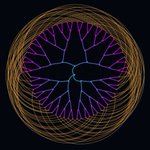
2/ A graph's girth is the length of its shortest cycle. Large girth means a graph looks like a tree for great distance around every vertex. Such graphs are key to constructing error-correcting codes. Since 1988, the best explicit graphs, due to Margulis and to Lubotzky, Phillips and Sarnak, had girth (4/3) log n, against a theoretical ceiling of 2 log n.

3/ double-agent completely autonomously found a deep algebraic construction and proved it, all on a budget of less than $2k. Its graphs reach girth (8/5) log n, and do so for infinitely many degrees. The full proof is formalised in Lean. Paper: doubleai.s.gy/girth85. Lean: doubleai.s.gy/girth85-lean
2/ A graph's girth is the length of its shortest cycle. Large girth means a graph looks like a tree for as far as possible around every vertex. Such graphs are key to constructing error-correcting codes. Since 1988, the best explicit graphs, due to Margulis
and to Lubotzky, Phillips and Sarnak, had girth (4/3) log n, against a theoretical ceiling of 2 log n.
3/ double-agent completely autonomously found a deep algebraic construction and proved it, all on a budget of less than $2k. Its graphs reach girth (8/5) log n, and do so for infinitely many degrees. The full proof is formalised in Lean.
Paper: doubleai.s.gy/girth85
Lean: doubleai.s.gy/girth85-lean
Can AI reach superoptimisation across the internet, at scale? What if every single workload you ran was tailored to your exact hardware configuration?
Gal Beniamini (@laginimaineb) is speaking about it at @NVIDIAGTC Berlin, Thu 22 Oct, 15:00 CEST.

doubleAI retweeted

RL algorithms for post-training (e.g., GRPO) typically optimize top-1 performance. But this can create a diversity problem.
In agentic systems tackling expert-level problems, what we often really care about is best@k.
So how do you derive an unbiased gradient estimator for best@k?
See the nice work below 👇
Kudos to my academic grandson @NadavSchweiger!
doubleai.com/research/argmax…

doubleAI retweeted

Another research from @_doubleAI_
Most RL objectives for language models maximize average reward per generation. They do not explicitly reward maintaining several distinct, high-quality solutions, so output diversity can shrink during training—limiting the gains from best-of-k sampling.
ArgMaxRL directly optimizes the expected quality of the best among k samples for continuous rewards. This better aligns training with test-time scaling: generate multiple candidates, verify them, and select the best.
The result could be models that preserve useful diversity and benefit more from additional inference compute.
doubleai.com/research/argmax…
3/4
Why that matters: most real rewards aren't yes/no. Ten CUDA kernels can all be correct but run 1.2x to 8.5x faster. Pass@k only sees "correct," not which one is fastest. ArgMaxRL optimizes directly for the best sample.
4/4
It's an unbiased gradient estimator of the joint best@k objective, recovers binary MaxRL exactly as a special case, and it's a simple code block you can introduce to your workflow now.
Full technical blog: doubleai.s.gy/argmaxrl