

Student of life! Learning never ends! No post or RT is an investment recommendation. Do your own research.
Joined November 2021
- Tweets2.4K
- Following220
- Followers790
- Likes5.3K





fred thomas retweeted

HydroGraph will be presenting its newly launched Fractal Graphene Paste, a pre-dispersed aqueous product containing 20% graphene by weight, tomorrow at the Advanced Materials Show USA in Pittsburgh, Pennsylvania. hydrograph.com/

fred thomas retweeted

The webinar is titled Dissolution and Circular Packaging Innovations. It was a free public event held Wednesday, August 26, 2026 (2:00 p.m. ET / 11:00 a.m. PT), hosted by the Stewardship Action Foundation and National Stewardship Action Council.
Speakers were:
Rob Kurtz (Rumpke Waste & Recycling)
Christian Bruey (PureCycle Technologies, Director of Sustainability & External Affairs)
Melissa Vettleson (IPL Schoeller, Sustainability & Materials Engineer)
Moderated by Heidi Sanborn (NSAC / Stewardship Action Foundation)
It covered the full supply chain: MRF collection and sorting upgrades, PureCycle’s dissolution process for food-grade polypropylene PCR, traceability/verification, and how IPL Schoeller is using the resin in commercial packaging to meet state recycled-content and EPR rules.
A recording and slides are available on the host site:
nsaction.us/product-page/dis…
(The original Waste Dive recap that mentioned the webinar is here: wastedive.com/news/rumpke-pu…)

fred thomas retweeted
PureCycle and IPL Schoeller have announced SnapPack Square EVO, a new sustainable option within IPL Schoeller’s family of tamper-evident packaging that will incorporate 20% PureFive recycled PP in every unit. purecycle.com/blog/ipl-schoe…
fred thomas retweeted


Whenever high beta / story stocks find a floor...
This is one I am very interesting in sizing in to
It touches Robotics AND Photonics
It's a story stock right now.
Lot's of risk.
But lot's of upside as well.
open.substack.com/pub/cruxca…
fred thomas retweeted
$PCT In case you are wondering why new plastic material commercialization takes so much time, here is a good explanation. mitsuiplastics.com/industry-…

fred thomas retweeted

Toyota’s Koji Sato, Japan’s new car czar, wants nation’s 7 automakers to compete less, collaborate more. Industrywide parts standardization is first step plasticsnews.com/latest-news…

fred thomas retweeted

$PCT is building a worldwide business in front of our eyes. Everyone of these announcements mean recurring customers and massive recurring revenues. Patience will be rewarded in a big way. Stay Tuned!

$PCT RM Tohcello has the largest BOPP market share in Japan. It competes with large global film producers. Product validation is indeed a substantial achievement for Purecycle.
Japan does not need PPWR to force a behavior in its population. Japanese have much higher post-consumer recycling rate. It is a resource poor country where citizens value circular economy more than any other western(ized) country. When would Mitsui ask for a joint operation in Japan?
Expect to hear from auto industry in Japan as well. They are ~20% of the economy and recycling mandates will eventually bring them to Purecycle for the PureFive®. Toyota, Honda, Mitsubishi, Isuzu, Mazda and Nissan build cars in Thailand.
Toyota's CIO chairs Japan Automobile Manufacturers Association (JAMA) and is pushing parts standardization across the industry. Thailand could be a big beneficiary here where auto parts are also developed. $PCT's Rayong facility is well placed to serve the local supply chain for Japanese automakers.


fred thomas retweeted

$PCT Convert Arb 101, 6/11/26:
After speaking with some of my old convert arb coverage today (I did convert arb for over two decades in a former life), here’s my 2c on the new convert deal and share offering.
Old convert was on 100% delta, except for Sylebra’s $50 mm outright position. Net delta shares “to cover”: ~13.5 mm
New convert also sold on 100% delta, net of $36 mm over allotment (“shoe”) and net of Sylebra rolling into $50 mm of new bonds. Net delta shares to short: ~21.9 mm.
Theoretical net amount to short: 7.8 mm
New share issuance of 17.7 mm shares was placed at least 80% into “strong hands”/LT holders, which leaves only 3.5 mm sh up for churn. Between the 7.8 mm “to short” and the 3.5 mm up for churn that’s 11.3 mm shares potentially for sale.
Total dilution is about 14%. Sh out was 180 mm before today, and after today, it’s about 206.3 mm. Between that and today’s massive “volume” of 37 mm shares and stock decline, situation looks heavy right?
It’s the OPPOSITE, and here’s why:
Having been in this market for almost 25 years, I can tell you that these offerings are almost always preceded by folks “in the know” pre-positioning. Stock declined from $14 over the last several days to be priced at $8.21 today. You think that was a surprise to the arbs? I wouldn’t count on it.
Of the 11.3 mm shares “for sale” I am willing to bet that 50-75% of that was hedged in the prior couple days. Arbs likely OVER-hedged into today and net COVERED today.
Why was the volume so heavy? That’s another thing outsiders don’t get. When convert deals are sold “on swap” to arbs, the volume is double counted — buyers buy with a delta hedge and the sellers sell with a delta hedge. Today’s deal also involved an old deal getting unwound “on swap,” so the volume could have been artificially 4x’ed just based on these swap transactions.
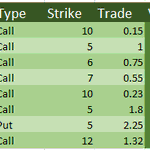
The upshot of this is that I think the technicals are very asymmetric to the upside, and contrary to what it looks like, I think there is little to no overhang from this. I bought risk reversals today and effectively doubled my delta exposure today.
Finally, prior to today, my biggest fundamental concern for this company was their funding gap next year, and it made me queasy that they seemed to be counting on warrant exercise to close that gap. Today, they closed that gap, and even though I think they could have executed better, I think the fundamental story just got a lot more compelling as well.
fred thomas retweeted
Agree.
As an ex-convert arb, I can tell you that most delta-hedge pre-positioning is done ahead of time and/or via “happy meals” where hard to borrow stocks (like this) are often made available to short via a special swap facility in order to get hedges to buy the convert.
Sell the rumor/buy the fact is the likely outcome in these situations.
fred thomas retweeted

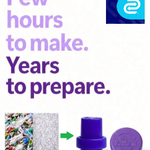
$PCT performs in the most demanding applications because the product IS virgin quality. Currently there are ZERO mechanically recycled resins that work in hinge applications (it is extremely tough!).
Like Bruckner for film, Stacktech is a gatekeeper in the injection molding space and brands look to them for assurance a product works as advertised.
Stacktech works with many of the large brands, and there is now exactly ONE resin that will meet regulatory mandates and have the product quality to work in hinge applications.
There are some hints/ interesting products listed on StackTeck’s website:


Living hinge caps are one of the toughest tests for recycled polypropylene.
PureCycle and StackTeck have now successfully produced living hinge caps using up to 100% PureFive® recycled PP resin, with lids passing hundreds of flex cycles without failure.
purecycle.com/blog/purecycle…

fred thomas retweeted

This @HedgieMarkets post illustrates where the infinity scalable asset-light technology model meets the physical realities of an asset-heavy business that faces an upward sloping supply curve.
We have long argued that AI compute is just another bit-atom commodity (like crypto) that uses a lot natural resources to create a valuable (unlike crypto) virtual asset.
On the bit side, Big Tech is a price-maker with fat margins. On the atom side, a price-taker.
Big Tech grew up in bits — search, social, e-commerce, office software: asset-light, infinitely scalable, natural monopolies. Build once, serve billions, watch costs fall every year. So they assume AI is the same game and will spend whatever it takes to own the market.
But inference is also atoms, i.e. land, critical minerals and electrons, which are mostly molecules. In the commodity world, competition drives price to marginal cost: P = MC, which is upward sloping as volume rises. The better the models get, the faster they compete their own margins down to the physical floor which rises with volume.
You can already see it. Microsoft just cancelled Claude Code because the cost to run it exceeded the value it returned — demand retreating the moment price met real cost. The irony: the customer pulling back was itself a hyperscaler. In April, Uber confirmed once again that AI compute demand is price elastic.
Bottom line: they assumed AI costs would keep falling like they always did on the bit side; however, on the atom side, there is a hard floor that likely rises in the short run.
I am not denying that the margins are still fat. But it’s not the same model. These guys are running towards obsolescing their own pricing power. Why did Rockefeller stop at the gas station and not vertically integrate into cars?

🦔Microsoft canceled its internal Claude Code licenses this week after token-based billing made the cost untenable, even for a company with effectively infinite cloud resources. Uber's CTO sent an internal memo warning the company burned through its entire 2026 AI budget in just four months. American AI software prices have jumped 20% to 37%, and GitHub (owned by Microsoft) is dropping flat-rate plans for usage-based billing across its products.
My Take
The AI subsidy era is ending in real time. The same company that put $13 billion into OpenAI and built the Azure infrastructure powering most of Anthropic's compute just looked at the bill from a competitor's coding tool and decided it was not worth paying. That is not a productivity failure on Anthropic's end. Token-based pricing is forcing every enterprise customer to confront the actual cost of running these models at scale, and the number turns out to be far higher than the flat-rate experiments suggested.
This ties directly to my Gemini Flash post yesterday. Anthropic, OpenAI, and Google all raised effective prices in the last six months. Enterprises that built workflows assuming AI costs would keep falling are now watching annual budgets evaporate in months. Two outcomes look likely from here. Either enterprises scale back AI usage to fit budgets, which slows the revenue ramp the labs need to justify their valuations ahead of IPOs, or the labs cut prices and absorb the losses, which makes the unit economics worse at exactly the wrong moment. Both paths land in the same place, the numbers stop working, and somebody has to take the writedown.
Hedgie🤗

fred thomas retweeted
A new report from the Progressive Policy Institute (PPI) finds that expanding advanced recycling at existing oil refineries and new standalone facilities nationwide can more than double the U.S. plastic recycling rate from 9% to 19-23%. prnewswire.com/news-releases…


fred thomas retweeted

PureFive® resin is officially recognized as "recycled content" by the NJDEP. This 1-year conditional approval lets customers use our resin to meet NJ Recycled Content Law mandates. ♻️
Work continues with the NJDEP toward a permanent approval.
purecycle.com/blog/purefive-…

fred thomas retweeted

$POET signed a supply and joint development deal with Lumilens for AI optics, including an initial $50M order for optical engines. The partnership could scale to $500M over five years, with samples expected in late 2026 and production ramp planned for 2027.

fred thomas retweeted
In a landmark 2025 study conducted by scientists at @ProcterGamble, our PureFive® resin achieved the highest safety rating under the CosPaTox assessment framework.
Click the link below to read more about the study.
purecycle.com/blog/purecycle…


fred thomas retweeted
PCT peeps, 5/6/26:
$PCT just reported Q1'26, and the market is loving what it's hearing.
This name has one of the most interesting MOATS as you can see on UrbanKaoberg.com.
When the NJ approvals go through, this thing will be a powder keg. 🎇

