
Assistant Prof @CarnegieMellon | Physical Intelligence Lab | How do humans acquire, adapt, and retain motor skills?
Pittsburgh, PA
Joined February 2017
- Tweets3.8K
- Following4.8K
- Followers2.2K
- Likes6.1K




Pinned Tweet
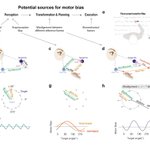
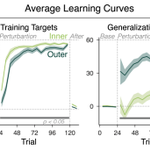
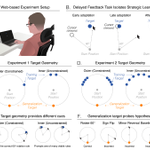
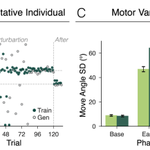
New preprint! 🥳
How do we discover what to do when a movement goes wrong?
Answer: hypothesis testing (HT) - testing candidate motor solutions based on sensory evidence.
HT explains how we explore, and when exploration gives way to an “aha!” moment.
tinyurl.com/3nsyc96d

Jonathan Sanching Tsay @tsay.bsky.social retweeted

I'm so honored to join the 2026 #PackardFellows class! 🤩 Thanks to the Packard Foundation, my lab will tackle some of the hardest questions in robotics & embodied AI safety, and hopefully collaborate across cognitive science, math, & beyond. I can’t wait! packard.org/2026fellows
📷 CMU is hiring an Asst Prof in NeuroAI! Join a collaborative, cross-department community spanning ML/AI, robotics, neuro & neurotech
@CarnegieMellon
Neuro Institute PhD in neuro, ML, robotics, CS, cogsci, EE or related. Apply: apply.interfolio.com/189268 #NeuroAI #AcademicJobs
Jonathan Sanching Tsay @tsay.bsky.social retweeted

What to remember in the past to act—spatial, temporal or motion details?
We often assume what’s useful, but that’s hard to know in advance.
Meet IMPRINT 🧠: retain rich memory first, then learn to use it for control. Compact latents keep inference fast as history grows. 🧵 1/10
Jonathan Sanching Tsay @tsay.bsky.social retweeted

Our paper is out in Nature, congrats to Qiyu, An et al!
By stimulating ~20 motor cortex neurons carefully selected based on their activity, we could induce learned population activity and, sometimes, the movement itself, depending on the brain's state.
nature.com/articles/s41586-0…

Jonathan Sanching Tsay @tsay.bsky.social retweeted

NEVER LOOK BACK!
Introducing LEDGER: persistent 3D object memory from egocentric videos.
Remember where things were, when they moved, and what they held -> then answer questions without looking back at the video!
ledger-3d.github.io
Jonathan Sanching Tsay @tsay.bsky.social retweeted

What can you learn about a robot partner that still matters when the task changes?
Its physical limits.
We introduce the problem of inferring those limits by watching it work with another robot, then coordinating with it zero-shot on a new task.
Introducing Watch, Infer, Coordinate
Project Page: watch-infer-coordinate.githu…
Preprint: arxiv.org/abs/2610.02170
Jonathan Sanching Tsay @tsay.bsky.social retweeted

Happy to announce that I am searching for for a graduate student, starting Fall 2027. If you want to study the neural mechanisms of reaching and grasping, come join us in the rich environment of the Sensorimotor Superlab. For details: pruszynskilab.com/positions.…

Jonathan Sanching Tsay @tsay.bsky.social retweeted

1/ 🚨 Just out in @NatureNeuro! 🧠
We profiled >6,000 features of brain dynamics across humans + monkeys, mice, fish and worms 🧑🐒🐒🐁🐟🪱 to find a shared neural endpoint of anaesthesia: spatiotemporal isolation of local activity 🧵
🔗 doi.org/10.1038/s41593-026-0…

Jonathan Sanching Tsay @tsay.bsky.social retweeted

Today, Carnegie Mellon University and Ken Griffin, founder and CEO of Citadel and founder of Griffin Catalyst, announced a historic $3 billion gift to elevate Carnegie Mellon in Pittsburgh and launch Carnegie Mellon University Miami. #CMUMiami
Learn more: cmu.edu/news/stories/archive…
Jonathan Sanching Tsay @tsay.bsky.social retweeted

In our new npj Aging paper, we show that a 30-second voice recording captures a signature of biological aging
Using 7,000 participants from the Human Phenotype Project (humanphenotypeproject.org) we trained voice-based age models to predict chronological age. The resulting Voice Age was among the strongest single-modality aging clocks and added information beyond metabolomics, imaging, physiology and lifestyle
A higher Voice Age gap was associated with adiposity, sleep-disordered breathing, poorer nocturnal oxygenation and liver-related traits, suggesting that voice may provide a simple, scalable biomarker of accelerated biological aging
nature.com/articles/s41514-0…

Jonathan Sanching Tsay @tsay.bsky.social retweeted
Sharing new work on understanding articulated object manipulation from monocular human videos!
We explore how far SOTA vision models combined with optimization can take us for articulated object reconstruction and dexterous re-targeting
track-articulate-act.github.…
Jonathan Sanching Tsay @tsay.bsky.social retweeted

I made a computer vision tool for rock climbing holds analysis!
As someone who is newer to climbing and wants to improve, I've noticed more and more recently how everyone solves the route differently. As I said to my friends the other day, "Everyone has to find their own way." 🤣
So I extended my last rock climbing demo with new analytics that I'm really excited about. I added what percentage of the total time your hands and feet are on a hold, as well as which holds each hand and foot is using.
This data can be used in a few ways. For example, I know that I should use my feet and legs more when climbing. This tool can show me how much I use my feet, so I can use that as a baseline to improve.
What I'm most excited about is how it enables comparing climbing sequences on the same route. You can compare against your friends' sequences: maybe you use 1, 3, 5, 7, and another friend uses 1, 2, 6, 7. Or you can compare against your own historical data, like I show here at the end.
I used ViTPose+ Large for pose estimation and SAM 3.1 to segment the holds, both models accessed through the @vlmrun Gateway. I also use SAM 3.1 to segment the gray floor, so we know when the feet leave the ground to help with starting the route timer.
Would love to hear what you think!
The code is open-source on GitHub: github.com/jeremyipark/visio…
Big shoutout to Anjuli for leading this project, and to Elizabeth, Wei, Saurabh, Kelsey, and Rich for all their contributions!
Jonathan Sanching Tsay @tsay.bsky.social retweeted

Check out our latest paper, where we developed a novel theory where desirability and cognitive effort tune the control gains that govern deliberation during perceptual decsion-making. Outstanding work by the superb, @Jan_Calalo. journals.physiology.org/doi/…

Jonathan Sanching Tsay @tsay.bsky.social retweeted

Excited about new work from my CCN keynote (38m): youtu.be/v3J-vJfxhOE?si=aNHp…
We often choose between Bayesian and neural net models of behavior. But what if there's a spectrum, and combining makes better predictions? Introducing BBT w @akjagadish @jiang_gy
arxiv.org/abs/2608.22154

Jonathan Sanching Tsay @tsay.bsky.social retweeted
My research group is looking for a postdoctoral fellow to study control principles between human-human and human-agent pairs. Ad below. Please retweet!

Jonathan Sanching Tsay @tsay.bsky.social retweeted
My group at Johns Hopkins now has a name and a website
Introducing the Brains, Bots, and Behavior Lab
b3.cs.jhu.edu
We're always looking for creative researchers at all levels to join us!

How can we measure how the nervous system knows, moment to moment, where the body is as it moves?
We introduce a continuous tracking task to measure the hidden dynamics of proprioception—revealing it is faster and more precise than vision during motion.
tinyurl.com/yf297k53
Jonathan Sanching Tsay @tsay.bsky.social retweeted
We're looking for a postdoc with NHP ephys experience to do simultaneous Neuropixel recordings across the corticothalamic motor circuit to better understand the neural control of reaching and grasping. We start looking at applications on August 31st. docs.google.com/document/d/1…
