

Enterprise SaaS Sales & BD | Web3 | early @Cartainc @CarnegieMellon #girldad
Joined July 2009
- Tweets2.9K
- Following5.5K
- Followers798
- Likes14.4K







Tom Matta retweeted

Riemann Hypothesis Proof Explained: this is by far the best explanation on the internet. I studied mathematics at Cambridge & spent the last 3 nights sleepless to get this out.
This is NOT AI slop. A lot of human effort went into this lecture. Watch till the end & you'll agree


Tom Matta retweeted

A toothpaste company has quietly killed the entire market research industry and nobody is talking about it.
Colgate published a paper showing you can predict real purchase intent by simply asking LLMs to roleplay customers.
And this is beyond insane.
If you ask an AI, "Rate this product from 1 to 5," it gives safe, middle-of-the-road garbage.
So researchers invented a method called Semantic Similarity Rating (SSR).
Instead of asking the AI for a number, they asked it to roleplay.
They gave the LLM a demographic profile. They showed it a product concept. And they asked it to write down its raw, unfiltered thoughts.
Then, they used a semantic model to translate those written thoughts into a numerical score.
The results are staggering.
Tested against 57 real personal care product surveys and 9,300 human responses, the synthetic consumers hit 90% of human test-retest reliability.
They perfectly mirrored how different age brackets and income levels react to price changes.
And they provided detailed, qualitative feedback that was deeper and more critical than what actual humans wrote.
This destroys the economics of traditional market research.
You don't need to wait a month to see if a product will sell.
You can simulate 1,000 hyper-targeted customer interviews overnight.
You can A/B test pricing across every demographic instantly.



Tom Matta retweeted

NASA shared space images from Mars.
Readers added context they thought people might want to know
This video is not authentic NASA footage from Mars. It is a composite of a rover surface image (often daytime) with an unrelated Earth or generated starfield, as NASA has confirmed for identical viral clips.
x.com/NASAMars/statu…
youtube.com/watch?v=FRm_tS…
petapixel.com/2025/08/22/no-…
Tom Matta retweeted
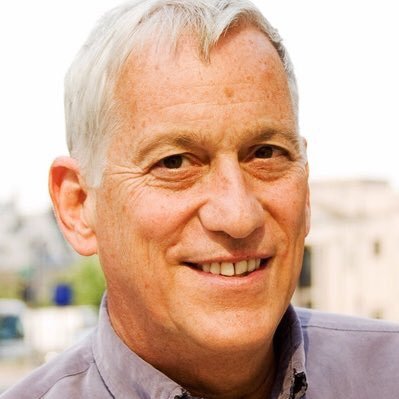
This is actually a bigger deal for humanity than most people can imagine. I will always remember the looks on the engineers’ faces in the Starbase conference room in December 2020 when @elonmusk suggested, then insisted, that the Mechazilla launchpad arms could catch a returning Starship.


Tom Matta retweeted

We were taught that Earth orbits the Sun in a closed circle. In reality, Earth has never returned to the same point in space once in 4.5 billion years.
Right now, the Sun is carrying Earth and every planet around the center of the Milky Way at 230 km/s (828,000 km/h), more than 18,000 kilometers every 80 seconds.
Because the Solar System is tilted 60.2° to the galactic plane and bobs up and down through the galactic disc roughly every 30 million years, the planets trace open 3D corkscrew helices across deep space rather than flat loops.
The last time the Sun stood where it stands today, one Galactic Year (230 million years) ago, the very first dinosaurs were only beginning to appear on Earth. Since forming 4.6 billion years ago, our Sun has completed only 20 laps.
Tom Matta retweeted

Halloween tip for America’s adversaries: Ghosts aren’t real. American strength and resolve is. 👻🇺🇸🎃 #happyhalloween

Tom Matta retweeted

SIR PATRICK STEWART (1940-2026)
Before everything else, Patrick was defined by being born and bred in Yorkshire, the proud county in the north of England which he loved to the end. You could hear it in his accented voice and in the stern honesty with which he told you what he thought and felt. Yorkshiremen have no truck with half-truths or avoidance of big issues. He wore his heart on his sleeve, which made him a man to rely on, to admire and in my case, love.
We first met as ambitious young actors with the Royal Shakespeare Company half a century ago but we weren’t in the same productions. My first strong memory was a few years later, meeting him in the street in central London when he told me about an offer to take over a leading part in 'Star Trek'. “But Patrick think of your stage career in the UK. Do you really want to risk—getting lost in Hollywood for years and years?”. Well, he took the risk and thank goodness for us all that he did for not just his devoted Trekkies but film and theatre audiences, who marvelled at his using international celebrity to star in a string of cinema successes ('X-Men' of course) and in great classical plays by Shakespeare, Ibsen, Arthur Miller, Peter Shaffer, Pinter and Beckett at Stratford-upon-Avon, in London’s West End and on Broadway.
America was his adopted home, where he met his adored Sunny who has cared for him through sickness and health, through thick and thin. But he never forsook his origins: and the proudest achievement of the most respected and beloved actor of his generation on either side of the Atlantic, was his appointment as Chancellor of Huddersfield University in Yorkshire.
His farewell performance in 'Avengers: Doomsday' is yet to be seen.
Ian McKellen 29 October 2026
Photo: University of Huddersfield


Tom Matta retweeted
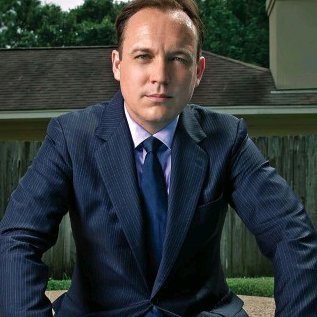
Google's Eric Schmidt dated a woman 24 years younger than him.
They broke up.
She went on to marry Dario Amodei, the founder of Anthropic.
Then she got her ex into Anthropic's Series A.
His stake is now worth ~$20 billion.
Be nice to your exes.

Tom Matta retweeted

📓 SpaceX Engr Cheat Sheet
...from the back of my notebook, made of recycled stone.
Bottom center: "Any altitude is attainable with the right attitude."

Tom Matta retweeted

Today, Carnegie Mellon University and Ken Griffin, founder and CEO of Citadel and founder of Griffin Catalyst, announced a historic $3 billion gift to elevate Carnegie Mellon in Pittsburgh and launch Carnegie Mellon University Miami. #CMUMiami
Learn more: cmu.edu/news/stories/archive…
Tom Matta retweeted

Lee Kuan Yew on China
Q: Will China become a democracy?
"No, China is not going to become a liberal democracy; if it did, it would collapse. Of that I am quite sure, and the Chinese intelligentsia also understands that. If you believe that there is going to be a revolution of some sort in China for democracy, you are wrong. Where are the students of Tiananmen now? They are irrelevant. The Chinese people want a revived China. Can it be a parliamentary democracy? This is a possibility in the villages and small towns.
The Chinese fear chaos and will always err on the side of caution. It will be a long evolutionary process, but it is possible to contemplate such changes. Transportation and communications have become so much faster and cheaper. The Chinese people will be exposed to other systems and cultures and know other societies through travel, through the Internet and through smart phones. One thing is for sure: the present system will not remain unchanged for the next 50 years.
To achieve the modernization of China, her communist leaders are prepared to try every method, except for democracy with one person and one vote in a multiparty system. Their two main reasons are their belief that the Communist Party of China must have a monopoly on power to ensure stability and their deep fear of instability in a multiparty free-for-all, which would lead to a loss of control by the center over the provinces. To ask China to become a democracy, when in its 5,000 years of recorded history it never counted heads — all rulers ruled by right of being the emperor; if you disagree, you chop off heads, not count heads."
Q: The relationship between the United States and China has now become the most important geopolitical issue of this century. How do the two sides engage with one another?
"From the Chinese side, in a very pragmatic, almost cold blooded and clinical fashion. On the American side, there’s been some vacillation. First China is a strategic adversary, then China is a strategic partner, then China is a stakeholder, and then China is not carrying its weight."
Q: What impact is China’s rise having on its neighbors in Asia?
"China’s strategy for Southeast Asia is fairly simple: China tells the region, 'Come grow with me.' At the same time, China’s leaders want to convey the impression that China’s rise is inevitable and that countries will need to decide if they want to be China’s friend or foe. China is also willing to calibrate its engagement to get what it wants or express its displeasure"
Q: Will they be able to create the domestic demand that’s necessary as they find exports reduced?
"Slowly. But in the meantime they’re keeping the economy by an enormous expenditure on infrastructure in the west — high-speed roads, high-speed railways, airports, telephone lines, bringing water from the south up to the north where it’s arid and dry, huge, enormous, mammoth projects. That keeps it going. "
Q: How will China’s behavior toward other countries change if China becomes the dominant Asian power?
"At the core of their mind-set is their world before colonization and the exploitation and humiliation that brought. In Chinese, China means Middle Kingdom, recalling a world in which they were dominant in the region.
The concern of America is what kind of world they will face when China is able to contest their pre-eminence. Many medium and small countries in Asia are also concerned. They are uneasy that China may want to resume the imperial status it had in earlier centuries and have misgivings about being treated as vassal states having to send tribute to China as they used to in past centuries.
The Chinese tell us that countries big or small are equal; [that they] are not a hegemon. But when we do something they do not like, they say you have made 1.3 billion people unhappy. So please know your place
"
Q: What is China’s strategy for becoming No. 1?
"The Chinese have concluded that their best strategy is to build a strong and prosperous future, and use their huge and increasingly highly skilled and educated workers to outsell and outbuild all others. The Chinese have calculated that they need 30 to 50 years of peace and quiet to catch up, build up their system, and change it from the communist system to the market system.
I believe the Chinese leadership has learned that if you compete with America in armaments, you will lose. You will bankrupt yourself. So, keep your head down, and smile for 40 or 50 years."
Q: What are the major hurdles in executing that strategy?
"There will be enormous stresses because of the size of the country and the intractable nature of the problems: the poor infrastructure, the weak institutions, the wrong systems that they have installed. Straight-line extrapolations from [China’s] remarkable record are not realistic. China has more handicaps going forward and more obstacles to overcome than most observers recognize. Chief among these are their problems of governance: the absence of the rule of law, which in today’s China is closer to the rule of the emperor; a huge country in which little emperors across a vast expanse exercise great local influence; cultural habits that limit imagination and creativity, rewarding conformity; a language that is exceedingly difficult for foreigners to learn sufficiently to embrace China and be embraced by its society; and severe constraints on its ability to attract and assimilate talent from other [countries].
China will inevitably catch up to the U.S. in absolute GDP. But its creativity may never match America’s because its culture does not permit a free exchange and contest of ideas. How else to explain how a country with four times as many people as America — and presumably four times as many talented people — does not come up with technological breakthroughs?"
Q: How should one assess Xi Jinping?
"He has had a tougher life than [his predecessor] Hu Jintao. His father was rusticated, and so was he. He took it in stride, and worked his way up. It has not been smooth sailing for him. His life experiences must have hardened him. He is reserved — not in the sense that he will not talk to you, but in the sense that he will not betray his likes and dislikes. There is always a pleasant smile on his face, whether or not you have said something that annoyed him. He has iron in his soul, more than Hu Jintao, who ascended the ranks without experiencing the trials and tribulations that Xi endured. He is a person with enormous emotional stability who does not allow his personal misfortunes or sufferings to affect his judgment. He is impressive."