
Building space data center, accessible to all.
Hyderabad, India
Joined April 2021
- Tweets328
- Following87
- Followers1K
- Likes146




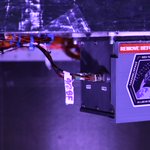
MOI-1a Update: We finally made it to orbit onboard a orbital transfer vehicle (OTV) depoyed at T+01:02:10 from Transporter-18 mission of Falcon-9 SpaceX. Impulso.space supported us across every critical phase of MOI-1a launch journey.
Next stop, on 10th Oct we get injected into orbit by the OTV. Post that 90-minutes of phoenix period (no operations) and then the operations begin.
Stay tuned for updates on mission.
#ai #space #dataCentersInSpace #isro #india

TakeMe2Space retweeted
Genuinely big day for India's private space sector. SpaceX's Transporter 18 is carrying two Indian satellites and an Indian hosted payload into orbit, all authorised by IN-SPACe.
Among them, @satleolabs TAPAS-1, India's first commercial thermal imaging payload built by a private company. Thermal sensing picks up what ordinary optical cameras cannot, from crop stress to forest fires to urban heat. A new layer of Earth intelligence, now opened up by Indian industry.
Alongside it, @tm2space's MOI-1A brings AI computing to orbit, running models on the satellite itself, and @DhruvaSpace's LEAP-2 flies four payloads, demonstrating its platform for hosting others in space.
Orbital computing, thermal intelligence, and a homegrown hosting platform, all on a single flight. This is the range and ambition of India's private space ecosystem today.
Congratulations to all three teams. Wishing you a clean deployment and a long innings in orbit. @isro @INSPACeIND @PMOIndia
We shipped our first Helmoltz Cage and Air Bearing setup to a customer. This can be used to test pointing and detumbling of a satellite up to 30kg.
Designed by @tm2space and manufactured in Hyderabad.
#MadeInIndia #engineering


The Moment of Interia and Center of Gravity test at IN-Space
We had the worst CG deviation of 4mm along one axis and avg of 3mm deviation on other axes. The max MOI across CG was found as 0.180 kg-m2 about the pitch axis. These values were measured in stowed condition of the satellite.
MOI-1a is now waiting to be shipped. Waiting for the license to be shipped :)
Thanks IN-Space for enabling this test.
#space #makeInIndia #dataCenterInSpace
TakeMe2Space retweeted

Happy to learn that Hyderabad-based startup TakeMe2Space's PowerBank-50 has become the first Indian-made satellite battery pack to earn flight heritage.
TakeMe2Space announced that its PowerBank-50 satellite battery pack successfully completed its first space mission, earning the coveted "flight heritage" status.
It flew aboard Skyroot Aerospace's Vikram-1 mission, becoming the first Indian-made satellite battery pack to achieve this milestone.
I am especially glad that TakeMe2Space took its initial shape at @TWorksHyd, India's largest prototyping facility.
Congratulations to @tm2space founder Ronak Samantray and the entire team. May you continue to scale even greater heights.


TakeMe2Space retweeted

Space-grade 50 Wh Li-ion. ✅
Proven in orbit. ✅
Made in India. ✅
The missing piece of India’s commercial space puzzle just powered up. 🇮🇳🚀
In satellite tech, you face a brutal Catch-22: No one flies unproven hardware, but you can’t prove hardware without flying.
Hyderabad-based startup TakeMe2Space just broke that cycle. Its PowerBank-50 satellite battery pack officially earned its coveted "Flight Heritage" tag, a first for an Indian private battery maker.
Here’s why this matters 👇
1. The Test: 450 km Up
Flown aboard Skyroot Aerospace’s maiden Vikram-1 orbital flight, it powered Cosmoserve Space's payload at a 450 km altitude.
* What it survived: Violent launch shocks, zero-gravity vacuum, and extreme thermal swings.
* What it proved: Real-time health monitoring, internal thermal control, and flawless power delivery in orbit.
2. The Tech: Small Box, Big Specs
* Size & Weight: 380g delivering >50Wh capacity.
* Architecture: Stackable design, scalable from CubeSats to microsatellites.
* Cost Disruption: ₹1,04,900 off-the-shelf, a fraction of the cost of foreign imports.
3. India’s Full Space Stack:
This isn't just one product; it's proof of the domestic ecosystem converging:
* Private Launcher: Skyroot Aerospace.
* Private Sub-system: TakeMe2Space.
* Commercial Payload: Cosmoserve Space.
Instead of waiting months for pricey imported batteries, Indian satellite builders now have local, flight-proven power ready off the shelf.
So What’s Next?
Flight heritage is just step one. TakeMe2Space is using this foundation to build next-gen orbital computing and space-based data processing infrastructure.
Space-proven. Built in India.
Upwards and onwards...👏
@tm2space @SkyrootA
@CosmoserveSpace
@INSPACeIND
By @shinejac
#MakeInIndia #DeepTech #SpaceTech #AtmanirbharBharat #Vikram1 #NewSpaceIndia


TakeMe2Space retweeted

A proud moment in India’s journey towards Aatmanirbhar Bharat! 🇮🇳
Under the visionary leadership of Hon’ble PM Shri @narendramodi Ji, India is steadily moving from importing critical technologies to designing and building them in India.
This is the spirit of Make in India.💪
@NitinNabin
@blsanthosh

Brilliant!
“Until now, Indian satellite builders mostly had to import this critical component at high cost and long waiting times.”
TakeMe2Space's PowerBank-50 becomes first India-made satellite battery.
#AtmaNirbharBharat business-standard.com/compan…

TakeMe2Space retweeted

No imports. Just homegrown power.
With TakeMe2Space’s PowerBank-50, India powers its own orbit. A breakthrough flight-proven satellite battery driving our space sector forward.
Another giant stride for Atmanirbhar Bharat.
Brilliant!
“Until now, Indian satellite builders mostly had to import this critical component at high cost and long waiting times.”
TakeMe2Space's PowerBank-50 becomes first India-made satellite battery.
#AtmaNirbharBharat business-standard.com/compan…
TakeMe2Space retweeted

Most of us look at space & see rockets (All thx to ISRO & now Skyroot). The real visionaries look at space & see an infra layer.
While mainstream headlines chase launch vehicles, a Hyderabad based startup named TakeMe2Space (TM2S) is quietly building the cloud data center of Low Earth Orbit.
After co-founding NowFloats, a SaaS enterprise acquired by Reliance Industries, Ronak Kumar Samantray posed a fundamental question:
"If an entire global economy exploded because anyone could access a computer through an API, what happens when anyone can access a satellite?"
The bottleneck in space is data congestion. Satellites gather massive streams of Earth observation imagery, but downlinking raw TBs to ground stations creates severe latency & high costs.
Ronak’s thesis was stop downloading raw data. Bring the compute to space & transmit only the answers.
Rather than relying on white-labeled components, TakeMe2Space engineered its core tech stack in-house from 1st principles:
- OrbitLab (The Software Layer): An on-orbit AI platform where researchers, defense analysts & enterprises can upload custom machine learning models to run directly on satellites for $2/min, slashing bandwidth costs by up to 85%.
- RadShield Coating: A proprietary radiation-resistant coating that survived solar flares during orbital testing, extending critical component lifespans by up to 10x.
- PowerBank-50 (The Hardware Breakthrough): A compact, 380g, space-grade battery pack. It recently earned flight heritage aboard Skyroot Aerospace’s historic Vikram-1 rocket (Mission Aagaman). By pricing an off the shelf, flight-proven battery at ₹104900 (~$1100), TM2S effectively ended India’s reliance on costly, heavily regulated Western battery imports for CubeSats.
We all know, Deeptech requires conviction capital. TakeMe2Space backed its execution with institutional validation: Pre seed of ₹5.5 Cr led by SeaFund, alongside Blume Ventures & Artha Venture Fund.
Seed round of $5M led by Chiratae Ventures, with participation from Unicorn India Ventures, SeaFund & Artha.
The target? Scaling toward a 6 satellite orbital compute constellation (MOI) to deliver daily, real-time AI insights across the globe by Q4 2027.
Now, Why This Matters??
Every major industrial paradigm shift relies on an unglamorous infrastructure layer:
- Railways unlocked trade.
- Fiber optics unlocked the internet.
- On-board orbital compute will unlock space.
TakeMe2Space is building the AWS of Low Earth Orbit. 🙏🙏

Thank you, Hon'ble Finance Minister @nsitharaman.
We are deeply honored by the mention. Reliable, high density power is the foundation of our core vision of building data centers in space. Indegenesing and solving critical hardware bottlenecks is our step towards that. 🚀 🇮🇳
Brilliant!
“Until now, Indian satellite builders mostly had to import this critical component at high cost and long waiting times.”
TakeMe2Space's PowerBank-50 becomes first India-made satellite battery.
#AtmaNirbharBharat business-standard.com/compan…
TakeMe2Space retweeted

Brilliant!
“Until now, Indian satellite builders mostly had to import this critical component at high cost and long waiting times.”
TakeMe2Space's PowerBank-50 becomes first India-made satellite battery.
#AtmaNirbharBharat business-standard.com/compan…
PowerBank-50 is officially space-proven! 🚀
@tm2space 50 Wh battery pack earned its first mission patch aboard @SkyrootA's maiden launch, Vikram-1 'Aagaman'.
1xPowerBank-50 successfully powered @CosmoserveSpace's payload on the OAM at a 450 km orbit.


Final stages of MOI-1a. A 120w, 13Kg, 6U AI-satellite.
Equipped with in-house built power systems, obc, adcs, reaction wheels, torquers, star tracker, sun sensors, imu cube, uhf, triple plate solar panels and AICube+Storage.
Also carries imager by EON, SBand by Astrome.


TakeMe2Space retweeted

#ReportLaunch | #ISC2026
We are pleased to announce the release of "India’s Strategic Opportunity in Space-Based Compute Infrastructure", developed jointly by SIA-India and TakeMe2Space.
As artificial intelligence, Earth observation, and data-intensive applications drive unprecedented demand for compute infrastructure, the report examines how orbital data centres and space-based computing could emerge as the next frontier of digital infrastructure. It highlights the growing constraints of terrestrial data centres—including power, water, land, and scalability challenges—and explores how orbital compute can complement Earth-based systems.
The report outlines India’s strategic opportunity to participate early in the emerging orbital compute ecosystem through regulatory innovation, technology development, and industry collaboration. It also presents recommendations for enabling orbital AI, data processing, and next-generation space-based digital infrastructure while strengthening India's leadership in both the space and AI economies.
Released during India Space Congress 2026, the publication contributes to the ongoing dialogue on the future of compute, digital sovereignty, and India's role in shaping the next era of space-enabled infrastructure.
#IndiaSpaceCongress2026 #ISC2026 #SIAIndia #TakeMe2Space #OrbitalCompute #OrbitalDataCenters #SpaceBasedComputing #ArtificialIntelligence #DigitalInfrastructure #SpaceEconomy #SpaceTechnology #SpaceInnovation #FutureOfSpace #IndiaAI #NewSpace
@tm2space | @rokrsa | @AnilPra28432993 | @RGambhir


TakeMe2Space retweeted

IN-SPACe has picked @astrobase_space, @sat_sure and @tm2space under their Technology Adoption Fund.
Why these three?
Because they are building epic stuff.
Astrobase is the first and only company in India to work on developing an FFSC engine.
And this is a huge deal.
Because SpaceX is the only company in the world to have successfully flown an FFSC engine.
This is the same engine that's powering SpaceX's massive Starship.
Then you have SatSure.
They are building what they call an Earth Intelligence company.
They are using raw satellite data, turning it into meaningful insights and using that to create products that can be used by companies on Earth to make real business decision.
In fact, one of their more interesting product is SatSource - which basically captures detailed data about cropping patterns, land productivity and risk classification in a region.
And this data is then checked against land records - to give the banks the ability to build an alternate credit score for farmers in that region.
Banks then use that information to provide loans to farmers.
Now, SatSure is building "Dhaarini" - their own foudnational AI model.
By training their AI model on India-specific data - they will be able to create more finetuned AI products for Indian businesses.
Then there is TakeMe2Space.
And they are trying to build data centers in space.
But under the Technology Adoption Fund, they are working on building an indigenous AI-powered star tracker system for satellites called StarSense.
This is basically a smart camera on a satellite - which looks at the stars in space and figures out exactly which direction is the satellite facing.
It essentially acts as the compass for the satellites.
And every satellite that needs to take accurate pictures and send communication through space - this star tracker system and its accuracy becomes critical.
