

Founder @veractoai. Building with AI. Exploring how it changes the way we think, learn and build.
Joined March 2021
- Tweets698
- Following140
- Followers88
- Likes383





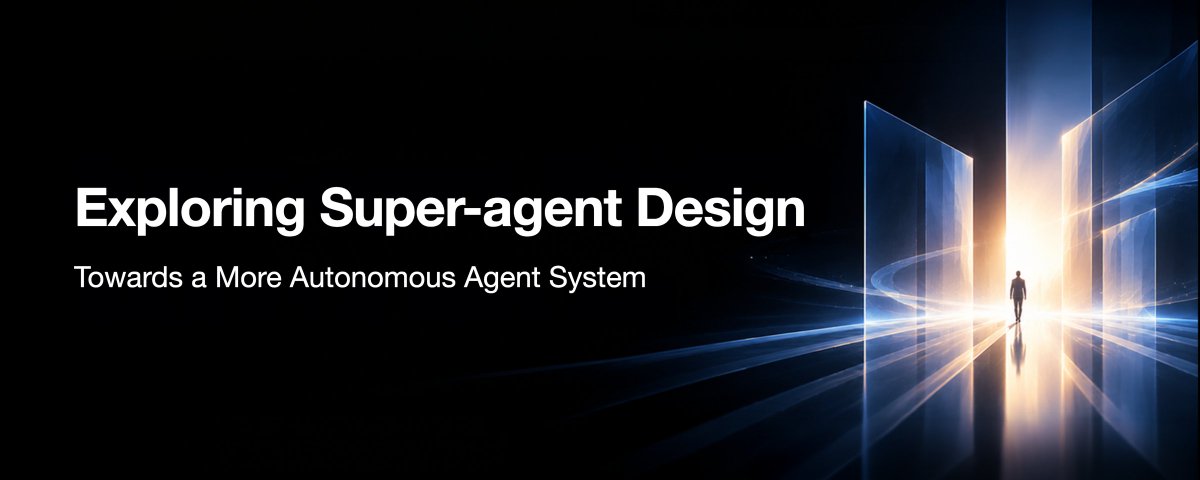
I see harnesses like GrokBot (@bot) /OpenBot (@OpenBot_) moving toward the kind of system described in this @DeepSeekHarness article. DeepSeek lays out an architecture for a more autonomous, always-on agent that can coordinate multiple different tasks and work proactively.
I’m experimenting with a similar direction in my own OpenBot setup, moving toward the idea of a super-agent.
One of the hardest parts, in my experience, is long-term memory. It’s not just about having a good retrieval system or a knowledge graph. The harness also needs to know what to remember, how to connect it in logical chain, and when to bring the right context back into an ongoing task.
I also see a connection between this kind of harness and the work @sailresearchco is doing around long-horizon agents and GPU optimization. If agents 24/7 working in the background, the trade-off changes: for some tasks, latency may matter much less than the cost and reliability of completing the work.
This could bring us a different kind of agent possible: one that proactively works in the background and makes progress continuously. We don't have to ask it to do anything. It is just always analyzing our whole digital work.

1
144
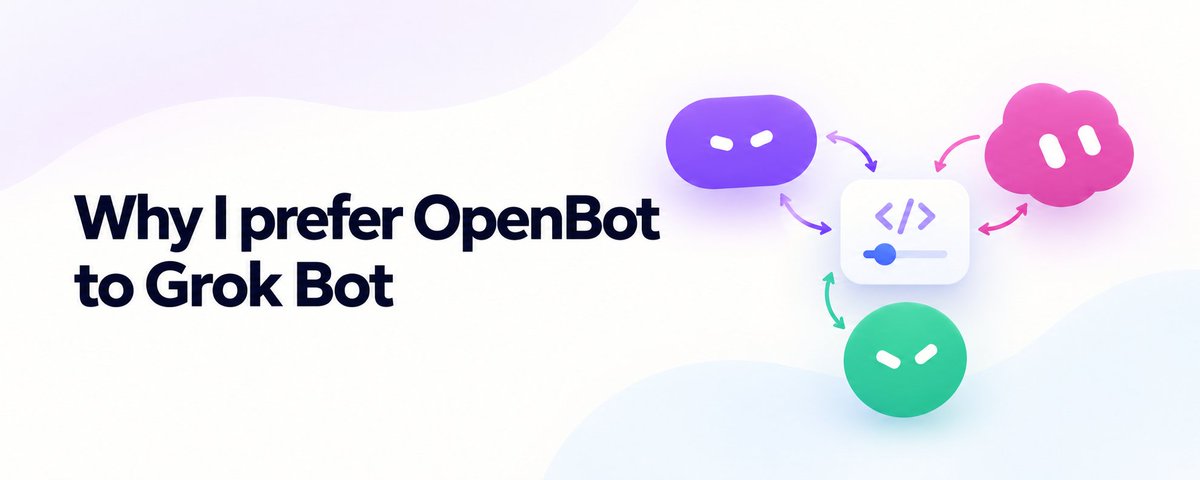
OpenBot > Grok Bot. For me.
The models I want. Code I can change. Better design and UX.
I borrowed two ideas from @elonmusk and @NStoronsky to organize my AI team.
Here's the setup—and why I prefer it ↓
1
126
I think AI could make companies like Revolut much harder for startups to compete with.
Revolut is already challenging new niches through its new bets teams. It’s still founder led, and Nik wants to expand into new markets.
AI helps those teams test more ideas with much fewer people. They also have much more funding to iterate, unlimited tokens, customer data, and existing audience.
A startup has to earn trust and loyalty while building the product. They get the same AI. So both sides can build faster.
But as development becomes less of a bottleneck, the huge advantage shifts toward things that take years to earn: reputation, trust, loyalty and insider data.

Jeff Bezos said you need to pour gasoline on promising sparks.
Nik Storonsky says this is exactly how he makes bets on new products at Revolut:
“We know that our top 10 bets, they grow 10-20% month on month.”
“If we see that a bet is historically in the bottom 25% of all the bets, we simply sunset it.”
“We instill discipline when we're running businesses which are not growing very fast. And then bets which are growing very fast, we're doubling down.
230
Elon Musk and Nik Storonsky are two of the brightest founders of the West today, building NOT AI as a main product, disrupting their industries.
I consider these guys are business geniuses who build frontier systems and highest performing teams.
Revolut — the most valuable private company in Europe.
SpaceX until recently was the most of the world.
I saw quite a lot of intersections in their scientific approaches to building companies in performance tracking, hiring the best, product and many more. I'd like to learn from their playbooks, and collected their publicly shared principles and found intersections creating a graph of the scenes:
Github:
github.com/timsmykov/founder…
Interactive site:
founder-systems.timsmykov.ch…
I welcome you to look at it and get the most from these geniuses to implement in your company systems and life.
I think to expand this graph by adding other exceptional founders' principles and see what works best in business systems in general in the modern world.

1
120
We first touched AI in interfaces, and it felt like a miracle.
Then we installed Codex/Claude Code on our device, and it became a co-CEO of our work.
The next step is Hermes/OpenClaw kind of an AI OS that knows our whole life and becomes a co-Brain.
1
317

AI makes you faster. But does it make you smarter?
I used to be a good writer. In school, in university. I was consistently among the top. I could shape raw ideas into structured arguments, weave words into something meaningful. Writing was thinking made visible.
Now I use AI for practically everything:
- What to eat
- How to train
- When to wake up
- How to structure my work
- What work to do
- How to learn new things
I use AI to do 95% of my things. And it works. I genuinely believe I'm 10x more productive than I was in the pre-AI era.
But here's what I didn't expect.
Over the past two years, I haven't written a single text longer than several paragraphs without AI involved at some stage: outlining, structuring, drafting, or generating entirely. My role shrank to editing and approving.
Now, when I try to write something from scratch, I feel so much pain and frustration. I feel like a child who has not read books, only learned to speak, unable to construct words into beautiful, coherent sentences. The muscle atrophied.
And I think this is a broader pattern. When you use AI everywhere, your role quietly shifts:
- From author to reviewer
- From creator to orchestrator
- From thinker to verifier
We stopped generating ideas on paper. We started curating machine output.
When was the last time you wrote something substantial without AI at any stage? No structure assist, no post-processing, no "just clean it up." Purely your own mind on a blank page.
292

If you want to start changing your life — start with reading Atomic Habits.
The most important part of change is creating your foundational life system: rebuilding all of your habits, routines, and automations from first principles.
There are three most foundational things to do:
1. Master your attention: where your attention is directed — there your energy flows, and there your life flows.
2. Track where you spend your time every day and ruthlessly cut all bad habits.
3. Replace those cut bad habits with new ones aligned with your life goals.
It takes time — and compound interest is your best companion on this journey.

1
217

Look at the Chinese LLM providers:
- I bought GLM 4.7 coding plan for $36 per quarter and have almost unlimited tokens for personal usage.
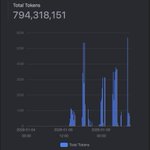
- In 4 days, I sent 800M tokens, which is over 1B per week.
- No US LLM provider would give you this many tokens for such a low price.
- If I used Opus 4.5 via API, it would cost me $9 000 for 1B tokens.
- Benchmarks are too close to overpay tens of times.
- All of these models work with Claude Code, Opencode.


181


I think this tactic has always worked; it's just that AI replies have become such a big problem that it can only be fixed by changing the algorithm's logic and making replies useless.
This quoted post is unavailable.
51

If you didn't have subscribers yet, where would you get these impressions from? For small accounts, replies are the only way to get some impressions and reach.
This quoted post is unavailable.
43
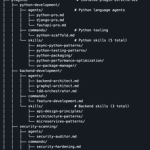
We already need to create a GitHub repo that aggregates all Claude Code plugins, agents, skills aggregation repos


94
