

Building brain-like AI @noemon_ai Previously @Huawei @IBMResearch @ETH_en @UZH_en @ntua
Zurich, Switzerland
Joined January 2009
- Tweets2.3K
- Following2K
- Followers1.4K
- Likes4.8K




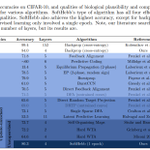




Well, the bad news is that if AI is or becomes brain-like, then the hard to interpret, nonlinearly mixed neurons are crucial for intelligence. Worse, understanding individual neurons and local circuits doesn't necessarily imply system-level interpretability.
Nature 2013 by @mattiarigotti et al.


interpretability might be the most important scientific problem in the world right now, as I don't think we can solve alignment if we don't know what we're building. I think I have good news about it. I co-authored early work in mechanistic interpretability at OpenAI and came away pessimistic, because neural networks appeared to fold into arbitrary tangled knots. years later, I started openai's first large-scale automated interpretability project, finding about 2% of neurons legible with the primitive tools we had
with modern agentic tools and a much closer look, the picture looks totally different. the vast majority in models up to trillions of parameters are legible, and their circuits beautiful. many famous examples of tangled neurons turned out to be misunderstood. The roadblocks I expected mostly aren't there. I now think ambitious interpretability will be solved by the time we need it most, and possibly quite soon, as automated scientists keep improving. it may be a bitter lesson for interpretability: the simple thing, at absurd scale, works
already-clean.goodfire.com/


Not really though.
This assumes ~2800 parallel users, single-tasking (only autoregressive chain of thought), no learning, no motor control, no continuous input during the generation, and only 10 tok/s.
The fair comparable is a batch_size=1 robot that learns while working, discerns stimuli with sub-millisecond-resolution, and multitasks.
That's at least 9 orders of magnitude of efficiency difference!
There is probably no way to get there with the current scaling paradigm.
batch_size=2800 vs 1 (3 OOM)
1000 training examples vs 10 (2 OOM)
Backprop per example (1 OOM)
100 ms vs 1 ms frequency (2 OOM)
1 CoT thread vs 10 tasks to be conservative (1 OOM)
Walking alone contains 37 degrees of freedom, 80 lower-limb muscle–tendon actuators, and 17 upper-body torque actuators. Now imagine walking while talking, listening and looking around.

Timoleon (Timos) Moraitis retweeted
GPT-6 Astra Max thinking also missed some less well known but arguably better proven candidate algorithms of the canonical cortical microcircuit.
Here are some, with theory and simulations.
TL;DR Combining plasticity with the soft winner-take-all function that emerges from the interaction of excitation with lateral inhibition can be very powerful, outperforming LSTMs, bio-constrained backprop approximations etc.
arxiv.org/abs/2009.06808
iopscience.iop.org/article/1…
openreview.net/forum?id=8gd4…
Plasticity is not gradient descent, especially not on a global loss.
This alone could be a world of difference.


Nice. I would also add it needs:
- To adapt to bodies, tasks, and environments that vary case by case and over time.

Leslie Kaelbling on why Astra is so good at robotics and why robotics still isn’t solved “yet”.
I spoke at Leslie’s lab pre-Astra, and we chatted about many of these ideas. Pretty cool to see them coming into the mainstream. #IROS2026


A neolab that is truly onto something new wouldn't play this game where R&D is synonymous to compute costs.

The economics of a Neolab.
A neolab is loosely defined as a startup of AI researchers who raises a lot of money pre-production to be able to finance GPU compute to take on a large AI problem.
To buy 1000 GB300s or ~14 NVL72 racks will set you back $125-150M for 3yrs with 15-30% upfront. That’s about ~2-2.5MW.
Thats about enough to do 10^25 flops a quarter and get to a GPT-4 level model which is 1-2 OOMs off frontier for pretraining.
If you post-train on a great open source model, you have a better chance of getting to frontier. The risks are a) you need to spend millions on RL environments too and b) being lapped by another model release while being tied to a base model.
For this to payback, you need to give your customers a better and ideally cheaper inference service than a base model and serve them for long enough to recoup your large investment. Even at 50% margin on inference, to recoup $10M in training means serving ~10T tokens (!) if you price like Fable / Astra given a standard cache read / input / output split ($2/M blended). And you have to justify being better than a release like Opus 5.5 which is even cheaper. Often, you end up charging your customers a huge premium in terms of platform fees and compute fees on top of pure inference.
Meanwhile, every hour you’re not utilizing your GPUs you are burning money so you typically resell this compute back to a broker or run inference for open models / resell spot instances. At below a ~60% utilization on spot, you will still lose money.
Add to that insane cost of talent.
So what can you do with the compute?
- Not play the model game at all.
- Play an entirely different model game (Jev, World Labs) that if big labs played, would either a) cannibalize their business or b) be incrementally not significant revenue c) would cause too much distraction from the main main thing
- Acquire a proprietary data set (Peridodic Labs) in enough volume in a domain of usefulness to eclipse frontier quality. Often happens in robotics, biology, chemistry.
If you do overcome the challenge of building a model that is useful and well priced beyond big labs models, given the huge price of compute, you still need to play in an area where the revenue / compute ratio is signficant and market demand is large enough to payback your compute spend.
It is a difficult game.
Timoleon (Timos) Moraitis retweeted

The state of AI in AI robots today.
Figure's Helix, Physical Intelligence's π0 models, and Google DeepMind's Gemini Robotics all converge on a similar design. They use a vision-language-action model. A slower "thinking" layer, basically a multimodal LLM, understands the request, looks at the scene and plans steps. A separate fast control layer then turns that into motor commands many times a second.
You can talk to it, it can break "clean up the kitchen" into steps, and it can notice that a grasp failed and try again.
These models are trained mostly via imitation learning from human demonstrations (teleoperation plus first- and third-person video), with reinforcement learning layered on top, mostly in simulation for locomotion and increasingly in the real world for fine-tuning skills. This way the bot learns how to do a task with many variations.
Since no production robot AI systems can learn on the fly (yet, more on that below), there are various mechanisms that are used to handle mistakes or novel situations.
The slow thinking layer model sees what just happened (the cup slipped, the drawer is stuck) and replans. It adapts through its context window, not via permanent learning. For reasoning-type problems ("the cup isn't where I expected, look in the dishwasher") this works reasonably well, and it will keep improving as the underlying models improve.
Bots also log their failures, allowing the company to retrain offline, and push an update in a few weeks or a month or so, the way Tesla does with FSD. That is continual learning of a sort. It just runs at the fleet level on a cycle of weeks instead of inside each robot. For common situations that's a powerful loop, arguably better than per-robot learning, because every robot benefits from every other robot's mistakes.
Then there are agentic-like bolt on memory systems ("this family keeps the pans in the left cabinet") and you cover a lot of the personalization need too.
But there’s still something missing from this AI stack.
Context-based adaptation is good for reasoning and bad for motor skill. A human can pick up an unfamiliar tool, fumble twice, and have it by the third try, because their motor system actually rewires. A current robot model can plan to "try a different grip," but it can't turn those three attempts into a lasting new skill until the next fleet retrain. The same goes for things specific to one site or one body: a stiff drawer in this particular house, a slippery floor, a gripper whose joints have worn and now behave differently. Fleet retraining handles common failures well but handles rare, local ones badly (ask me how frustrated I am about my Tesla continually driving over the same road dip too fast every damn time).
Will this lack of on-bot continual learning/adaptation matter? And/or will true on-bot continual learning become possible? These are the trillion dollar questions right now in AI robotics IMHO.
I don’t know the answer to either question. I do know that there are several well funded research efforts to solve continual learning and also to reduce computation by many orders of magnitude which would allow large 1T+ reasoning models to run on-bot without cloud dependency. Whether and when these research efforts bear fruit is anyone’s guess, but I’m cautiously optimistic we’ll see massive improvements within 3-5 years in these areas.
In the meantime, we’ll keep iterating fleet training faster and faster - if we end up with overnight model refreshes maybe continual learning won’t be needed as much (but I’d still like my Tesla to have a local agentic-like memory to remember that road dip! My car’s suspension will forever be grateful, as will my back).
🤖 Made with AI

Yup 🇨🇭

Some data we recently assembled on entrepreneurship/compute in Europe: eudata.vercel.app.
We hope that one of the useful roles that Stripe can play is in collecting and publishing empirical data pertaining to entrepreneurship and industry in Europe. There's growing appetite to get Europe on a better footing, and cross-sectional comparisons can often shine light on where opportunities lie. If you're interested in this kind of thing, we publish more at stripeeconomics.substack.com.


The fact that this assigns useful credit 1000 layers deep when such works typically managed a couple dozen layers is quite a feat. Congrats to @SakanaAILabs and the authors @jeffreyseely & Julian Gould!
I do think one distinction is important though.
PC-ALM and related approaches are not very different from backpropagation in the strongest sense. It is a dynamical mechanism for recovering a backprop-like credit signal. The network is still trying to communicate the same global supervised error through the hierarchy.
The change is very worthwhile to study, is indeed more bio-plausible than backpropagation and could have some computational advantages for asynchronous updates, but it also means adding machinery to approximate the signal that backprop already computes directly. It also means that the ceiling in computational efficiency, sample efficiency and generalization is likely that of backprop.
On our side, we have been working for a long time on a more radical route: remove the backward credit signal altogether. In our approach, learning is purely bottom-up. There is no feedback signal, no target propagated through the network, and no global task loss dictates hidden weight updates. The causal arrow is reversed: local weight changes give rise to learning at the level of the whole model.
In what we showed publicly several years ago, such feedback-free approaches can score better than PC-ALM and its predecessors report, despite being arguably more biologically plausible, more computationally efficient, and more suitable for hardware implementations.
In the multilayer SoftHebb work from 2022, in the full 1000-class ImageNet problem – not Tiny ImageNet – and other tasks, we showed accuracies that PC-ALM and other recent approaches have not managed to reach. Interestingly, these results were reached after a single presentation (i.e. epoch) of 10% of the dataset. Under different architectures, setups, etc, but the broader point is important.
In light of all the recent interest around continual learning, test-time compute, and post-training, here is another interesting aspect: These genuinely local learning rules are also inherently amenable to online, continual, and distributed learning, because they only have a forward pass, they learn without batches, and they have minimal communication requirements across parts of the model.
The difference becomes especially interesting for post-GPU hardware architecture. If local dynamics such as PC-ALM's are cheaper than backprop on a physical substrate, then algorithms that do not need the error-propagation dynamics in the first place have an even larger advantage.
The difficulty is that once you move far enough away from backprop, you also move away from the conceptual framework that most of modern AI is built and trained around. There is less machinery, but also fewer familiar tools for understanding what the system is doing and how to scale it. That has made this direction harder for others in both academia and industry to follow.
Those public results are several years old now, but we at @noemon_ai have kept pushing this direction. We can’t wait to show where this path has led us.

Introducing PC-ALM, a local-learning alternative to backpropagation.
Our method trains 1000-layer neural nets using only local dynamics, and without backprop.
Blog: pub.sakana.ai/pc-alm/
Standard deep learning relies on backpropagation. The brain, however, cannot implement backpropagation, at least not exactly. How can a physical system, such as the brain, solve multilayer credit assignment without explicit use of backprop?
We look for inspiration in two related fields: distributed optimization and NeuroAI.
In NeuroAI, predictive coding asks each neuron activation to solve an energy-based inference problem instead of using a standard forward pass. That inference step can be implemented as energy-minimization dynamics on local prediction errors.
This perspective -- each layer as a dynamical system -- has proven promising, but performance of predictive coding hasn't scaled well with depth. Credit signals at far ends of the network struggle to diffuse into internal layers.
We turn to distributed optimization, generalizing predictive coding to use an augmented Lagrangian instead of energy. This motivation stems back to a classic 1988 paper by LeCun, showing that the Lagrange multipliers of a deep network can be identified with gradients of a supervised loss. The augmented Lagrangian then bridges LeCun's perspective to the standard predictive coding that is used in NeuroAI.
We find that this new perspective yields a natural PC-like alternative to backpropagation, resulting in a method we call PC-ALM. PC-ALM differs from PC in that it introduces dual neurons (Lagrange multipliers) as part of the layer-local dynamics, resulting in each layer acting as a PI feedback control system to minimize local prediction errors.
We find that PC-ALM is capable of propagating signals to seemingly arbitrary depth, especially in deep narrow networks where standard PC struggles to learn.
Ultimately, our motivation here is to understand how distributed physical systems, such as the brain, can compute credit signals using only local coupling and local dynamics.
PC-ALM may also inform deep learning in neuromorphic hardware, where dynamics are cheaper than on GPUs.
Paper: arxiv.org/abs/2605.31022
Code: github.com/SakanaAI/pc-alm

Timoleon (Timos) Moraitis retweeted

Whether the brain does something like backprop is one of the oldest (now, cliche) questions in DL. Maybe I'm naive, but I still find this question incredibly compelling.
And I'm further naive in believing that solving it will somehow point to new unexpected advances in AI.
Timoleon (Timos) Moraitis retweeted

Spending the last few days across Zurich and Munich catching up with folks across robotics is a reminder (not new to me) that:
1) this is probably the densest hub of robotics talent in the western world (though you could argue it’s not huge)
2) our talent baseline in the US is much lower than here
US hardware founders are now spending more time in Shenzhen (for good reason) but I would also suggest spending time in the alpine region here to get a sense of what top young talent looks like (happy to make connections)


The first valid submission to break 90% on ARC-AGI-2 for a low cost is now on the community leaderboard. @noemon_ai achieved it back in March, and it took four months for the rest of the frontier to catch up, with GPT-5.6 and Claude 5.
Thank you, @arcprize @mikeknoop @fchollet @GregKamradt for getting to our pull request!
Our request for verification on the semi-private set has also been pending.
BTW, we have open-sourced this outer learning harness for the community, in a version that uses simple ICL as the inner learning method, but at @noemon_ai we work on the fundamentals of neural learning.

Noemon’s agentic ARC-AGI-2 Solver
A Reasoner > Validator > Refine loop learns instructions, tests them, and uses self-consistency and a judge to select outputs.
Author:
- Noemon: @noemon_ai
Code: github.com/noemon/noemon-arc…


A new scaling axis that does not benefit from centralization is in its early innings. Yes, I'm vagueposting, but it will all be obvious in hindsight.

this comment must go so hard if you eat crayons for breakfast
my point was not that there's a window to build "powerful" AI, but that there's a window in which you can catch up to the frontier
the most ironic thing about your comment is that the compute argument actually supports my point, but you wouldn't know that, weather boy
---
first, "powerful AI" is not a fixed point, it is ALWAYS relative to the frontier, the same way the definition of "rich" changes with time due to inflation/deflation.
having "mythos class" model on your laptop in 6 years is meaningless, when we will have ASI running in the cloud that does the job 10 times cheaper, better and faster than your shitty local laptop model could ever do
we have literally seen this exact same thing play out over the last few years
no one is using Gemma-4 nowadays, just because it is stronger than GPT-4. hosting Gemma-4 yourself is actually more expensive than using a frontier model nowadays, because you need hardware that costs thousands to serve at comparable speeds (50-100tks/s)
and as an individual you are simply never going to utilize the hardware as well as the frontier doing batches of 1024 requests
but compute is only one parameter in my argument, the real argument is that recursive self-improvement will accelerate the progress of the frontier
the frontier is literally on a different exponential/hyperbolic than your local models
---
second, the reason why your argument is braindead and backfires
the ratio of supercomputer flops to PC flops has gone up, not down
supercomputers are pulling away!
and this is only traditional scientific supercomputers (blue line)!
It is literally a thousand times worse if you include AI supercomputers (green line), which are now at ZettaFlop scale
