

Leveraging Market Structure through Options, Volatility, Passive flows, and Systematic Rebalancing. Research Distributed through @Hedgeye
San Francisco
Joined August 2021
- Tweets5.2K
- Following857
- Followers51K
- Likes23.2K




Tier1 Alpha retweeted

100% agree. Like many others, @t1alpha and @t1acapital are making rapid progress in moving local and only using cloud/frontier for hardest 5%. The local compute token supply is exploding.
From my perspective, it’s broadband 2.0, but possibly much worse, and will require pretty strong evidence otherwise.

I get it, there are nuances for tech-bros who are deep in the weeds. Everyone has an anecdote about why I’m wrong.
Take a step back and be a commodity-bro who’s seen enough supply/demand cycles. Tokens are a commodity. Currently, the token factories are out-stripping token demand. Pricing is the adjustment factor. Except token factories are mostly fixed-price businesses. They have take-or-pay. They have commitments. They will produce tokens at a loss rather than turn off.
I’m not saying that token demand is slowing. It’s still growing at astronomical rates. I’m saying that token production is now out-pacing demand. The cycle will turn when demand accelerates or token production slows. There’s like half a trillion $ of GPUs waiting to be installed. I don’t think token production slows anytime soon.
Yeah, I get it. Jevon’s and all. It’s great for AI consumers and innovators. But the guys owning token factories are gonna all go bust in the process, and that’s like $2T of capex to date. You cannot even restructure these things and crush the debt. They’re just stranded by new, and more efficient chips. They’re always going to be stranded by new chips. More efficient Models will strand the more expensive ones. It’s a race to the bottom against fixed costs. It’s the most godawful business misallocation I’ve seen in a while. Makes the Chinese look like prudent capital allocators🤣🤣
It’s like having iron rails when the new railroads run on steel. This bankruptcy cycle will be epic…

Tier1 Alpha retweeted

"The entire story of the market can be told in the record low correlation. No higher low divergence was made... perhaps we can go for negative implied correlation. In 2010, we experienced implied correlation above 100%. Maybe 2026 will be our mirror." -Mike Green @profplum99 @t1alpha

Tier1 Alpha retweeted

A dollar of net inflow into Nvidia raises its market cap by roughly a hundred dollars, according to Michael Green. His conclusion: stock prices have almost nothing to do with fundamentals anymore.
@profplum99, former portfolio manager and chief strategist at Simplify Asset Management and now Founder and CIO, Tier1 Asset Management, spent years running macro strategies at Peter Thiel's hedge fund before building the research that made him one of the most cited critics of passive investing on Wall Street. His argument is not that passive is bad for the average saver. It is that the entire market has quietly stopped functioning the way most investors think it does.
Here is how he explained the math on my podcast:
"The average impact of a dollar into the market was five dollars. That's five hundred times more than what the original theory predicted. My estimate is that for the largest, most inelastic stocks, those multipliers are now approaching one hundred. A dollar into Nvidia is raising Nvidia's market cap by about a hundred dollars."
Every dollar that lands in a 401k on payday gets allocated by formula, not judgment, into whatever index the target date fund happens to hold. Nobody is asking if the price is fair. They are buying because the paycheck arrived. As passive share grows, there are fewer active investors left to sell into that flow and correct the price, so the same dollar moves the stock further than it used to. Green's own trading has adapted to this: not asking what a company is worth, but tracking where the flow is forced to go next.
The market has not stopped pricing risk. It has started pricing something else entirely, and most investors are still reading the old map.
We’d like to thank @AlphaSenseInc for sponsoring this episode!
Full episode below 👇
youtu.be/5i3TIaEHn6A

Tier1 Alpha retweeted
It's good to be back. Even better to share a collaboration between @t1alpha and @weareintropic in my first return post. Please checkout the analysis.

SpaceX may be the clearest example yet of how passive flows can shape price discovery.
The shares rose 62% in three sessions, before falling 7% after the largest index flows had cleared.
We colaborate with @profplum99 in this note, with the IPO acting as a blueprint for upcoming mega-cap listings. (intropic.io/research-hub/thr…)
Tier1 Alpha retweeted
Gone are the days of picking stocks on valuation and ideas alone - you need to risk manage The Machine's flows, or The Machine risk manages you
Tier1 Alpha retweeted

I literally just got off a call with an industry friend talking about the importance of novel data. Relatively small shops like CBB or @cerulli_assoc or @t1alpha are going to be much bigger winners on a relative basis than big data firms. Novel, and First. Thats what counts.

"#China’s factory activity unexpectedly contracted for the 1st time in 5 months in June."
Not unexpectedly. We released this finding...5 weeks ago.
Some interesting things happening in July as well.
bloomberg.com/news/articles/…

Tier1 Alpha retweeted

The @profplum99 piece "A Semi-Theory of Almost Everything" is a must-read look under the hood at the The Machine's engine.
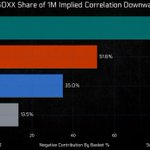
1/ Are implied correlations broken?
We've often referred to implied correlations as the real "fear index", which has become increasingly harder to justify over the past several months.


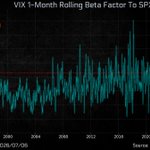
Even though implied correlation indices like COR1M are borderline useless here, Spot/Vol beta is right in the sweet spot.
In other words, our old friend the $VIX is probably your best gauge for equity risk at the moment.


Can't help but think about this NAV slippage between $SPX and $SPY/ $VOO/ $IVV during the Russell reconstitution last month.
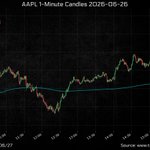
The biggest single-stock driver of the tracking error was $AAPL, which saw a style shift from 100% growth to 54% growth and 46% value.


EXCLUSIVE: Two Millennium trading pods run by Glen Scheinberg and Pratik Madhvani made about $3.7 billion in total last month or more than half of the about $6.6 billion profit generated by Millennium before fees in June bloomberg.com/news/articles/…


4/ In other words, this isn't broad dispersion, it's extreme return concentration.
At this point, we are comfortable saying the implied correlation indices are essentially broken, or at the very least, no longer representative of their intended purpose.

We’ve been covering this in-depth for several weeks now in our daily reports.
AUM in these funds, specifically $SOXL, means the notional MOC imbalances has entered unprecedented territory. More importantly, it’s the swaps that count more than the fund itself.
