

Assistant Professor Penn Path & Bioengineering. Interested in gene expression in cancer, single cell bio, tech dev, diagnostics. @PennMedicine @PennBioeng
Philadelphia, PA
Joined August 2014
- Tweets561
- Following610
- Followers1.4K
- Likes3K






Pinned Tweet
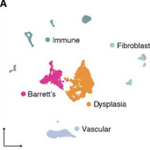
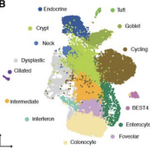
Excited to share our latest preprint led by Rodrigo Gier!!🥳🥳
with @HuerosRaul and amazing collaborators @NancyZh60672287 @DrGaryFalk @LabMuir @tkarakasheva
Lineage tracing with scRNA-seq to track the origins of metaplasia and its evolution to cancer.
biorxiv.org/content/10.1101/…


Sydney Shaffer retweeted

Inheritable 'memory' genes drive #cancer drug tolerance, but their discovery in clinical samples is a major challenge. Our new theory, moving away from Luria-Delbruck, detects them from a *single* scRNA-seq dataset! With #ArchishmanRaju led by @suvranil_1 tinyurl.com/4pef8scy
Sydney Shaffer retweeted

REGISTER NOW! 🚨🚨
Spots are filling up for the first EMBO workshop on Single cell Lineage Tracing 2025!!
Sept 18-21 in Girona, Spain.
Tons of opportunities for talks (short and full length) still available!!!
meetings.embo.org/event/25-l…


Sydney Shaffer retweeted

1/6 🧬New paper at @CellSytemsCP led by @SashaFanari! What if the “fifth nucleotide,” pseudouridine (Ψ), in mRNA dynamically responds to cell state? We used nanopore direct RNA sequencing + Mod‑pID to map Ψ in a neuron‑like SH‑SY5Y line under “normal” and “perturbed” conditions (healthy, RA‑differentiation and unhealthy, neurotoxicant Pb2+poisoning).

Sydney Shaffer retweeted

We are hiring postdocs! Projects on 1) probes for remote control of cell death and inflammation, and 2) application in vivo to study inflammation in cancer and therapy. Exciting science in an unparalleled environment @Penn @pennbioeng.
DM or email if interested!
Sydney Shaffer retweeted

My lab at UCSF (hsiunglab.org) is looking to recruit multiple postdocs across the spectrum of wet/dry lab interests to contribute to our research in synthetic gene regulation, combinatorial genetics, and tissue biology (including liver biology and immuno-oncology). We esp. welcome individuals who add to our capabilities and perspectives in computation or specific biological domains in tissue biology. Where appropriate there would be exceptional opportunities to work collaboratively with the help of junior specialists in the lab, as well as with other UCSF labs with complementary expertise.

Sydney Shaffer retweeted

Gene regulation involves thousands of proteins that bind DNA, yet comprehensively mapping these is challenging. Our paper in @NatureGenet describes ChIP-DIP, a method for genome-wide mapping of hundreds of DNA-protein interactions in a single experiment.
nature.com/articles/s41588-0…

Sydney Shaffer retweeted

What gets erased when you integrate single cell data, and can you recover it? Finally, we know what happens and how to recover the lost signals. So excited to share CellANOVA, published online today in NBT! go.nature.com/4hZnzW5


Recovery of biological signals lost in single-cell batch integration with CellANOVA go.nature.com/4hZnzW5

Sydney Shaffer retweeted

Our latest paper with Joan @BruggeMe is now out @NatureGenetics! We explore hidden mechanisms of BRCA1 hereditary breast cancer using new mouse models, revealing unexpected tumor-like chromatin changes in Brca1-heterozygous normal mammary cells.
nature.com/articles/s41588-0…
Sydney Shaffer retweeted
Refreshed look for Tools for Science!
arjun-raj-lab.gitbook.io/arj…
Also, given the season, here's my guide for applying to faculty positions:
arjun-raj-lab.gitbook.io/arj…

Sydney Shaffer retweeted
Come check out the lab presentations on microbiome, fibrosis, cartilage, craniofacial biomaterials, osteochodral engineering! Applying to grad school or postdoc positions? Looking to recruit the next gen PhD students & Faculty? Come talk to us! #bmes2024 @pennbioeng

Sydney Shaffer retweeted

On bioRxiv today, we raise serious concerns over a recent @nature paper describing ReDeeM, a new single-cell mitochondrial DNA (mtDNA) sequencing / analysis method. Here are three things that you need to know: 1/n
biorxiv.org/content/10.1101/…

Sydney Shaffer retweeted

So excited to announce our new method for multiplexed RNA imaging in bacterial cells: bacterial-MERFISH! A huge congratulations to the team of @AriSarfatis, Yuanyou Wang, and Nana Twumasi-Ankrah! Check out the following thread or our bioRxiv (biorxiv.org/content/10.1101/…) 1/12
Sydney Shaffer retweeted

"Non-stem cell lineages as an alternative origin of intestinal tumorigenesis in the context of inflammation"
nature.com/articles/s41588-0…

Sydney Shaffer retweeted
IVT-derived unmodified human transcriptome paper is live! Resource for the #nanopore community. Congrats to the team 🙌🏼 gigabytejournal.com/articles… @CAMcCormick20 @mitenjain @NUBioE1


Preprint alert! Multicellular, IVT-derived, unmodified human transcriptome for nanopore direct RNA analysis. biorxiv.org/content/10.1101/…

Sydney Shaffer retweeted
We have released a new version of CAJAL, our Python package for cell morphology analyses. You can read about CAJAL in nature.com/articles/s41467-0…. In this version, we introduce several functionalities for improved interpretation, integration, and performance #singlecell #neuroscience

Sydney Shaffer retweeted

Do you want to quantify PD-L1+ extracellular vesicles in blood, but need a limit of quantitation 750x greater than conventional ELISA? We may have what you're looking for!
lnkd.in/eW3_cuAn

Sydney Shaffer retweeted

Our paper characterizing the impact of different #geneexpression normalization with different gene panels in analysis + interpretation of #singlecell imaging-based targeted #spatialtranscriptomics data is now out @GenomeBiology
Summary and 🧵👇
Congrats to @lylaatta + team 🥂


Check out our now published investigation into how experimental design and analysis choices can affect downstream results when analyzing imaging-based spatial transcriptomics data. rdcu.be/dKFby