Head of Content at Commonwealth Fusion Systems, a company commercializing fusion energy: clean, safe, affordable, secure. Former sci-tech journalist.

SF Bay Area, CA
Joined June 2007
In fusion energy, everything starts with the plasma physics. These five papers lay the foundation for our ARC fusion power plant. 58 authors, 226 pages, and the physics checks out. #FusionEnergy
Today, we laid the physics foundation for our ARC fusion power plant. ⚛️ With 5 deeply researched papers — validated by independent peer review and published in the Journal of Plasma Physics — we’ve shown we've nailed the scientific basics of producing copious amounts of fusion power. The collective assessment from our 58 co-authors? This machine will work. No scientific breakthroughs are required to bring this clean, secure, abundant source of energy to the grid. Here is how we're handling fusion's biggest challenges: ⚡ Powering the Grid: Using extremely strong magnets, ARC will confine the plasma long enough to generate 1.1 GW of fusion power. We'll convert that into 400 MW of continuous net electricity — enough to power ~280,000 average American homes. 🛡️ Handling Heat Exhaust: To control a superhot, unruly cloud of charged particles, we're utilizing proven methods to safely handle the heat exhaust that acts as a key practical constraint for tokamaks. ✅ Managing Disruptions: We aren't trying to build an operationally perfect machine. We are pragmatically designing ARC to safely handle disruptions and keep the plasma stable for top performance. 🏗️ Proving the Approach: We're building on decades of tokamak research and supercomputer simulations. And we're proving our approach right now with SPARC, the tokamak we are actively building in Massachusetts. With our transparency, you don’t have to take our assertions on faith. We are really pushing fusion forward.
3
2
875
General Fusion made it past milestone 2 (a pretty hot plasma) of the 6 it takes to reach competitive fusion power on the grid. They did it the right way, with diagnostics, evidence, expert input, and peer review. #FusionEnergy
This is what good looks like: Significant milestone + credible measurement + peer reviewed result = true fusion advancement. Congratulations are in order as @GeneralFusion has now advanced the magnetized target fusion concept to Milestone 2 — heating the plasma — and shared the news in a constructive, credible way. 1/4
1
371
Props to @Arcteryx for the coupon to replace my trusty Beta SL after some delamination problems. Doing the right thing. (Too bad about the boring colors though. I tilt toward visible, not-found-in-nature colors.)
633
Stephen Shankland retweeted
Reminder of how much time news photographers spend in getting images: "As is often the case with covering politics, hours of preparation went into about 11 minutes of photography. I set up a ladder on a riser across from the National Archives Museum at around 6:30 a.m. Trump’s and Xi’s motorcades arrived at 11:49 a.m. They were out of their vehicles at 11:50 a.m., and I took this photo at 11:51 a.m. They entered the museum at 11:55 a.m. and emerged at 12:03 p.m., and their motorcades were gone by 12:08 p.m."
4
11
2,411
My biggest annoyance with @mimestream is that opening an email marks it as read; I want that status change only when I've actually read it, not just cruised by while navigating the inbox. Guess what? There's a setting for that. Yay!
417
One difference between Kitty Hawk and SPARC Q>1: It wasn't obvious during that early flight that there would be a commercial aviation industry. With net fusion energy, that promise and scale-up trajectory are clear.
"We forget that up until the Wright brothers, there were people saying that [flight] was physically impossible — despite the evidence that birds fly." Fusion is the energy source of the sun and stars and, as CFS CEO and Co-founder @BobMumgaard points out during this chat with @axios, @Livermore_Lab in California proved it can work on Earth, too. Similar to what the Wright brothers achieved at Kitty Hawk, we're now approaching that moment when fusion "takes flight." CFS plans to turn on our #SPARC machine next year, and shortly after it'll be clear fusion energy is on its way to the power grid. #FusionEnergy
342
Q>1 isn't the destination, but it makes it clear how close the destination — fusion energy — is.
"We forget that up until the Wright brothers, there were people saying that [flight] was physically impossible — despite the evidence that birds fly." Fusion is the energy source of the sun and stars and, as CFS CEO and Co-founder @BobMumgaard points out during this chat with @axios, @Livermore_Lab in California proved it can work on Earth, too. Similar to what the Wright brothers achieved at Kitty Hawk, we're now approaching that moment when fusion "takes flight." CFS plans to turn on our #SPARC machine next year, and shortly after it'll be clear fusion energy is on its way to the power grid. #FusionEnergy
3
391
Fusion energy costs are indeed key to its eventual success. Those costs are deeply connected to a fusion company’s choice of architecture, where it’s critical not only that the eventual power plants can be economical, but most fundamentally, that a commercially relevant machine can actually work. That’s what we’re tackling with our SPARC machine outside Boston. Our project got a head start thanks to many years of collective operational experience that people have gained by running tokamaks around the world (to date over 1800 tokamak-years of operation across over 150 machines over the last 50+ years!). On top of that we add all our experience designing, manufacturing, constructing, commissioning, and operating SPARC. That work confirms our understanding of the physics, engineering, supply chain, performance, reliability, and cost. This collection of factors is the kind of knowledge that gets a company onto the cost curve so it can then scale up and drive down that cost curve. None of this is a slam dunk. But bear these points in mind when looking at the levelized cost of energy (LCOE) and fusion competitiveness: • Every other form of energy on the grid also went through this shift toward being economical. What might look routine today, like burning coal or fissioning uranium, was once at the cutting edge of what was technologically possible. • The widely cited LCOE analysis by the energy experts at @Lazard only recently began to address the added cost some energy sources face to ensure they're firm (predictably available). And even then their extra firming costs only include 4 hours of power from a battery or firm power from a nearby gas plant, neither of which is really clean, firm 24x7 power. • LCOE has been increasing for all forms of energy in recent years, and demand for energy also is soaring. • While the cost for power is represented well by LCOE, the value of that power can be quite different. This is especially true for power that’s both clean and firm, but fusion has other advantages, too. It’s also highly energy dense and therefore land efficient. It’s safe and siteable nearly anywhere, including close to demand, and therefore requires less transmission. It has essentially negligible costs from fuel that’s abundant, available nearly everywhere, and essentially limitless. It’s highly secure, providing energy not through some collected or purchased resource, which leads to fuel volatility costs and geopolitical capture, but rather from a technology that can be built, owned, and fully fueled from day one. #FusionEnergy #Energy
Fusion has moved beyond the question of whether the physics can work. Now comes the harder test: Can companies build commercial power plants cheaply enough to compete with solar, batteries, gas and nuclear? @willwwade and I dug into the economics: bloomberg.com/news/articles/…
7
6
3
53
7,112
Stephen Shankland retweeted
Since CFS’ earliest days, I worked to ensure a supply of the high-temperature superconducting (HTS) tape that’s critical to our fusion machine magnets. We successfully built a supply for our 2021 TFMC prototype magnet test, then for the SPARC fusion demonstration machine that we’re assembling today, and now we’re working to build that for our ARC fusion power plants, too. That’s why our announcement today that @CFS_energy agreed to purchase more than 10,000 kilometers (3 GA-m) of HTS tape from Fujikura Ltd. — the largest single HTS purchase order — is a big deal. Bringing commercial fusion energy to the world requires not only breakthrough science and engineering, but also a global industrial base that can manufacture critical components at scale. Fujikura is an important partner in our global supply chain, and this order will support the expansion of its HTS manufacturing capacity. That’s the kind of investment we need as we move from building our SPARC demonstration machine to deploying our ARC power plants. My thanks to the team at Fujikura for working with us to build this important industrial capability.
Fusion energy is often discussed as a matter of plasma physics, funding, and machine design, but bringing commercial fusion to the grid also requires a global industrial base that can manufacture critical components at scale. Today CFS took an important step toward meeting that need, announcing an agreement to purchase more than 10,000 km (3 GA-m) of high-temperature superconducting (HTS) tape from Fujikura Ltd. It’s the largest single purchase order for HTS tape, a critical component of our breakthrough magnets. This news is important evidence that our fusion industrial supply chain is taking shape. Our order allows Fujikura to invest in new manufacturing capacity for the long term, stepping up in our global network of more than 1,000 suppliers across 30 countries. We already built a supply chain for our SPARC fusion demonstration machine, but this agreement helps secure HTS tape for our next chapter: building ARC power plants, starting with our first at the Fall Line Fusion Power Station in Virginia. The ARC effort is moving ahead with design, technology development, and commercialization work like applying to connect that first ARC plant to the grid with PJM Interconnection, the largest U.S. wholesale electricity market.
1
2
10
424
Stephen Shankland retweeted
Fun fact: I couldn’t fit inside the @MIT fusion machine that helped chart the @CFS_energy path to commercializing fusion energy. That’s because that machine, a tokamak called Alcator C-Mod, used a compact design that turns out to be really important. Smaller fusion machines cost less to build, and that translates directly into more economical fusion power. Over two decades of research at PSFC, C-Mod helped blaze the trail that we’re now following to fusion energy at Commonwealth Fusion Systems. It showed that a compact tokamak with high magnetic fields — like our SPARC demonstration machine and ARC power plant — has the superior performance and flexibility we need to bring fusion energy to the grid. All the way up to C-Mod’s last day of service 10 years ago, the tokamak was advancing the fusion state of the art. Over a series of pulses on Sept. 30, it showed multiple paths to achieving high plasma pressure — a key measurement since raising the plasma pressure increases the fusion power a lot. Even though I couldn’t fit inside C-Mod, the machine was a big part of my grad school years at PSFC. I and many others are now putting that knowledge to good use bringing fusion to the world’s electrical grids.
4
1
1
21
1,323
And 10 years later, MIT's Alcator C-Mod tokamak is *still* of use. I see new research papers circulating that include what we learned on C-Mod. For example, you can validate computer models to see if your simulations match actual results recorded on C-Mod. #FusionEnergy #tokamak
In a one-day sprint 10 years ago, researchers at @MIT helped chart the CFS path to commercializing fusion energy — even before CFS was actually founded. That sprint took place during the last day of service for Alcator C-Mod, a type of fusion machine called a tokamak. C-Mod is the progenitor of the SPARC demonstration machine we’re building today and the ARC power plant we’ve begun designing. And we’re putting the C-Mod lessons to good use. C-Mod showed that a compact tokamak employing very high magnetic fields is well suited not only for high fusion performance but also for economical power generation. And during that last day, researchers showed three separate paths to high performance in a competition to push the machine as far as it could go. It set a record that stands to this day, unmatched by any other tokamak. Unmatched until we start running SPARC, that is. The knowledge gained from C-Mod helps propel us to achieving net fusion energy, aka Q>1, with SPARC.
1
404
This glosses over a lot of important points (regulations, camera-only sensor suite...) but has some interesting technical details about Tesla's Cybercab that I wasn't aware of. austinvernon.substack.com/p/…
1
530
Some big progress advancing fusion energy in the United States today: the introduction of the American Leadership in Fusion Act, a bill with bipartisan backing that would hasten the day that the country could benefit from this new source of energy. The bill’s sponsors come from both sides of the aisle: @RepZoeLofgren, the Ranking Member of the House Science, Space, and Technology; Rep. @JayObernolte, Chairman of the Committee’s Research and Technology Subcommittee, and Reps. @RepDonBeyer, @RepGallagherCA1, and @RepLoriTrahan. The bill, which dovetails with the work of the @scsp_ai's bipartisan fusion energy commission, is a good response to make sure the U.S. remains competitive in a world where countries like the U.K, Germany, and China are already investing heavily in fusion commercialization programs. Fusion, the energy source of the sun and other stars, holds the promise of clean, safe, secure, baseload electricity. This bill responds to the SCSP’s fusion commission’s call to action and accelerates development and deployment work to bring fusion onto the nation’s power grid sooner and at a larger scale. The American Leadership in Fusion Act is a catalyst to fusion commercialization efforts. It provides $10 billion over several years in two broad categories. About $5 billion would fund vital research and a collection of facilities to accelerate commercially-relevant technologies like materials science for power plants and blankets to capture fusion energy. Another $5 billion would support the U.S. Department of @ENERGY's Milestone-Based Fusion Development Program to support fusion company progress to bring fusion power to the grid. Of that, $2 billion would fully fund the present phase of the Milestone program to help companies design their fusion power plants and $3 billion for a new demonstration phase of the Milestone program to cost-share first-of-a-kind fusion power plants. The bill also would restructure DOE’s fusion R&D efforts by codifying the DOE’s reestablishment of an Office of Fusion to sustain research efforts while expanding the department’s commercial focus as the industry continues to grow and mature around the world. We at Commonwealth Fusion Systems join other fusion energy companies, universities, and non-profits, in supporting this bill. #FusionEnergy #Energy
6
13
4
104
4,292
Our fifth, sixth, seventh, and eighth TF magnets are now in place in tokamak hall. Our SPARC fusion machine will have 18 total — two sets of nine we'll later join into a single donut-shaped arrangement. #FusionEnergy
In case you've been wondering — yes, we've been quite busy 🧲. We're now up to eight installed toroidal field (TF) magnets of the 18 total our SPARC fusion machine needs to help confine its superhot plasma. Building the first-of-a-kind of anything presents unique challenges, but as we work, we learn, and the pace of our progress with magnet manufacturing and installation continues to accelerate. #FusionEnergy #Magnets #SPARC
3
603
Got this poll about AI today. Kind of engagement bait, but also thought-provoking.
1
1
546
A look into our magnet factory. SPARC won't generate electricity, but everything we do is geared for commercialization with our ARC power plant, which will. SPARC's magnet factory paves the way for our ARC effort factory — technology, materials, supply chain, workflow, testing.
"We see energy as a fundamental lever for growth...We believe fusion can provide this source of energy." – That's CFS Chief Science Officer and Co-founder @BrandonSorbom reflecting on the direct relationship between energy and human prosperity — and the fact that the world's demand for energy is growing rapidly. The gap between the energy we all have and the energy we all need is one of the reasons why CFS is on a mission to delivery fusion energy to the world as fast as possible. Even though the machine we're building right now, SPARC, won't put electricity onto the grid, our power generation goal informs everything about SPARC. And what we've learned from building SPARC and its magnets already is informing the design of the machine that will connect to the grid, our ARC power plant. We developed the manufacturing muscle for SPARC, but we're flexing it again for the ARC plant. #FusionEnergy
3
457
Take a look at the plumbing that'll cool our magnets to 8 K (or 15 K or 80 K, in some cases). Superconducting magnets make our fusion machines possible, and cryogenics makes our magnets superconduct. #FusionEnergy
To create a region with the hottest temperature in the solar system, we also have to create another nearby that’s just about its coldest. For our SPARC fusion machine, that cooling job falls to its cryogenic system — a system that recently reached a major achievement of operating at a very cold 8 kelvin (–445°F or –265°C) temperature. This cryogenics achievement is a big deal. The system applies well understood cooling technology to the cutting-edge new job of fusion energy. SPARC uses superconducting magnets to confine and control a superhot cloud of charged particles called a plasma, enabling those particles to fuse together and release energy. To perform well, our magnets must be cooled as low as 8 K to carry enormous electrical currents with no resistance. Bringing the full cryogenic system to 8 K is an example of our shift toward operations at SPARC. We’re testing and commissioning the support systems that surround the heart of the facility in anticipation of a major integrated test called dry dress rehearsal (DDR) that will put the SPARC support equipment through its paces. That allows us to exercise the equipment before we’ve completed assembly of the SPARC tokamak itself — the hardware with the magnets and vacuum vessel where the fusion will occur. SPARC won’t generate electricity, but its successor, the ARC power plant, will. The ARC cryogenics system will be similar to SPARC’s, though it’ll have to handle the power plant’s continuous operations. That means what we learn on SPARC will apply directly to our work on the ARC plant. For more details, check the link in the comments for our blog post on the SPARC cryogenic system. #FusionEnergy
1
3
702
Stephen Shankland retweeted
Our cryogenic and operations teams have knocked it out of the park, getting SPARC’s cryo system down to its operating temperature of 8 kelvin, aka -265 celsius! That’s a huge achievement on our way to Q>1. As we work toward that net fusion energy goal, we try to avoid reinventing the wheel. The cryo system is a great example: We borrowed as much as possible from other industries. But even then, we had to clear engineering hurdles like figuring the best way to handle the surge of heat that our high-field, high-power tokamak will produce during a fusion pulse. That meant developing what we call the blowdown system. To handle the heat from a fusion pulse, we developed and built this pressurized system. It sends a massive flow of very cold supercritical helium — 25,000 gallons in just a few seconds — during each pulse. It then captures the helium in a closed loop and re-cools it for the next pulse. This blowdown system is unique to SPARC. In our ARC power plant, most of this heat will be captured using tokamak technology called the blanket that ultimately lets us convert all that heat into electricity. But we’ll still need to keep ARC magnets cold, so that plant will also have a cryo system that’s a close cousin to SPARC’s. As we continue to test and commission the SPARC cryo system, it retires some big execution risks for us, ultimately clearing the path for SPARC to hit Q > 1 (net fusion energy) as fast as possible. Check the video and blog post for details.
To create a region with the hottest temperature in the solar system, we also have to create another nearby that’s just about its coldest. For our SPARC fusion machine, that cooling job falls to its cryogenic system — a system that recently reached a major achievement of operating at a very cold 8 kelvin (–445°F or –265°C) temperature. This cryogenics achievement is a big deal. The system applies well understood cooling technology to the cutting-edge new job of fusion energy. SPARC uses superconducting magnets to confine and control a superhot cloud of charged particles called a plasma, enabling those particles to fuse together and release energy. To perform well, our magnets must be cooled as low as 8 K to carry enormous electrical currents with no resistance. Bringing the full cryogenic system to 8 K is an example of our shift toward operations at SPARC. We’re testing and commissioning the support systems that surround the heart of the facility in anticipation of a major integrated test called dry dress rehearsal (DDR) that will put the SPARC support equipment through its paces. That allows us to exercise the equipment before we’ve completed assembly of the SPARC tokamak itself — the hardware with the magnets and vacuum vessel where the fusion will occur. SPARC won’t generate electricity, but its successor, the ARC power plant, will. The ARC cryogenics system will be similar to SPARC’s, though it’ll have to handle the power plant’s continuous operations. That means what we learn on SPARC will apply directly to our work on the ARC plant. For more details, check the link in the comments for our blog post on the SPARC cryogenic system. #FusionEnergy
1
2
1
14
1,626
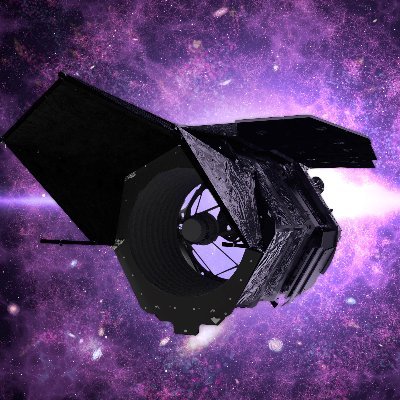
Sometimes your eyes need a minute to focus when you wake up. Roman's Wide Field Instrument just woke up for the first time EVER, and scientists have started adjusting its "eyes" so they can focus on the bigger picture. Check out its first test image below go.nasa.gov/4j51w30
105
853
95
6,114
490,328