

Weaponizing Open Source in my spare time.
Sweden
Joined December 2008
- Tweets1.6K
- Following684
- Followers1.9K
- Likes5.4K









Måns retweeted

My toxic trait is saying yes to the things I am able to do, without actually considering if I have the time, energy, or motivation.


Måns retweeted

As soldiers hand off more and more tasks to AI-enabled machines, what expertise must they absolutely retain? mwi.westpoint.edu/what-must-…
Måns retweeted

An interesting shift in #GeoAI by @Microsoft - their 𝐌𝐀𝐑𝐒 tool converts satellite and aerial imagery directly into GIS-ready vector features (buildings, roads, railways, water) in one pass.
Infographics: @Saurav

Måns retweeted

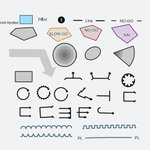
We open-sourced the hard half of military mapping.
293 MIL-STD-2525E / FM 1-02.2 / NATO APP-06 control measures as editable GeoJSON. OpenLayers + MapLibre. MIT.
npm: npmjs.com/package/@zaes/tact…
All 293: zaes.com/tactical-graphics-c…

Måns retweeted

Internal Denial Of Service (IDOS):
“Where the organisations IT Dept restricts out of the box software functionality so much on the grounds of security that it becomes unusable.”
Måns retweeted
The US military has a set of crucial jobs—forward observers and others—for people who bring artillery and airstrikes into the close fight. But drones change the battlefield dynamics in such a way that we need a new role: the unmanned fires observer. mwi.westpoint.edu/the-unmann…

Måns retweeted

I got tired of people expecting these Geo ‘foundation’ models to do object detection on high resolution SAR imagery for me.
I couldn't find any benchmarks for their performance - So I benchmarked them myself, 14 of them.
TLDR:
- Generic image foundation models beat every GFM.
- SAR specific pretraining bought nothing.
- Best GFM is DINOv3-SAT - an RGB model.


Måns retweeted
product manager using their 16” M5 Max Macbook Pro to ask Claude to clean up files in a folder

Måns retweeted
Ukraine’s DELTA system - there should be a lot of EU/US BMS/C2 system suppliers looking worriedly over their shoulder.
@spatialillusion
xitter.cf/i/grok/share/afa99b98c…

One year ago, JATEC was established as the first-ever joint civilian-military institution between Ukraine and @NATO. In just 12 months, the Centre has become a unique platform where Ukraine’s battlefield experience is integrated into the Alliance’s strategic planning, and solutions for modern warfare are developed through equal partnership.
For the first time, Ukrainian experts are working alongside Allied counterparts with equal rights and opportunities – drawing on real experience from high-intensity warfare.
Innovation has been one of the key focus areas. In 2025, three NATO Innovation Challenges were held under JATEC’s framework, ensuring – for the first time – a full development cycle for technological solutions, from concept and battlefield testing to technical recommendations.
Among the breakthrough solutions are air-target interception systems, AI-powered UAV guidance tools, and innovations to counter FPV drones and glide bombs.
At the same time, the launch of the JATEC Innovation Hub is underway, aimed at connecting Ukrainian and NATO defence technology ecosystems.
For the first time in history, Ukraine was integrated into selected NATO collective defence exercise planning processes. Ukrainian representatives took part in command-and-staff exercises under Article 5, while the Ukrainian Navy led the OPFOR component during multinational exercises in Portugal. Ukraine’s DELTA situational awareness system served as a command-and-control tool for multinational forces – another step toward deeper integration.
JATEC has also achieved tangible results in digitalization, medical support, and interoperability. Artificial intelligence models have been delivered to Ukraine’s Defence Forces, and recommendations have been developed on casualty evacuation, mental health, and antimicrobial resistance. Ukrainian companies were engaged in contracts with NATO structures for the first time.
In just one year, JATEC has demonstrated that it is not merely a platform for dialogue, but an effective mechanism for change that strengthens Ukraine’s defence and the wider Euro-Atlantic community.
@UKRinNATO @NATOinUkraine

Måns retweeted

This is from my fictional military project, the 29th Strike Division of the Royal Govanian Army, one of the premier armoured units. It's still a work-in-progress, but I am continuing to expand on the units and formations. Thanks to @spatialillusion for the ORBAT creator #ORBATs

Måns retweeted

XReality Factory (XRF) uses CesiumJS and Cesium for Unity for a single shared operational view for better, faster decisions across real operations and training scenarios, throughout defense, security, and emergency management: hubs.li/Q04bWG6_0

Måns retweeted

Operation Epic Fury 23rd March 2026 Geolocation Thread 🧵
Please share if you find this interesting - our reach is utterly terrible, whilst AI slop does exceedingly well. A large geolocation catch up over the weekend took place, and adding in many new geolocations (over 1800 geolocations now) from the geolocators who publish their work for free.
We'll start with image 1, showing ammunition storage at Dezful / Vahdati airbase going up in a huge explosion. We'll also include Sirjan Naval Training base ammo going up which we received this morning. It looks like the target list has now reached ammo depots - so expect more of this.
Zooming in slightly, we'll go to Qom, where atop the regime buildings being struck, we also received higher res imagery of what was struck in Shokohieh industrial town and nearby, which was a Turbine plant for missiles and drones. The nearby airstrip was also struck.
Onto Tehran, which is very much filling out, we received more imagery from the missile production plant east of Tehran that was struck in the early days, showing more destruction and included CENTCOMs imagery of strikes on the Missile Final Assembly buildings, showing destruction.
The geolocation thread 🧵(21 posts) follows

ALT Iran as of 23rd March 2026

ALT Qom as of 23rd March 2026

ALT Tehran as of 23rd March 2026
Måns retweeted

Operation Gulf Shield will be utilizing a browser based interface for players to plan their operation without the need to own/operate/interface with the hyper detailed Command Modern Ops user interface. This is the sort of innovation we love to share in FCI.


Måns retweeted

Someone builds a project management tool with Claude Code over a weekend. Ships it. Tweets "just replaced Jira."
The app works. One user, happy path, localhost. Then two people edit the same record simultaneously, and the data is silently corrupted. They don't know what an optimistic lock is. They never needed to before.
The prototype is maybe 1% of what makes software actually work. The other 99% is what you find after real users show up: race conditions, failed transactions, sessions expiring at the wrong moment, a payment webhook that fires twice and charges someone double. AI didn't cover any of that. It built exactly what you asked for.
And the confidence is the worst part. "Just need to adjust a few things before we go live." The few things you need to adjust are the product. That's like laying a foundation and telling people you basically built the house.
Vibe coding works. For personal tools, throwaway scripts, and prototypes you'll never put in front of paying users, it's genuinely fast and good enough. I use it. But there's a hard ceiling, and it shows up the moment the stakes get real.
Agentic engineering is a different discipline. You're not prompting for code. You're decomposing problems, designing system boundaries, writing specs precise enough that the agent doesn't go sideways. You review everything it builds, because it will make mistakes that only look wrong if you know what correct looks like. You guide it. You catch what it misses.
If you don't know what a distributed transaction is, the agent won't save you. It'll generate something broken with complete confidence, and you won't know until production.
The hard part of software was never writing the first 200 lines.
It never was.
Måns retweeted

Palantir CEO Alex Karp just exposed the absolute mathematical failure of the American education system.
We’re actively filtering out our apex builders.
The system is still training the biological workforce to be compliant, administrative cogs for an industrial machine that superintelligence is currently overwriting.
Karp: “All of our tests are built around things that were valuable in the Industrial Revolution.”
Sitting perfectly still and memorizing compliance metrics is a zero-margin commodity.
The highest-output operators of the next decade are the exact people the archaic system actively punishes.
The neurodivergents. The dyslexics. The hyper-kinetic builders.
Karp: “Everybody who can’t sit or needs to build or wants to build have to go into a separate slot.”
Don’t force apex cognitive talent to beg for a mid-level banking job at Goldman Sachs.
Weaponize their chaotic, non-linear execution to build the physical infrastructure of the future.
And here’s the brutal reality check.
Karp: “Vocational training in Germany is very technical. The people building the cars at BMW or even in the French version Airbus, very complicated jobs, they didn’t go to college. They went to a very, very high-end high school. And they come out without any debt.”
The elite establishment treats vocational training as a biological failure state.
It’s the ultimate sovereign moat.
We’re mass-producing millions of debt-saddled knowledge workers whose entire skill set is about to be absorbed by an LLM.
The algorithm cannot manufacture a jet turbine.
It cannot secure a power grid.
The nations that win the next decade will completely bypass the bloated university system.
Aggressively route the highest-IQ operators directly into elite, zero-debt physical execution.
Karp: “You also need to change our testing system. Different forms of intelligence. Pull out all the dyslexics, all the neurodivergent.”
Standardized testing doesn’t measure cognitive velocity.
It measures biological obedience.
The system measures the entire species on a single, archaic axis of compliance.
Fail to sit in a chair and memorize the curriculum?
The system discards you.
The AI arms race won’t be won by compliant valedictorians who are excellent at filling out rubrics.
It’ll be won by hyper-obsessive, neurodivergent builders who mathematically cannot tolerate the friction of a traditional classroom.
By actively filtering these operators out, the current education system is bleeding out its most valuable resource.
And it doesn’t even know it’s doing it.
Karp: “We should have gotten you before you got turned down at Goldman and said this is a waste of your time. You could be building something important.”
Identify the builders before the system breaks them. Hand them the compute.
Because the system is filtering out the exact people who will build what replaces it.
They won’t come back to reform it. They won’t ask for permission.
They’ll just build over it.
And they already started.

Måns retweeted

ADHDer's dream job:
Being a Professional Idea Generator.
Giving Unlimited ideas with absolutely no responsibility for implementation.

Måns retweeted
"You can automate a bad process and do it faster but it doesn’t change the outcome." mwi.westpoint.edu/how-the-ar…
