

Postdoc studying algorithms and online speech @CSMAP_NYU
Joined June 2012
- Tweets176
- Following372
- Followers406
- Likes1.1K





Pinned Tweet
1/ My first sole-authored paper just out in @polanalysis 🎉
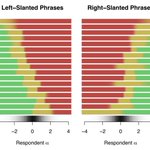
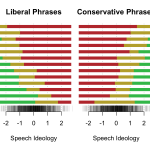
I develop & validate a survey method for estimating political self-censorship and preference falsification in the mass public… 🧵

#OpenAccess from @polanalysis -
What Would You Say? Estimating Causal Effects of Social Context on Political Expression - cup.org/3DuWUAx
- @small_schulz
#FirstView

Will Schulz retweeted

Social media discourse is driven by false #polarization
Analyzing 1.7 million social media posts, a series of controlled experiments, and a large global survey covering 40 countries (total N = 49,222), we find that
(1) strong ideologues post their opinions significantly more often than moderate individuals
(2) extreme attitudes are posted more often than moderate attitudes.
(3) This general pattern replicates robustly across 40 countries
(4) the opinions that users post are more hostile and toxic than the beliefs they keep to themselves.
Across studies we find extreme opinions are overrepresented on social media by at least 6% and up to 22% compared to their true prevalence in our samples.
osf.io/preprints/psyarxiv/7z…
This project was led by @small_schulz and @ClaireRobertson and includes @H_Sjastad @AshuAshok @LisaFOswaldo @junghwanyang @simonsaysnothin and @andyguess

Check out the preprint here!
osf.io/preprints/psyarxiv/7z…
This was a massive collaborative effort, so a huge thank you to our WONDERFUL coauthors, @H_Sjastad (who spearheaded global data collection), @AshuAshok, @LisaFOswaldo, @junghwanyang, @jayvanbavel, and @andyguess!!

Therefore, much of the intense polarization we observe online today may not be caused directly by platform algorithms pushing people apart, but rather by the selective posting behavior of extreme voices over-representing their most extreme views.
And, troublingly, the opinions users choose to post online are measurably more hostile and off-putting than the beliefs they keep to themselves.
This general pattern replicated robustly across 40 out of 40 countries examined, spanning diverse political cultures, and held true across diverse political issues regardless of general political interest or left-right ideology.
Using mixed methods (including sequential behavioral experiments, analysis of over 1.7 million social media posts, and a global survey of nearly 48,000 people across 40 countries) we quantify the true scope of false polarization online.
Claire isn't on here anymore, but she's awesome and you can find her links at: sites.google.com/colby.edu/e…

Is social media truly making us more politically polarized, or does it simply over-represent our most extreme opinions?
In our new preprint, Claire Robertson and I present *punishing evidence* that social media systematically overrepresents users’ most extreme political opinions.

Will Schulz retweeted

My article, Labor vs. Big Business, is out! it's about efforts of companies like Uber to reform gig worker laws and voter cue-taking from unions and business. TLDR; progressive voters trust union cues to substitute for policy information link.springer.com/article/10…

Will Schulz retweeted
Currently in FirstView: In “What Would You Say? Estimating Causal Effects of Social Context on Political Expression,” @small_schulz develops a method for estimating social influence over political expression. He uses an experiment to estimate respondents’ lexical ideology.

6/ reach out if you’d like to try using the WWYS method yourself! I can set you up with the survey instrument and model code. I’m also looking for collaborators to apply in different languages/country settings!
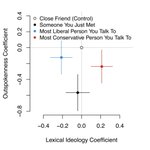
5/ and I also derive causal estimates of self-censorship by analyzing treatment effects on a second “outspokenness” dimension generated by my Wordsticks model (details in paper)
