

I am a neuroscientist who studies the impact of #nutrition on brain function (#mood, #cognition, #brain #aging, #mitochondria)..in my spare time I write books
New York, USA
Joined December 2009
- Tweets1.8K
- Following1K
- Followers715
- Likes6.3K




Ellen Siobhan Mitchell PhD retweeted

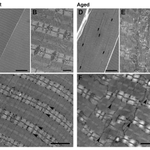
Mitochondria at Brain Connections Linked to Lost Mental Flexibility in Old Mice; MitoQ Helped
brainasap.com/mitoq-synaptic…

I highly recommend The Health Coach Talk podcast.
In this episode I share how mitochondria health is a key part of healthy aging
functionalmedicinecoaching.o…
@fxmedcoach #HealthCoachTalk #WellnessPodcast #HealthCoaching #FunctionalMedicine

27
Ellen Siobhan Mitchell PhD retweeted

Therapeutic potential of MitoQ, a mitochondria-targeted antioxidant, in age-related physiological dysfunction
🔎"By addressing the central role of mitochondrial oxidative stress, we propose that MitoQ represents a promising strategy to counteract aging-associated physiological dysfunction."
link.springer.com/article/10…

Ellen Siobhan Mitchell PhD retweeted

Most exercise and aging studies can't answer a basic question: is muscle deterioration from aging itself, or just from decades of moving less? A new Nature Aging study solved this by recruiting older adults who moved as much as people in their twenties.
The researchers from Amsterdam UMC and Maastricht University recruited four distinct groups: young adults in their twenties, older adults whose daily step counts and high-intensity activity matched the young group, older adults who had trained consistently for years (three structured hour-long sessions per week for over a year), and older adults with early physical impairment.
They took muscle biopsies before and after a one-hour cycling session, then measured over 24,000 gene transcripts, 135 metabolites, and 1,383 lipid species.
By matching activity levels between young and older groups, any molecular differences couldn't be blamed on the older adults simply moving less. This isolated aging from inactivity for the first time at this molecular depth.
Key findings:
• The defining molecular signature of muscle aging is an energy crisis. Comparing young adults to activity-matched older adults, 1,106 genes were downregulated with age. These genes build the mitochondrial machinery that produces cellular energy: ATP synthase, cytochrome c oxidase, and NADH dehydrogenase subunits. Mitochondria are the power plants of cells, converting nutrients into ATP, the energy currency cells use to function. When these genes decline, cells lose their ability to generate energy efficiently.
• NAD+ levels declined and triglycerides accumulated inside aging muscle. NAD+ is a molecule required for energy production and cellular repair. Lower NAD+ means less capacity to convert fuel into usable energy. Triglycerides are stored fats, their accumulation inside muscle indicates unburned fuel piling up as the tissue loses its ability to process it.
• More than half the molecular signature of muscle aging was absent in trained older adults. Specifically, 57.1% of age-related gene downregulation and 55.9% of upregulation were missing in the trained group. Their muscle resembled young adults far more than their chronological age would predict.
• The changes training preserved were specifically the energy metabolism ones. Genes like NDUFS1 and COX5A, which were depleted in normally active and impaired older adults, sat at youthful levels in the trained group across all five mitochondrial respiratory complexes. The single most prominent feature of muscle aging turned out to be the single most preventable.
• Being generally active was not enough. Structured training was the difference. The normally active older adults walked as much as young adults, and their energy metabolism genes declined anyway. What preserved the youthful molecular profile was structured, sustained training. Filling a step counter and being genuinely trained are not equivalent at the molecular level.
• Roughly half of muscle aging persisted regardless of training. Changes in genes controlling synaptic transmission (how nerves communicate with muscle) and WNT signaling (a pathway regulating tissue maintenance and stem cell function) appeared in all older adults, trained or not. This unavoidable half is where drugs will have to work.
• The fittest muscle mounted the largest inflammatory response to exercise. All groups activated stress and immune genes after exercise, including IL6, IL1B, and TNF. But the magnitude scaled with fitness. Trained older adults most closely resembled young adults in their response, followed by normally active, with impaired older adults showing the most blunted response. The stress response to exercise appears to be the mechanism of adaptation, not damage to be minimized.
This raises a concern about anti-inflammatory longevity strategies. If the inflammatory stress response is how exercise produces its benefits, chronically suppressing inflammation may blunt the adaptation that exercise depends on. It doesn't mean inflammation is beneficial in general, but the timing and context matter.
A separate discovery: the proteasome appears to regulate NAD+. The proteasome is the cellular machinery that breaks down damaged proteins. When researchers inhibited it, NAD+ levels rose in both muscle and liver cells to a degree comparable to NAD+ precursor supplements. This opens a new route to understanding NAD+ decline that operates through protein turnover rather than just supplying more raw material.
The study draws a clear line between what lifestyle can address and what will require therapeutics. The energy metabolism decline, mitochondrial deterioration, and NAD+ depletion that define muscle aging are largely preventable through structured training. The synaptic and signaling changes that persist in all older adults represent the unavoidable half where drugs will need to work.
The decisions made about structured training in midlife determine which molecular trajectory muscle follows in later decades. Half of muscle aging is optional. The other half isn't. Knowing which changes belong to each category is knowing where behavior ends and biology takes over.

Ellen Siobhan Mitchell PhD retweeted

This week, with @ARIA_research, we explore mitochondria. This episode features @nani_grotjahn @scrippsresearch, @siobhanmitchell @Mito_Q, @hhlee @CultivariumFRX, @Mito_Redox @MRC_MBU, and Maximilian Sichrovsky @ARIA_research. 🎧Listen here:
thenakedscientists.com/podca…

Ellen Siobhan Mitchell PhD retweeted

New brain atlas reveals thousands of overlooked microproteins linked to Alzheimer’s disease #MECFS #LongCovid
psypost.org/new-brain-atlas-…

Interesting finding: in skin cells S-equol stimulated pro-collagen I by 60% while retinol alone did not significantly increase pro-collagen I.
S-equol is a potent phytoestrogen formed in about 30% of women from soy
athenaeumpub.com/in-vitro-eq…

30
Great Study: Biological aging is decreased by hormone replacement therapy (but only if your blood sugar is imbalanced)
HRT use also correlated with decreased mortality.
Take-away: More evidence that HRT may be a good idea🧪👩🔬
link.springer.com/article/10…

Ellen Siobhan Mitchell PhD retweeted

A #high-#fat #diet leaves a lasting “senescence-like” imprint on liver regenerative cells—even after they’re grown as organoids ex vivo.
#MitoQ reduces ROS and inflammation, improves mitochondrial respiration, and partially restores regenerative capacity.
onlinelibrary.wiley.com/doi/…

Ellen Siobhan Mitchell PhD retweeted

🧬 Can mitochondria-targeted antioxidants help counter age-related decline?
🔬 A new open-access review by Siyun Kim explores the therapeutic potential of MitoQ, a mitochondria-targeted antioxidant, in addressing age-related physiological dysfunction.
📖 Read the review: rdcu.be/epBBg1X9ayta
#GeroScience #AgingResearch #Mitochondria #MitoQ #HealthyAging

Women exhibiting inflammatory proteins during perimenopause that indicate higher risk of #Alzheimer's and #dementia. 🧪
Women with night sweats were even more at risk.
If you're experiencing symptoms, please fix them!
nature.com/articles/s41591-0…

1
44
Peptides like BPC-157 and MOTS-c are being bought online by biohackers who aren't aware of the real data behind them (eg they don't truly work inside mitochondria)
Mitopod gives a great overview on what these #peptides actually do 🧪
youtube.com/watch?v=Uc3hQHEA…
1
2
75
Ellen Siobhan Mitchell PhD retweeted

Amazing work by @UriAlonWeizmann
nature.com/articles/s41591-0…
Female aging is a cliff dive at menopause.

Ellen Siobhan Mitchell PhD retweeted

This could be a game changer.
Researchers just published a paper on a smart ring that can continuously monitor glucose, ketones, vitamin C, uric acid, lactate, and alcohol through sweat.


Ellen Siobhan Mitchell PhD retweeted

Parallel Universes May Not Be Completely Sealed Off, a New Quantum Theory Suggests lifeboat.com/blog/2026/10/pa…

Ellen Siobhan Mitchell PhD retweeted

最新|老化脳で新しいルールに適応する力が落ちる犯人:神経の萎縮ではなくシナプス前のミトコンドリアだった|Japan Health
老化マウスの研究で、新しいルールへの適応力の低下は神経の萎縮ではなく、シナプス前のミトコンドリアタンパク質の増加とだけ相関していたと報告されました。
抗酸化物質MitoQを20週間投与すると、適応課題でより速く順応できたことも確認されています。
note.com/hirokazumineral/n/n…

The way you talk may predict the rate you are aging.
I often notice when an older person has a 'young voice': more intonation, livelier, clearer.🧪
Now there's a study showing that 'young voices' really do indicate a slower aging rate
nature.com/articles/d41586-0…

Ellen Siobhan Mitchell PhD retweeted
This study reviewed recent developments in vascular aging research, showing that #vascular #aging is a driver of organ dysfunction and systemic aging.
by @HellmutAugustin, @DimmelerLab
nature.com/articles/s44161-0…

Ellen Siobhan Mitchell PhD retweeted

One in eight cancers are caused by infections, a new study finds. And there’s an easy way to protect yourself against most of them: get vaccinated.
spklr.io/6018EpPma
