

Guiding organisations toward strategic alignment, purposeful innovation, and delighted customers
Berlin, Germany
Joined February 2015
- Tweets665
- Following138
- Followers184
- Likes1.6K






Simon Sablowski retweeted

Most companies suck at setting goals.
But Google, Amazon, and Microsoft figured it out ages ago.
Here’s their simple but powerful goal-setting framework (that you can use personally too):
Simon Sablowski retweeted

Nur wer in der Lage ist, flexibel auf Marktveränderungen zu reagieren, kann langfristig wirtschaften und wachsen – Stichwort Resilienz. Mit den richtigen Methoden und Werkzeugen kann jede Organisation herausfinden, wie es um sie steht. [Anzeige] t3n.de/news/wie-resilient-is…
Simon Sablowski retweeted
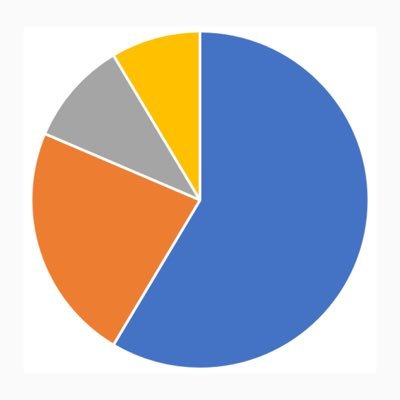
Only 2.6% of the ants in a colony are constantly active 🐜
More than 25% of ants observed are never working, and 71.9% are inactive half of the time.
Simon Sablowski retweeted

Regarding SAFe being somehow good because it adds structure: I'm told that being in prison also adds structure to your life. I wouldn't recommend it as a standard practice.
Simon Sablowski retweeted

The consequences of the climate crisis in a nutshell by @jrockstrom:
Simon Sablowski retweeted

Would a simpler way to Limit WIP be....only when we finish an item do we start a new item?
Simon Sablowski retweeted

Here are 4 common Agile frameworks and methods that have emerged in the last few decades ➡️
Scrum
Extreme Programming
Kanban
Design Thinking
To find out about their key elements and some differences between them, read our blog by @simonsablowski ➡️
agile42.com/en/blog/agile-fr…
Simon Sablowski retweeted

Splitting #userstories. It’s something I get asked about every day. I got asked so much, that I invented the SPIDR acronym to make it easy to remember the 5 simple, but powerful, ways to split user stories.
Simon Sablowski retweeted

Meanwhile in Russia: genocidal denials of the Ukrainian identity from the host and his guest. They claim that Ukrainians are just mentally ill Russians, whom they will "cure" once Russia wins. They propose destroying all Holodomor memorials. They discuss killing Americans. Watch:


Simon Sablowski retweeted
A USER STORY describes a user's work in the domain. It describes a domain-level problem.
A USE CASE describes a broad interaction between a user and the system. It describes a computer program.
Use cases do not describe outcomes. Stories do. If find them much more useful.
Simon Sablowski retweeted

1/ Hey, kennt ihr Steven Seagal, den Action-Filmstar von anno dazumal? Heute ist er Kreml-Propagandist.
Wie ist es soweit gekommen? Schnallt euch an, es wird wild. 🧵


Simon Sablowski retweeted
Re. "Fail fast." I don't set out to fail. I accept it as part of the learning process, but I don't court it. I'd rather succeed. However, when I work tiny, occasional failure is easily corrected. Maybe, instead of "fail fast," we should be saying "fail small."
Simon Sablowski retweeted

Russland zeigt sich offen für Verhandlungen – doch sei Putin nicht an einer Verhandlungslösung sei Putin interessiert, so @MKlein1973 Expertin für russische Militärpolitik. Interesse gebe es nur „an Verhandlungen zur Kapitulation der Ukraine“
➡️kurz.zdf.de/6g3n/
@SWPBerlin
Simon Sablowski retweeted
No. Things don't take longer. Let's look at one way to make stories smaller. The image in the QT is the first step in breaking up a large story into many small ones. (Something they evidently didn't do.) A "workflow diagram" like that is the first step. 1/5


Simon Sablowski retweeted
According to a 2022 survey by @flexjobs, toxic company culture is the number one reason people leave their jobs. Here are some signs that yours may need some work and some pointers on how to fix them.
agile42.com/en/blog/bad-comp…
Simon Sablowski retweeted

US-Verschwörungstheoretiker Jones muss fast eine Milliarde Dollar zahlen tagesschau.de/ausland/versch… #USVerschwörungstheoretiker #Schulmassaker
Simon Sablowski retweeted
Working at the feature (or "epic") level is a way to defer high-value work for low-value work. All big things contain small things not worth building. Working on those in order to "finish the feature" is waste. Work on the most valuable thing, regardless of "feature," instead.
Simon Sablowski retweeted

I call it “a meeting” when it’s a waste of time, collaboration when it’s useful; a “requirement” when I disagree, a good idea when I like it; “process” when I hate doing it, the way we work when it makes sense. Probably too cynical. Too many mandatory backlog grooming meetings.