

Whale shark research & conservation. Executive Director at the Marine Megafauna Foundation. Working out how to use AI for conservation.
Aotearoa
Joined July 2009
- Tweets3.8K
- Following944
- Followers5.3K
- Likes10.3K




Pinned Tweet
I've spent some time figuring out how to integrate AI into my workflows to get more science, conservation, and nonprofit management done.
I've made a GitHub repo so that I can share what I'm learning, and hopefully learn from all of you!
github.com/simonjpierce/how-…

😎

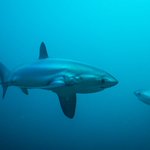
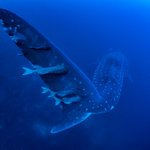
Researchers using a custom-calibrated @Tags4Wildlife SPLASH10 satellite tag documented a whale shark dive estimated at 1,978-2,527 m, extending the species' previously accepted depth limit by up to 599 m.
mdpi.com/2673-9917/5/2/10

Simon Pierce retweeted

I am surprised that people are surprised this is how I prompt Claude.
Talk to Claude the way you would a coworker. There's no secret to prompting. There's no need to be overly scaffolded or prescriptive for most tasks -- give Claude a goal, and it will figure it out.
Back in the Sonnet 3.5 days, your prompt mattered a lot. Nowadays, it's much more important to communicate to the model:
1. What you want it to do
2. How much effort you want it to spend
3. How it should verify that it did the right thing


These days you'd never send a draft manuscript to a co-author without running it through a spell checker first. They shouldn't have to fix your typos.
I think the same now goes for an AI review. Your co-authors shouldn't have to catch your basic calculation mistakes.
Before one of my drafts goes to anyone else, I run it through my own manuscript review: three AI models (currently Opus, Fable, and Astra via the Codex CLI) take turns reviewing it as a tough journal reviewer, and every number and citation gets re-checked. It's pretty harsh. (I should have called it Reviewer 2.)
I'm unlikely to agree with all of its critiques – I'm unlikely to agree with everything from human Reviewer 2 either – and it can be a bit extra with its ideas, but it usually catches some dumb error, or at least gives me something to think about.
How it works: github.com/simonjpierce/how-…

When I'm working interactively with Claude Code doing data analysis, in time-honoured tradition I find it really helpful to maintain a 'lab notebook'. I just can't be bothered writing it myself.
Instead, Claude writes down my verbatim inputs, results, decisions along the way, all the things, in a Markdown text file (along with graphs, etc.). Then, if things go awry, it's easy to walk back and see where we lost the plot.
If I'm working with Opus, I'll also use Fable and Astra subagents (the latter via the Codex CLI, directly from Claude Code) at key decision points to stress-test and improve the plan.
When it comes to writing down the actual final method, it's all there in the .md file, and not lost to compaction. That's why I externalise the AI memory in a .md file (in Obsidian) rather than relying on the built-in Claude or OpenAI memory functions.
See more details here: github.com/simonjpierce/how-…
This is definitely really useful. I ran it across my Claude Code setup (about 80 skills spanning marine biology and charity admin). The first pass found around 50 fixes, including dead links, outdated rules, and instructions written for older models. It's now part of my weekly system check-up:
github.com/simonjpierce/how-…


Simon Pierce retweeted

NEW PUBLICATION ALERT | 259 important shark, ray, and chimaera habitats mapped across North America and the Caribbean
New additions to the global ISRA eAtlas reveal major migration corridors, nursery grounds, and aggregation sites across Atlantic, Caribbean and Pacific waters.


It was fantastic to chat about whale shark research with Dave and Andrew for the Beyond Jaws podcast!

New #BeyondJaws Episode Alert! Learning about whale sharks takes on a whole new meaning when you hear from someone who’s dedicated his career to studying them. @simonpierce, co-founder @MarineMegafauna, shares his journey about these gentle giants. youtube.com/watch?v=cPihgjLU…

Simon Pierce retweeted

🚨NUEVO ARTÍCULO CIENTÍFICO👉🏼 Local diver knowledge reveals decline in scalloped hammerhead sharks (Sphyrna lewini) at seamounts in the southwestern Gulf of California, by Katy Ayres el al.
📷: 1. @simonpierce en Galápagos / 2. Walter Pisco: cardumen de martillos, El Bajo, 2018.


Simon Pierce retweeted

REMINDER: Today is the last day to submit your proposal for the SCS Small Research Grant. Don't miss out on this opportunity! Visit our website to view the proposal instructions and download the grant application form sawfishconservationsociety.o…
Submit your application today!

Good opportunity for sawfish researchers :D

The SCS is excited to announce a Request for Proposals for a #Sawfishresearch & #Conservation Small Research Grant. Please see the attached document for the proposal instructions and grant application form.
acrobat.adobe.com/link/revie…
Below is the pertinent information:

Simon Pierce retweeted

New OA paper - Ever wanted to know how fast shortfin mako #sharks actually swim? We're beginning to find out w/ new bio-logging tags and it's surprising - great work by @MarBioMatt @thembauk @MoveCIBIO @OkeanosUac @OceanEarthUoS @nunoqueiroz29
doi.org/10.1111/jfb.15475

Simon Pierce retweeted
July 14th is #SharkAwarenessDay , and this year we're going to be highlighting some of the most threatened and least known marine fishes: rhino rays! Join us, and use #RhinoRay when you post. Please contact us for a media toolkit with images and talking points.

Simon Pierce retweeted

#sustainability takes time. Lots of time. @MarineMegafauna co-founders Andrea Marshall @QueenofMantas and @SimonPierce know exactly how much. DIVE spoke to them about MMF's formative years in #Mozambique divemagazine.com/scuba-divin…

Simon Pierce retweeted

Holy moly. @MarineMegafauna describes the newly developed process for underwater ultrasound and blood collection from #endangered whale sharks. (Hint: it involves a waterproof ultrasound unit, a jetpack, and a MacGyver'ed double syringe.)

Everyone knows the correct answer is gentoos. 😇

There are 18 known species of penguin. My favourite is the Northern Rockhopper. Which is yours? 🐧💕🤔
#PenguinAwarenessDay

Simon Pierce retweeted
Issue #7 #SharkNews now available to download bit.ly/sharknews07 or view iucnssg.org/shark-news.html#… Lots of great stories from
@IUCNShark members and researchers from around the world working to conserve #sharks, #rays, and #chimaeras! Thank you to all that have contributed!


New science on Southern African reef manta rays!

A new MMF-led study has shown that reef manta rays *do* swim between Mozambique and South Africa – and, interestingly, there are some teeny flappers down amongst the Sardine Run off the Eastern Cape of SA.
marinemegafauna.org/news/new…


Tiger sharks have entered the chat 😎
Did you know that they're resistant to (or simply shrug off) sea snake venom? faculty.fiu.edu/~heithaus/SB…
