

Pronouns desk/drawer
Oslo
Joined August 2017
- Tweets3.8K
- Following1.7K
- Followers821
- Likes19.8K





Let's go

Introducing SKY-001, the first Engineering World Model.
On CAD and BIM tasks, it beats GPT-6 Astra and every frontier model we tested:
-> 51-125x faster
- > 150-210x cheaper
-> Higher IOU than all frontier models
SKY-001 lets you dream a physical object before you build it.
18 months of work. Built by the team out of Maluuba's deep learning lab (acq. by @MSRResearch).
The first ‘AI General Engineer’ will be the backbone for Autonomous Manufacturing.


I just gave this tweet to my agent, I'm gonna make a million dollars

Every week someone tells me they vibe-coded their app over the weekend and don't need developers anymore.
Before it touches a paying customer, make sure it includes:
> a schema someone designed, instead of one the AI improvised table by table
> login that still works when someone puts a plus sign in their email
> password reset links that expire and work once
> MFA, plus a recovery path for the user who lost their phone
> sessions that time out, and a way to kill every session for one user
> SSO for the enterprise customer who won't sign without it
> SAML, because that customer's IT team doesn't do magic links
> SCIM, so a fired employee loses access the moment IT offboards them
> roles and permissions deeper than "admin" and "everyone else"
> checks that stop user A from reading user B's data by changing one number in the URL
> tenant isolation, so one customer's bug never shows another customer's records
> an admin "log in as this user" button for support, with an audit trail on every use
> rate limits on login, so nobody can guess passwords at scale
> lockouts that stop attackers without locking out your CFO the night before the board meeting
> database migrations that run forward and roll back
> migrations that don't lock the main table at 2pm on a Tuesday
> indexes, because the query that was instant on 50 test rows times out on 5 million real ones
> connection pooling, so a traffic spike doesn't exhaust the database
> backups every night
> a restore from those backups, tested, because a backup you've never restored is a hope
> point-in-time recovery for the day someone runs a delete without a where clause
> soft deletes, so "I deleted it by accident" is a support ticket and not an incident
> validation on the server, not just in the form
> timezones stored right, so the 9am reminder doesn't fire at 4am
> the customer with an apostrophe in their last name
> emoji, accents and right-to-left text in every field
> money stored as integers, because 0.1 + 0.2 doesn't equal 0.3 in floating point
> currency, rounding and tax rules for every country you sell into
> a data model that survives your second customer asking for "one small change"
> idempotency keys, so a retried payment doesn't charge the card twice
> deduplication for the user who clicks submit four times
> pagination that still works on page 400
> exports, because sooner or later every customer wants their data in a spreadsheet
> imports that survive the CSV someone saved in 2009
> retention rules, and code that deletes what your contract says you'll delete
> secrets out of the code, out of the repo and out of the AI chat history
> rotating every key the AI pasted into a config file last month
> confirming every package the AI installed exists and is the one you meant
> dependency scanning, because the AI pulled in libraries nobody reviewed
> input sanitization everywhere a user can type
> protection against SQL injection, XSS, CSRF and the rest of the OWASP list
> file uploads that get scanned, size-limited and stored where they can't execute
> CORS rules that aren't "allow everything"
> security headers on every response
> encryption at rest and in transit
> least-privilege access for everyone, including the AI agent holding production credentials
> logs that record who did what, without recording passwords, tokens or card numbers
> a penetration test before your enterprise customer's security team runs their own
> answers to the security questionnaire every enterprise buyer sends, with evidence behind each one
> a disclosure process for the day a stranger emails you a vulnerability
> a plan for the day a laptop with production access gets stolen
> SOC 2, which means policies, evidence and an auditor, not a checkbox
> HIPAA, the moment a single patient record touches your system
> a BAA with every vendor that touches that data, including your AI model provider
> audit trails that show who viewed a record, not just who changed it
> PCI scope, and card numbers kept out of your database
> GDPR deletion requests that reach every table, backup and log
> data residency for the customer whose contract says EU only
> quarterly access reviews someone signs off on
> dev, staging and production environments that match each other
> infrastructure written as code, so the setup lives somewhere other than one person's memory
> a deploy pipeline that runs the tests before anything reaches customers
> one-click rollbacks, because Friday deploys happen
> zero-downtime deploys, because your customers don't have maintenance windows
> feature flags, so you can ship the code without shipping the feature
> autoscaling for the Monday morning spike
> a CDN, so the app loads fast in Singapore too
> DNS, SSL certificates, and renewals that don't expire on a Sunday
> background job queues, so slow work doesn't freeze the page
> retries with backoff, so one flaky API call doesn't become a lost order
> a dead-letter queue for the jobs that fail every retry
> cron jobs that don't run twice the day you add a second server
> caching, and clearing that cache when the data changes
> SPF, DKIM and DMARC, so your password resets don't land in spam
> bounce and complaint handling on every transactional email
> storage rules, so you stop paying to keep 2021's temp files
> cost alerts, so a runaway agent loop shows up the same day and not on the invoice (we learned this one for $1,382.59)
> a disaster recovery plan, written down and tested once a year
> a second region, if your contract promises uptime one region can't deliver
> structured logs you can search at 3am
> error tracking that groups the same bug instead of sending you 4,000 emails
> uptime checks from outside your own network
> alerts that page a human, tuned until they stop paging for nothing
> dashboards for latency, error rate and throughput
> tracing for one slow request across every service it touches
> an on-call rotation, and a person who picks up
> runbooks, so the engineer on call knows what "queue depth critical" means
> postmortems that change something
> a status page customers check before they email you
> unit tests written by someone who knows what the logic should do
> integration tests for every third-party API you depend on
> end-to-end tests for signup, checkout and the other flows that make you money
> load testing before the launch email goes out
> test data that looks like production without being production data
> regression tests, so fixing bug 41 doesn't bring back bug 12
> testing on the five-year-old laptop your biggest customer's ops team still uses
> accessibility compliance, because the enterprise contract requires it
> subscriptions, upgrades, downgrades and proration
> failed-payment retries and dunning emails
> invoices with the customer's PO number on them, because procurement won't pay without it
> sales tax and VAT
> refunds, credits and partial refunds
> usage metering that matches what you bill, to the cent
> annual contracts with custom terms your billing logic never planned for
> revenue reports your finance team can reconcile
> webhooks that verify signatures
> webhooks that retry, with a log of every failed delivery
> a versioned API, so you can change it without breaking your customers' integrations
> API keys customers can create and revoke
> API rate limits that protect you without blocking real integrations
> a plan for the day a third-party API changes its response format without telling you
> OAuth token refresh, because tokens expire at the worst possible moment
> a sandbox where customers can test their integration
> protection against prompt injection in every field that reaches the model
> customer and patient data kept out of prompts that leave your network
> a model spend cap per customer, so one heavy user can't run up your bill
> evals, so you find out when a model update makes your answers worse
> a fallback for the afternoon your model provider goes down
> a migration plan for the day your model gets deprecated
> prompt and output logs for debugging, minus whatever you're not allowed to keep
> a human approval step for anything the AI does that can't be undone
> pages that load on hotel wifi
> empty states, loading states and error states on every screen
> error messages a customer can act on, instead of "something went wrong"
> forms that keep what people typed when one field fails validation
> emails that render in every mail client your customers use
> notifications people can turn off
> undo
> keyboard navigation and screen reader support
> translations, with dates and numbers formatted for each locale
> a back button that does what people expect
> code a human can read
> code review on every change
> a branching strategy, so two people can work without overwriting each other
> monthly dependency upgrades, so you're never two major versions behind
> framework upgrades before the old version stops getting security patches
> deleting the dead code the AI left behind from its first three attempts
> splitting up the 2,000-line file the AI kept appending to
> architecture decisions written down, with the reasons
> a README that gets a new engineer running locally in under an hour
> documentation for whoever inherits this
> an admin panel for your ops team
> support tooling, so customer success can answer questions without pinging engineering
> a changelog customers can read
> terms and a privacy policy that match what the code does
> every account, domain and repo in the company's name, not the name of whoever built the prototype
> a bus factor higher than one
Oh, and besides keeping all of this working every day, forever… your vibe-coded app will still need people who know what they're doing:
> reading every line the AI wrote before it ships (a senior engineer)
> designing the data model before your second customer breaks it (a backend engineer)
> explaining why the AI's fix for one bug created two new ones (a senior engineer, again)
> deploys, rollbacks, servers and the cloud bill (a DevOps engineer)
> answering the page at 3am when payments stop (whoever's on call)
> patching the framework the week a vulnerability goes public (security)
> walking an auditor through how patient data moves (security and compliance)
> testing what the AI says it tested (QA)
> running a migration on a live database without losing a row (a backend engineer)
> saying no to the feature that breaks three others (a tech lead)
> turning "works on my laptop" into "works for every customer at once" (an architect)
> debugging the code when the AI that wrote it can't (a senior engineer)
> remembering why it's built this way, a year from now (someone who was there)
…wishing them the best 🫡
Simen retweeted

You mean this? github.com/Simen1331/ShowMe


Should try the Omarchy-version as well
github.com/Simen1331/ShowMe

What if Spotlight actually understood the meaning inside your files?
DigUp is an open-source macOS menu bar app powered by EmbeddingGemma 2 that brings 100% local, multimodal semantic search to your Mac.
Instead of searching for file names, you can use natural language to:
📸 Find specific scenes in your photos
⏳ Jump to the exact timestamp in audio or video
💻 Search through your codebase by intent
Everything runs locally in a single vector space.
DigUp, now on Linux 🐧
I ported it to Rust for Omarchy: ShowMe. Same idea, describe what you're looking for and it finds the video moment, PDF page, photo or recording. On-device, llama.cpp on Vulkan.
SUPER+D, or search right from the bar.
github.com/Simen1331/ShowMe
Thanks @_ARahim_ for the original!

Search your Mac by what's in your files, not what they're called.
DigUp runs @GoogleDeepMind's new EmbeddingGemma 2 on-device: describe a video moment, a podcast minute, a PDF page, a photo or code, in any language, and dig it up.
github.com/ARahim3/DigUp
Free and open source. @googlegemma
Simen retweeted

Dusting off this tweet from April because this gap in shared understanding of LLM capability is *widening*. It's now less "two groups of people speaking past each other" and more a sharp funnel.
- Napkin math somewhere around 6B people (~75% of the population) have barely come in contact with LLMs at all.
- Around 1-2B (~20%) are casual and infrequent users of free-tier ChatGPT-like products. This group sees derpy chatbots and treats them a bit like a better Google search, a writing aid, or etc. Maybe an agent tries to book you a flight. I have non-tech friends who (reasonably, imo) say they have not much use for it at all. Even many professionals outside of math&code are in this tier. For example, execs and many other functions spend a lot of their time talking to other people, so while they understand what is happening intellectually, it is still second-hand and a bit abstract.
- Now we get to professional use of frontier-grade LLMs in math&code. Somewhere around 20M people (0.2%) see first-hand that large, complex projects that used to take them weeks/months can now be completed by agents with a prompt. Building apps, copying apps, translating apps, decompiling apps from binaries... This has all happened very quickly and recently - less than 1 year ago, I was writing code manually by hand, typing memorized computer code commands into a code editor character by character, occasionally pressing Tab to autocomplete a little chunk of code.
- And finally we get to the ~5,000 people (~0.00006%) with access to frontier-grade systems internally. The external world has seen the preview. It looks like swarms of thousands of agents collaborating over weeks on software mega projects: minting zero days, running cyber attacks and defenses at machine speeds, discovering new science, advancing the frontier of mathematics. Things that would have taken top professionals in the industry years of work. Meanwhile, human review and comprehension are starting to fall behind. For example, people are still involved in the "archeology" of the OpenAI-HF incident from many months ago. Mathematicians may be poring over the 722 manuscripts on frontier mathematics for a while.
The funnel is driven by a combination of factors:
1. The impact scales with ambition, problem size, and horizon. A question with a paragraph answer barely stresses the system. You need a reservoir of big, difficult problems that you really care about. This aspect drives the consumer / professional dimension of the funnel.
2. The jaggedness of the system (which I have written about a lot separately). Capability peaks in domains that are digital, verifiable and economically valuable. This is because LLM capability emerges from reinforcement learning on verifiable rewards on a curated environment mixture driven by revenue potential. This aspect primarily drives the area (e.g. math&code) dimension of the funnel.
3. Access. Free-tier, paid-tier, internal.
So this is the weirdness of the moment. The general public has mostly not interacted with these systems. When they have, it looks like a derpy chatbot. The majority of professionals still see only a modest uplift. And a small sliver of professionals are experiencing the vertigo of the curve going vertical. And it is all happening at the same time.

Judging by my tl there is a growing gap in understanding of AI capability.
The first issue I think is around recency and tier of use. I think a lot of people tried the free tier of ChatGPT somewhere last year and allowed it to inform their views on AI a little too much. This is a group of reactions laughing at various quirks of the models, hallucinations, etc. Yes I also saw the viral videos of OpenAI's Advanced Voice mode fumbling simple queries like "should I drive or walk to the carwash". The thing is that these free and old/deprecated models don't reflect the capability in the latest round of state of the art agentic models of this year, especially OpenAI Codex and Claude Code.
But that brings me to the second issue. Even if people paid $200/month to use the state of the art models, a lot of the capabilities are relatively "peaky" in highly technical areas. Typical queries around search, writing, advice, etc. are *not* the domain that has made the most noticeable and dramatic strides in capability. Partly, this is due to the technical details of reinforcement learning and its use of verifiable rewards. But partly, it's also because these use cases are not sufficiently prioritized by the companies in their hillclimbing because they don't lead to as much $$$ value. The goldmines are elsewhere, and the focus comes along.
So that brings me to the second group of people, who *both* 1) pay for and use the state of the art frontier agentic models (OpenAI Codex / Claude Code) and 2) do so professionally in technical domains like programming, math and research. This group of people is subject to the highest amount of "AI Psychosis" because the recent improvements in these domains as of this year have been nothing short of staggering. When you hand a computer terminal to one of these models, you can now watch them melt programming problems that you'd normally expect to take days/weeks of work. It's this second group of people that assigns a much greater gravity to the capabilities, their slope, and various cyber-related repercussions.
TLDR the people in these two groups are speaking past each other. It really is simultaneously the case that OpenAI's free and I think slightly orphaned (?) "Advanced Voice Mode" will fumble the dumbest questions in your Instagram's reels and *at the same time*, OpenAI's highest-tier and paid Codex model will go off for 1 hour to coherently restructure an entire code base, or find and exploit vulnerabilities in computer systems. This part really works and has made dramatic strides because 2 properties: 1) these domains offer explicit reward functions that are verifiable meaning they are easily amenable to reinforcement learning training (e.g. unit tests passed yes or no, in contrast to writing, which is much harder to explicitly judge), but also 2) they are a lot more valuable in b2b settings, meaning that the biggest fraction of the team is focused on improving them. So here we are.


Is this the first version of the assemblers, @GreatDismal

After six years in stealth, Atomic Machines is out. Our mission: on-demand, universal command of matter. First beachhead: the Matter Compiler, an AI-native manufacturing system that builds working micro-machines from code alone. No per-product tooling. No process development. Different code, different machine.
Please show them how it's done @thsottiaux @poteto

We didn’t anticipate the demand for the Claude Startups program. In the first 48 hours of the program, we received 21x the number of applications compared to the last 5 months it’s been live.
We let way too many people in this time, so we’ll need to pause on giving out the Team plan and API credits benefits. The other benefits (Startup Stack, Applied AI office hours/events) will remain. If you’ve already claimed the Claude offers, they’ll still remain in your account.
We didn’t properly tune the acceptance criteria at the start, and many non-startups were accepted this time around. We’re fixing this now. We’re sending an email now to everybody who hasn’t claimed their benefits yet, and will re-verify those applications so we can keep Claude Startups for startups 🙏
I know I were about to become very loyal to Anthropic for a while, but as I was approved for the start-up program and later removed due to capacity, maybe someone else has capacity, @thsottiaux @poteto ?

This is great... For eradicating privacy

whoops I hit send and went to a meeting, didn't realize the repo wasnt public- it is now!
it's a chrome extension I use every day now github.com/ThariqS/ai-newtab


Are we doing this now???
Postgres-everything🤯🫠

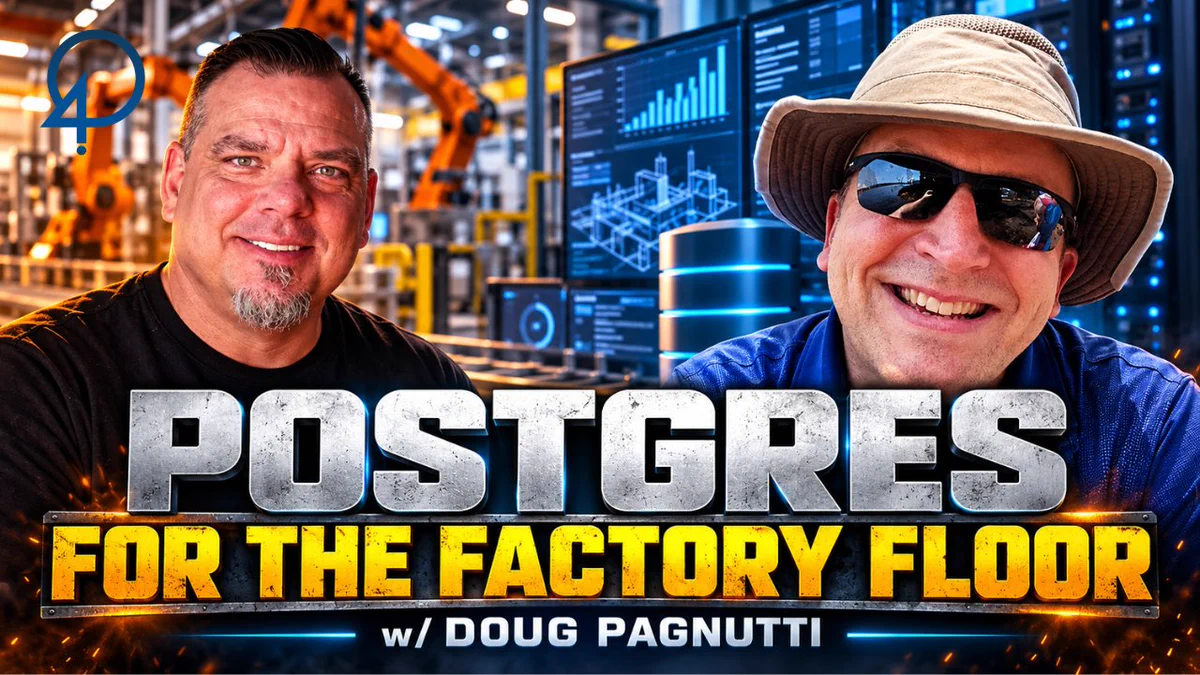
Postgres for the Factory Floor w/ Tiger Data xitter.cf/i/broadcasts/1YxNrbkjR…
Simen retweeted

«Kan jeg ta med en kompis? Han er chill.»
Kompisen:
