

Good old fashioned Black, socialist, feminist.
UK
Joined January 2024
- Tweets3.5K
- Following528
- Followers332
- Likes146K







Naomi Coxe retweeted

The death penalty is inadmissible because it is an attack on the inviolability and dignity of the person. The common good can be safeguarded and the requirements of justice can be met without recourse to capital punishment: effective systems of detention have been developed that protect citizens while at the same time do not completely deprive those who are guilty of the possibility of redemption. #NoDeathPenalty
Naomi Coxe retweeted

Just as a reminder, there are around 2.7m people in the UK who are in paid employment but who still need to claim benefits to make ends meet
A huge proportion of the welfare budget subsidises employers not employees
The taxpayer enables corporate greed.
Naomi Coxe retweeted

Things that have no impact on the legality of women’s spaces:
- how men are treated in men’s prisons
- how embarrassed a man feels undressing in the men’s changing rooms
- any discomfort a man might feel using a men’s toilet
- any body issues a man has that affects how he sees himself
If organisations want to find ways to alleviate the above then by all means, feel free. But you can’t solve the problem by removing the rights of women.
Naomi Coxe retweeted

Let me ask a direct question - why do some people see these two men as bastians of society, leaders of a vital movement to make the UK a better, safer, more prosperous place?
Danny Tommo tried to kidnap someone at knifepoint because he believed they had £10,000 worth of the cocaine he was dealing. There are also strong allegations, and court records, that he was also involved in a domestic abuse case against his former partner, along with recordings of him saying he mistreated her so badly she became a crack addict. He is currently facing multiple charges dating back from April, along with his current charges. He is a career criminal.
Tommy Robinson is a known drug addict, who boasted about being able to score drugs everywhere he went. He has been convicted on multiple occasions of violent crime, along with fraud, and several other offences.
This isn't some conspiracy or rumour. These are facts about these men. Violent serial criminals.
So, to anyone who supports these men, including elected MPs: explain how they are making Britain safer for women and children. What exactly about attempted kidnapping, drug dealing, violent crime, fraud and drug addiction represents the values you want for this country?
Do you condone that conduct, or do your standards not apply when the criminal shares your politics?
Tell me what makes these men role models. Would you want your own children to grow up like them?

Naomi Coxe retweeted
For those who do not understand why Danny Tommo wasn’t given bail: it's completely and utterly obvious for anyone who isn't totally braindead.
Tommo is a convicted criminal who served two years for attempted kidnapping. He was already on conditional bail following six criminal charges in April, with a hearing due in October, when he was filmed slashing a dinghy with a rescue worker still aboard. He refused to confirm his abode to the police.
A serious previous conviction, a new criminal allegation while already on bail from 6 other charges, no fixed abode: this is a slam dunk "no bail" scenario. Not a conspiracy.
Comparing him with the five men arrested near RAF Fairford is utterly disingenuous. It's obvious by now that these were petty criminals stealing fuel, not terrorists. They were fully identified, having given fixed abodes, and no one is a flight risk for a petty attempted crime. I also guarantee none of them were already on bail from previous charges.
So please, stop with the false outrage. No one genuinely believes these scenarios are comparable.
Naomi Coxe retweeted

I've been deeply moved by seeing trans identified men upset they've been excluded from society because of their identity. My heart bleeds for them, so I made a list of places where they can enjoy life in public. I couldn't fit them all into one image, so comment with others.

Naomi Coxe retweeted

33 of 38 med studies find women less likely than men to be offered an active treatment. Men w/ liver failure more likely to get a transplant than women. Women kidney patients on dialysis less likely to be given permanent access & spent longer on a catheter.theguardian.com/science/2026…

Naomi Coxe retweeted

WHAT MAKES EXITING PROSTITUTION SO HARD?
By Huschke Mau.
Occasionally I’m asked what makes it so hard to exit prostitution. It took me years to leave, I kept returning – and this is true for many women. What makes it so hard is the complexity of the situation. When I went to a counselling service for prostitutes to ask for help to exit, I was told: “If you don’t want to do this any longer, just don’t go back to the brothel!” But it isn’t that simple.
1. A HISTORY OF BEING FAILED BY THE AUTHORITIES
Most prostitutes have had very bad experiences with many kinds of authorities or official institutions. In fact, these institutions may actually be the reason the women are in prostitution in the first place.
Those like me who have learned how easy it is to slip through the gaps in Germany’s safety net, know where not to go when they’re in need of help. In my case, youth services alleged I’d run away from home, not because of the violence, but because I hadn’t got enough pocket money. I only received any help at all because of the efforts of committed social workers at a girls’ refuge. But that help ended far too early. Come 18 years of age it was over.
Nobody seemed to care about the dangers of my situation as a traumatised young women who had no contact with her parents, no support, and was penniless.
There was a girl at the girls’ centre who was there because her father had repeatedly raped her. Youth services got them to sit down together to “talk it out.” Her father admitted everything and apologised. Youth Services then told her: “There you are, he apologised, he won’t do it again. You can go back home now.”
I am fairly sure that she will never again turn to an official institution when she needs help.
At all the various offices – social security, student loans, job centre/unemployment, housing – it’s the same story. “Not within the scope of our responsibilities,” endless protraction in dealing with applications, stupid remarks.
Housing office: “We’ve been processing your application for almost a year now, we’ll let you know. What’s this? You can’t pay your rent anymore? Well, if you don’t have an apartment, you’re not entitled to rent support, so we’ll stop processing your application.”
Student office: “If your parents don’t want to sign the application form, you must have done something wrong. It’s usually the children’s fault. Have you ever thought of apologising to the authorities?”
(In Germany, economically deprived students are entitled to a state-sponsored student loan to cover their living costs. Parents must sign the application form and can be compelled to do so. However, the bureaucracy often puts up barriers and delays, so students don’t get the loans they are entitled to and therefore fall into destitution.)
2. INADEQUATE OR NON-EXISTENT SOCIAL SECURITY
I know prostitutes who want to exit, but the unemployment office refuses to grant financial support and threatens them with a three-month ban on any payment if they terminate their ‘contract’ with the brothel.
Others try to exit but aren’t provided with the full payments they’re due because the office assumes they are still engaged in prostitution and come up with a completely imaginary sum they’re supposed to be earning. This is added into the calculations and reduces the payments so they’re not enough to live on.
Those who end up in prostitution or remain there because of such things are not there because of free choice but because the only options are unwanted alternatives: prostitution or starve and/or become homeless.
3. USELESS (OR NEARLY-USELESS) ADVOCACY SERVICES
Advocacy and counselling centres that claim to offer exit support in Germany are not usually on the side of the prostituted woman.
Mimikry, an advocacy centre in Munich, demonstrated their support for sex trade operators by inviting Stephanie Klee, the owner of an escort agency, to their anniversary celebrations.
The head of the public health office in Dresden (which runs the advocacy centre there) appears as a speaker at pro-prostitution events and glorifies prostitution as a great opportunity for punters, with or without disabilities.
Kassandra in Nuremberg maintains that violence in prostitution is rare and prostitutes must never be considered an ‘at risk group’ because it would stigmatise them – even though more than 90 prostitutes have been murdered in Germany alone since the Prostitution Act in 2002.
Most advocacy centres (like Hydra in Berlin) speak in terms of ‘sex work,’ do more to help women enter prostitution than to leave it, and claim that the greatest problem prostitutes face is ‘stigma.’ I know women who turned to such counselling centres and were told that the problem wasn’t the job – it was them, and why didn’t they just re-orientate themselves within prostitution? Could escorting be an alternative or BDSM?
Turn to such centres and you’re not only denied help, you’re shamed.
4. LACK OF ALTERNATIVES
Another problem is the lack of alternatives. The job situation in Germany is not all that rosy. Things are difficult if you’ve got a criminal record for offences in the context of prostitution (disregarding zoning regulations, carrying drugs, etc.) or gaps in your CV that cannot be camouflaged no matter how creative you are.
Women who spend years in prostitution have little, if anything, to show in terms of job experience, and typically have never had any professional training. The jobs that she can apply for are therefore those with maximum hours and minimum pay. Someone who has barely left prostitution usually has to contend with the disorders following trauma – i.e. permanent stress. And that means they may not be able to endure these jobs for long.
If money is short again and again and again, you do what you know how to do and can do, and go back to ‘working.’
Not a single prostitute that I know has the self-confidence left to apply for well-paid jobs with good conditions.
5. THE CONSEQUENCES OF PROFOUND AND ENDURING TRAUMA
And then there’s the trauma. Most prostitutes suffer from post-traumatic stress disorder (PTSD) similar to victims of torture. They suffer from anxiety disorders, lack of self-confidence, obsessive behaviour – such as compulsive washing or repetition of pointless rituals that supposedly ensure safety. (I have to knock on wood when I have fearful thoughts. And I often have those. When I can’t do that, a panic attack ensues. I know how crazy this sounds and that ultimately it’s pointless, but I can’t help it.)
When I switched from the brothel to escorting, I wasn’t used to going out during the day. I couldn’t abide daylight. Nor the crowds of people. Someone whose boundaries are being violated daily and hourly may not be able to stay among others, because their inner alarm system keeps going off: “This is a man! Danger!”
I don’t want to begin talking about what it’s like to be triggered and having flashbacks when you’re out and about. Nightmares and sleep disorders are exhausting. It is almost impossible to keep up appearances and move into a ‘normal life.’ You feel different from everyone else, inferior, more hurt. Broken.
People seem creepy, the ‘normal ones’ more than anybody else, because they make you see what you yourself aren’t any longer: without cares, without injuries, without fears. Whole. Nice. In a good mood.
In order to endure prostitution, you have to split your awareness away from your body, to dissociate. The problem is that you cannot just slip back into it later. The body remains without contact to your soul, your psyche. You just do not feel yourself any more.
It took me several years to learn that what I sometimes feel is hunger. And that this means I should eat something. Or that what I’m experiencing means that I’m cold. And I need to put on something warm.
It is exhausting to learn or to relearn that one’s body has needs, to feel it, and it is even more exhausting to practice ‘self-care’ and not to treat yourself like shit any longer. To sleep, when you are tired – because you’re not sitting in a 24-hour brothel and have to take the next punter. That you don’t have to feel cold any longer because you’re in street prostitution when it’s below freezing. That you can change situations that cause pain instead of eliminating the pain through dissociation, drugs or alcohol.
But trauma doesn’t let go of you easily: You get used to it. This phenomenon is called trauma bonding, and it is the reason why women who are battered by their husbands keep going back. Traumatic situations can be addictive because they cause a massive release of adrenaline – and that is addictive.
Additionally, a violent situation is something well-known to people who have experienced as much violence as is common in prostitution. I learned from early childhood on: The place where I am afraid, where I am hurt, where I am degraded, is the place where I belong. That is home. This is why even today I still struggle in situations that endanger me, to see the danger for what it is and walk away. The situations are shite, but familiar; I know them.
Situations in which people are nice to me, do not shout, do not batter, and do not abuse me, feel creepy. I promptly feel inferior. My soul signals: “Something is wrong here. This is alien.” Prostitution is like self-harm. No. Prostitution IS self-harm.
6. ADDICTIONS
Addictions are another barrier to exiting. Many prostitutes numb themselves, with drugs, alcohol, cigarettes, because that is the only way they can function. This develops its own dynamics and you promptly have an additional problem to deal with.
7. VICTIM-BLAMING ATTITUDES
It is difficult to find therapy for former prostitutes. It takes a lot of time and nerves to secure a place in therapy, and when you do, you find many therapists, both male and female, will not accept that prostitution is violence. (I will write a separate article about therapy one day.)
Like therapists, our entire culture has a problem recognising prostitution as something damaging, not only to society, but to the individual prostitute.
Exiting prostitution is incredibly challenging when the dominant view out there is that prostitution is something entirely normal, something that can be advertised on huge billboards along the main streets, whose advertising can be plastered all over taxis, when articles repeatedly make you read terms like ‘sex worker,’ ‘people who offer sexual services,’ when you keep being confronted with images and films and articles that minimise or even hype prostitution. All of that does something to you.
Not even to mention people who feel the need to designate former prostitutes who dare speak up in public as ‘filthy whores,’ ‘gold diggers,’ ‘low life,’ etc. right under the articles these women have written or right below the interviews in which they have spoken.
Exiting prostitution and then being told it was your ‘own fault,’ that you ‘made poor choices’ or that you are lying, can make you feel you should have just stayed there.
Disordered self-perception and extremely low self-esteem isolate most prostitutes from the world outside the sex trade. After years spent in that environment, most women don’t know anyone from outside that life.
8. PUNTER IMPUNITY
The sex trade is like a parallel world. And sometimes it feels like ‘the true world’ because you don’t feel any trust in your fellow human beings, and above all none in men. You now know, and have experienced, what they are capable of. You know this in your own body and you see right through the bourgeois façade out there.
For punters don’t only parade around in the ‘underworld.’ They are out there, in the ‘normal world’ – only what happens in that ‘normal world’ is that you are shamed as the (former) prostitute while they are never shamed and never held accountable.
9. THE PIMPS – IN ALL THEIR GUISES
So you may just as well remain in prostitution. By comparison it appears sort of honest at least, violence in return for money, everybody knows what you’re doing, does the same, the rules are known, as are the mechanisms.
In Germany women are not put under any pressure to leave the brothel. Quite the reverse in fact. The usual custom is having to buy yourself out. A German colleague who wanted to disappear from a brothel had the brothel keeper who had repeatedly raped her stuck to her heels for an entire year. He slashed her tires, appeared inside her apartment, threatened her boyfriend, and enlightened her parents about how she had made her money. He only left her in peace after he had gotten the pay-off of € 3,000. (This sum is often euphemised as ‘debts incurred by the prostitute.’ But what it really means is: Punishment for being late, for not tidying the room, for turning down punters, ‘non-attendance’ fees; rent for the room that she had to pay for even though she hadn’t had any punters or was sick, etc.)
I’m not going to begin now on the prostituted women’s ‘partners’ who also profit from their ‘working.’
And in all of this I still haven’t taken the foreign prostitutes into consideration, who do not speak German, who only know a corrupted police force in their home countries (and here in my own country I do not entirely acquit the police force from this…), who are not even theoretically entitled to social security payments, who have no health insurance, and who are often transferred to a different city or brothel every week and so don’t even know where they are. And even if they did know: Who are they supposed to turn to?
The German state does not provide any help. It leaves the financing of the (new) ‘Prostitutes’ Protection Law’ entirely to the municipalities, thus ensuring they have to continue enabling the punters’ to smoothly engage in their little hobby – so the German state can continue to take taxes from it and gorge on the revenue.
And this does in fact give rise to the question of whether the state has any interest at all in preventing women and young girls from ending up in prostitution or in helping prostitutes exit.

Naomi Coxe retweeted

Utter rubbish. Your best case is that a trans id man has the same propensity to offend as other men (as shown by Dhejne). Men are responsible for 98% of violent crime, so we safeguard & keep them ALL out of women's spaces.
However, analysis of prison data indicates that self-id policies have encouraged some violent men, including rapists and CSO to "identify" as women in order to access victims. Thus, in prison populations the rate of violent offences from trans ID men exceeds that of other men.
You cannot be "born in the wrong body". It's an offensive, semi-religious belief in a sort of gendered soul that is unmoored from physical reality & highly upsetting to people with illness & disability who really are failed by their body. What it is, is a form of dysmorphia like anorexia or apotemnophilia. We don't say that these people were born into a "wrong" body.
Most trans id people (over 90%) never have any surgery (like Rose, Upton or fictional Pete). They change clothes and hair & demand access to women's spaces.
Someone who cuts off their own genitals is mentally ill. They need help, but that should not mean women have to be a human shield. Thankfully, it's rare. The case we know about is Sarah Jane Baker, who violently & sadistically tortured a teenager who he left to die.
Show compassion? You start. Show compassion for women in prison who are being sexually coerced by the male murderers in there. Or for the women going into rape crisis counselling & being confronted with a man who told them to "reframe their trauma". How about Muslim women who can't go swimming because the women-only swim session let's in men?
Women are fully human, we aren't support animals for the men you consider lesser, hobbled, or incomplete. Never, ever tell women our safety & dignity is worth less than the demands of men like Rose.
Naomi Coxe retweeted

If you’ve spent five minutes on social media lately, you’ve probably seen Reform UK voters unironically calling themselves the "People’s Army" or "The Real Resistance." It’s a beautiful narrative. Truly inspiring. There’s just one tiny, hilarious problem.


Naomi Coxe retweeted

Our FOIs to Police Scotland, published today in @Sunday_Post, show almost 100 sexual crimes at swimming pools and leisure centres — including rape, sexual assault and 51 voyeurism offences.
81 female victims. 57 male perpetrators. Zero offences attributed to male staff.
11 offences involved girls under 13. More girls under 13 were among the additional victims.
Every recorded offence was at a venue with mixed-sex, village-style shared changing. Not one was recorded at a centre with single-sex facilities.
Councils cannot keep calling these spaces “safe” while girls are being filmed, and sexually assaulted in them.
Local authorities must provide single-sex changing, designated family spaces, proper risk assessments, and stop treating women’s and girls’ safety as secondary.
Changing areas have to change.
#ItsTime
Thank you @ladymcbeth2

This is what it feels like for many in the UK right now. Being treated like we don't belong in our own country because of the colour of our skin. What visitors who aren't white must feel I don't know... Ignorant, isolationist, racists unable to judge individuals on their merits.

Excuse me tf WHAT??!?!
Basically- they saw some brown men that according to the local Reform councillor "..did not seem to be English had arrived at the hotel.."
And decided to descend upon the hotel like thugs....
And you're telling me this isn't to do with race??!?
I wonder what the poor Pakistani cricket team were thinking?? How awful for them!

They didn't 'have' a baby. They bought a human - it's just like slavery.

Adam Frisby and Jamie Corbett had a baby via a surrogate mother in the US. They tell @skysarahjane they're not legally recognised as parents under UK law.
🇬🇧 Watch The UK Tonight with Sarah-Jane Mee: youtube.com/watch?v=uzwYHOqZ…
Naomi Coxe retweeted

The RNLI normally receives around £25,000 to £30,000 in donations a day.
Thanks to the far-right, whenever they attack the charity, donations increase significantly.
For example, the image on the left is from today. They’ve raised over £100,000, with 2,428 people donating. Yesterday, they raised £63,000, with 1,517 people donating.
The image on the right is from August last year. On one day, they raised just over £25,000 from 289 donors, and the following day they raised nearly £22,000.
It’s almost as if the far-right attacks are raising more money for the RNLI.


Naomi Coxe retweeted

Our charity exists to save lives at sea. Our mission is to save every one. Our lifesavers are compelled to help those in need without judgement of how they came to be in the water. They have done so since the RNLI was founded in 1824 and this will always be our ethos.

Naomi Coxe retweeted

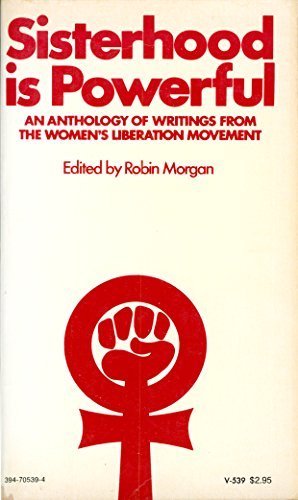
Now it's Robin Morgan who has died. From Blake Morgan:
"My mother Robin Morgan died peacefully in her sleep early this morning. Surely, she will be remembered for designing the iconic image of the women's movement (the fist in the circle of the women's symbol) and for her formative anthology, Sisterhood Is Powerful, for co-founding the Sisterhood is Global Institute with Simone de Beauvoir, for co-founding the Women's Media Center with Gloria Steinem and Jane Fonda, for a lifetime of fierce feminism and fierce friendship. But first and foremost, she was an artist. Her art fueled her politics, fueled her feminism, fueled the way she raised me. She taught me that how one does anything is how one does everything—that the personal is the political, and that as she once wrote, 'Hate generalizes, love specifies.' I'll have more to say and more songs to write about her, but for now, I'll express my love and gratitude that so many of you knew and loved her as both my mother, and as your friend."
"In 1970, Robin created the first feminist anthology, Sisterhood Is Powerful, which gave voice to widely diverse women activists and writers when there was no national feminist forum. It was later cited by the New York Public Library as one of the 100 Most Influential Books of the 20th Century. She used funds from its immediate best-seller publishing success to provide grants to women's groups. Following with a second anthology, she assembled Sisterhood Is Global, to provide an opening for a global women’s movement which to this day amplifies women’s voices from Europe, the Middle East, Africa, South America, and Asia. Together with her friend and colleague, Simone de Beauvoir, she then co-founded The Sisterhood Is Global Institute, still going strong today. She went twice into Gaza with UNRWA during the first and second Intifadas to work with and write about Palestinian women. In the midst of all this national and global organizing and activism, Robin wrote twenty widely read, translated, and course-taught books of political theory and reportage, as well as books of poetry and fiction. She was a former editor-in-chief of Ms. magazine. She hosted and produced “Women’s Media Center Live with Robin Morgan,” an award-winning podcast heard for 13 years in 112 countries. This was her influential, intelligent way of continuing a lifetime of activism, although she was in the second decade of living with Parkinson’s Disease."
Naomi Coxe retweeted

This image from Nangarhar province is truly Afghanistan💔
A woman once she was teacher now sit for begging and appears to be sick, with an IV drip attached to her, is forced to beg for money and polish men’s shoes on the roadside just to survive her self and family.
This is part of the reality for women in Afghanistan today under Taliban group: they can beg, polish men’s shoes, and struggle to survive, but they are denied the right to work, education, healthcare, and even the freedom to raise their voices.
Where is the UN? Where is international community? Where is humanity?
#LetAfghanGirlsLearn #FreeAfghanWomen
