

👨🏽💻 Coder and casual gamer 💻 TypeScript, Node.js, Python, Go, C/C++, and Linux 🤖 AI Engineering, Software Design, and Software Development
Metro Cebu
Joined October 2016
- Tweets11.5K
- Following307
- Followers110
- Likes67.9K




Sieg retweeted

We've redesigned the side panel in Claude Code on desktop.
Files, Changes, Terminal and your other tools now open as tabs beside your session. You can still move a tab to see several at once, or pop it out into its own window.
Rolling out on Mac. Windows and Linux coming soon!
Sieg retweeted

There’s now one way to connect your tools to Claude, teach it a new skill, or do both.
Connectors and skills come together as plugins. Live on Free, Pro, Max, and Ultra plans, with Team and Enterprise coming soon.
Browse 10,000+ plugins: claude.ai/plugins

Sieg retweeted

Stupid things I did:
1. 250,000+ pages was a joke guys!, I find big number extremely hilarious. I tried to make it clear by the level of pedantry of the reals total ordered statement in the main theorem, but people ran with it unfortunately and I didn’t feel like talking on social media in the days after the announcement, though I did have a good time with the memes. Sorry!!! (Similarly with our YM4 existence I found it extremely funny that we were slowly working through 60,000 pages of slop, though the committee asking for Lean made me feel dumb about wasting our time with that. But 60,000 funny.) Tao advises to not joke in papers, see also the Big Lebowski reference I shoehorned, I now understand why… I didn’t feel comfortable having any slop writeup attached to this problem, and I figured I can’t produce anything readable anyway, so I went off the Lean to lengthmaxx.
2. The Lean is full of garbage obviously, but compiles, but all criticism of such garbage is totally reasonable and accepted, I should have cleaned it up but it was randomly difficult to for various strange reasons. Mea culpa…
3. @scottnarmstrong clocked me, indeed even as a student there were theorems that took me the better part of a decade to write up, but with this one I should hopefully be more responsible. (I really was yoloing a lot in there, I bet most is unnecessary in the end, admittedly the lazy thing to do would be to wait because it’ll simplify massively…)
4. I forgot to emphasize what I think is the point. Arguments like these, cool, but they are the raw inputs when interpolating definitions. We don’t have the / an “H^1 object” over number fields, and probably for a layperson the fact that we fight hard for these arguments for the purpose of definitions is not clear a priori (that’s at least my philosophy). Just like I knew I must fight for an utterly simple Weil / Deligne, I feel Riemann should be easy, and any real difficulty is an indication our setup is just dumb at the moment.
Sieg retweeted

NVIDIA Board reinstates Jensen Huang as President, CEO and Board Director.
Read the release: nvidianews.nvidia.com/news/n…

Sieg retweeted

Independent mathematicians have now finished the full verification of the proof of the Riemann hypothesis announced yesterday by Anthropic mathematician Levent Alpöge. The results are real, they say.
scientificamerican.com/artic…

Sieg retweeted

Meet the new Claude mobile app!
So much craft and polish across the app, including a new tab bar. Huge shoutout to @daniel__designs, @khalilcader, @pranathiperii, Andrew, and Graham for all their work across iOS and Android.
Rolling out to all users, starting today!


Sieg retweeted
Remarks from Anthropic CEO @DarioAmodei on our initial public offering:
My co-founders and I started Anthropic because we believe that the most powerful technology of our time should be built for the benefit of humankind.
Daniela and I lost our father to a disease that, just a few years later, became curable. I started my career in biology, hoping to help future cures come sooner. In the lab, I saw the vast thicket of complexity that scientists face when they’re trying to understand disease and develop new treatments.
So many of the scientific tools that can cut through that thicket—tools for gene editing, gene synthesis, controlling brain cells with light—started as pure ideas. In other words, they came from thinking. From intelligence.
Human intelligence has already made diseases like plague, smallpox, and polio history for most of the world. But progress on other diseases has been too slow for so many patients and their families. Going from a great idea to a treatment can take decades: it took many years from the first discovery of a strange repeating pattern in DNA to the approval of the first treatment for a disease using CRISPR.
Nature is full of these patterns. But we’ve had too little intelligence to decipher most of them; too few scientists, with too little time. Now we can build that intelligence. Whether it’s protein folding, drug design, cancer genetics, or clinical trial administration, scientists across many areas of biology and medicine are finding Claude can help them do their research in a fraction of the time it would’ve taken just a couple of years ago. I believe sufficiently powerful AI, working in concert with humans, could compress a century of scientific and medical progress into a decade.
I don’t want to get ahead of myself. At this point all we have are early results. Experiments and clinical trials will still take time. And although they involve slow and ponderous processes, I believe those processes can be substantially accelerated by AI. We hope that in the future fewer families miss a cure by just a few years.
Medicine is just a particularly vivid example, but there are many others. Our customers—the world’s most ambitious companies, nonprofits, and individual people—are already applying the intelligence we’ve built to stimulate economic growth; lift people out of poverty; protect democracy and free societies; even make everyday services like the DMV work better. We’re proud to work alongside them. And I’m extremely optimistic about what we can do together in the future.
At the same time, we have always been honest that this technology has very real risks. These range from misuse of the technology by individuals or nation-states, to economic disruption, to losing control of AI systems. We discuss these risks not because we think they are inevitable, but because we think they are avoidable.
Avoiding them depends on the choices made by the people building AI. There is a gigantic difference between how AI will go if we pay little attention to safety, versus how it will go if we are obsessed with safety. And an obsession with safety and with public benefit has been woven into Anthropic’s DNA from the start. From safeguards against biological and cyber risks, to alignment training and testing, to looking inside our models like an X-ray, Anthropic has pioneered methods for understanding and steering the behavior of AI systems.
There is much work still to be done, and the most difficult safety work lies ahead of us. The incredible talent of the company that has enabled us to build the most capable AI systems will need to be directed, even more so than it has already, towards double- and triple-checking that those AI systems are safe and secure.
And to state it unequivocally, we will pace the training and deployment of AI systems, taking as long as is necessary to have confidence that they are safe and will remain under human control. We will not bend to either business or political pressure. Today puts the company in a stronger financial position, and in doing so only strengthens our resolve to do the right thing.
If we can show it’s possible to make the right choices on safety and still build an incredibly successful company, others in our industry will be inspired to do the same. We call this a race to the top. When the race to the top is working properly, it doesn’t matter which company has the best models—everyone wins because everyone is building safely. The race to the top works best when driven from the front of the pack, and we fully hope and expect to do so, but the goal is to make the whole industry better, regardless of whether Anthropic is winning or losing at any given time.
The advent of machine intelligence is one of the seminal moments in human history, and we have a rare opportunity to shape it for the better.
This moment is bigger than any one company, or any one country. It will take all of us, working together, to ensure this technology goes well for us and the many generations to come. Starting today, we hope that you’ll join us on this mission.
Sieg retweeted

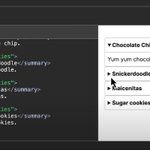
My biggest UI pet peeve:
animations that are not origin-aware.
Dropdowns, popovers, menus, etc. should scale from their trigger, not from the center.
Just send this to your agent:
Make all trigger-based UI elements in this app animate from their trigger, not their center.
Sieg retweeted
One of my favorite recent updates for AI for UI students:
/package-my-work skill:
- Records your work at the right resolution
- Uses correct cursor and touch indicators (and movement)
- Zooms in on key details
- Applies packaging tricks I've learned over the years
Sieg retweeted
Check out Code Mode, a new, experimental way for Claude Code to work with tools. Claude writes scripts that chain your tools together in sophisticated ways, and it can answer you while long commands are still running.
Opt in with CLAUDE_CODE_EXPERIMENTAL_CODE_MODE=1 code.claude.com/docs/en/code…


Sieg retweeted

Rex demo time: magical and automatic remote copy/paste, drag/drop, and port forwarding (e.g. open web servers running on remote machines in your local browser). Plus, showcasing some of the internal plumbing that powers this and how you can hook into it with Lua scripting.
Our goal with Superlogical and Rex is for everything to feel local. I've said before: the moment any UI shows a selector between "local" and "cloud", the product has failed. The lines should blur, and we should build the foundational technology that makes it happen performantly, securely, and beautifully.
Sieg retweeted
Claude Code on desktop now supports iPhone Duo in the iOS simulator (public beta).
You can run your app on Duo next to your conversation and Claude can fold and unfold the device to test each layout.
Sieg retweeted

Custom themes are just mods so your background can even react to your actual session!
Here I just asked Claude to make it snow as my context fills up (the mod hooks into turn.step) but you can get really creative with it ☃️

Sieg retweeted

All hail the weird web
I just enabled HTML-in-Canvas in Claude’s desktop apps. It’s a footnote change next to everything else, but with it, Claude can make bizarre & beautiful sites. Reminds me of the Flash days!
Please look at the stupid demos I made: claude.ai/artifact/7cCNqKnoF…


Sieg retweeted

Nearly every process in the SDLC warrants a custom skill:
/create-ticket
/fix-bug
/implement-ticket
/review-code
/open-pr
/fix-pr-comments
If our team repeats a process, a skill means we can standardize, automate, and continually improve the process.
Sieg retweeted
Just pushed an update to my skills repo.
All 19 skills have been improved with a total of 185 changes across them.
Rerun the install command to update.
aiforui.dev/skills
