






I remember watching a similar clip of TR back in the days and true.
Compounding delivers …

Tony Robbins reveals investing in private equity turns $1,000,000 into $142,000,000 in the same time investing in the S&P would have returned just $26,000,000...
“Same million dollars, instead of being worth $26 million, it's $142 million. Same investments. Only one problem… access.”
12


Shibin SSain {شبل} retweeted

Intuition is nothing but the outcome of earlier intellectual experience.
- Albert Einstein

Shibin SSain {شبل} retweeted

Brian Chesky on why he stayed in Airbnb hosts' homes to figure out what to build:
"One of the most important pieces of advice I can probably give you is something that Paul Graham told me, and he said, 'It's better to have 100 people love you than a million people that just sort of like you.' Find 100 people and make them fall in love with your product, and you do that by doing things that don't scale."
"Sometimes the most important things you can do are the human moments. We went door to door signing people up. We went door to door living with people. When you bought an iPhone, Steve Jobs didn't come and stay in your house, but I did."
"We literally photographed people's homes. We helped them price it. We did everything. You see, the point is, as you design the perfect experience end to end, you do it by hand, and you recruit the community members one person at a time. They have a deep connection to you."
"The most important thing is to know what to build, and you don't know what to build if you're not with your customers, living with them, experiencing the world with them, especially in the offline world."
@bchesky on STATION Featuring, 2018


Shibin SSain {شبل} retweeted

One operator, ∇, answers three different questions about a field.
Gradient: which direction is uphill?
Divergence: how much is flowing outward?
Curl: how much is it rotating?
Three operations, three ways to understand how fields behave.
Maxwell's equations use divergence and curl to describe electricity and magnetism.
Legend

Werner von Braun standing beside the five F-1 engines of the Saturn V rocket at the U.S. Space & Rocket Center.
Each engine produced around 1.5 million newtons of thrust. Together, the five generated 7.5 million pounds of thrust, lifting the 111-metre Saturn V off the launch pad and sending Apollo astronauts toward the Moon.
Von Braun was the chief architect of the Saturn V and a central figure in America's space programme. But his past was deeply controversial. During World War II, he helped develop Nazi Germany's V-2 rockets, weapons built using forced labour and used against Allied cities.
After the war, he was brought to the United States through Operation Paperclip, where he continued developing rockets that eventually helped make the Apollo Moon landings possible.
A remarkable engineering legacy, inseparable from a troubling history.

12


Shibin SSain {شبل} retweeted
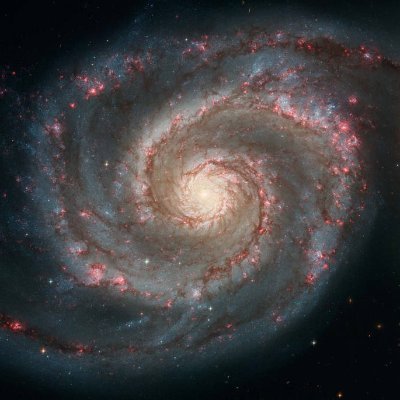
Last week, Voyager 1 reached a light-day away from Earth after sailing through the solar system for nearly 50 years. But how does that compare to other cosmic distances? (Hint: we measure many of them in light-YEARS.)
Ponder the vastness of space with us: go.nasa.gov/4jgyIDn
Shibin SSain {شبل} retweeted

Goodbye moon; hello moon. Here's a real time video of a moon rise and moon set as seen from the forward and aft windows of cupola yesterday.

167-year-old math problem solved with AI. #RiemannHypothesis | we have entered an era of alien mathematic discoveries supercharged by AI

The Riemann Hypothesis Proof, Mapped File by File
The Lean proof of the Riemann Hypothesis has 60,790 files and 16,984,346 lines. Levent Alpöge released it on November 20, 2026, after working with Claude. Every nontrivial zero of ζ(s) has Re s = 1/2.
The trunk is the longest import chain, 90 files from Main.lean down. Branches are its 1,540 direct imports. The dust is 213 files Main never reaches.
Lean's kernel and independent checkers accepted the proof. No human has read all of it yet.
38
Shibin SSain {شبل} retweeted

Two amateur astronomers, Kevin Bond (@canvrno) and Ethan Byrd (@itsjustemail), independently found signals that could point to planets around distant stars. They knew you didn't need your own telescope for this kind of hunt.
Kevin used Codex and Ethan used Astra to search public telescope data for tiny, recurring dips in starlight that an orbiting planet can cause. Both found signals worth a second look.


