Math-Whisperer. Creator of https://xitter.cf/t.co/YTkPUsp7ve.
New Jersey
Joined January 2017
- Tweets5.2K
- Following3.5K
- Followers5.7K
- Likes9.2K


Steve Hare retweeted

Worked examples are solutions, not problems: they are concrete examples, one of 6 researched verified learning strategies.
W/o them, a learning experience is unstructured + unsupported by PIE (proof, information, examples.)
Worked examples bridge learning gaps!


Steve Hare retweeted

Another summary, the EXCELLENT How We Learn by @StanDehaene -well worth a read!
Especially at this point in time; an insight into brains/learning is SUPER informative & useful for teachers & parents.
His 4 pillars of learning - BRILLIANT.
Summaries here: itsalearningcurve.education/…

Steve Hare retweeted

We spend enormous effort optimizing how to get one teacher to teach the same topic to 30 students at the same time, instead of asking whether that model itself is the bottleneck.
Steve Hare retweeted

I told myself no more books with “How” or “Learn” in the title for a while, but then this was staring me in the face at the public library yesterday, and I couldn’t say no.
I think I officially have a problem.


Steve Hare retweeted

Very insightful!
Steve Hare retweeted

MUST read for educators
Steve Hare retweeted

This is such a sound and insightful thread on CLT. Thanks, Steve.
Steve Hare retweeted

Students have their phones and screens. The teachers and admin rationalize their failure to teach basic arithmetic because they’re also so innumerate they can’t reckon the opportunities that are lost when students lack automaticity in basic computation.
The schools are kneecapping the kids financially, let alone in terms of STEM
careers.
Thank God for @sharemath and his series. youteachyou.org/?srsltid=Afm…
Steve Hare retweeted
This exposition of learning as compression in 4 steps/pillars is concrete and beautiful.
@3blue1brown recent post on Shannon compression extends this example; learning is prediction and predictability is the limit of compression.
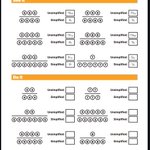
In 𝘏𝘰𝘸 𝘞𝘦 𝘓𝘦𝘢𝘳𝘯, neuroscientist Stanislas Dehaene identifies 4 Pillars of Learning, the biological requirements that make lasting processing possible. Here’s what they look like - all four - in a simple activity introducing the coordinate plane.
Attention: The eight completed examples at the top - with no explanation - create curiosity. “What’s going on here? Is there a pattern?”
Active Engagement: The eight similar problems below invite the student to immediately put their predictions to the test.
Error Feedback: The key on the back of the page shows every answer so that misconceptions are corrected instantly and privately, without stress.
Consolidation: The True or False question at the bottom invites the student to generalize and confirm the rule for moving around in the coordinate plane based on their own experience, making it easier to integrate the rule into their long-term memory.
With the 4 pillars in place, students have their 𝘰𝘸𝘯 reasons to learn about the coordinate plane.
Without them, it can seem pointless.


Steve Hare retweeted

I wanted more individualized learning (I still do). Now, I'm planning on not relying on edtech for it (though @Alphaschool is on the right path to do so).
Instead, I will use You Teach You books from @sharemath
Steve Hare retweeted
@BealsKatharine & I are talking about “information-integration” learning at researchEd on Saturday — depends on generation & immediate feedback (milliseconds not minutes)
Look forward to seeing the books! Congratulations!
First post we’ve put up is here: scienceofhumanwriting.substa…
Steve Hare retweeted

Wordle is getting pretty stale at this point. Try this one, an actual new concept in word games.

Steve Hare retweeted

Last week I had a frustrating conversation with a co-teacher.
Yesterday I told another co-teacher about @sharemath's Fact Freaks website.
When I saw her today, she said that she's already had all her students create accounts!
Bright spot in my week and it's only Tuesday.
Steve Hare retweeted

My daughter mentioned last year at the end of 6th that she was "not getting fractions" so I bought the fractions book and she completed it over the summer. As a 7th grader, she just took a math test on fractions and she got an A. She is much more confident and capable now and I think this was a huge help.
Math teachers:
Make this the year all of your students master the basics before getting to the trickier stuff. FactFreaks.com and YouTeachYou.org will do the trick, and do the heavy lifting for you, by having the students do it for themselves!
Visit both today!
#mathfactfluency #mathworksheets #mathteachers
Steve Hare retweeted

BREAKING math fact news @IXLLearning in two weeks is releasing “Fluency Zone” with timing for math facts per minute and “Math Fasttrack” so students see their progress
@rastokke @brian_poncy @sharemath @rscodding @MrZachG
Steve Hare retweeted

Great story from a #RealTeacher. What a wonderful experience for both student and teacher. I was an #EnglishCreature, but I love to see #learning everywhere -- even in MathLand!!😅
Years ago, I piloted a single-semester “math lab” course designed to get our middle schoolers caught up with the basics, using a self-paced, self-explanatory, example-based curriculum I was creating.
“TWO periods of math a day??” a student protested on day one.
I tried explaining that this was a chance for everyone to master the math they may have missed over the years and to put an end to their math anxieties for good.
And I tried to soften the blow by telling the kids they could skim the stuff they’d already mastered and just focus on the stuff they needed to know.
But this kid wasn't having it.
He bragged that he had always gotten straight A's in math, and that the last thing he needed was to go back through all of it again.
Day after day, he would mumble some variation of “This is so stupid” as he grudgingly made his way through the activities, which started from the beginning with counting and basic addition, and built step-by-step from there.
And day after day I would hold my breath, wondering when the mutiny would begin.
It never did.
Instead there came a day without a single complaint. I called him aside at the end of class to thank him for it.
“I appreciate you not fighting me on this,” I said, “I know you don’t need the help, but a lot of these kids do.”
He dropped his eyes for a moment, and his voice fell to a whisper.
“I do need the help,” he confided as his classmates exited the room.
“What do you mean?” I said.
“I’ve been getting problems wrong, even some of the easier ones” he replied. “I thought I knew this stuff, but when I check the answer keys…”
“No shame,” I said with a smile. “I know exactly how you feel. I couldn’t believe how much math I didn’t know when I started teaching math years ago!”
He smiled back.
“Your secret’s safe with me,” I added as he made his way out the door.
He was a model student for the rest of that semester, the bragging never returned, and he mastered everything he thought he had mastered and then some.
Fast forward two years later and the same kid catches me in the hall between classes. “Hey, I've been meaning to thank you for that math lab class back in the day,” he says. “Without it, I would have been lost in Algebra.”
“It was my pleasure!” I said with another smile on my face as we made our opposite ways down the hall.
“Oh!” he called out over the crowd as he faded into the distance. “And thanks for not embarrassing me too!”
Mastering math requires humility.
It never, ever requires humiliation.
#YouTeachYou #mathworksheets
Steve Hare retweeted

I love these stories by @sharemath
I taught Basic Skills math for a year. In one of the rooms on my rounds, there was a student with a 1-to-1 aide. Often during seatwork, she would say “I don’t get it!” and he would say “I don’t think you’re trying to get it.”
At the time, I was inclined to agree with him.
Years later, I had this same student in a remedial “math lab” course I was teaching using the “see it, do it, check it” math worksheets that would eventually become the You Teach You math method.
I had created the worksheets during Covid, basing them on the latest developments in Cognitive Load Theory, and I had high hopes that the pre-worked examples, practice problems, and fully-worked solutions would be self-explanatory to the students.
I didn’t have high hopes for the student in question, though.
I told myself that some kids just wouldn’t be willing to put in the effort, and that if she didn’t take to the worksheets, it wouldn’t disprove the method.
But I didn’t actually believe it.
I watched her nervously as the class made its way through the very first assignment - and for the first few minutes she seemed to be doing okay!
But then she left her seat to come to my desk, and my heart sank.
I almost heard her say “I don’t get it” as she made her way to me.
But what she actually said was “I got them all right!”
I don’t know which one of us was happier.
And she kept getting them right too.
Turns out she’d been trying to “get it” all along. She just lacked the background knowledge.
The worksheets let her build the background knowledge she’d always needed step by step - and she was more than happy to do so.
It chokes me up to think of the many times I said “I don’t think you’re trying to get it” to kids in the early years of my career. It was like saying “I don’t think you’re trying to jump ten feet in the air.”
Most students are more than happy to try.
So long as they’re given a ladder.
#YouTeachYou #CognitiveLoadTheory #MathEd #TeacherBurnout #SelfPacedLearning