

Cyber Security
London, England
Joined April 2009
- Tweets928
- Following3.1K
- Followers227
- Likes1.8K






Lucc retweeted

The entire RAG industry is about to get cooked.
Researchers built a new RAG approach that:
- needs no vector DB.
- doesn't embed your data.
- does zero chunking.
- runs no similarity search.
It's called PageIndex. Instead of chopping your docs into chunks and dumping them into Pinecone, it builds a tree index and lets the LLM reason through it like a human reading a book.
hit 98.7% on FinanceBench. beat every vector RAG on the leaderboard.
no embeddings. no chunking. no vector DB.
100% open source.

Lucc retweeted

No.
1. In the presence of superhuman bug finding machines, humans cannot write safe code without extreme levels of care and planning.
2. That care has almost never been applied to the critical systems in our lives. Not because software engineers don't care, but we aren't really engineers, not in the way civil engineers are engineers. The title is stolen valor.
3. Even careful, experienced "engineers" have difficulty writing code that is safe against modern models in C/C++ and other low-level languages.
4. We are finding that CVEs are overrated; huge numbers of organizations are being owned by custom vulns in the 100s of billions of lines of non-standard enterprise code out there or misconfigurations in heterogeneous systems, which LLMs can find and write exploits for live.
5. @dinodaizovi is right, we need architectures for which one RCE is not game-over and that buy us time for AI-driven response.
6. Everything is going to have to be re-written by AI, in type/memory safe languages, with minimal libraries, using formal methods, contracts, solvers, etc...

The vulnpocalypse is caused by security vendors.
Their inability to convey risk accurately, due to either incompetence or ignorance, causes tremendous damage and stress on responding teams.
There is a lot of weight associated with vulnerability announcements. We can no longer trust many security vendors’ blog posts, since their purpose is marketing & fanfare, not accuracy.
Exploitability needs to be demonstrated, in realistic environments, and its likelihood accurately conveyed. So that responders can make informed decisions on what to prioritize. But instead we are seeing fake PoC videos set in contrived & controlled lab environments, that give an illusion of exploitability when it’s unrealistic in any real-world scenario.
And vendors now try to show off who found it first, rush to send you marketing emails and call you without your consent; to sell you snake oil they pulled out of their ass two hours earlier, with no intention on actually making anyone safer, only to meet their quarterly sales quotas.
The core responsibility of a security professional is to accurately communicate risk, and let people make informed decisions. Too many vendors are failing at this, that I cannot consider them security vendors, only snake oil salesmen taking advantage of people in vulnerable positions due to their lies.
Lucc retweeted

BREAKING: A mathematician at Anthropic claims to have used the company's AI to solve the Riemann hypothesis, the most notorious open problem in all of math
sciam.com/article/anthropic-…

Lucc retweeted

This is f*cking insane. Google CEO Sundar Pichai just put a deadline on everyone who still does the work by hand:
"If you don't learn how to orchestrate agents now, you'll spend 2027 catching up to people who started today"
In 30 minutes, Google shows one agent system that ran 93 subagents for 12 hours straight on under $1K
Prompts → Agents → Subagents → An Agent Operating System
An agent does one task while you watch it
An agent system hands out the work, checks it and keeps going while you sleep
Anyone can open Gemini and ask a question. Almost nobody runs 93 agents on one job
Watch it today, then save the full guide on harness, loops and graphs below before everyone catches up ↓


Lucc retweeted

Our November meetup has started and right now we have Olle Johansson (@oej) on stage talking about CRA, CVE, NVD - the world is shaking!
Watch the livestream 📺 here:
👇
youtube.com/live/8UQ1Ij5dGjU…

Lucc retweeted

The vulnpocalypse is caused by security vendors.
Their inability to convey risk accurately, due to either incompetence or ignorance, causes tremendous damage and stress on responding teams.
There is a lot of weight associated with vulnerability announcements. We can no longer trust many security vendors’ blog posts, since their purpose is marketing & fanfare, not accuracy.
Exploitability needs to be demonstrated, in realistic environments, and its likelihood accurately conveyed. So that responders can make informed decisions on what to prioritize. But instead we are seeing fake PoC videos set in contrived & controlled lab environments, that give an illusion of exploitability when it’s unrealistic in any real-world scenario.
And vendors now try to show off who found it first, rush to send you marketing emails and call you without your consent; to sell you snake oil they pulled out of their ass two hours earlier, with no intention on actually making anyone safer, only to meet their quarterly sales quotas.
The core responsibility of a security professional is to accurately communicate risk, and let people make informed decisions. Too many vendors are failing at this, that I cannot consider them security vendors, only snake oil salesmen taking advantage of people in vulnerable positions due to their lies.

Lucc retweeted

Google DeepMind just built an AI that rewrites its own code, remembers every change it made, and gets smarter every time it tries.
They’re calling it “Continual Recursive Self-Improvement”
For years, "recursive self-improvement”, the idea of an AI rewriting its own code to become exponentially smarter, hit a brick wall.
Every time an AI tried to improve itself, it suffered from catastrophic amnesia.
It would optimize for a new task, forget what worked in the last iteration, repeat past mistakes, or drift into useless loops. It couldn't compound its own intelligence.
Until now.
A new paper just introduced Self-Improvement Memory.
And it turns a static model into a perpetual learning engine.
Instead of blindly rewriting itself from scratch on every pass, the AI now maintains a structured, persistent memory of its own evolutionary history.
It logs every modification it makes. It tracks which experiments succeeded, which failed, and why.
Before making a new upgrade, it queries its own past.
The results rewrite the rules of scaling.
With Self-Improvement Memory, the AI doesn't just make one-off tweaks. It achieves continual recursive self-improvement.
Performance doesn't plateau. It compounds.
Iteration after iteration, the system builds on its own verified breakthroughs while actively avoiding the dead ends it already explored.
Nobody had to step in to guide it. Nobody had to hand-feed it new training data.
The AI literally became its own senior researcher—conducting experiments, learning from failure, and upgrading its own architecture in a closed loop.
We have spent the last decade throwing billions of dollars in compute and human data at models to make them marginally smarter.
That era is ending.
When an AI can remember how it improved yesterday, it no longer needs us to teach it tomorrow.


Lucc retweeted

Game theory explains why working harder inside a broken system is the worst response to that system. Because a system is never truly broken. It's just producing exactly the outcomes its own incentive structures were designed to produce, whether intentional or not. Working harder inside this system increases your output in the payoff matrix, but it simply won't change the actual structure of the system's matrix. Thus, the correct response is not more effort. Instead, you must aim to identify whose interests the current structure serves and position yourself in favor of those interests rather than against them. Change the game, or play the game that is actually being played. Either way, you must stop optimizing for the game you wish it to be and start acting realistically.


Lucc retweeted

THIS IS F**KING DANGEROUS.
SOMEONE JUST RELEASED AN OPEN-SOURCE AI HACKING ARMY THAT CAN RUN AUTONOMOUS PENTESTING OPERATIONS.
It’s called SAPPER.
One AI commander. An entire swarm of AI agents. Real hacking tools running behind the scenes.
Here’s what makes it stand out:
→ One AI commander plans and coordinates the entire operation
→ Multiple AI agents work together to execute tasks
→ Uses real tools like Nmap and Nuclei
→ Comes with a built-in hacking knowledge base for its agents
→ Integrates with Claude Code and Codex
→ Runs inside a Kali Linux environment
It reportedly competed against 634 teams in a Tencent attack-and-defense competition and operated autonomously for 8 hours without human intervention.
Fully open source.
ONE COMMANDER → MULTIPLE AI HACKERS → AN ENTIRE AUTOMATED RED TEAM.
Only use it in authorized labs and CTF environments.
REPO BELOW.
Lucc retweeted

Every defender I know who is actually staring at firewall logs and doing real defense work is saying the same thing right now.
Cyber combat activity is going exponential.
To be clear, this is not a data report. It's what I'm hearing from my own community of people in the trenches. But they're all saying it. 🫡
Lucc retweeted

My @offensive_con Tokyo talk is now live!
Watch how we bypassed @telegram’s server-side sticker validation… multiple times!
And stay tuned for the full research with @the_st0rm at @BlackHatEvents Europe!
youtu.be/WXaJIZBLUkw

Lucc retweeted

Our favorite person Bruce Schneier stood in the audience at @unpromptedconf listening to this talk and asked people around him: "Who is this??" because the talk was THAT GOOD. Today’s daily dose of [un]prompted was from Anna Groza, a @calif_io security researcher on this exploit.
Lucc retweeted
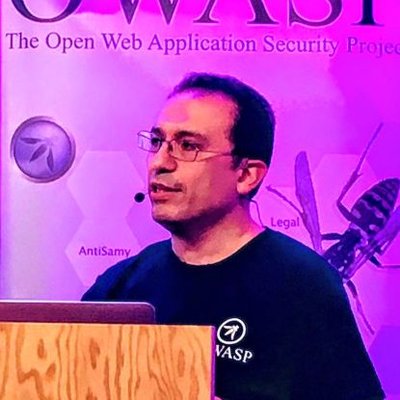
#OWASP Releases: Securing Agentic Applications V2 – A Builder & Defender’s Guide!
Defenders - learn how to block unsafe calls, stop runaway agents and test controls.
#AISecurity
👇
genai.owasp.org/resource/sec…


Lucc retweeted

A thread of early experiments with Claude Fable 5.2:
A 3D model of a cell, built entirely from code one organelle at a time. Built by @kevin_t_ngo.
Lucc retweeted

One of my blackboards from this semester’s Data Sciences course: explaining the asymptotic consistency of the maximum likelihood estimator. I’m teaching it in English this year—should I put the whole course on YouTube? :)

Lucc retweeted

Introducing: 0 - the open-source AI security harness by @0securitylabs (YC F26).
It found 30+ Linux kernel 0-days. Then we got backed by @YCombinator
> Found vulnerabilities in software running on 3+ billion devices & government code from 🇨🇭🇮🇹🇪🇺 + Wireshark, node-forge & jsonata
> Full-stack pentesting: from web apps & APIs down to binaries & kernels
> Multi-model, Reverse engineering, web interface + CLI and MCP for agents.
> Security Workflows: parallel agents investigate, reproduce vulnerabilities & test fixes
Use it with your coding agent:
github.com/0sec-labs/0