

sociologist/criminologist AP @HamlineU. PhD @UMNsociology. Crime, punishment, inequality, quant.
Minneapolis
Joined February 2011
- Tweets1.2K
- Following490
- Followers387
- Likes2.1K







Ryan Larson retweeted

People dunking on this saying that TWFE is just fine are omitting an important detail that these are from “top 5” -- papers that have been vetted for identification, passed several robustness checks, gone through several rounds of reviews, and then gone through.


Ryan Larson retweeted

This paper extends difference-in-differences methods to settings with non-binary treatments and #heterogeneous effects. The #framework allows researchers to estimate #dose-response relationships when treatment intensity varies over time and across units. spkl.io/60177Vc8R

Ryan Larson retweeted

Please enjoy!
Writeup: dropbox.com/scl/fi/ago5vsi89…
Repo: github.com/peterdhull/twfe-r…
Planning to expand to other journals soon


Ryan Larson retweeted

Nature research paper: Banking records reveal characteristics of financial abuse
go.nature.com/46HkdT7

Ryan Larson retweeted

He fit the same statistical models with three different software and got much different estimates. It’s another dimension of the multiverse.
statmodeling.stat.columbia.e…
Ryan Larson retweeted

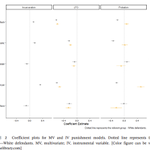
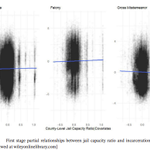
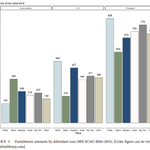
New in Criminology! Punishment as a racialized package of confinement, cash, and surveillance. By @ryanplarson, Rob Stewart, @Veronica_L_H, and some old guy. This detailed thread by Ryan show ‘n tells the story.

New paper out in Criminology w/ Rob Stewart, @Veronica_L_H , & @chrisuggen
We model punishment more closely as it is experienced by defendants - a constitutive package of incarceration, probation, and monetary sanctions.
onlinelibrary.wiley.com/doi/…

Ryan Larson retweeted

New in Nature Human Behaviour: How Deceptive Online Networks Reached Millions in the US 2020 Elections
-Reached at least 37M Facebook and 3M Instagram users
-3 networks out of 49 responsible for >70% of users reached
-Exposed users older, more conservative


Ryan Larson retweeted

@Nature has published three groundbreaking papers on reproducibility, analytical robustness, and replicability across the social sciences. Sincere thanks are due to the many folks who contributed to these projects. It’s painstaking work, and a great service to social science.


Ryan Larson retweeted

New Acemoglu et al. paper: AI may boost short-term decision quality but can erode the learning incentives that sustain collective knowledge in society, creating a risk of long-run knowledge decline or collapse.


Ryan Larson retweeted
New! How homicide changed in Minnesota’s Twin Cities after the police murder of George Floyd. Read @ryanplarson’s thread (and data viz) and/or our team’s new article in J of Quant Crim.

Fresh online in JQC (@SpringerCrim) w/ @jillkpeterson, @chrisuggen, and others! We use an ITS design to examine the changes in the Twin Cities in relation to the pandemic and the police murder of George Floyd. Finding summaries below!
Link here: link.springer.com/article/10…
1/n

Ryan Larson retweeted

"Breaking Bad: How Health Shocks Prompt Crime"
aeaweb.org/articles?id=10.12…


Ryan Larson retweeted
Juvenile Arrest as a Life Course Trap: Being arrested as a juvenile is associated with a 20-30 percentage-point drop in the likelihood of graduating from a 4-year college.
-Garrett Baker, David Kirk, & Rob Sampson, new in SocIology of Education journals.sagepub.com/doi/ful…

Ryan Larson retweeted

Comparing group means with t-tests is a common task in applied statistics, but the underlying logic is often hidden behind one-line function calls. infer enables tidy t-tests in R by expressing hypothesis testing as a readable, step-by-step workflow that fits naturally into tidyverse pipelines.
Useful when you want to:
✔️ Express t-tests as a clear sequence of inferential steps
✔️ Visualize null distributions and observed statistics
✔️ Emphasize reasoning and uncertainty rather than formulas
✔️ Keep hypothesis testing readable and consistent with tidyverse workflows
The visual below illustrates typical outputs from one-sample and two-sample t-tests using infer, taken from the official infer documentation. More details are available here: infer.netlify.app/
I regularly share practical tools and examples on statistics, data science, R, and Python in my newsletter.
Click this link for detailed information: eepurl.com/gH6myT
#datascienceenthusiast #rstudioglobal #Rpackage #tidyverse #RStats

Ryan Larson retweeted
We're mourning yet again in Minnesota — and struggling to square the gut-churning video of Alex Pretti's final moments with official accounts.
I teach about techniques of neutralization, so I made a simple slide on the DHS statement. Share if it's useful. nytimes.com/2026/01/24/us/mi…

Ryan Larson retweeted

Now out in Nature Human Behaviour! 🚀🚀
Over the past decades, research on collective human behaviour has relied heavily on networks. This is intuitive: people interact with other people.
However, we argue that this dominant framework misses a crucial ingredient.
Traditional networks represent agents as nodes and pairwise relations as edges. As a result, they fundamentally assume that social interactions can be decomposed into pairs.
Yet many social processes are irreducibly group-based.
A simple example: a group of three coauthors writing a paper cannot be reduced to three independent pairs of coauthors. The group itself matters.
In this article, we review a wide range of empirical and theoretical cases where group interactions cannot be decomposed into pairwise ones, and show that higher-order interactions shape collective behaviour above and beyond dyadic ties.
We advocate studying collective behaviour on hypergraphs, where interactions can involve multiple agents simultaneously.
We review how hypergraphs provide new insights across domains, including affiliation and collaboration networks, high-frequency contact settings (families, friends), and key social processes such as social contagion, cooperation, truth-telling, and moral behaviour.
Finally, we outline promising directions for future research: addressing computational challenges of higher-order models; studying bias and inequality in group dynamics; combining hypergraphs and large language models to investigate the coevolution of language and behaviour; and using higher-order networks to simulate the impact of policies before implementation; and others.
We are very excited about this work and hope it will inspire further research in a rapidly growing and fundamental area with broad real-world implications.
Link to the paper in the first reply
This work was brilliantly led by Federico Battiston (@fede7j), with an outstanding team of co-authors: Fariba Karimi (@fariba_k), Sune Lehmann, Andrea Bamberg Migliano, Onkar Sadekar (@OnkarSadekar), Angel Sanchez, & Matjaz Perc (@matjazperc)


Ryan Larson retweeted

📊I've uploaded the 3rd stats lab post:
"What is the Logic Behind a Two-Way Fixed Effects Analysis?"
It includes the meaning of control unit or/and time fixed effect with graphs and R codes.
idlhy0218.github.io/page%20b…
#rstats #econtwitter #soctwitter #dataviz
Ryan Larson retweeted
New! Survey experiment & interview study shows how narratives can reduce stigma of criminal via moral justification, social affinity signaling & information salience.
-@DJHardingSoc @mariassmithphd @_daeunjung S Luna-Lopez & @PandaGlazer in @CulturalSociol link.springer.com/article/10…
