

Area of interest- Proteomics and signalling pathways
Joined October 2010
- Tweets3.2K
- Following3.6K
- Followers585
- Likes5.8K



Pinned Tweet
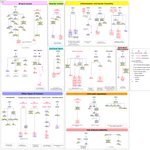
ProteoArk is a web-based tool that offers a range of computational pipelines for comprehensive analysis and visualization of mass spectrometry-based proteomics …
Source: ACS Publications search.app/PQ59uLoSgMTeFNa99

Dr. Rex Devasahayam Arokia Balaya, MPhil., Ph.D. retweeted

Online Now! Immunoids: Building immunocompetent organoids from human pluripotent stem cells dlvr.it/TVdHYM #stemcells

Dr. Rex Devasahayam Arokia Balaya, MPhil., Ph.D. retweeted

Can immunology still surprise itself? dlvr.it/TV8YM0
Dr. Rex Devasahayam Arokia Balaya, MPhil., Ph.D. retweeted

Introducing the BRaVa results browser v1! 🎉
1.2M+ individuals across 10 global biobanks
44 heritable, disease-relevant traits (and counting)
419M gene- & variant-level association tests
➡️ nikbaya.github.io/brava_brow…
Dr. Rex Devasahayam Arokia Balaya, MPhil., Ph.D. retweeted

Human organoids that mimic brain development grown for years in lab
nature.com/articles/d41586-0…
nature.com/articles/s41586-0… @Harvard @IreneFaravelli @BolanosAnton @ArlottaLab


Dr. Rex Devasahayam Arokia Balaya, MPhil., Ph.D. retweeted

How can one measure the speed of a ribosome?
One option is to use a microscope. Take some human cells and add 'loops' of RNA to them. Each loop has 321 codons and encodes ten copies of a small peptide, called a SunTag.
These RNA loops do not have a stop codon. Ribosomes in the cell grab onto them, begin translation, and then go around the loop again and again. Each time a ribosome completes one cycle, it makes ten SunTags.
As soon as a SunTag is made, it 'sticks' to the ribosome; there is no stop codon to trigger its release. Then, this SunTag gloms onto an antibody, fused to GFP, floating nearby.
As the ribosome goes around the loop, its chain of SunTag grows longer. More copies of GFP grab onto the peptide chain, and the perceived brightness of the ribosome, when viewed under the microscope, grows accordingly.
By measuring how quickly the ribosome's brightness changes, one can calculate its speed:
First, figure out the brightness of a single GFP. You can do this as a control experiment. Then, knowing that a single loop has 321 codons, and that this creates 10 SunTags, you can deduce that one SunTag (and thus one GFP) corresponds to 32 codons.
Finally, by watching the brightness change over time in steps, or chunks, and multiplying by 32, you can back-calculate to figure out how many amino acids are added by the ribosome each second. The answer, in this experiment, is 2.6.
Video below. Green is the GFP. Red is a tag for the RNA loops.
Dr. Rex Devasahayam Arokia Balaya, MPhil., Ph.D. retweeted

ヒトゲノム計画は、生命の設計図を読み解いた。次に地図化すべきは何か。一つの有力な答えが、細胞と細胞の会話だ。私たちの体は、単独で働く細胞の寄せ集めではなく、互いに信号をやり取りする関係のネットワークでできている。
Nature Biotechnologyの提案論文。Di Carloらは、どの細胞がどの細胞にどう影響するかを網羅的に調べる、ヒト細胞間インタラクトームの機能地図づくりを掲げる。第一歩として構想するのがBillion Cell×Cell Project。単一細胞の解析や空間プロファイリング、高速の細胞選別、遺伝子編集、AIを束ね、数十億規模で細胞ペアの相互作用を体系的に測ろうというものだ。
病気の多くは、細胞どうしの対話の乱れから起きる。その関係を読めれば、免疫やがん、再生の治療設計が変わる。壮大だが、目の付けどころが正しい。※これは実データでなく提案・構想の論文。実現には技術とコストの課題が残る。
出所:Nature Biotechnology(2026)Di Carlo ら Mapping and engineering the human cell–cell interactome(Billion Cell×Cell Projectの提案)
nature.com/articles/s41587-0…

Dr. Rex Devasahayam Arokia Balaya, MPhil., Ph.D. retweeted

Nature research paper: A compendium of next-generation patient-derived models for diverse cancers
go.nature.com/4q541UH

Dr. Rex Devasahayam Arokia Balaya, MPhil., Ph.D. retweeted

🧠New NIH-funded research has uncovered an aspect of human brain aging that reshapes our approach to age-related cognitive decline and dementia risk.
This knowledge will be critical as we work toward developing earlier detection methods and more effective treatments.
Read the full NIH news release ➡️ nih.gov/news-events/news-rel…
Dr. Rex Devasahayam Arokia Balaya, MPhil., Ph.D. retweeted

The human genome may be hiding thousands of unknown proteins. Researchers identified and named these microproteins - overlooked molecules with potential roles in disease & drug discovery.
👇 Learn more about these "peptideins" here 👇
nature.com/articles/d41586-0…
Dr. Rex Devasahayam Arokia Balaya, MPhil., Ph.D. retweeted

WES, WGS, what? Considering whole exome sequencing (WES) or whole genome sequencing (WGS)?
This great article featuring input from our CEO and co-founder (and chemist!) @EmilyLeproust has some fantastic tips for making the right choice: biocompare.com/Editorial-Art…

Dr. Rex Devasahayam Arokia Balaya, MPhil., Ph.D. retweeted

What's a ribosomes’ role in deciding cell fate? More than we knew med.stanford.edu/news/insigh…

Dr. Rex Devasahayam Arokia Balaya, MPhil., Ph.D. retweeted

Forgotten myeloma history series #1
I see PANGEA and other models to predict risk of progression in smoldering myeloma based on evolving changes in M protein and hemoglobin during follow up.
But sometimes history is forgotten. We showed this 10 years ago almost to the date. Our model is the simplest and doesn’t need calculators:
0.5 gm/dL increase in M protein occurring concurrently with 0.5 gm/dL drop in hemoglobin qualifies as high risk SMM with >80% risk of progression in 2 years.
If the marrow is 20% or more, the risk is >90% in 2 years.
@PrafulRavi1 @Leif_Bergsagel @Rfonsi1 @BloodCancerJnl
nature.com/articles/bcj20166…

Dr. Rex Devasahayam Arokia Balaya, MPhil., Ph.D. retweeted

Singapore offers a generous package for Visiting Professorships. If you are excited about AI in biology and would like to join us at the @astar_gis for 20% of your time, contact me directly. We plan to tightly integrate AI with wet-lab experiments for training and validation.
The Visiting Professorship is open to AI researchers (either in academia or industry) who currently reside outside Singapore. The requirements for the Visiting Professorship are as follows:
A willingness to engage meaningfully with Singapore, including a commitment to spend at least 20% of time to support the collaboration, of which a substantive amount of time should be spent physically in Singapore.
The deadline is soon!! Please share!!!
Dr. Rex Devasahayam Arokia Balaya, MPhil., Ph.D. retweeted

Scientists from MSK and @WeillCornell found that a small subset of T cells, called stem T cells, are responsible for making new T cells and continuously replenishing them in chronic disease.
"We've identified what we believe is a fundamental mechanism, one that the immune system uses broadly to sustain itself in chronic disease," says MSK cancer immunologist Dr. Andrea Schietinger.
Learn more: bit.ly/3TgSLbb

Dr. Rex Devasahayam Arokia Balaya, MPhil., Ph.D. retweeted

We've been reading 2% of the book. Only ~1–2% of the human genome codes for proteins. The rest, enhancers, transposable elements, pseudogenes, non-coding RNAs, was long dismissed as "junk." A new review reframes this dark genome as a major driver of cardiovascular disease, and an emerging therapeutic frontier.
From anti-miRs already in clinical trials for heart failure to lncRNAs targeting cardiac fibrosis: the 98% is finally speaking. Read more in #EHJ.
doi.org/10.1093/eurheartj/eh…
#darkgenome #cardiotwitter @ESC_Journals @escardio

Dr. Rex Devasahayam Arokia Balaya, MPhil., Ph.D. retweeted

This 17 page pdf reveals the same technique Hedge Funds like Jim Simons' Renaissance Technologies use to find signal through noise.
Stanford released the complete Hidden Markov Model framework for everyone to use it.
Bookmark it before someone takes it down:

Dr. Rex Devasahayam Arokia Balaya, MPhil., Ph.D. retweeted

Why does p53 oscillate ?
🔊


The presentation by Prof. Galit Lahav at #SCP2025 is on YouTube:
Information Transfer through Integration of Protein Dynamics and Modifications
youtu.be/ORsczxZXqU0?si=cw0-…
Dr. Rex Devasahayam Arokia Balaya, MPhil., Ph.D. retweeted
Preprints don’t change much after peer review — and are rarely retracted.
go.nature.com/3R05ZZj
Dr. Rex Devasahayam Arokia Balaya, MPhil., Ph.D. retweeted
General purpose AI tools for science, such as Claude Science, promise to accelerate research. But which is right for you?
go.nature.com/4fqI0vA

Dr. Rex Devasahayam Arokia Balaya, MPhil., Ph.D. retweeted

Gut microbiota alters drug metabolism and therapeutic outcomes
This review systematically summarizes cutting-edge progress in microbiota-modulated drug metabolism and assesses microbe-targeted approaches to enhance clinical drug performance.
cell.com/cell-host-microbe/f…
