

Investing and Trading. For information and education only, not investment advice.
Weekly Recap →
Joined July 2022
- Tweets744
- Following794
- Followers18.5K
- Likes998




QuantSeeker retweeted

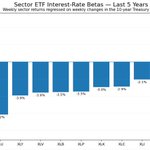
Never mind the reflecting pool, what about pooling statistical estimates for portfolio optimisation?
qoppac.blogspot.com/2026/06/…
QuantSeeker retweeted

BETA-ARBITRAGE RETURNS AND STOCK MARKET BUBBLES
Beta arbitrage, or “betting against beta,” is a strategy that invests with leverage in low-beta stocks and hedges the resulting beta risk with a smaller short position in high-beta stocks. Andrea Frazzini and Lasse Heje Pedersen (2013) have written about this strategy extensively.
When beta arbitrage loses money is an interesting question. There are two main environments in which beta arbitrage produces losses. The first is when banking balance-sheet constraints become more binding and money gets unexpectedly “tighter.” In those situations, the stock market declines, and low-beta stocks decline more than their ex-ante betas would suggest.
The second loss scenario for beta arbitrage is a rapidly inflating stock market bubble. In a rapidly inflating stock market bubble, the market goes up, and the high-beta stocks go up even more than their ex-ante betas would suggest.
Why is that? As investors abandon present-value discipline, sideline investors rush in, and the market attains extreme overvaluation (bubble steps 4, 5, and 6), the bubble stocks begin driving the whole market. This bubble inflation, in turn, causes the bubble stocks’ returns to be high and their already high betas to increase further. The beta-arbitrage strategy that hedges non-bubble-stock longs with bubble-stock shorts loses money in this process.
We can also invert the process. If the beta-arbitrage strategy has recently lost money in an up market, the probability of a bubble is higher, ceteris paribus. The graphs below from AQR’s site, augmented with some SPLV and SPHB ETF returns, show clearly how the beta-arbitrage, or BAB, strategy lost a ton of money during the late-1990s telecom-media-technology bubble.
So far, we are not seeing similar extreme beta-arbitrage losses in the current bull market, making it, in my subjective opinion, less likely that we are deep into bubble territory yet. (A caveat: I just half-assed the last couple of months of returns from ETFs. Better data will come with their next update.)


THE LIFE CYCLE OF A BUBBLE
1. A genuine advancement creates real productivity gains. A real technological or economic improvement increases productivity and leads to genuine revenue and earnings growth.
2. Stock prices leak into reported profitability. Rising stock prices improve reported earnings, financing conditions, collateral values, and perceived business performance.
3. Reported profitability drives real investment. Companies increase hiring, capital spending, construction, expansion, and speculative investment because of their own or their customers’ reported profitability.
4. Bubble beliefs and abandonment of present-value discipline. Investors stop focusing on discounted cash flows and begin relying on continuing gains from the greater fool theory, believing they can sell later at a higher price.
5. Inflows from sideline investors. Previously cautious investors enter the market in large numbers. New money from existing and new investors participation drive prices higher.
6. Extreme overvaluation. Prices rise far above historical normal multiples of reported fundamentals, even ignoring the fact that reported fundamentals have been driven by rising stock prices.
7. Issuance. Companies take advantage of high valuations through IPOs, secondary offerings, stock-based acquisitions, SPACs, and insider selling.
8. Exhaustion of inflows. The flow of new investors starts shrinking while existing investors approach their risk and leverage limits. Volatility and dispersion grow and gains become less uniform across stocks.
9. Earnings disappointments from slowing price appreciation. As stock prices stop rising rapidly, the earlier boost from higher valuations into earnings weakens or reverses. Companies begin missing expectations.
10. Stock-price collapse with high volatility. Confidence in both the fundamental growth and in the greater fool theory break down and prices fall sharply. Volatility rises further as leverage unwinds.
11. Bear-market rallies and progressively greater exhaustion. Bargain hunters and frustrated latecomers repeatedly buy the dips, creating violent temporary rallies that fail. Markets make lower highs and lower lows.
12. Capitulation, abandonment, and normalization. Bubble participants eventually give up in disgust or exhaustion. Volatility falls, valuations normalize, and the market returns to more ordinary behavior.

QuantSeeker retweeted
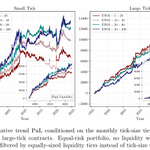
qoppac.blogspot.com/2026/06/… two blog posts today, going a bit hyper clearly...
QuantSeeker retweeted
A new Research Recap is out. Topics include:
➢ Crypto options
➢ LEAPS
➢ Risk parity
➢ Predicting vol
➢ Great blogs, industry research & podcasts
➢ ...and much more.
quantseeker.com/p/weekly-res…

QuantSeeker retweeted

Inside Two Sigma & AQR with Bill Mann: How Early Quants Built Edge Before the Modern Tools Existed
Bill Mann spent nearly 11 years across two of the world's most elite quant funds — AQR & Two Sigma — rising to Senior Vice President while building alpha models, establishing quantamental research teams, & designing the ML/AI systems that powered their forecasts.
"A real edge you used to have 15 years ago was creating your own version of someone else's data."
We cover:
- How Two Sigma's fundamentals team built proprietary data pipelines before vendors existed
- Why point-in-time databases were a secret weapon — & how look-ahead bias destroyed competitors
- The crowding problem hiding inside everyone's favorite value factor
- LLMs in quant research: what agents can already replace & what still requires human intuition
- Why junior quants are at risk — & the one mindset that keeps senior researchers irreplaceable
- How HarmoniQ Insights pivoted from advising buy-side firms to backing fintech startups with sweat equity
- The New Barbarians thesis: crypto natives meeting old Wall Street, & why both sides need each other
- Bill's one piece of advice for aspiring quants: build your own model, put real money behind it, learn from the losses
Timestamps:
00:00 Intro
00:57 Life as a Quant at Two Sigma
02:36 Finding Edge in Fundamental Data
07:04 Creating a Creative Quant Research Culture
11:19 How LLMs Change Quantitative Trading
15:52 AI’s Impact on Junior Quant Careers
22:56 Using AI Tools for Learning
23:57 HarmoniQ Insights: Advising Fintech Startups
30:47 The New Barbarians Podcast Explained
33:26 Crypto and Market Makers vs TradFi
34:54 Career Advice for Aspiring Quants
38:46 Final Takeaways
QuantSeeker retweeted

DeepSeek founder Liang Wenfeng’s quantitative hedge fund generated returns of more than 50% last year bloomberg.com/news/articles/…

QuantSeeker retweeted
Trends, Secular Trends, and Trend conversion
qoppac.blogspot.com/2026/01/…
QuantSeeker retweeted

𝐇𝐞𝐫𝐞’𝐬 𝐭𝐡𝐞 𝐭𝐚𝐛𝐥𝐞 𝐭𝐡𝐚𝐭 𝐠𝐞𝐭𝐬 𝐭𝐡𝐞 𝐦𝐨𝐬𝐭 𝐥𝐨𝐯𝐞. Early estimated hedge fund returns. 𝐐𝐮𝐢𝐜𝐤 𝐫𝐞𝐦𝐢𝐧𝐝𝐞𝐫: it’s skewed toward larger funds and not a ranking, just based on preliminary numbers confirmed with sources. Story: bloomberg.com/news/articles/…

QuantSeeker retweeted

There has been a lot of talk about how to use AI in investing.
This week, we sit down with someone who is actually using it to build real-world strategies.
We talk to Pictet Head of Quantitative Investments David Wright about how he and his team do it.
youtu.be/cpsI13lulQY

QuantSeeker retweeted
Inside the ‘rolling thunder’ quant crises of 2025 - ft.com/content/4300b622-42b2… via @FT

QuantSeeker retweeted

My colleagues Antti and Thom finish their series Understanding Return Expectations on a high note (and one admittedly in AQR’s wheelhouse). Part 10 focuses on Diversifying Alternatives — the oft-underappreciated liquid alternatives that are actually diversifying — while relegating the all-too-popular-and-not-so-diversifying illiquid alternatives to an appendix. If only more investors did the same…
The weblinks for the paper is here: aqr.com/Insights/Research/Wh…
The whole series can be found here: aqr.com/Learning-Center/Unde…
The CFA Institute Research Foundation will publish the whole series in a monograph in 2026.

QuantSeeker retweeted
A great explanation of how AQR’s trend following that has (again) done great this year is different from the standard trend following that has (again) suffered this year:
m.youtube.com/watch?v=VFb9TI…

QuantSeeker retweeted
Apropos of a recent discussion
qoppac.blogspot.com/2025/11/…
QuantSeeker retweeted

🚨 The 2025 Open Source Asset Pricing data release is live! This year, we carefully translated the Stata code to Python (30k lines). This makes maintenance easier and shows our commitment to producing the highest quality dataset out there. We also have a few bonus features 🧵

QuantSeeker retweeted

Terrific interview with @rjpjr12 (Jerry Parker). He talks about the Turtle Trader days and provides a lot of great details about his trading methods and philosophy. podcasts.apple.com/us/podcas…

QuantSeeker retweeted
The latest Weekly Research Recap is out. This week's topics include:
➢ Volatility Forecasting
➢ Lead-Lag Predictability Across Stocks
➢ Survey of LLMs in Quant Investing
➢ Predictability from Order Flow
➢ Great Blogs and Podcasts
➢ ...and much more.
quantseeker.com/p/weekly-res…

QuantSeeker retweeted

Beyond Factors: Reimagining Quant Equity for the Modern Era (S7E23)
In this episode, I speak with Jay Rajamony, Director of Alternatives at Man Numeric.
Jay has been with the firm since 2004, giving him a front-row seat to the evolution of quant equity: from simple factor models and broad signals to today’s world of alternative data, model ensembles, and human-machine collaboration.
We start with the history: what’s changed in quant over the last two decades, why the 2007 quant quake still matters, and how the definition of “alpha” has shifted alongside new tools and data.
From there, we explore the interplay between factors and macro regimes, how sparse datasets are reshaping the research process, and what it means to manage risk in a world where your models don’t always line up with reality.
Jay also offers a compelling perspective on how modern quant investing isn’t just about signal breadth anymore—it’s about firm breadth, organizational design, and knowing when to lean in and override the machine.
Please enjoy my conversation with Jay Rajamony.

QuantSeeker retweeted

“All Days Are Not Created Equal: Understanding Momentum by Learning to Weight Past Returns” by Beckmeyer & Wiedemann -> sciencedirect.com/science/ar…
@quantseeker weekly recap

QuantSeeker retweeted
Resolving three competing explanations for why trend following performance has been decaying qoppac.blogspot.com/2025/10/…