

crypto hft - usually wrong about everything
Joined November 2017
- Tweets2K
- Following956
- Followers12.7K
- Likes14.8K




For those who don’t understand why I say this, win rate only really means something alongside the magnitude of your wins and losses.
If I make $1 on every positive trade but lose $100 on every negative trade, a 92% win rate still means I’m losing money despite the very high win rate.
On the contrary, if I lose $1 on every negative trade but make $100 on every winning trade, a 10% win rate still means I’m profitable.
Without any edge, the magnitude of your losing trades is expected to offset the winning trades in proportion to how often each happens, plus a little more lost to spreads, fees, slippage and/or adverse selection.
Unfortunately, this isn’t something you get to choose. You can’t just play with the asymmetry between your take profits and stop losses and fabricate positive expectancy out of nowhere.
If you want a very high win rate, it’s as simple as taking profit very tightly while setting your stop losses very loosely. You’ll win very often, but when you lose, you’ll lose much more.
On the contrary, you can set your take profits very wide and your stop losses very tightly. You’ll have a much lower win rate, but your wins will be much larger than your individual losses.
You should always remain skeptical of the opinions of a turkey.


You can have a 92% win rate and still lose money.
You can have a 10% win rate and still be profitable.
Win rate tells you absolutely nothing about how good or bad a trader is.

86% win rate on my trades since 2024 on Hyperliquid
Last 30D performance is 92%
Data from @hypurrdash

This must hit pretty hard if you know nothing about the markets.
I’m here to tell you that you can easily achieve a ~90% win rate if you just set your stop losses 10 times as far away from your take profits, and you’ll likely still lose money.
You can trick the math however you like, but there’s no substitute for edge if you want to make money trading. Don't fall for this BS.
Quant retweeted

“If you can find traders that don’t want to trade but need to trade, those are great people to trade
against.”
@quant_xbt joins the Insilico Terminal Podcast to talk about building a crypto HFT business, finding
repeatable edges, and adapting as competition catches up.
We covered running HFT in JavaScript, trading against forced flows, exchange risk, and why even automated
strategies still need human judgment.
00:00 Intro and Early Crypto Trading
05:55 Finding the First Arbitrage Edge
11:31 Running HFT in JavaScript
19:17 Finding Edge Across Exchanges
25:19 Consistent Returns and Hidden Risks
33:53 Research, Automation and In-House Data
38:14 Quant vs. Discretionary Trading
45:29 Volatility, Forced Trading and Finding Edge
51:33 Bitcoin Conviction and Why Altcoins Fail
Thanks @Sokio8D for having me on the podcast!

“If you can find traders that don’t want to trade but need to trade, those are great people to trade
against.”
@quant_xbt joins the Insilico Terminal Podcast to talk about building a crypto HFT business, finding
repeatable edges, and adapting as competition catches up.
We covered running HFT in JavaScript, trading against forced flows, exchange risk, and why even automated
strategies still need human judgment.
00:00 Intro and Early Crypto Trading
05:55 Finding the First Arbitrage Edge
11:31 Running HFT in JavaScript
19:17 Finding Edge Across Exchanges
25:19 Consistent Returns and Hidden Risks
33:53 Research, Automation and In-House Data
38:14 Quant vs. Discretionary Trading
45:29 Volatility, Forced Trading and Finding Edge
51:33 Bitcoin Conviction and Why Altcoins Fail


If you think the only reason quants and other experienced traders criticize trading course sellers is that they don’t want you to succeed, you’re only half right. You’re also missing something fundamental about how markets work.
If you only look at prices and charts, it’s easy to forget that markets are just people buying and selling something at a certain price and quantity.
This makes it easier to understand where trading PnL comes from. You either make money at the expense of the market (someone taking the other side) or lose money to them.
By taking either side of a trade, you’re betting that the market (someone) is wrong to trade against you at that price.
But wait, if the person on the other side is also trying to make money trading, why are they letting you trade against them? Couldn’t they refuse to trade with you if they didn’t expect to make money at that price? Doesn’t it make more sense for them to trade with you only at prices they think are profitable for them?
Yes, exactly. They’ve been doing that all day against other traders like you.
But you’re better than the other traders. You bought a trading course from the hottest trading influencer on YouTube, and you know exactly what to do when that chart setup appears. So you place a trade.
But wait, isn’t this the hottest trading influencer on YouTube? Doesn’t that mean other people are looking at the same trade? Even if nobody else has bought the course, wouldn’t the course creator at least know about this trade?
Wouldn’t he be incentivized to put as much size as he could into the trade? It’s free money, after all.
Now let’s go back to the people on the other side. They also want to make money and know they risk losing it by trading against you. They’re now seeing “a guy” trading heavily against them. Wouldn’t it be smart to raise their prices until they’re comfortable trading with him again, “just in case”?
There has to be a price high enough that even the most bullish signal wouldn’t justify buying anymore.
But you’re better than your course seller. You automated his signal, and now even he can’t get into the trade because you’re already trading it in size. It’s free money, after all. Why wouldn’t you?
What a sucker. You paid $1,000 for his course, and now you’re making $2,000 per trade.
But wait, what if the guy trading against you also bought the same course? What if, as soon as “the big signal” appeared, he stopped trading at the old price and was only willing to trade at a price favorable to him?
If he consistently lost money trading against course buyers, he’d be out of business pretty quickly. Eventually, you’d only be trading against fellow course buyers who know what the good prices are and won’t sell to you at those prices.
Trading is a zero-sum game where a lot of smart people are placing bets against each other. The fastest and smartest have survived making those bets every day against people who think they can beat them.
Yet they’re still here.
This isn’t to say you can’t make money trading. You absolutely can, but trading isn’t a game with infinite capacity. You can’t keep scaling your profits, let everyone else do the same using your ideas, and expect the other side to keep losing money forever.
If you’re net profitable, that means the market is losing money against you. You wouldn’t want the people on the other side to know what’s hitting their bankroll.
So you trade for yourself, with as much capital as you can gather, until someone else finds the same trades and puts their own capital into them. Suddenly, the trades stop working for you and everyone else because you’ve collectively bankrupted the hen that was laying the golden eggs.
Maybe the course seller would’ve been better off collecting those eggs for himself instead of sharing them with you. Unless, of course, he never had a hen that laid golden eggs, and all he wanted was for you to believe he had one and was going to share it with you.
Unless you’re fully deployed, you don’t want to share your trades with anyone, let alone the thought process or information that justified your bet against the price the market is offering.
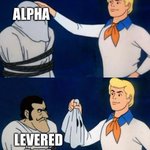
I don’t know this guy. He might be profitable, or he might not. What I do know is that alpha is scarce, and when you have it, you exploit it until it’s gone. You don’t share it.
That alone should make you extremely skeptical of trading courses.
Unless, of course, they want you to pump their own book. In that case, sharing it works pretty well for them.

Hold 100k in a bank, and they’ll give you priority access and a concierge, but hold 1m in a crypto exchange and you’ll be lucky to get someone from support to say “hi” when you contact them. It’s wild how out of touch crypto is compared to tradfi.