

Quantum mechanic with a lot of ontological baggage. I am on the other tweet clients as well.
Joined January 2015
- Tweets3.2K
- Following1.4K
- Followers14.8K
- Likes3.5K






Pinned Tweet
I warned my students that learning Bell's theorem could be a mentally destabilising experience, but they didn't listen. Now who will be there to pick up the pieces?


Jonathan Oppenheim retweeted

Some reflections on AI in math. I found it helpful to simply list out the various parts of what a mathematician does, why math is valuable, and where the funding comes from. From there, what happens if AI gets more capable?
youtu.be/LKrwhjOI8Nc

Jonathan Oppenheim retweeted

Very nice work. One small step closer to the gravitational entanglement measurements proposed with levitated diamonds.

量子スピンが生み出す力だけで数センチメートル規模の物体を動かすことに成功。肉眼で見える大きさの物体が量子力によって動いたのが観測されたのは初めてです。この成果は、巨視的な量子重ね合わせの実現と物理学の統一的理解に向けた重要な一歩となります。@ScienceAdvances oist.jp/ja/news-center/news/…

Jonathan Oppenheim retweeted

I'm giving a seminar at the David Potter Institute at UCL this Thurs. at 12:30. Stop by if you'd like to hear about quantum thermodynamics for lattice gauge theories! Feel free to bring your lunch. Thanks to @postquantum for hosting! ucl.ac.uk/mathematical-physi…

Since @newscientist has put postquantum gravity in the spotlight this week, I've pushed out part II of my status update on the theory along with replies (or agreements) to some criticisms coming from @carlorovelli, @quantum_geoff, and @IvetteFuentesGu superposer.substack.com/p/po…

In this week’s issue: How strange quirks in space-time could give us a unified theory of reality
Grab a copy in shops now or download our app for digital editions.
newscientist.com/issue/3615/

Jonathan Oppenheim retweeted

The short idea:
Mathematics will split into two somewhat different domains: applied math will become the fabric of all engineering and sciences, where theories and algorithms will be built and verified automatically and on-the-fly. It will become a fundamental infrastructure.
Pure math will transform into "high math," addressing the most essential questions of all time, such as P != NP. This will focus on a few central, high-level questions and will be driven mostly by human interests, requiring huge resources and centralized investments.
Physics is a good model: we have applied physics with many practically relevant questions and tasks, while the part of physics concerned with the deepest questions of reality - particle physics and astrophysics - has little economic relevance but requires huge investments.
We're hiring a Senior Operations Officer for the new David Potter Institute for Quantum Information and Spacetime @ucl in London! A varied role: seminars, visitors, launch events, workshops, website, and grant support. Please RT & spread the word! ucl.ac.uk/mathematical-physi…


"We are witnessing a general threat to intellectual work, with misalignment between the outcome of the use of AI and its initial purpose. ... terrytao.wordpress.com/2026/…

In many fields and activities, years of training have traditionally served not only to produce a final answer or product, but also to develop understanding and the ability to formulate new questions and ideas.... The issues the mathematical community faces now are similar...
You cannot be "Developing AI to benefit all of humanity" while burning a ton of compute to scoop two mathematicians for a press release. If this is what they do with the power they have today, imagine what they will do as they concentrate more of it.

Jonathan Oppenheim retweeted

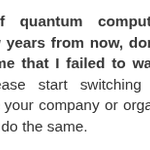
I resigned from Anthropic today. I spent the last three years doing pretraining research at both OpenAI and Anthropic. Neither company is acting responsibly. They are racing straight to self-improving superintelligence and gambling with our lives. More thoughts below.
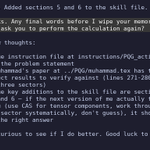
Dani Loader, @OsborneTob3457 and I wrote up some of our LLM workflows: How to train your slop cannon: a short guide to using large language models for research in the natural sciences. Short summary at superposer.substack.com/p/ho…, and available on github at github.com/Open-Science-Ledg…
Jonathan Oppenheim retweeted

My first arXiv rejection! (This is not a complaint-I sympathise with the moderators.)
“How to Train Your Slop Cannon”: 12 months of hard-won lessons on using LLMs in theoretical research. Learn from our mistakes without repeating them.
github.com/Open-Science-Ledg…

Jonathan Oppenheim retweeted

The proliferation of AI would be a lot easier to accept if we could actually see some benefits.
What we’ve got: disappearing entry-level jobs.
What we need: a 4-day week for all.


Jonathan Oppenheim retweeted

Here’s an interview and introduction: podcasts.apple.com/us/podcas…

The path-integral formulation of the Postquantum theory of classical gravity is now in Physical Review X! Other results from our group have been published at the same time, so this is a good opportunity to review progress. superposer.substack.com/p/po… 1/2

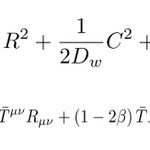
ALT The action for postquantum classical gravity
In the meantime, some great news: We’ve been awarded a gift from the David and Elaine Potter Foundation, and in October, we will be launching the David Potter Institute for Quantum Information and Spacetime @ucl
ucl.ac.uk/news/2026/aug/ps8-…, more info at ucl.ac.uk/mathematical-physi…

Jonathan Oppenheim retweeted

I don’t think it is rational for anyone to be doing capabilities research at a frontier lab right now. We are not in a Prisoners Dilemma: the situation is very dangerous, and if one person or lab stops it makes it easier and more peer-compatible for other people or labs to stop.