

Fill more saturate than 3ver but Now I like to take Notice of the Bhavior and ch4racter of a person,WhAT into psychology, Techno,n Information.#forzamilan
NeverLand
Joined October 2009
- Tweets2K
- Following1.4K
- Followers275
- Likes709



рфонех➿ 🇵🇸 retweeted

🇹🇭 Thailand, 🇹🇼 Taiwan, 🇷🇴 Romania, 🇻🇳 Vietnam, 🇮🇳 India, 🇮🇩 Indonesia, 🇬🇷 Greece, 🇦🇿 Azerbaijan, 🇰🇿 Kazakhstan, 🇫🇷 France
If a shock hits… How resilient are (countries) banks?
These charts measure banks’ liquidity resilience under stress.
The black line shows the stress factor at breakeven, how large a sudden funding outflow a bank can absorb before its liquid assets run out. Higher is better. The bars show inflows and outflows relative to liquid assets and funding liabilities.
First, bank liquidity resilience from strongest to weakest, then details
🇰🇿 Kazakhstan
🇷🇴 Romania
🇬🇷 Greece
🇮🇳 India
🇮🇩 Indonesia
🇦🇿 Azerbaijan
🇹🇼 Taiwan
🇹🇭 Thailand
🇫🇷 France
🇻🇳 Vietnam
Thailand
Thailand sits in a solid mid-range. The stress factor is around 3.4–3.8, with a mild upward drift in the simple average toward the end of the period. They should be able to handle a moderate liquidity shock without immediate strain.

рфонех➿ 🇵🇸 retweeted
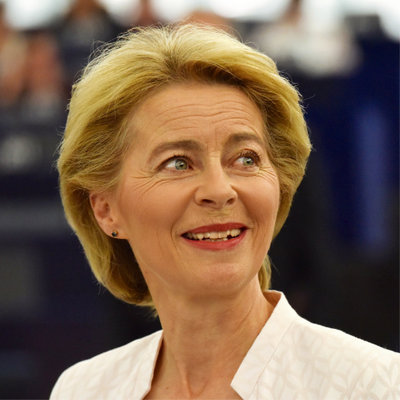
After 10 years of negotiations, we did it, @prabowo!
We have signed the EU-Indonesia Comprehensive Economic Partnership Agreement.
One of the most ambitious deals the EU has concluded in Asia, connecting 730 million people.
Terima kasih 🇪🇺🇮🇩
xitter.cf/i/broadcasts/2AMLvrgrK…

рфонех➿ 🇵🇸 retweeted
.
A hard-to-find ASEAN+3 chart, how effective U.S. tariffs evolved, all in one place
The estimated effective U.S. tariff rate on imports from ASEAN+3 went from 5.9% in 2024 to 38.8% on April 2, 2025, then fell to 13.4% by July 24, 2026. That’s well below the April spike, but still more than double the 2024 rate.
That regional average hides some striking differences
China and Hong Kong jumped to 51.2% and 49.3% on April 2, 2025. By July 2026, they were down to 14.2% and 8.9%.
South Korea went from 0.2% in 2024 to 16.0% in July 2026, the highest among the individual economies shown at that point. Japan went from 1.5% to 14.6%.
Thailand, Vietnam and Cambodia ended July at 13.9%, 12.6% and 12.2%, respectively. The Philippines, Indonesia and Malaysia were lower, at 10.9%, 9.6% and 9.4%.
Laos and Myanmar stand out in the other direction. Both exceeded 40% in April 2025, but their July 2026 estimates were 0.1% and 1.0%.
So ...
The April spike faded, but most economies in the chart still faced higher effective rates in July 2026 than in 2024.
These are trade-weighted effective rates, not a single tariff applied to every product.
Source: @amro_asia

рфонех➿ 🇵🇸 retweeted
.
GRID, GRID, GRID
The cost of delaying the ASEAN power grid
Southeast Asia has a plan to connect its national power grids into one regional network, the ASEAN Power Grid. Delaying that integration comes with a steep price.
Economic cost
1-year delay: $2.62 billion
2-year delay: $6.90 billion
5-year delay: $13.75 billion
Extra gas consumption
1-year delay: 12.13 bcm (equivalent to 78 Q-Max LNG carriers)
2-year delay: 31.77 bcm (203 carriers)
5-year delay: 54.94 bcm (352 carriers)
Emissions increase
1-year delay: 42.1 MtCO₂
2-year delay: 50.0 MtCO₂
5-year delay: 71.4 MtCO₂
A five-year delay could cost ASEAN nearly $14 billion, add almost 55 bcm of extra gas demand, and raise emissions by 71.4 million tonnes of CO₂.
Delays don’t just slow the energy transition, they lock the region into higher costs and more fossil fuel dependence.

рфонех➿ 🇵🇸 retweeted
❗️❗️❗️
We’ve all been talking about quantum computers.
But what about the QUANTUM INTERNET?
Here’s what it actually is, and why it matters (via BofA Global Research):
1. What is it?
A network of quantum devices that can send and receive information encoded in quantum states. It lets two (or more) quantum computers exchange quantum information directly.
2. Not a faster internet
It’s not a replacement for the classical internet or just a faster version. It solves problems that the classical internet simply cannot handle because of exponential complexity.
3. Connection becomes computation
Through entanglement, distant quantum systems can be linked into one larger computing system. This scales computing power exponentially, creating a shared, infinite space of possibilities.
4. Completely different hardware!
- Quantum channels: Fiber or free-space optics that carry single photons
- Quantum memory: Stores the quantum state of a photon without destroying it
- Quantum repeaters: Amplify signals and reduce errors over long distances (still a major technical bottleneck)
While most of the hype is around individual quantum computers, the real long-term prize may be connecting them.

рфонех➿ 🇵🇸 retweeted

Gimme three months and his golf buddies in Florida wouldn’t even vote for him.
I’ll smoke him by 7. Bet on it.

🚨BREAKING: Republicans' odds to flipping the Michigan US Senate seat JUMP OVERNIGHT.
Michigan - 2026 US Senate
🟥Mike Rogers 44.3% (+3.7)
🟦Abdul El-Sayed 40.6%
Polling average via Pollsmax.com.
Abdul El-Sayed has become the Democratic frontrunner, and compared to his primary opponents—Mallory McMorrow and Haley Stevens—he performs by far the worst against Mike Rogers.
If El-Sayed ends up being the nominee, Republicans will be the heavy favorites to flip Michigan's US Senate seat later this year.

рфонех➿ 🇵🇸 retweeted
🇬🇧
London is turning the River Thames into an energy asset
Two major developments are underway:
1. Electric vessels: The UK’s first fully electric passenger ferry, the Orbit Clipper, has already started operating between Canary Wharf and Rotherhithe. It carries 150 passengers + 100 bikes with zero emissions.
A broader project called Electric Thames (led by UK Power Networks) has studied 62 commercial vessels on the river. They currently use the equivalent of 10 million litres of diesel per year. The plan includes charging infrastructure at riverside sites and even vessel-to-grid technology so boats can act as floating batteries.
2. Heat from the Thames: The London Strategic Heat Main has received £41.6 million in government funding. It will carry low-carbon waste heat (mainly from Cory’s energy-from-waste plant in Belvedere) more than 25 km into central London via tunnels under and alongside the river.
Target: heat for up to 650,000 homes. While the tunnel is built, electric barges will carry hot water along the Thames starting from 2028.
The river is no longer just a transport route, it is becoming part of London’s low-carbon energy system
Source: @EnergyInstitute

рфонех➿ 🇵🇸 retweeted
.
Two important economic indicators, two surprising results in ASEAN+3!
** Headline inflation vs food/fuel inflation
** Exchange rates
Two charts from AMRO reveal interesting developments in inflation and exchange rates across ASEAN+3 economies in 2026.
1. Inflation: Fuel prices are rising much faster than overall inflation.
By the latest observation in the chart
Fuel inflation: 4.1%
Food inflation: 3.0%
Core inflation: 1.4%
Headline inflation: 1.3%
Fuel inflation briefly approached 6% in April–May 2026 before declining. Despite higher food and fuel inflation, overall inflation remains relatively low. This suggests that price pressures are concentrated in certain categories rather than being equally strong across the economy.
2. Exchange rates: South Korea stands out!
The second chart tracks exchange rates against the US dollar, with December 31, 2025 = 100.
A higher index means the local currency has depreciated against the dollar.
By early September 2026
🇰🇷 South Korea: The won shows the strongest depreciation, with the index rising to around 107.
🇨🇳 China: The yuan also depreciated, but much more gradually, reaching around 103–104.
🇯🇵 Japan: The yen experienced considerable fluctuations before ending near 102.
ASEAN-5: The group's average remained below 100, indicating a modest appreciation against the dollar.
What makes these two charts interesting?
Inflation remains relatively contained across ASEAN+3, even as food and fuel prices increase. At the same time, currencies are moving in very different directions. South Korea has experienced a particularly sharp reversal from appreciation earlier in the year to depreciation by September.
Notes: Inflation figures are year-on-year rates. The exchange rate data are as of September 10, 2026. ASEAN-5 and BCLMV exchange rate indices are simple averages of member economies' exchange rate changes. The inflation chart excludes Laos and Myanmar.
Source: @amro_asia

рфонех➿ 🇵🇸 retweeted
.
Curious about how much Chinese value added is hidden in each ASEAN country's exports to the US?
1. Chinese value added in total exports to the US
🇰🇭 Cambodia: Around 26%
🇻🇳 Vietnam: Around 21%
🇹🇭 Thailand: Around 8%
🇮🇩 Indonesia: Around 7.5%
🇸🇬 Singapore: Around 7%
🇲🇾 Malaysia: Around 8%
🇵🇭 Philippines: Around 5%
ASEAN average: Around 12%.
Cambodia and Vietnam stand out. A significant share of the value of their exports to the US originates in China.
2. The picture is even more interesting for electrical and optical equipment.
🇻🇳 Vietnam: Around 28%
🇵🇭 Philippines: Around 15%
🇲🇾 Malaysia: Around 12%
🇹🇭 Thailand: Around 11%
Vietnam's share increased sharply, particularly after 2017, reaching almost 28% in 2024.
What does this mean?
Imagine Vietnam exports a $100 electronic product to the US. If Chinese value added accounts for 28%, approximately $28 of that export value was created in China, while the remaining $72 comes from Vietnam and potentially other countries.
This shows why changing the country of final assembly does not necessarily eliminate dependence on Chinese supply chains. One important distinction: Chinese value added is not the same as the value of goods shipped directly from China, nor does it prove that products are simply being re-exported through ASEAN.
Notes: Latest data shown 2024. Value-added trade statistics are usually published with a lag of one or two years.
Source: @amro_asia

рфонех➿ 🇵🇸 retweeted
.
ASEAN public debt: size vs burden
Singapore’s public debt is $1,134 billion.
That is almost as big as Indonesia, Thailand, Malaysia, and the Philippines combined.
The top three countries (Singapore, Indonesia, and Thailand) hold more debt than all the other ASEAN countries put together.

рфонех➿ 🇵🇸 retweeted

Design for 20 social housing apartments, just outside central Paris
A tight plan, and a shame the top right home lacks a balcony. But again, a benefit all living spaces are dual aspect.
By Atelier de Chézy Architecture


рфонех➿ 🇵🇸 retweeted
ASEAN Countries’ contribution to the bloc’s total GDP and absolute GDP figures (Billion USD, 2026 projections)
In the quoted post, we saw how citizens of ASEAN countries perceive the economic output generated by their nations. Here, however, we look at the actual shares each country holds in ASEAN’s total GDP.
As the map shows, the distribution is extremely uneven, spanning from nearly half the total to fractions of a percent.
Countries’ share in ASEAN’s total GDP
🇮🇩 Indonesia: 32.78%
🇸🇬 Singapore: 14.79%
🇹🇭 Thailand: 13.20%
🇲🇾 Malaysia: 12.12%
🇻🇳 Vietnam: 12.01%
🇵🇭 Philippines: 11.11%
🇲🇲 Myanmar: 1.84%
🇰🇭 Cambodia: 1.2%
🇧🇳 Brunei: 0.42%
🇱🇦 Laos: 0.41%
🇹🇱 Timor-Leste: 0.05%
Indonesia accounts for 32.78% of ASEAN’s total GDP, almost as much as Singapore, Thailand, and Malaysia combined.


.
Member States’ contribution to ASEAN’s long-term development and progress
Singapore leads by a wide margin, accounting for 64.4% of the contribution, followed by Indonesia at 41.0%.
Thailand (26.1%) and Malaysia (26.0%) form the next tier, while Vietnam contributes 14.4%. The remaining members, Philippines, Brunei, Cambodia, Laos, and Myanmar, each account for less than 10%.
The figures highlight the outsized role of Singapore and Indonesia in driving ASEAN’s long-term economic development relative to the other member states.
Source: @ISEAS

рфонех➿ 🇵🇸 retweeted
.
Indonesia’s success in increasing the added value of nickel should be in textbooks
Nickel is a metal hidden in rocks (called ore). People need nickel to make stainless steel and batteries for electric cars.
For a long time, Indonesia dug up the rocks and sold them cheap to other countries. Those countries melted the rocks and made the expensive products. Indonesia got the small and other countries got the big money.
Look at the left side of the chart. After 2014, Indonesia’s dark-blue bars almost disappear. At first this was hard. Some years the money from raw rocks went down. The Philippines kept selling a lot of raw rocks (the light-blue bars).
Now look at the right side of the chart. This is the melted, more valuable nickel. Around 2013, Indonesia’s bar was small (about $1–2 billion). After factories were built, the dark-blue bars grew.
By 2022–2023 they reached more than $20 billion, most of the whole ASEAN total.
The lesson is simple
If a country has a special treasure in the ground, it can earn much more by turning that treasure into something better before selling it.
Source: @LowyInstitute

рфонех➿ 🇵🇸 retweeted

Anak Krakatau, Sunda Strait, Indonesia
When I walked across Anak Krakatau some years ago, I stood on ground built in living memory over a magma system very much older than that. Rakata rose across the water, the surviving fragment of a mountain that collapsed in 1883, and beneath my own feet lay the child that grew up afterward in the same place, itself already broken and partly rebuilt by the time I arrived. The mechanism has not repeated. What keeps repeating is the outcome. A single magma supply, drawn from the subduction zone beneath the Sunda Strait, has driven every phase of construction here for as long as anyone has kept a record of it, but the ways the surface structure has failed have been genuinely different each time: a magma chamber emptying beneath a caldera roof in 1883, a young and overloaded flank sliding into the sea in 2018.
The first known collapse in this system happened long before anyone was counting years accurately. Sometime in the first millennium, by tradition around 416 or 535 CE, though neither date rests on solid evidence, an older volcanic edifice collapsed and left behind a caldera some seven kilometres across. Little more than that can be said with confidence about the event itself. Its rim survives today as Sertung and Panjang, once Verlaten and Lang Island to Dutch surveyors. New cones, Rakata, Danan and Perbuwatan, grew up afterward inside that caldera and merged, over time, into the single island that stood here through most of the nineteenth century.
That island did not last. Eruptive activity began at Perbuwatan on 20 May 1883 and reached Danan through June and July, progressively tapping a shallow, silica-rich magma system beneath both cones. Activity intensified sharply on 26 August, and in the most violent hours of the eruption early the next morning, the ground above that emptying chamber lost the support it needed and gave way. That is how a caldera forms, not an explosion carving out a hole, but ground dropping into a space an eruption has just emptied beneath it. The collapse destroyed Danan and Perbuwatan, and left only the southern part of Rakata, the cliff I could see across the strait, standing above the water. More than 36,000 people died, most of them in tsunamis generated during the eruption's final, most violent hours, whose precise combination of causes, collapse, explosions and pyroclastic flows entering the sea, is still debated among specialists. Some of those pyroclastic flows crossed roughly 40 kilometres of open water to reach the coast of Sumatra.
None of that stopped magma arriving from depth. The Indo-Australian plate slides beneath Sumatra and Java along the Sunda Arc, and the melt it generates answers to plate motion rather than to whatever has just happened at the surface above it. Steam and explosions were reported rising from the drowned caldera in the closing days of 1927, from a point between the old positions of Danan and Perbuwatan. A small island rose there and the sea washed it away again more than once before further eruptions finally built a cone that held, becoming a permanent island by 1930. Local observers named it Anak Krakatau, child of Krakatau, and it grew quickly after that, through explosions, ash falls and lava flows recorded well over forty times, reaching about 338 metres above sea level by 2018 at an average rate of some four metres a year.
That growth also set the conditions for a very different kind of failure from the one that broke Krakatau in 1883. Anak Krakatau had grown on the steep, submerged margin of the older 1883 caldera, water two to three hundred metres deep dropping away close to its base, with little solid ground supporting that side of the young cone the way rock supports a volcano built on a plain. Researchers modelling the island years before 2018 had already flagged that unsupported southwestern slope as the one most likely to fail. This time it was not a magma chamber emptying beneath a roof. It was a steep pile of loose ash and lava, built at that rate of roughly four metres a year for ninety years, finally too heavy for the ground beneath it to carry, and seafloor mapping done after the event found that the same southwestern slope had failed once before, in 1949, along an almost identical alignment.
Satellite radar had already picked up part of the warning, without anyone yet reading it as one: the southwestern flank was creeping slowly seaward along a detachment surface researchers later modelled beneath it, while thermal cameras recorded the cone running unusually hot through 2018. On the evening of 22 December, during an eruption that had been building all that year, a small earthquake shook the volcano roughly two minutes before the flank gave way, though scientists studying the seismic record stop short of calling that earthquake the trigger. The whole southwest side of the cone slid into the sea in about a minute, a landslide that removed at least 150 million cubic metres of rock and, submarine mapping done years later confirmed, closer to half the island's total mass once the material lost underwater is counted, cutting the island's height from 338 metres to about 110. A landslide of that kind does not produce the strong, short-period shaking that an earthquake-based tsunami warning network is built to detect, so no alert went out, and the displaced water reached the coasts of Java and Sumatra within roughly half an hour. It killed 437 people who had no warning at all.
The collapse did more than remove rock. It opened the vent directly to the sea, reconfiguring the volcano's plumbing so that rising magma met seawater on its way up rather than open air, and the eruptions that followed turned Surtseyan, magma flashing seawater into steam in dark, ash-heavy bursts rather than the drier explosions of before. Eruptions in the following months added roughly 0.3 cubic kilometres of fresh tephra on top of the scar, burying the evidence of how the collapse had actually happened almost as fast as scientists could map it.
Both forces are still active in 2026. PVMBG raised Anak Krakatau to Level III, Siaga, on 2 July, and has held it there since, with a three-kilometre exclusion zone around the crater. The volcano entered a sustained phase of continuous eruption at 23:07 WIB on 4 September, observers describing red incandescent jets consistent with lava fountaining through the night, and satellites tracked the resulting ash to around 15 kilometres, with a second, lower ash layer drifting separately. PVMBG said on 5 September that the rebuilt cone remains too small, for now, to collapse on a scale capable of generating a tsunami like the one in 2018. Put another way, watching Anak Krakatau now means watching the same contest that the 1949 and 2018 failures both eventually resolved on their own: how much unsupported weight that slope can carry before gravity settles it. For the moment the agency's answer is that the new cone has not yet built up enough of it, and the exclusion zone stays fixed on the crater rather than the coastline.
Rakata still stands across the strait as the one piece of Krakatau old enough to have survived the 1883 collapse. Everything nearer the crater, the flooded caldera, the flank that gave way in 1949 and again in 2018, the fountains of lava that rose there overnight on 4 September, is the same magma supply finding, breaking and rebuilding its own way to the surface, in the same stretch of water, for as long as anyone has kept a record of it.


рфонех➿ 🇵🇸 retweeted

Anak Krakatau is erupting. 🌋
The Himawari-9 satellite vividly depicts a plume of volcanic ash being thrust into the atmosphere 100 miles west of Jakarta, Indonesia.
рфонех➿ 🇵🇸 retweeted
Global seafarer supply 2026
Top 5 seafarer supply countries (by national pool of certified seafarers)
🇵🇭 Philippines – 203,179 Officers + 256,968 Ratings ≈ 460,000
🇮🇳 India – 140,718 Officers + 171,218 Ratings ≈ 312,000
🇨🇳 China – 110,893 Officers + 199,107 Ratings ≈ 310,000
🇷🇺 Russian Federation – 85,816 Officers + 153,541 Ratings ≈ 239,000
🇮🇩 Indonesia – 72,304 Officers + 110,940 Ratings ≈ 183,000
These five countries account for 56.25% of the world’s total seafarer supply
Most common nationalities actually working on ships
(Based on shipping company surveys – real onboard employment)
🇵🇭 Filipino
🇺🇦 Ukrainian
🇮🇳 Indian
🇷🇴 Romanian
🇵🇱 Polish
Note: The first list shows the total certified workforce available in each country. The second list shows who is actually serving on international merchant ships right now. Filipinos dominate both lists. Ukraine, Romania and Poland punch above their weight in actual deployment.
Source: BIMCO-ICS Seafarer Workforce Report 2026
рфонех➿ 🇵🇸 retweeted

A German appeals court has ruled that comparing Israel to the Nazi regime is not a criminal offence under certain circumstances, overturning the conviction of an Instagram user who had been fined for posts featuring Nazi symbols alongside criticism of Israel.
The Higher Regional Court in Zweibrucken found that the woman’s posts were clearly intended to criticise Israel’s actions rather than endorse or glorify Nazi ideology. The court said the offence of using symbols of unconstitutional organisations does not apply when those symbols are used to express clear condemnation of Nazi-era crimes.
The ruling overturned a previous decision by a court in Ludwigshafen, which had fined the woman €2,400 for using banned Nazi symbols. The appeals court also warned against interpreting Germany’s restrictions on such symbols too broadly in ways that could undermine freedom of expression

рфонех➿ 🇵🇸 retweeted

A Malaysian pilot who tested positive for meth, MDMA and cocaine after flying a passenger plane to Indonesia risks the death penalty for allegedly smuggling more than 70,000 ecstasy tablets in his suitcase. ebx.sh/jaasUz

рфонех➿ 🇵🇸 retweeted

🦔It's a bit of a late night post, but I wanted to get this out to explain what's going on in South Korea.
South Korea's stock market triggered another emergency trading halt today, the second day in a row. Yesterday the KOSPI crashed 10.84% and tripped a full circuit breaker. Today it dropped another 8.17% and the exchange froze program trading again. The index is down 41% from its record high in about 28 trading days. SK Hynix fell below its US IPO price 18 days after a $26.5 billion debut. Jensen Huang called it "the golden age for Korea" four days ago.
My Take
SK Hynix reported record revenue and profit today. The stock bounced early and then the broader market sold off anyway. Record numbers and the market still ran for the exits.
Korean retail investors borrowed heavily to ride the AI chip rally, and now brokerages are liquidating their accounts as prices drop, which drives prices lower and triggers more liquidations. Korea has seen 1.2 million margin calls this month with 360,000 accounts wiped out. On top of that, a Chinese memory company called ChangXin raised $8.6 billion in a Shanghai IPO and briefly hit a $443 billion valuation on its first day. If China can produce cheap DRAM at scale, the premium SK Hynix and Samsung charge gets a lot harder to hold.
I've been covering the AI buildout for months now, the debt, the circular deals, the capex nobody can fund from cash. This is what it looks like when the doubt starts to price in...
Hedgie🤗

